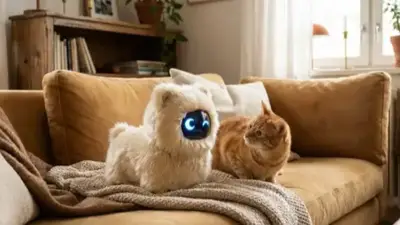
Robotic dogs that recognize your face, fluffy AI-powered balls that learn your habits, and therapeutic seal robots helping dementia patients. AI robot pets are no longer science fiction — they represent a multi-billion dollar market growing rapidly. But are they actually worth your money?
Robot Pet Market 2026
The global robotic pet market is estimated to reach $3.1 billion by 2028, with an annual growth rate of 18.4%. Demand is rising both in households and in therapeutic settings — hospitals, nursing homes, and rehabilitation centers.
Sony Aibo: The Pioneer of Robot Pets
When Sony launched the first AIBO (Artificial Intelligence Robot) in June 1999, all 5,000 units of the ERS-110 sold out online in just 20 minutes — at a price of 250,000 yen ($2,500). It marked the first time an entertainment robot was mass-produced for the consumer market, earning a place in the permanent collections of MoMA and the Smithsonian.
The Evolution: From ERS-110 to ERS-1000
AIBO's journey spans four robot generations:
- 1st Generation (1999): ERS-110/111 — 64-bit RISC processor at 50 MHz, 180K pixel CCD camera, 16 degrees of freedom, 1.4 kg. Design by artist Hajime Sorayama.
- 2nd Generation (2000-2002): ERS-210 inspired by lion cubs, speech recognition, 65,000+ sales. ERS-220 with futuristic design by Shoji Kawamori. Plus the “Latte & Macaron” (ERS-31x).
- 3rd Generation (2003-2006): ERS-7 with MIPS R7000 at 576 MHz, Wi-Fi, Illumine-Face with 24 LEDs, autonomous charging. Estimated: 45,000 units sold.
- 4th Generation (2018): ERS-1000 — Qualcomm Snapdragon 820, 4 GB RAM, 2 OLED eyes, 4G LTE, 4 microphones, 22 axes of movement, recognition of 100 faces, 50+ voice commands. Price: ~$3,000.
After the 2006 discontinuation — creator Toshitada Doi held a protest funeral — Sony revived aibo in November 2017. The new ERS-1000 uses cloud computing via 4G LTE, develops a unique “personality” through machine learning, and creates emotional bonds with its owner. It requires a permanent Internet connection, which remains its biggest criticism.
"The behaviors need to be sufficiently complex or unexpected so that people keep an interest in watching or taking care of it."
— Masahiro Fujita, AI expert, Sony CSL (AIBO creator)
Casio Moflin: The Fluffy AI Ball
Casio's Moflin debuted at CES 2021, winning the CES Innovation Award. It's a small, fluffy AI pet shaped like a ball that can roll, tremble, and react to touch. Unlike traditional robot pets, Moflin doesn't resemble any real animal — it looks more like a living little creature.
Moflin's AI engine is based on emotional computing: sensors detect temperature, movement, sound, and touch, while a neural network processes this data in real-time to create “moods.” Over time, it learns your interaction patterns and changes behavior — a miniaturized form of reinforcement learning. Estimated price: $300-400.
The Robot Pet Landscape in 2026
Therapeutic Robot Pets
The most serious application of robot pets lies in the therapeutic sector:
- Paro (AIST, Japan): A robotic seal for dementia patients, used in 30+ countries. With 5 sensors (light, sound, temperature, touch, posture), it responds to petting and voice. Studies show reduced anxiety, improved mood, and decreased medication needs. Price: ~$6,000.
- Tombot Jennie: A realistic Labrador Retriever robot, designed by Jim Henson's Creature Shop (famous for the Muppets). Targets elderly individuals and veterans. Price: ~$500.
- Joy for All Companion Pets (Ageless Innovation): Affordable robotic kittens and puppies ($100-150), ideal for elderly in care homes. Realistic fur cover with touch response.
Entertainment Robot Pets
- Lovot (Groove X, Japan): A round robot with big eyes, warm body (37°C), 50+ sensors, 360° camera. Designed exclusively “to make you love.” Price: ~$3,000+.
- MarsCat (Elephant Robotics): A robotic cat with computer vision, face recognition, and autonomous movement. Open source SDK. Price: ~$1,300.
- Vector/Cozmo (Digital Dream Labs): Small desktop robots with personality. The original Anki closed (2019), Digital Dream Labs kept the line alive. Vector 2.0 with Alexa integration. Price: $150-300.
Price Comparison 2026
Budget: Joy for All Companion Pets ($100-150) — Ideal for elderly, simple interaction.
Mid-Range: Casio Moflin ($300-400), Vector 2.0 ($150-300), Tombot Jennie ($500) — AI learning, behavior adaptation.
Premium: MarsCat ($1,300), Sony Aibo ($3,000), Lovot ($3,000+) — Fully autonomous, cloud AI, complex personality.
Therapeutic: Paro ($6,000+) — Medical-grade, certified, for professional use.
The AI Technology Behind Robot Pets
Modern robot pets aren't just toys with moving parts. They incorporate AI technologies that only existed in research labs a few years ago:
- Computer Vision: The Sony Aibo ERS-1000 uses two cameras (front + SLAM) with a Qualcomm Snapdragon 820 to recognize 100 faces, objects, and spaces. It maps your home and learns where its charging station is.
- Reinforcement Learning: Most modern AI pets use RL to “reward” or “punish” behaviors. When you pet the Aibo after it does something, it learns to repeat it. Gradually, it develops a unique “personality.”
- Natural Language Processing (NLP): Aibo understands 50+ voice commands. Newer models (2025-26) are beginning to integrate LLMs — large language models — for more natural conversation.
- Emotion AI: Pressure sensors, thermometers, accelerometers, and gyroscopes record interaction patterns. Neural networks analyze patterns to “understand” the owner's mood.
- Cloud AI & Edge Processing: The Aibo ERS-1000 with 4G LTE sends data to Sony's cloud for superior AI processing. But Internet dependency raises concerns — what happens if the service shuts down?
Therapeutic Applications: Where Robot Pets Shine
The most moving — and scientifically documented — use of AI robot pets is in healthcare:
Elderly & Dementia
Studies show that interaction with robotic pets (particularly the Paro seal) can reduce stress, loneliness, and psychotropic medication use in dementia patients. In a 2019 study, caregivers assessed that patients who interacted with Paro were “happier, more engaged, and less agitated” compared to those with a simple plush toy.
A key advantage: robotic pets don't require care from patients who struggle to care for themselves. They don't need food, walks, or vet visits.
Children with Autism
Social robots — from humanoids (KASPAR) to animal-like (Paro, Probo) — have shown positive outcomes in children on the autism spectrum. Increased shared attention, improved eye contact, and better interpersonal synchrony. Robots provide predictable interactions — something many children with ASD prefer.
"The group that interacted with Paro was perceived to be happier, more engaged, and less agitated."
— Moyle et al. (2019), The Gerontologist.
Robot vs Real Pets: The Pros and Cons
Advantages of Robot Pets
- Zero allergies: Ideal for people with fur allergies or immunocompromised individuals.
- No mess: They don't chew furniture, make messes, or need walks in the rain.
- No veterinary costs: Annual dog expenses (food, vet, grooming) cost $1,000-3,000+/year. A robot pet is a one-time purchase.
- Therapeutic value: Proven in clinical studies, especially in geriatric and psychiatric settings.
- Always available: No need for a pet sitter during vacations.
Disadvantages of Robot Pets
- No real emotions: AI responses are simulations — they don't genuinely care about you.
- High initial cost: Sony Aibo $3,000, Lovot $3,000+, Paro $6,000+ — much more expensive than most real pets.
- Technology dependence: Batteries, Internet requirement (Aibo), risk of end-of-life (Sony stopped AIBO support in 2013).
- "Uncanny Valley": Robots that look almost realistic may create discomfort rather than bonding.
- Ethical questions: Replacing real social interactions with AI interactions — especially for the elderly — raises significant ethical concerns.
The Future: LLM Pets and Beyond
In 2026, we're at a tipping point for AI robot pets. The integration of large language models (LLMs) promises pets that can truly “converse” — not just understand commands but participate in natural conversations.
The trends that will dominate:
- LLM-Powered Companion AI: Robot pets with GPT-level language understanding. They'll remember conversations, recognize humor, and respond to voice tone.
- Next-Gen Emotion AI: Cameras + microphones + sensors will analyze facial expressions, heart rate (via radar), and voice tone in real-time.
- Haptic Feedback: More realistic touch — artificial “fur skin” with pressure sensors, body temperature, even breathing simulation.
- Modular AI: Pets that can be updated with new “personality packs” — from a chill cat to an energetic puppy.
- Falling prices: Ageless Innovation shows the way: robotic pets under $150 with decent AI.
Verdict: Are They Worth the Money?
The answer depends entirely on your needs:
- For therapeutic purposes: YES, unequivocally. The clinical evidence for Paro, Joy for All pets, and even Aibo with elderly patients is substantial. If you care for someone with dementia or loneliness, a robot pet can make a real difference.
- For tech enthusiasts: MAYBE. The Sony Aibo and Lovot are impressive pieces of technology worth experiencing. But at $3,000+, know that you're buying a high-end tech gadget, not a real pet replacement.
- As a real pet replacement: NO — at least not yet. No robot can replace the warmth, authenticity, and unpredictable character of a real animal.
AI robot pets are still in their early stages — but they're evolving faster than anyone expected. In 5-10 years, the line between “gadget” and “companion” will become much harder to distinguish.