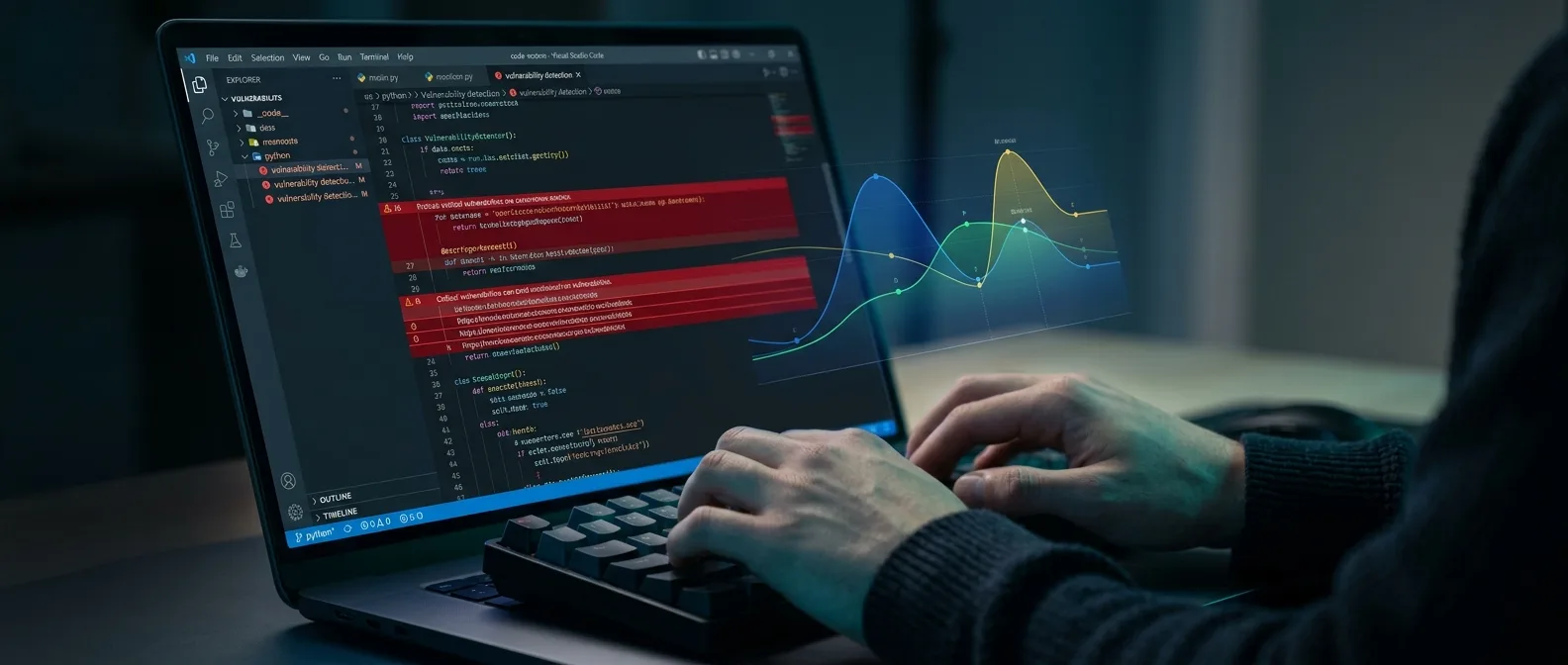
Codex Security from OpenAI is rewriting the rules of vulnerability detection. What traditionally required weeks of code analysis now completes in seconds. The results might surprise you — or keep you awake at night.
🔬 From Aardvark to Codex Security Revolution
OpenAI unveiled Codex Security in 2026 as the successor to Aardvark, an experimental system that had been quietly tested in closed circles since October 2025. The new version isn't just improved — it's a completely different beast.
Instead of traditional static analysis tools that drown development teams in thousands of false positives, Codex Security operates like a seasoned security auditor. It analyzes context, understands project architecture, and focuses on what actually matters.
The difference? The system first creates a threat model for each project, identifies exposure points, then hunts for vulnerabilities. Not the other way around.
The research preview is available through ChatGPT Pro, Enterprise, Business and Edu via the Codex web interface. Essentially, OpenAI is testing the waters before deciding whether this becomes a mainstream product.
📊 Numbers That Tell the Real Story
During the last month of beta testing, Codex Security scanned over 1.2 million commits from external repositories. The results are staggering:
But here's the disturbing number: critical vulnerabilities appear in less than 0.1% of commits. That means for every 1,000 code changes, there's one that could destroy a system's security.
The targets weren't random. OpenAI focused on projects like OpenSSH, GnuTLS, PHP and Chromium — critical pieces of internet infrastructure used by millions daily.
⚡ How the Codex Security System Actually Works
Codex Security isn't another vulnerability scanner. It's a three-phase system that mimics the work of a security consultant:
Phase 1: Architecture Understanding
The AI creates an editable threat model that maps trust boundaries and system exposure points. Essentially, it "learns" how the program works before it starts attacking it.
Phase 2: Targeted Vulnerability Hunting
Instead of blindly searching for patterns, the system focuses on points a real attacker would target. It analyzes dependencies, input validation mechanisms, and code paths leading to privileged operations.
Phase 3: Proof-of-Concept Testing
Here's where it gets interesting. Codex Security creates exploits in sandboxed environments to confirm vulnerabilities. If it can't exploit it, it doesn't report it.
Automated Patching
Generates patches aligned with existing architecture while minimizing regression risk.
Context Awareness
Understands vulnerability impact based on actual system exposure, not generic heuristics.
This approach explains why the system achieved 84% reduction in alert noise. When something gets flagged as critical, it's genuinely critical.
🧬 The CVEs It Discovered
One way to judge a vulnerability scanner's effectiveness is through the official CVEs it manages to earn. Codex Security secured 14 official CVE identifiers — an impressive result for a system in beta phase.
Some highlights from the findings:
- CVE-2025-32990 (CVSS 8.2): Heap-Buffer Overflow in GnuTLS certtool. An off-by-one bug in template parsing that could lead to remote code execution.
- CVE-2025-64175: Two-Factor Authentication bypass in GOGS. Someone could bypass 2FA embarrassingly easily.
- CVE-2026-24881: Stack Buffer Overflow in gpg-agent via PKDECRYPT operations. The kind of bug that turns encryption software into a malware delivery platform.
These aren't theoretical vulnerabilities — they're exploitable flaws in code running on millions of machines. The question that emerges: how many more bugs like these are still out there?
🎯 The "Codex for OSS" Program
OpenAI realized something crucial: most critical vulnerabilities live in open-source projects that lack budgets for security audits. That's why they're launching the "Codex for OSS" program.
Qualifying open-source maintainers get free:
- ChatGPT Pro accounts
- Code review infrastructure
- Full access to Codex Security
"It's a smart move. OpenAI improves internet security while simultaneously creating a training dataset for their AI models."
— Anonymous Security Researcher
The program targets projects affecting critical infrastructure. Imagine what would happen if an OpenSSH vulnerability remained undiscovered for years.
🔮 What This Means for the Industry
Codex Security isn't the only AI-powered security tool on the market. Anthropic has its own Claude Code Security, and several startups specialize in AI-driven vulnerability detection. What's changing is the scale and quality of results.
Consider this: if an AI can spot 792 critical vulnerabilities in one month, what happens when every development team has access to such tools? Security will improve dramatically — or we'll create a new type of vulnerability arms race.
There's a dark side too. The same tools helping developers find bugs can help attackers discover them faster. OpenAI recognizes this and has built in sandboxing, restricted filesystem access, and approval mechanisms.
The question isn't whether this technology will prevail — it's how quickly traditional security vendors will adopt it and how teams currently doing manual code reviews will adapt.
💡 Implementation Reality Check
The research preview version means Codex Security isn't ready for production use yet. ChatGPT Pro/Enterprise users can test it, but with limitations and no SLA guarantees.
Pricing isn't public yet, but given the compute costs such systems require, expect significant fees. An estimate based on similar enterprise AI tools would be around $800-1,500/month for small teams.
Integration with existing CI/CD pipelines is crucial for the tool's success. If developers must manually upload their code to a separate interface, they won't use it.
There's also the trust issue. Sending proprietary code to OpenAI cloud services raises data privacy and intellectual property protection questions — especially for enterprise clients.
Despite these concerns, the beta test results are impressive enough to suggest this approach has a future. What remains is whether OpenAI can scale it and make it accessible at large scale.