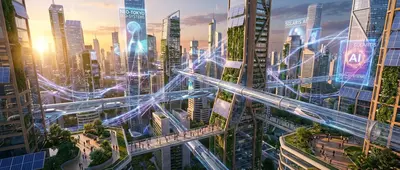
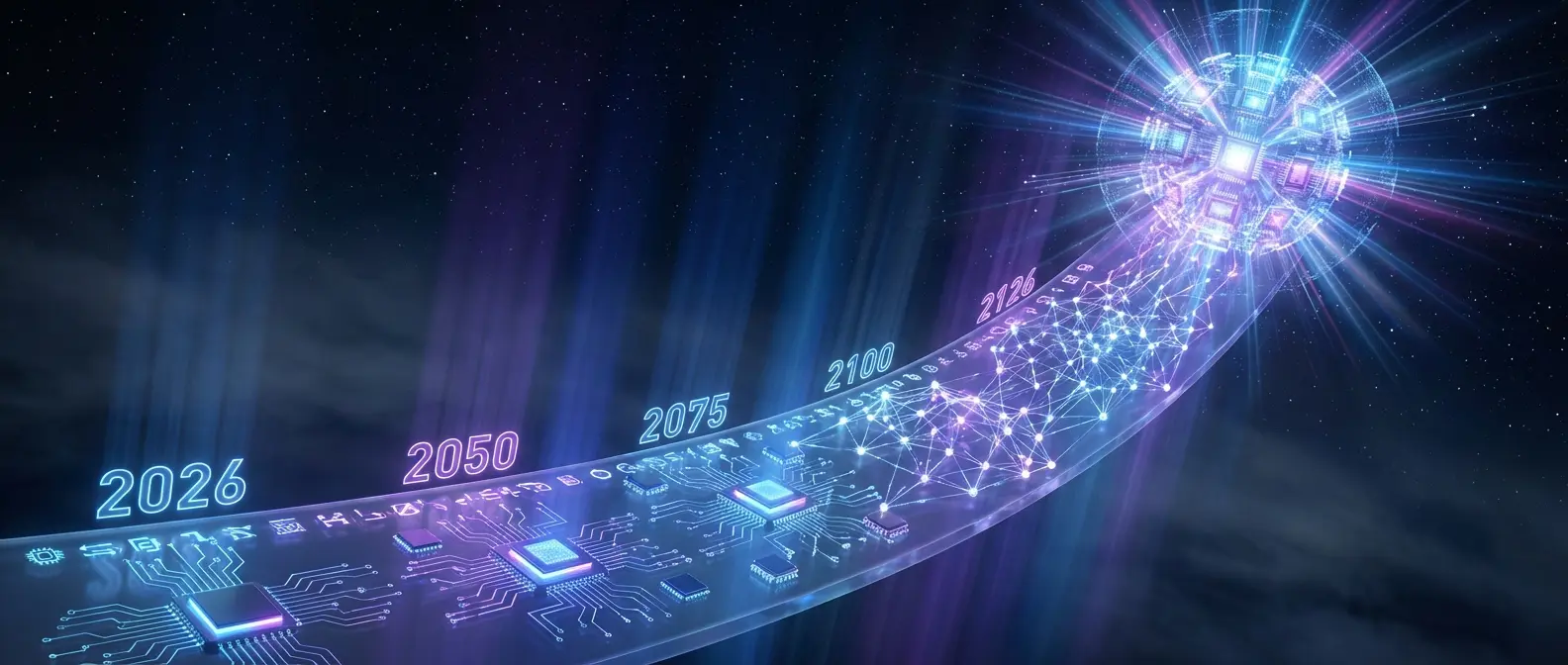
Imagine waking up in the world of 2126. A hundred years from now, humanity will have undergone such a radical transformation that our current ways of life will seem as primitive as the Middle Ages seems to us today. Artificial intelligence, which today is still in its infancy, will have become an inseparable part of every aspect of human existence — from the way we think to the way we love.
This article is not a simple prediction. It is a deep exploration, based on current technology trends, predictions from top researchers, and exponential growth mathematical models. It is an attempt to depict — as realistically as possible — the world that our grandchildren's grandchildren will inherit.
— Nick Bostrom, AI Philosopher
📖 Read more: AI Trading: Stock Market with Artificial Intelligence
🧬 The Revolution in Health and Longevity
In 2126, the concept of “disease” will have radically changed. AI systems will continuously monitor every biological function of our bodies through nano-sensors circulating in the bloodstream. Cancer, heart disease, Alzheimer's — all the diseases that terrify us today — will be detected and treated at the cellular level, before symptoms even appear.
The end of aging
Aging will no longer be considered inevitable. AI will have fully decoded the mechanisms of aging at the cellular and molecular level. Telomere regeneration therapies, cell reprogramming, and nano-robotic tissue repair will allow people to maintain a biological “age” of around 30-40 years for a much longer period. Average life expectancy will exceed 150+ years.
The doctors of 2126 will primarily be AI systems with a vast database of every disease that has ever existed and every treatment that has been tried. Human doctors will still exist, but they will function more as “health psychologists” — there for human contact and support, while AI handles diagnosis and treatment.
💼 Work We Wouldn't Recognize
The concept of “work” as we know it today will have been radically transformed. 85% of the professions that exist today will not exist in 2126 — not because they will have been lost, but because AI systems will perform them autonomously.
📅 Today (2026)
- 8-hour workday, 5 days/week
- Salary based on hours
- Fixed office/workspace
- One career for life
- Retirement at 65-70
🚀 In 2126
- 10-15 hours of creative work/week
- Universal basic income from AI production
- Work from anywhere in the world (or space)
- Multiple “passions” and projects simultaneously
- No mandatory retirement
The economy will be based on a new model: AI will generate wealth through automated industries, and a Universal Basic Income (UBI) will be distributed to all citizens. Human work will focus exclusively on creativity, innovation, human relationships, and the search for meaning.
💡 Expert Vision
"Children born today will most likely never need to 'work' in the traditional sense. They will live in a world where AI does all productive work, and humans focus on what inspires them." — Kai-Fu Lee, former President of Google China
🎓 Education: From Schools to Personal Mentors
Schools and universities as we know them will have disappeared. Every person will have a personal AI mentor from birth — a system that will understand their way of thinking, their interests, their strengths and weaknesses. Learning will be fully personalized.
A child who struggles with mathematics will not be condemned to learn the same way as other children. AI will find the ideal approach for them — perhaps through music, perhaps through games, perhaps through visual arts. The concept of a “bad student” will have disappeared, since every person will be taught in the way that suits their brain.
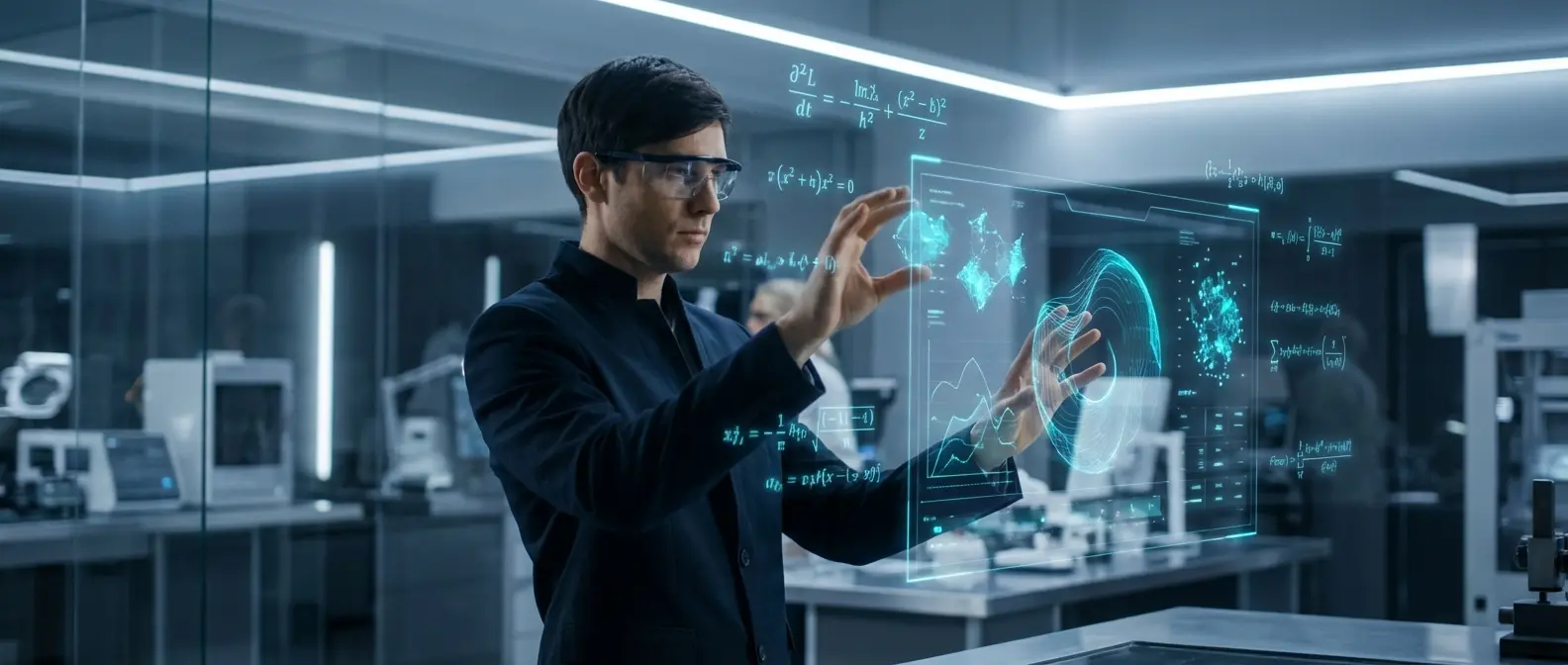
By 2126, brain-computer interfaces will allow the direct transfer of information to the brain. Want to learn a new language? Chinese in 20 minutes. Want to understand quantum physics? Knowledge “downloads” directly. Learning will no longer be a process that takes years, but a choice.
📖 Read more: Apple AI Glasses: Smart Glasses with Artificial Intelligence
🚗 Transportation and Cities of the Future
Roads as we know them will no longer exist. Cars will fly — electric, autonomous, and interconnected through AI networks that will eliminate traffic accidents. Cities will be redesigned with roads converting into parks and recreational spaces.
Long-distance travel will be done with supersonic trains in vacuum tubes (hyperloop) and supersonic aircraft. Athens-New York in 2 hours. London-Sydney in 4 hours. The concept of “distance” will have lost its meaning.
🏠 The Home of 2126
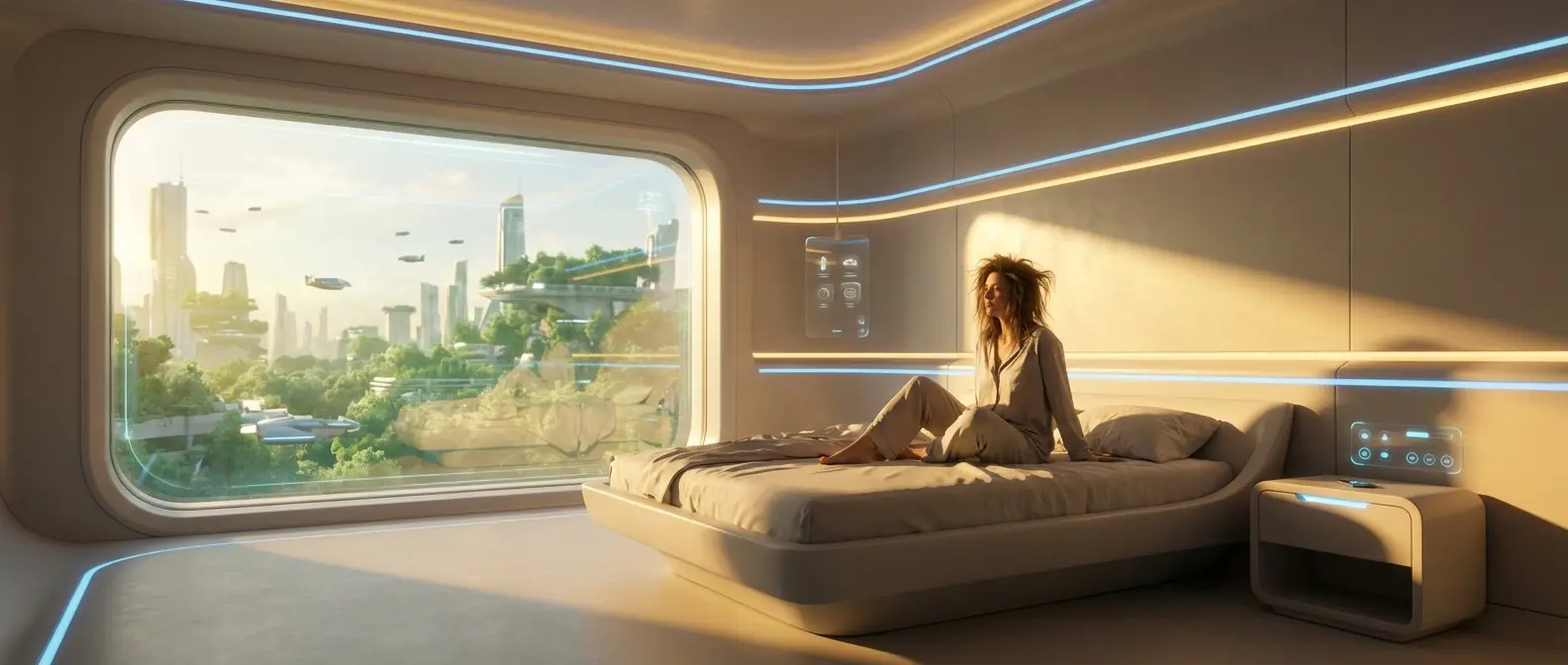
The home will be a living organism. Walls will change color and texture based on your mood. AI will know when you wake up, when you're hungry, when you're stressed. It will adjust the temperature, lighting, music, and even the scents of the space to optimize your well-being.
The kitchen will have transformed into a “food printer” — 3D food printers that will create any dish you desire, with exactly the nutrients your body needs at that moment. AI will monitor your diet and suggest (or automatically prepare) meals optimized for your health.
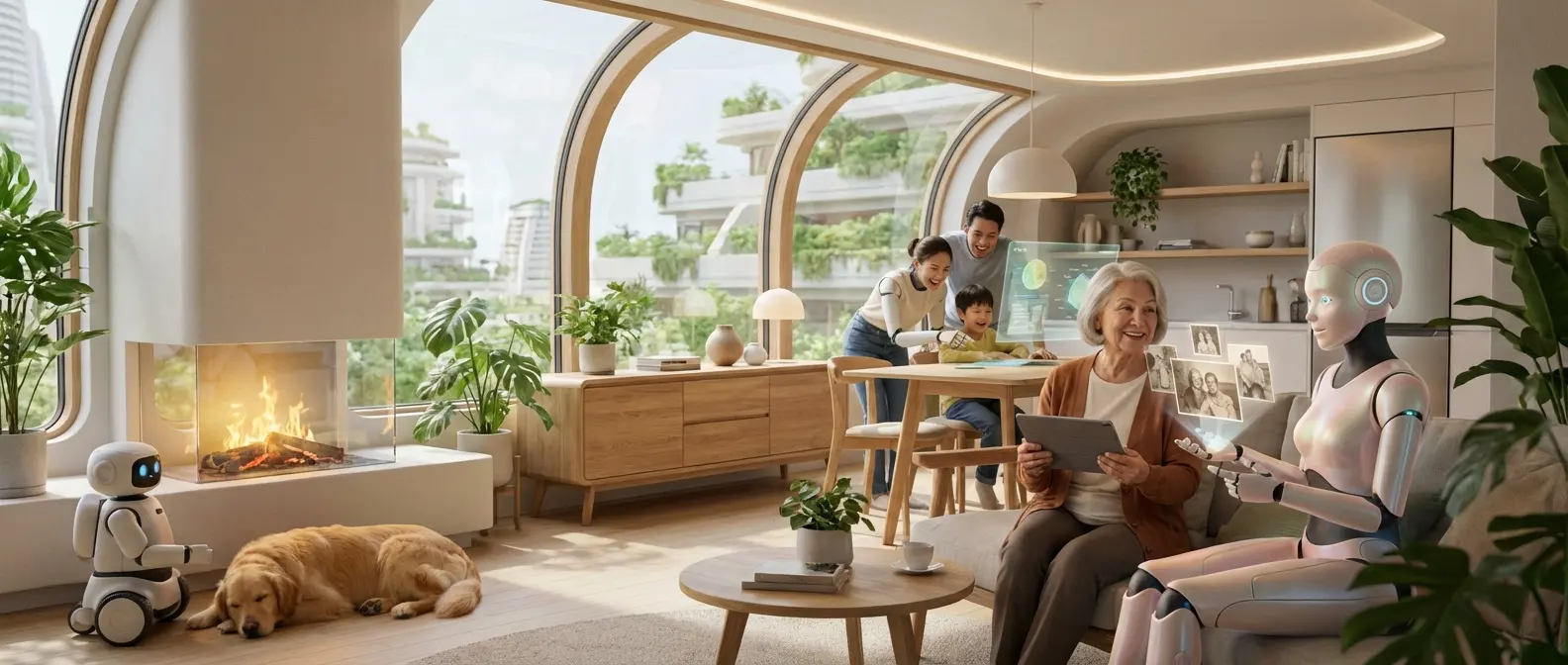
Household robots will be as common as vacuum cleaners are today. They will clean, organize, repair, care for pets and plants. The concept of “housework” will have disappeared.
📖 Read more: Quantum AI: When Quantum Computers Meet AI
💕 Relationships, Love, and Society
This is where things get complicated. AI will have radically changed the way we form relationships. AI “matchmakers” will analyze compatibility between people at levels we can't even imagine today — not just common interests, but genetic compatibility, neurological harmony, and long-term happiness predictions.
An even more controversial topic: relationships with AI entities. By 2126, AI will be so advanced that conversation with them will be impossible to distinguish from a human one. AI “companions” will be created — digital entities designed to understand you perfectly, support you, love you unconditionally. Will that be a real relationship?
The society of abundance
With AI generating most of the wealth, society will face challenges we cannot predict today. Inequality may disappear — or become even worse, depending on who controls the AI systems. Governments will have to decide: does AI production belong to everyone, or to those who built it?
🎨 Art, Entertainment, and Creativity
Art will have entered a new era. AI will be able to create music, painting, literature, and films that will be impossible to distinguish from human works. But that doesn't mean human art will die — on the contrary.
Human creativity will gain new value precisely because it is human. A work of art made by a human will have an authenticity, a “soul” that AI will never be able to fully reproduce. Art will become more about the human experience and less about the result.
Entertainment will be fully personalized. Want to watch a movie where you are the protagonist? AI will create it in real time. Want to play a video game that changes based on your emotional reactions? It exists. The line between reality and the digital world will be indistinguishable.
📖 Read more: AI in Medicine: Diagnoses with Artificial Intelligence 2026
🌍 Environment and Planetary Management
AI will be the savior of our planet — or at least, that's what we hope. AI systems will manage global energy distribution, optimize agriculture for minimal environmental impact, and predict and prevent natural disasters.
Forests will be monitored by AI-equipped satellites that will detect fires before they even start. Oceans will be cleaned by autonomous underwater robots. Climate change will be addressed with carbon capture technologies that AI will have designed.
🧠 Human-AI Integration
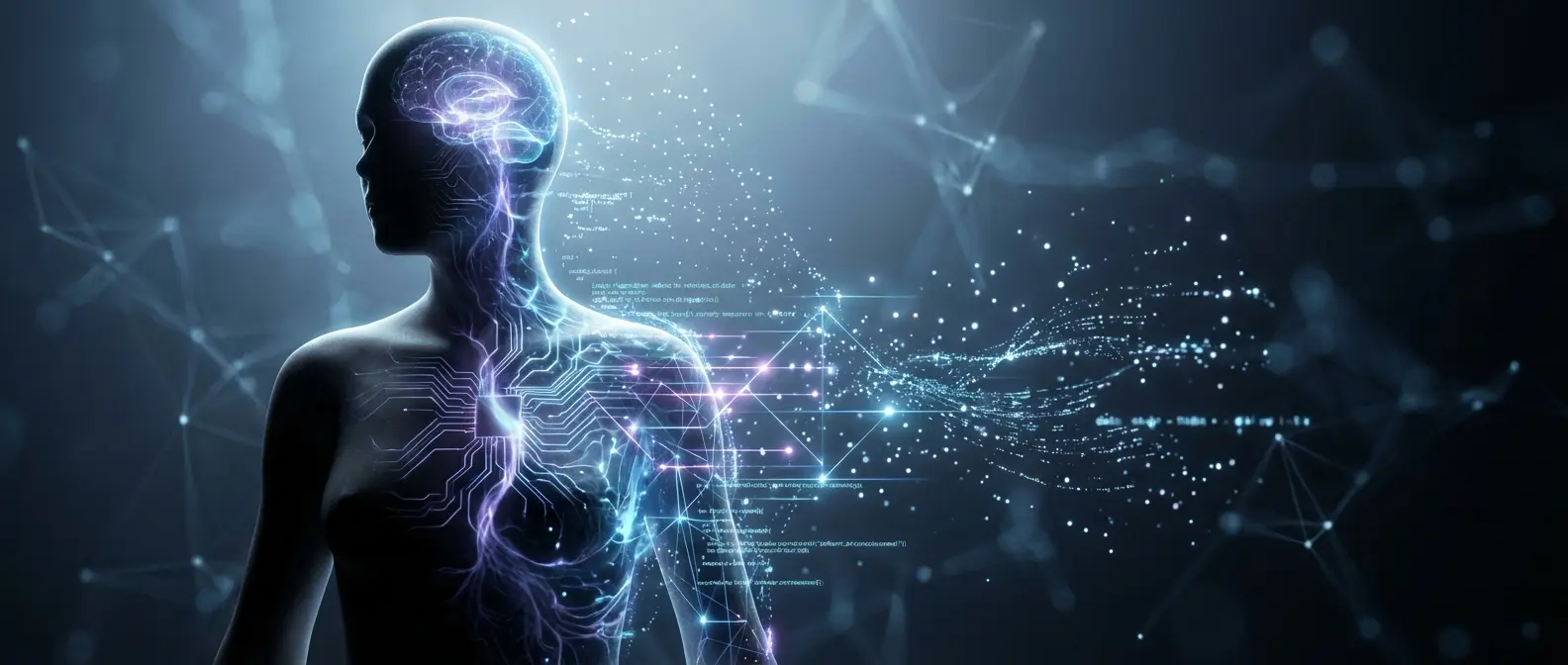
Perhaps the most radical change will be the very concept of “human.” By 2126, brain-computer interfaces will have evolved to the point where the distinction between biological cognition and AI will be blurred.
You will be able to “connect” your brain to AI for augmented intelligence. Remember everything. Calculate everything. Have access to all of humanity's knowledge with a single thought. The question is: will you still be you?
⚠️ Risks and Concerns
Not everything is rosy in this vision of the future. There are serious risks that must be addressed:
1. Loss of control: If AI becomes too powerful and too autonomous, how will we ensure it continues to serve humans? The “AI alignment” problem — ensuring that AI will have values compatible with human ones — is one of the most critical questions of our era.
2. Concentration of power: If a few companies or governments control the most powerful AI, they will have enormous power over everyone else. How will we prevent a new form of tyranny?
3. Loss of meaning: If we don't need to work, if AI solves all problems, what will give meaning to our lives? The psychological challenge of abundance may be greater than that of deprivation.
4. Digital immortality — at what cost? If we can “upload” our consciousness to a computer, what will that mean for the human soul? For religion? For the concept of life and death?
🔮 Final Thoughts
The world of 2126 will be so different from today's that it is impossible to fully imagine. Artificial intelligence will have changed every aspect of our existence — the way we live, work, love, create, and even the way we think.
But some things will remain constant: the need for connection with other people, the search for meaning, the thirst for beauty and truth. Technology changes the tools, not the deepest needs of the human soul.
The future is not predetermined. The decisions we make today — about AI development, about the distribution of the wealth it will create, about the ethical boundaries we set — will determine whether 2126 will be a utopia or a dystopia.
The choice is ours. And that, precisely, is the hope.