
A historic development in healthcare: Utah becomes the first US state to allow an artificial intelligence system to renew prescriptions without human oversight — for 190 common medications.
🏥 What This Means
For the first time in history, an AI system has legal authorization to make medical decisions autonomously. The system can analyze a patient's history, evaluate whether criteria are met, and issue a prescription renewal — all without a doctor being involved.
📖 Read more: Bandcamp Bans AI Music - First Platform to Take a Stand
Key Facts
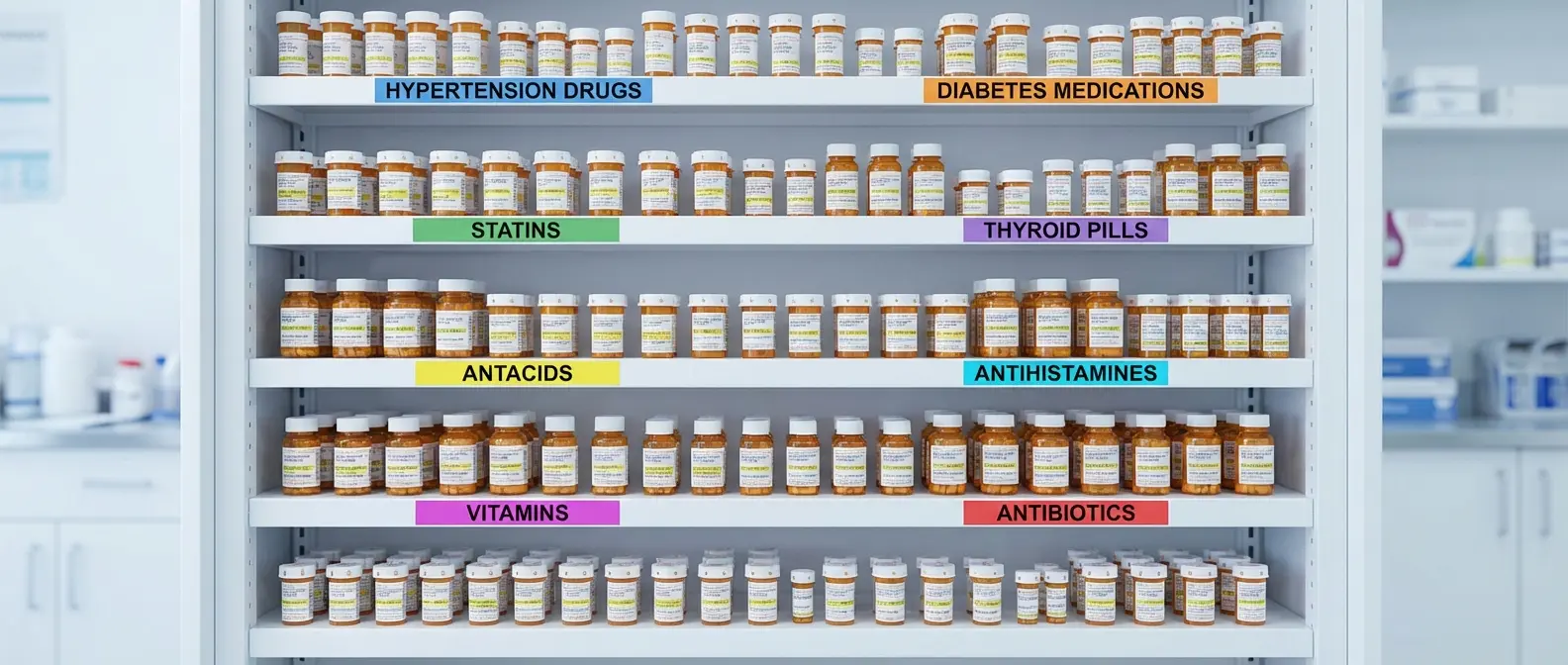
Which Medications Are Covered
💊 Medication Categories in the List of 190
Note: Controlled substances, opioids, benzodiazepines, and high-risk medications are excluded.
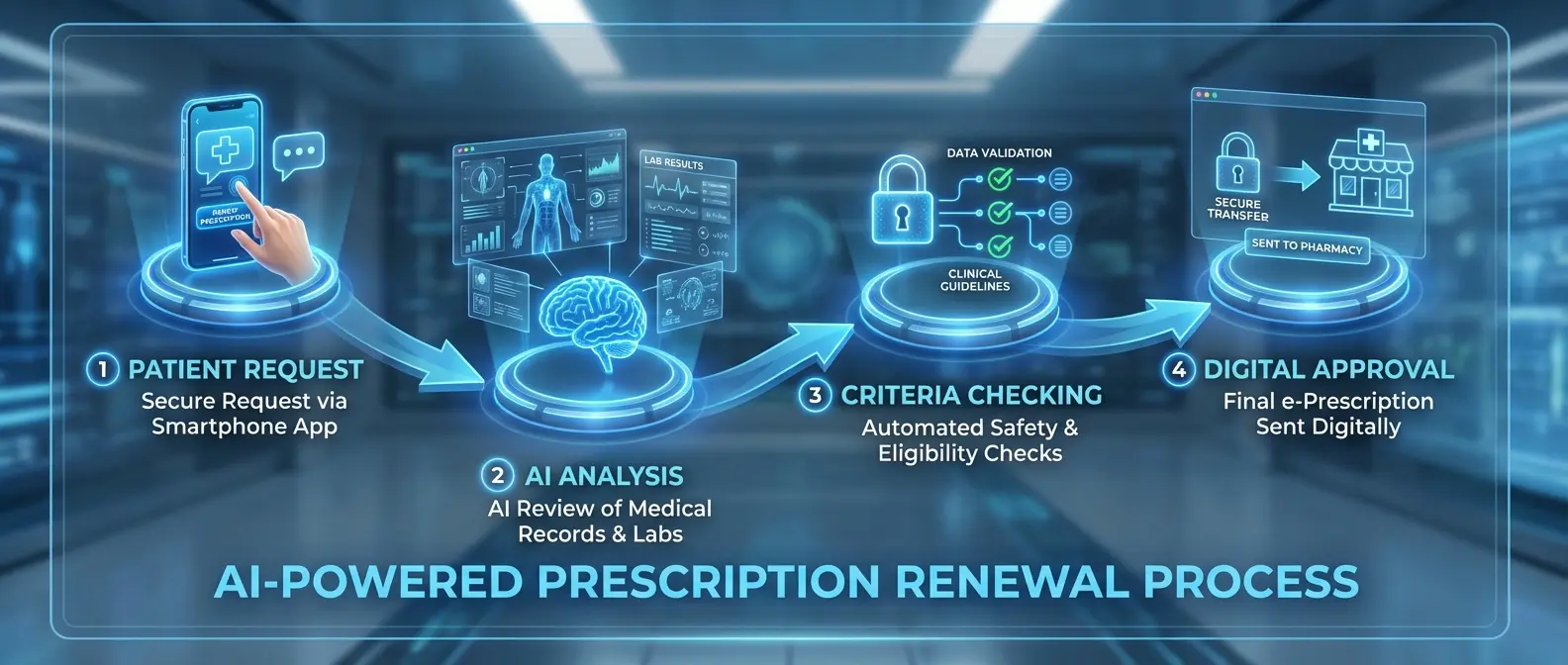
How the System Works
🔄 Prescription Renewal Process
Patient Request
The patient submits a renewal request through an app or website.
Medical History Analysis
The AI analyzes the complete medical history, lab results, and previous prescriptions.
Criteria Check
It evaluates whether the patient meets the criteria: stable condition, no contraindications, recent follow-up.
Decision & Issuance
Approves or rejects the request. If approved, the prescription is automatically sent to the pharmacy.
📖 Read more: Claude Operon: Anthropic's AI Lab for Biology Research
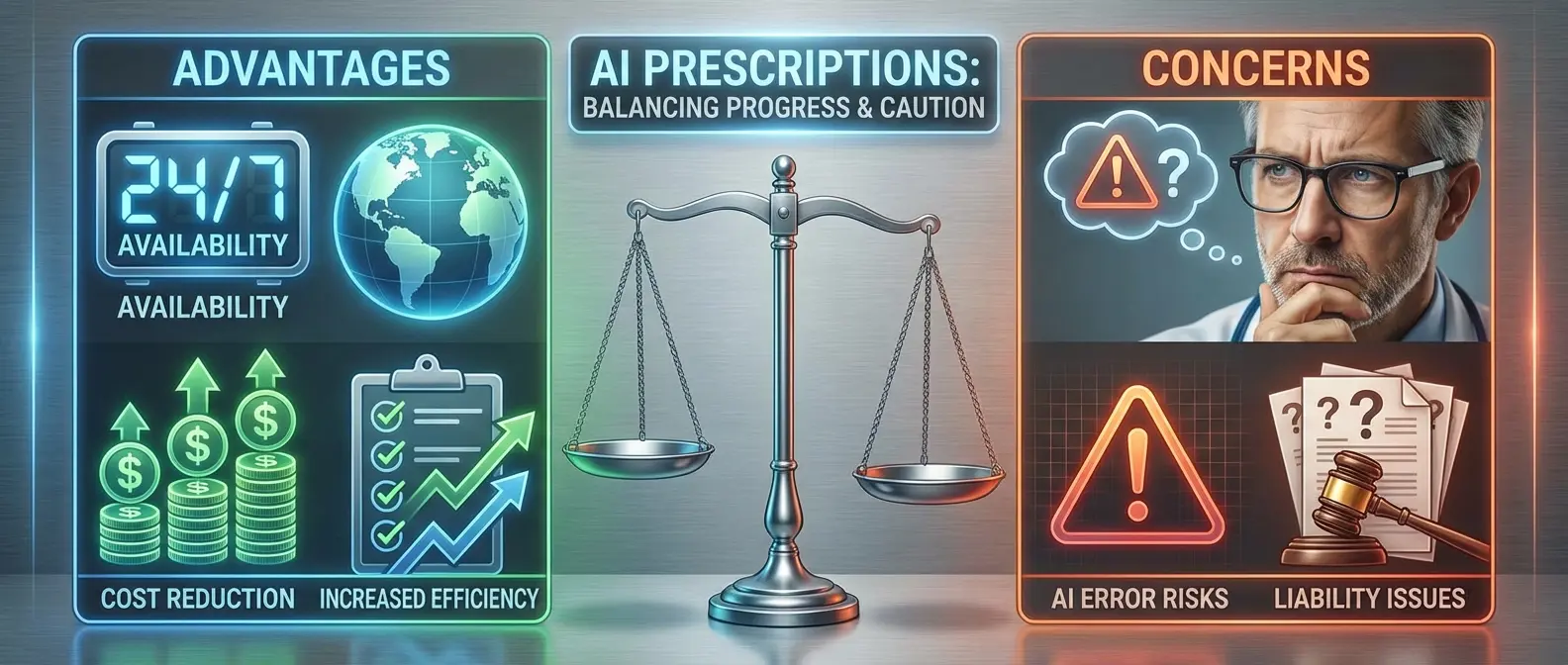
Pros & Cons
✅ Advantages
- 🕐 Instant 24/7 service — no more waiting
- 💰 Reduced cost — no need for a doctor visit
- 📊 Consistency — the AI always applies the same criteria
- 🏥 Frees up clinics for more serious cases
- 🔍 Complete drug interaction checks
❌ Concerns
- 👨⚕️ Lack of human judgment in edge cases
- 🤖 Potential AI errors with serious consequences
- 📋 Who bears responsibility if something goes wrong?
- 🔐 Health data security concerns
- 💔 Loss of the doctor-patient relationship

The Medical Community's Reaction
"This is a dangerous experiment with people's health. Prescriptions are not simple paperwork — they require medical judgment that no AI can fully replace."
"For routine renewals of chronic conditions with stable lab results, this is a logical development. Doctors should be focusing on real medicine, not signing refills."

📖 Read more: GPU vs TPU: Which Chip Wins in AI 2026?
Safety Measures
🛡️ Protection Measures in Place
- The system automatically rejects requests if red flags are detected
- Mandatory referral to a doctor every 12 months
- Real-time monitoring for anomaly detection
- Override button for pharmacists if they have concerns
- Complete audit trail for every decision
- Insurance coverage for AI-related errors
The Timeline
The Utah Legislature approves bill HB-412 for AI prescriptions.
Pilot program in 3 hospitals with 50 medications.
Evaluation: 0 serious incidents, 98.7% accuracy.
Full deployment with 190 medications across the entire state.
What This Means for the Future
Utah's decision will be closely watched by other states and countries. If it proves successful, it could pave the way for broader automation in healthcare — from diagnostics to surgical decisions.
However, questions remain: Where do we draw the line? Which decisions can AI make autonomously and which always require human involvement? Utah took the first step — time will tell if it was the right one.
One thing is certain: The relationship between artificial intelligence and medicine will never be the same again.