🎯 The Discovery That Shattered Stereotypes
1831. A Scottish shepherd stumbled across something extraordinary in a sand dune near the Lewis coast. Buried in the earth were 93 chess pieces carved from walrus ivory and whale tooth, dating to around 1150-1200 CE. The Lewis Chessmen, as they're known today, didn't just survive a millennium underground — they shattered every stereotype about Viking society.
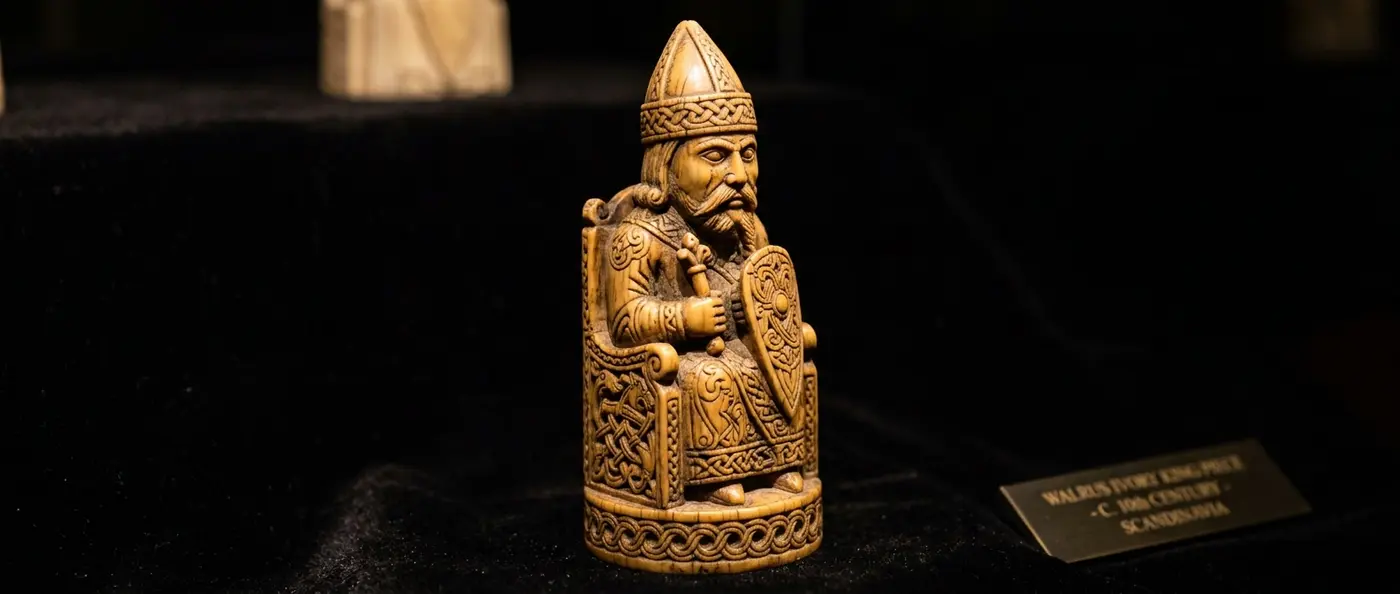
These weren't crude warrior tokens. Each piece was a masterwork of medieval craftsmanship, featuring expressive faces, intricate clothing, and psychological depth that rivals Renaissance sculpture. Kings sit on elaborate thrones clutching swords. Queens rest their chins thoughtfully on their hands. Berserker pawns bite their shields in battle fury. Every detail screams sophistication, not savagery.
The discovery proved Vikings weren't just raiders and traders — they were connoisseurs of complex strategy games that demanded hours of intellectual engagement. Chess had traveled from the Islamic world through European trade routes, and the Norse had embraced it completely, transforming an abstract game into vivid storytelling through art.
⚔️ Chess in the Viking World
Chess arrived in Northern Europe around the 10th century through Islamic trade networks. Vikings, who were merchants as much as warriors, adopted the game rapidly and wove it into their cultural fabric. In Iceland, medieval sagas describe chess as one of the essential skills every nobleman should master — right alongside swordsmanship and poetry.
The Lewis pieces showcase a unique fusion of Scandinavian artistry with European influences. Kings grip their swords while seated on thrones. Queens adopt the contemplative pose that would later appear in Gothic art. The warrior pawns — those shield-biting berserkers — connect directly to Norse mythology and battle practices. Each piece tells its own story while serving the larger game.
Crafting these pieces required extraordinary skill. Walrus ivory from Greenland was precious cargo that demanded specialized handling. Artisans had to soften the hard material with steam or boiling water, then carve with surgical precision to avoid cracking. A single misstep would ruin weeks of painstaking labor.
The eyes are highlighted with dark pigment — likely soot or plant dyes — creating figures that seem to stare across the centuries. Some pieces retain traces of red paint, suggesting the two "armies" were distinguished by color rather than the traditional black and white. The detail in clothing, hair, and facial features reveals deep knowledge of human anatomy and artistic representation that rivals contemporary European work.
Carving Techniques
Iron tools created intricate details. Each face bore unique characteristics crafted by master artisans who understood both material and form.
Decoration
Natural pigments highlighted eyes and distinguished opposing sides. Red and natural ivory created the classic chess army division.
Material Processing
Heat and moisture softened walrus ivory before carving. This prevented cracking during the delicate sculpting process.
🗺️ The Origin Mystery
Their origin sparks fierce academic debate. Most experts point to Trondheim, Norway — a major ivory-working center in the 12th century. Others argue for Iceland, where chess was wildly popular and fine woodcarving traditions flourished. The carving techniques point to Norwegian workshops, yet the chess obsession feels distinctly Icelandic.
How they ended up buried in a Scottish sand dune is equally mysterious. One theory: a merchant traveling from Norway to Ireland hid them for safekeeping. Another possibility: they belonged to a local chieftain who buried his treasure during a crisis. The pieces lay undisturbed for eight centuries until that shepherd's lucky discovery.
💎 Value and Modern Significance
Far from mere curiosities, these pieces command extraordinary prices. In 2019, a single piece that had been missing for decades sold at auction for £735,000. The British Museum holds 82 of the 93 pieces, while Scotland's National Museum displays the remaining 11.
🎭 Cultural Impact
The Lewis Chessmen have inspired countless artworks and stories. They appeared in "Harry Potter and the Philosopher's Stone" as the wizard's chess set, while replicas sell in museums worldwide, bringing Viking craftsmanship to modern players.
But their true worth transcends money. They're physical proof of medieval Europe's cultural exchanges, chess's journey from East to West, and Viking society's complexity. They show that people 900 years ago valued art, games, and intellectual challenge as much as warfare and conquest.
Modern technology keeps revealing new secrets. X-ray analysis showed some pieces have internal cracks repaired with metal pins — evidence they were valued enough to fix when broken. Chemical analysis of the pigments confirmed the use of natural materials available in 12th-century Scandinavia.
In 2010, archaeologists launched new excavations at the discovery site, hoping to uncover more clues about their origin. While no additional pieces emerged, they found traces of medieval habitation suggesting the area was occupied when the chessmen were buried.
⚖️ Comparison with Other Medieval Chess Sets
🏛️ Legacy and Influence
The Lewis Chessmen have become symbols of cultural heritage for both Scotland and Norway. Each country claims part of their story, sparking diplomatic discussions. In 2007, Scotland requested the return of some pieces from the British Museum, citing their local significance.
Beyond politics, the pieces continue inspiring. Contemporary artists create modern interpretations. Chess players compete using replicas. Historians study every detail to understand medieval life better. Ninety-three chess pieces, and suddenly we see an entire civilization differently.
These tiny masterpieces remind us that human creativity and love of play are timeless. In an era often portrayed as dark and barbaric, people created works of exceptional beauty and played games requiring strategic thinking. The Lewis Chessmen prove that even 900 years ago, humans sought beauty, entertainment, and intellectual challenge — exactly like us today.