🗿 The Discovery That Rewrites History
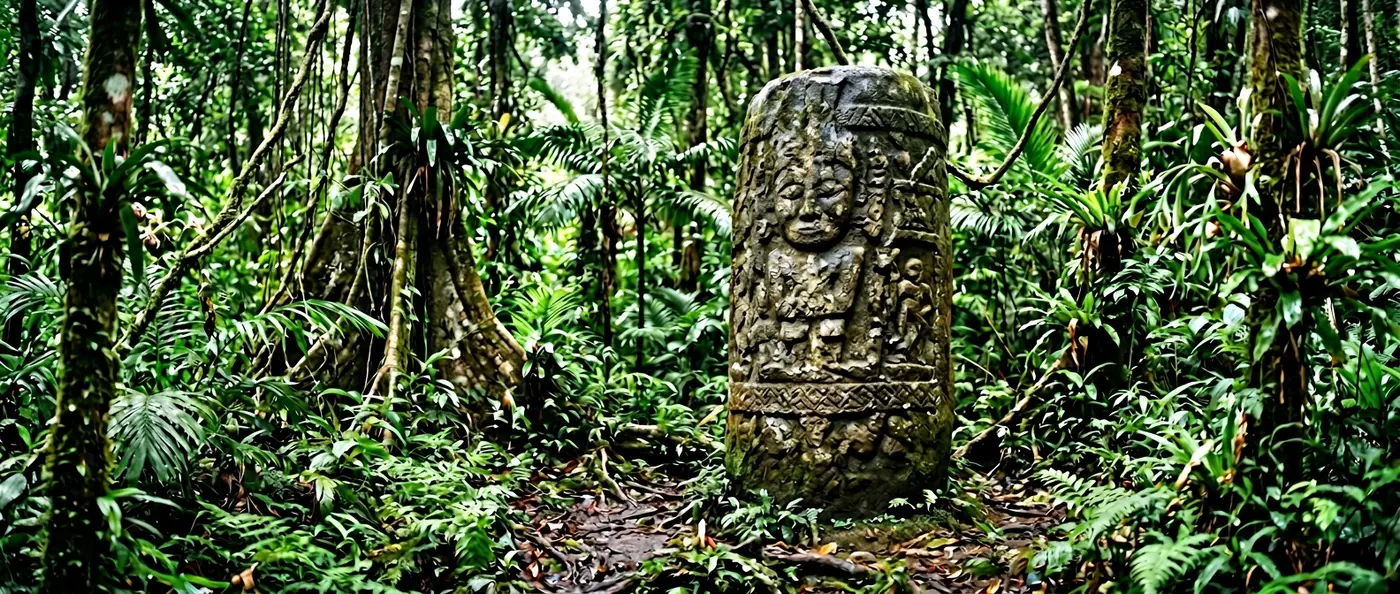
Between 2019 and 2022, Professor Adam Brumm's team from Australia's Griffith University pulled these stone artifacts from the Calio site in Sulawesi. Seven pieces of worked flint. Simple cutting and scraping tools. One had been retouched along its edges to make it sharper.
The sediment layers where they found these tools tell the real story. Multiple dating methods place them between 1.04 and 1.48 million years old. That makes them the oldest evidence of human presence ever found in Wallacea — the vast island region sitting between Asia's and Australia's continental shelves.
These weren't sophisticated tools. Just sharp flakes knocked off stone cores using basic percussion techniques. But their location changes everything. Sulawesi has always been an island. Even when sea levels dropped during ice ages, getting there meant crossing at least 25 kilometers of open water.
⚒️ Stone Age Technology
The toolmakers used knapping — hitting a stone core with a hammerstone to create sharp flakes. Basic technique. But it requires planning, spatial awareness, and understanding of stone fracture patterns. Not something you stumble into by accident.
Each tool shows deliberate shaping. The flakes were struck at precise angles to create working edges. One artifact bears clear signs of additional modification — someone took time to improve its cutting ability. These weren't random rock chips. Someone made these tools with specific tasks in mind.
The precision dating of the sediment layers gives scientists their first solid timeline for early human presence in Southeast Asia's island world. No guesswork. No approximate ranges. These tools sat undisturbed in their original positions for over a million years.
🦴 Who Made These Tools?
Here's where it gets weird. The oldest human remains ever found in Sulawesi are fragments of a modern human jaw dating back just 25,000 to 16,000 years. The island also hosts the world's oldest narrative cave art — at least 51,200 years old.
But these tools predate both discoveries by nearly a million years. So who made them? The timeline points to Homo erectus, which reached Java around 1.6 million years ago after first evolving in Africa. But Sulawesi doesn't have Java's extensive fossil record.
The mystery deepens when you consider the island's geography. Sulawesi sits in the heart of Wallacea, separated from mainland Asia by deep ocean channels that have existed for millions of years. Getting there required some form of water crossing — intentional or accidental.
💡 Why This Discovery Matters
This is the first proof that early humans inhabited Sulawesi possibly before reaching Luzon island to the north and Flores island to the south. The mysterious Sulawesi group could be ancestors of Homo luzonensis or Homo floresiensis — both "hobbit" relatives of modern humans.
🗺️ The Geographic Challenge of Wallacea
Wallacea is evolution's laboratory. This unique biogeographic region sits between Asia and Australia, separated from both by deep ocean channels. Even during ice age low sea levels, when many islands connected to mainland areas, reaching Wallacea required crossing open water.
The region's isolation led to unique evolutionary paths. Giant rats. Dwarf elephants. And possibly new human species that evolved in isolation after their ancestors somehow crossed those ancient seas.
For early humans to reach Sulawesi 1.5 million years ago suggests either deliberate seafaring abilities we never suspected, or exploitation of natural phenomena like tsunamis or accidental transport on natural rafts. Either possibility rewrites our understanding of early human capabilities.
Ocean Crossing
Reaching Sulawesi required crossing at least 25 kilometers of open ocean, even during periods of lower sea level.
Strategic Position
Sulawesi sits at Wallacea's center, serving as a potential bridge between continental Asia and Australia.
Evolutionary Laboratory
Island isolation led to unique species evolution, possibly including new human species.
🔬 Dating Methods and Analysis
Brumm's team used multiple dating techniques to nail down the tools' age. They analyzed the geological layers, dated the sediments, and cross-checked results using different methods. The convergent evidence all points to the same timeframe: 1 to 1.5 million years ago.
The study, published in Nature, represents years of painstaking work under difficult conditions in Sulawesi's tropical forests. The excavations followed strict protocols to ensure the tools remained in their original positions and hadn't been moved by later geological processes.
Every artifact was mapped in three dimensions. Every sediment layer was sampled and analyzed. The team left nothing to chance — the implications were too significant for sloppy methodology.
🏺 Connection to Other Indonesian Discoveries
Indonesia has a rich history of groundbreaking paleoanthropological discoveries. From "Java Man" (Homo erectus) discovered in the 19th century to the "Flores hobbit" (Homo floresiensis) found in 2003, the archipelago keeps revealing secrets about human evolution.
The new Sulawesi findings add another piece to the puzzle. They show the region was inhabited much earlier than previously thought and that early humans were capable of reaching and surviving in remote island environments.
The timeline creates an intriguing possibility: the Sulawesi toolmakers could be ancestors of the later "hobbit" species found on other Indonesian islands. Island isolation often leads to evolutionary changes, including body size reduction — exactly what happened to Homo floresiensis.
⚖️ Indonesian Ancient Discoveries Timeline
🌴 Ancient Sulawesi's Environment
One to 1.5 million years ago, Sulawesi was a very different place. Sea levels were lower, but the island remained isolated from the mainland. The climate was probably cooler and drier than today, with different vegetation and fauna.
The early inhabitants would have faced unique challenges. They had to adapt to new plant and animal species, find water sources, and develop survival strategies in an isolated island ecosystem. The stone tools they left behind are the only evidence of their presence.
What did they hunt? What plants did they gather? How did they organize their societies? The tools provide tantalizing clues but leave most questions unanswered. Each artifact represents thousands of years of human adaptation and innovation.
❓ Open Questions and Future Research
The discovery raises more questions than it answers. Which human species made these tools? How did they reach Sulawesi? Did their descendants survive long enough to evolve into the unique "hobbit" species found on other Indonesian islands?
Professor Brumm and his team note that until fossils of archaic hominins are found in Sulawesi, it would be premature to assign a specific species to the toolmakers. The most likely scenario, given the timeframe, is that Homo erectus or a similar species made the tools.
The tools' purpose also remains unclear. They could have been used for food-related tasks or for making tools from wood or other perishable plant materials. So far, none of the animal bones the team found show cut marks or other signs of butchery.
🔍 What Archaeologists Are Looking for Now
The team has identified three more promising sites across Sulawesi's central highlands. Next season, they'll probe sediment layers that could be even older than Calio.
🌏 Implications for Understanding Human Evolution
The Sulawesi discovery has broader implications for understanding human evolution and dispersal. It shows that early humans were more capable explorers and colonizers than previously thought.
The ability to reach and survive on remote islands suggests cognitive and technological capabilities we may have underestimated. The possibility that these early islanders evolved into unique species like Homo floresiensis also highlights the role of geographic isolation in human evolution.
As research continues in Sulawesi and other Indonesian islands, more surprises are likely to emerge. Each new discovery adds a piece to the complex puzzle of human prehistory and helps us better understand the long and complicated journey that led to the emergence of modern humans.