🦣 When Giants Roamed and Humans Followed
Fourteen thousand years ago, Alaska looked nothing like today. Massive woolly mammoths thundered across vast steppes where the Bering land bridge connected Asia to North America. The first humans to cross this frozen highway faced a brutal reality: adapt or die.
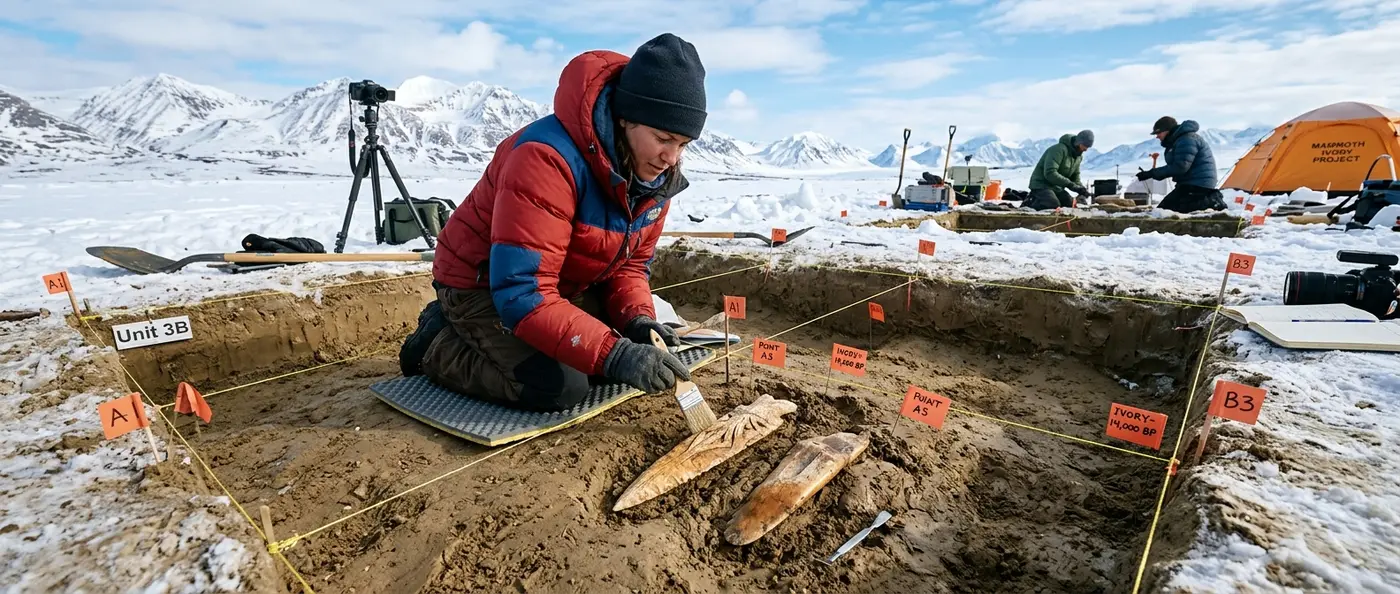
The ivory tools archaeologists pulled from Alaskan permafrost tell a story of incredible ingenuity. Working mammoth ivory wasn't like chipping flint. This dense, fibrous material required specialized knowledge — understanding its grain, knowing how heat and cold affected its workability, mastering techniques passed down through generations.
These early toolmakers lived at the tail end of the last ice age. Glaciers were retreating. Sea levels were rising. The land bridge that brought their ancestors to the New World would soon vanish beneath the waves, cutting off the migration route forever.
The significance is clear: dating these tools to 14,000 years ago pushes back the timeline of human presence in Alaska. We're not talking about recent arrivals fumbling with unfamiliar materials. These were skilled craftspeople who had already perfected their techniques for surviving in one of the planet's most unforgiving environments.
🔧 Precision Engineering in the Ice Age
Forget everything you think you know about "primitive" tools. The ivory implements found in Alaska are masterpieces of prehistoric engineering. Arrow points sharp enough to punch through thick mammoth hide. Cutting blades that could slice frozen meat. Specialized tools for working leather in subzero temperatures.
Why ivory? In a landscape where trees were scarce and stone often too brittle from cold, mammoth tusks offered unique advantages. Ivory is harder than bone but more flexible than stone. It holds an edge longer than wood. And crucially, it doesn't shatter when temperatures plummet.
The manufacturing process was complex. First, extract the ivory from a mammoth skull — backbreaking work requiring specialized tools. Then came the delicate process of heating and cooling to make the material workable. Finally, hours of patient grinding and polishing to create precision instruments.
Daily life for these toolmakers was a constant battle against the elements. Arctic winters lasted months. Exposed skin could freeze in minutes. Every calorie mattered. Every tool had to work perfectly because failure meant death.
These small bands of hunter-gatherers had developed remarkable survival strategies. They followed herds of megafauna — mammoths, caribou, bison — on seasonal migrations. Nothing was wasted. Meat for food, hide for clothing and shelter, bones and ivory for tools.
The ivory tools played crucial roles in every aspect of life. Sharp blades for butchering animals and cutting meat. Ivory needles enabled watertight seams in leather clothing — essential protection against killing cold. Specialized scrapers processed hides into soft, flexible materials.
Multi-Purpose Design
Each tool served multiple functions — from hunting and food processing to shelter construction and clothing manufacture.
Cold-Weather Performance
Ivory tools remained functional in extreme temperatures when other materials became brittle and useless.
Social Organization
Complex toolmaking required knowledge transfer across generations and coordinated group effort.
🗿 Connecting Ancient Worlds
These Alaskan ivory tools reveal global prehistoric connections. Around the same time, on the other side of the world, humans in Europe and Asia were also developing sophisticated organic material technologies.
In Siberia, connected to Alaska via the Beringia land bridge, archaeologists have found similar ivory tools. This suggests techniques and knowledge spread as populations moved. The similarities in style and manufacturing methods hint at cultural connections between groups living in these remote regions.
But Alaska's tools also show unique adaptations. Local environmental pressures shaped their design. Arrow points were engineered to penetrate thick Arctic animal hides. Cutting tools featured specific angles perfect for processing frozen meat.
The workmanship matches the finest tools made anywhere during this period. These weren't desperate survivors making crude implements. They were skilled artisans creating sophisticated technology perfectly adapted to their environment.
💡 Did You Know?
Mammoth ivory can survive in frozen ground for tens of thousands of years without decomposing, making it ideal for archaeological study and radiocarbon dating.
🔬 What Ancient Tools Teach Us
Studying these prehistoric implements reveals crucial insights about human adaptability and innovation. Alaska's first inhabitants weren't just survivors — they were innovators who developed technologies perfectly suited to their environment.
Microscopic analysis reveals details about manufacturing techniques. Ancient craftspeople used stone tools to carve and shape ivory with stunning precision. Wear patterns on the tools provide clues about how they were used and what activities they performed.
The distribution of finds across multiple Alaskan sites helps archaeologists reconstruct movement and settlement patterns. These early populations followed specific routes, likely guided by animal migrations and resource availability.
The discovery has major implications for understanding human migration to the Americas. Traditionally, scientists believed the first people reached North America around 13,000 years ago. These new finds add weight to theories that human presence in the region may be even older.
The technological sophistication suggests these toolmakers weren't the first arrivals. They had already developed specialized techniques adapted to the Arctic environment — something that requires time and experience. This means human presence in Alaska likely predates current archaeological evidence.
The study also contributes to understanding climate change and its impact on human migration. The period 14,000 years ago was an era of dramatic environmental shifts, with retreating glaciers and rising sea levels that eventually closed the Beringia land bridge.
🌐 Comparing Prehistoric Technologies
🔍 Unanswered Questions and Future Discoveries
Despite the significance of this discovery, many questions remain unanswered. Archaeologists continue investigating the region, searching for more evidence about these early populations. Each new find adds another piece to the puzzle of human prehistory in the Americas.
One major question concerns the exact origins of these people. Genetic studies of modern Native American populations indicate connections to Siberian and East Asian populations. However, the precise route and timing of migration remain subjects of intense scientific debate.
Researchers are also trying to better understand the social structures of these early groups. The complexity of the tools and standardization of manufacturing techniques suggest organized societies with systems for knowledge transmission. How were these groups organized? How did they make decisions? How did they share resources?
Ongoing research in Alaska and other Beringia regions promises to reveal more about this crucial chapter in human history. As dating and analysis techniques improve, we can expect even more detailed information about the lives of the first Americans.
The ivory tools from Alaska aren't just archaeological artifacts. They're testimonies to human ingenuity and adaptability. They remind us that our ancestors were capable of surviving and thriving even in the planet's most hostile environments. Their story is part of our story — a tale of exploration, innovation, and human resilience that continues today.