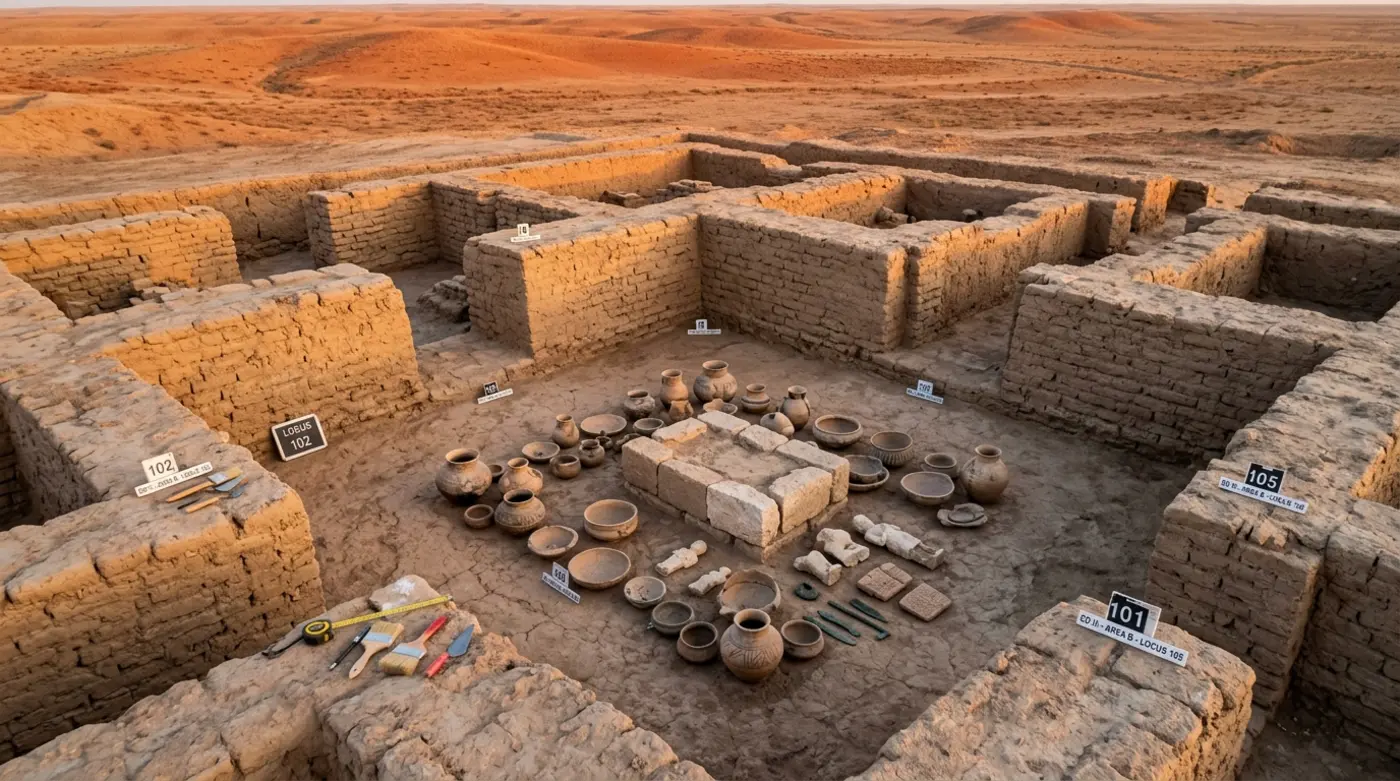
In northern Mesopotamia, where humanity's first cities once flourished, archaeologists have uncovered a ritual complex dating back 5,000 years. The discovery in modern-day Iraq shows how people worshipped during the birth of the world's first cities.
🏛️ The Discovery That Illuminates the Past
The archaeological site sits in the heartland of humanity's first organized societies. The excavation uncovered a ceremonial space used for religious rituals.
The find dates to approximately 3000 BCE, a critical period in human history. This was the era when Mesopotamia's first city-states began to take shape, bringing with them new forms of social organization and religious expression.
Northern Mesopotamia saw the birth of writing, cities, and organized religion. Here, between the Tigris and Euphrates rivers, the first cities were born, writing developed, and the foundations of organized society were laid.
🔱 The Significance of Ritual Spaces
Ritual spaces in ancient Mesopotamia formed the center of religious and social life. They weren't merely places of worship, but meeting points where the community gathered to honor the gods, celebrate seasonal changes, and strengthen social bonds.
During the period around 3000 BCE, religion permeated every aspect of daily life. People believed that gods controlled river floods, crop fertility, and the fate of cities. Ritual spaces functioned as bridges between the world of mortals and gods.
The architecture and layout of these spaces reflected the cosmological concepts of ancient Mesopotamians. Every element, from the building's orientation to wall decorations, held symbolic meaning and purpose.
⚡ The Age of the First Cities
The period when this ritual space was built coincides with one of the most revolutionary phases in human history. Around 3000 BCE, Mesopotamia experienced the emergence of the first urban centers.
Cities like Uruk, Ur, and Eridu transformed from small settlements into complex urban centers with thousands of inhabitants. This urbanization brought new challenges and opportunities. New forms of organization, new governance structures, and new mechanisms for maintaining social cohesion were needed.
Ritual spaces played a crucial role in this transition. They functioned as centers that united city dwellers, providing common identity and purpose. Through ceremonies and religious practices, people found their place in the new, more complex world of cities.
💡 Did You Know?
Mesopotamia is considered the "cradle of civilization" because it was where writing, the wheel, large-scale agriculture, and the first laws first appeared. All of this happened in a relatively small area between two rivers.
🏺 Architectural Features and Findings
Ritual spaces from this period in Mesopotamia followed distinct patterns. They were typically constructed from mud bricks, the region's basic building material, and featured carefully designed spaces for various ceremonial activities.
Walls were often decorated with reliefs or murals depicting gods, mythical creatures, and worship scenes. Inside, altars and hearths served for offerings and ritual fires. The layout of spaces followed specific patterns that reflected the religious beliefs of the era.
Objects found in such spaces include ceramic vessels for offerings, figurines, seals, and other ritual items. Each artifact tells us how these ancient people worshipped their gods.
Construction
Mud bricks and wooden beams formed the basic materials. Construction techniques reflected centuries of building experience.
Decoration
Murals and reliefs with religious themes adorned the walls, creating a sacred atmosphere.
Ritual Objects
Ceramic vessels, figurines, and seals were used in religious ceremonies and offerings.
🌍 Mesopotamia as the Cradle of Civilization
This ritual space shows Mesopotamia's pivotal role in human development. Here, in the land between the Tigris and Euphrates, humans took the first steps from life in small agricultural communities to creating complex urban societies.
The period around 3000 BCE marked the beginning of the Early Dynastic period in Mesopotamia. City-states competed for territory and resources, but simultaneously shared common culture, language, and religious traditions. Ritual spaces served as convergence points for this shared identity.
Mesopotamia's influence spread far beyond its borders. The innovations developed here - from writing and mathematics to legislation and astronomy - spread throughout the ancient world and laid the foundations for later civilizations.
📜 Religion and Daily Life
In ancient Mesopotamia of 3000 BCE, religion wasn't separate from daily life. It permeated every aspect of human existence, from agriculture and trade to politics and war. Ritual spaces functioned as the nerve centers of this religious life.
Mesopotamians believed in a pantheon of gods controlling nature's forces. Enlil ruled wind and storms, Inanna was the goddess of love and war, while Enki protected wisdom and fresh waters. Each city had its patron deity, and the city's main temple served as the god's dwelling.
Ceremonies included offerings of food and drink, animal sacrifices, prayers, and hymns. Priests played a central role, mediating between gods and humans. Through rituals, the community sought to secure divine favor for good harvests, protection from enemies, and prosperity.
🔱 Mesopotamian Deities
🔬 Modern Archaeological Approaches
Studying ritual spaces like the one discovered in Iraq requires an interdisciplinary approach. Modern archaeologists combine traditional excavation techniques with advanced technologies to reveal the past's secrets.
Analysis of finds includes radiocarbon dating for precise age determination, microscopic examination of materials to understand construction techniques, and chemical analysis of residues to identify substances used in ceremonies.
Simultaneously, studying ancient texts from the period - when available - provides valuable information about these spaces' function and significance. Comparison with similar sites from other locations helps create a more complete picture of the era's religious life.
🗿 The Legacy of Ancient Ritual Spaces
Ancient Mesopotamia's ritual spaces left an indelible mark on human history. The architectural and ceremonial traditions developed here influenced later civilizations throughout the Middle East and beyond.
The idea of the temple as community center, priests' role as divine mediators, and the use of ceremonies to strengthen social cohesion are elements found in many later civilizations. From ancient Greeks and Romans to modern religions, Mesopotamia's influence is evident.
This 5,000-year-old ritual space reveals how our ancestors built the first urban communities around shared beliefs. It helps us understand how our ancestors addressed fundamental questions of existence and organized their societies around shared beliefs and values.
Continued research at such sites not only enriches our knowledge of the past but offers lessons for the present. In a world seeking new ways to unite different communities and address common challenges, studying how ancient peoples created and maintained social cohesion remains relevant.