📖 Read more: Ancient China's War City: Bones, Sacrifice, and Lost Secrets
🦶 The Birth of a Painful Tradition
Foot binding, known as "chanzu" in Chinese, began during the Song Dynasty (960-1279 CE). The earliest archaeological examples of lotus shoes were discovered in the tomb of Lady Huang Sheng, who lived from 1227 to 1243. Six pairs of shoes were found in her tomb, averaging just 13 centimeters in length.
The process started when girls were between 4 and 8 years old. Their mothers wrapped their feet with gauze strips about 3 meters long, bending the four smaller toes under the sole and bringing the front and back of the foot as close together as possible, breaking the arch bones.
Initially, foot binding was a privilege of the upper class and a prerequisite for a "proper" marriage. Tiny feet were considered symbols of beauty, status, and femininity, but they also severely restricted women's physical mobility.
👠 Lotus Shoes: Art and Torture
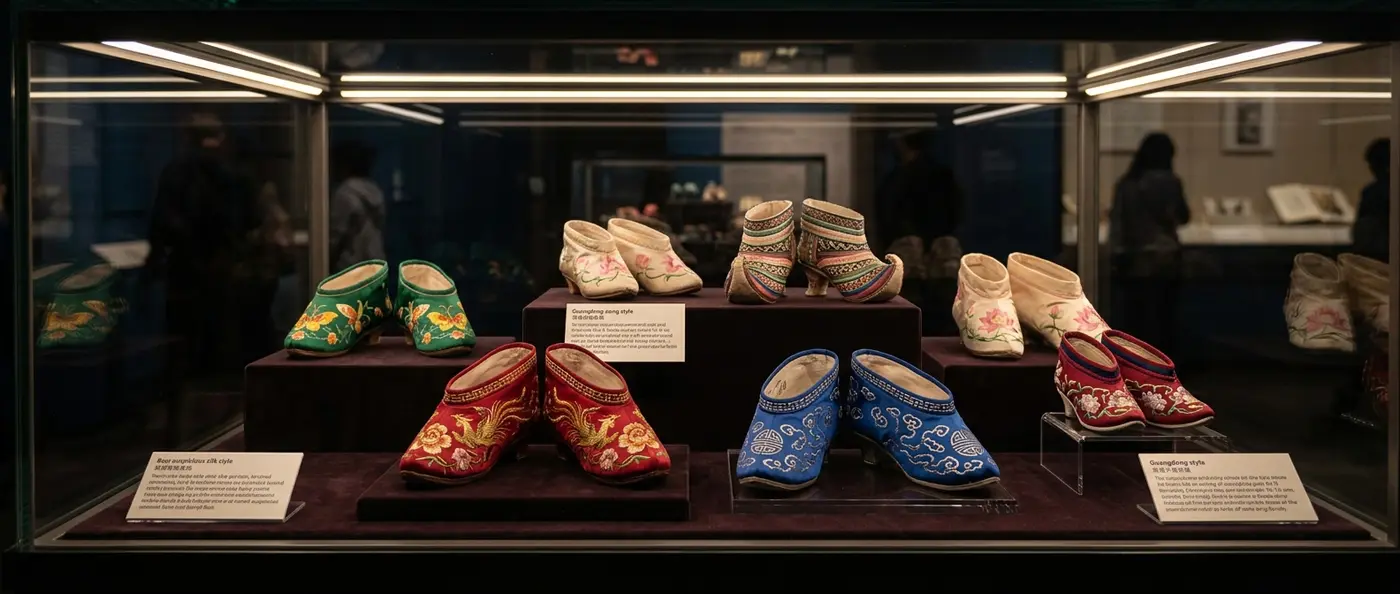
Lotus shoes weren't just footwear — they were works of art. Made from cotton, wool, or silk, they were often intricately embroidered with flowers and birds. Different types existed: everyday boots, bridal shoes, even sleeping socks.
The smallest example of a lotus shoe on display at the Textile Research Centre in Leiden, Netherlands, measures just 6 centimeters long. To put that in perspective, it's smaller than a smartphone.
Yang Yang, a Chinese author whose mother had bound feet, describes a harsh reality: "The bandages used for foot binding were about 3 meters long, so it was difficult for women to wash their feet. They only washed once every two weeks, so the smell was very, very strong."
The binding process was excruciating and caused permanent deformities. Bones broke, toes folded under the sole, and the foot took on a triangular shape. Women with bound feet struggled to walk and often suffered from infections.
Despite the pain and difficulties, the practice continued for centuries. It was considered essential for a woman's social position and marriage prospects. Women with natural feet were considered peasants and had little chance of marrying well.
📖 Read more: China's Terracotta Army: 8,000 Warriors Guard Emperor's Tomb
Bone Breaking
Arch bones were deliberately broken to bring the front and back of the foot together. The process was so painful that many girls fainted.
Walking Difficulty
Women with bound feet walked with small, unsteady steps. Their distinctive movement was considered charming and called the "lotus walk."
Infections
Poor hygiene and constant pressure from bandages caused frequent infections. Many women lost toes to gangrene.
🏛️ Social Significance and Symbolism
In ancient Chinese society, bound feet weren't just about aesthetics. They represented female submission, economic dependence, and social position. A woman with bound feet couldn't work in the fields or do hard labor, making her a symbol of wealth — the family could support her without her labor.
Lotus shoes became objects of fetishism. Men rarely saw their wives' bare bound feet, as they were considered extremely private and erotic. The intricately embroidered shoes concealed the deformity and maintained the fantasy of tiny, perfect feet.
💡 Why "Lotus"?
Bound feet were called "golden lotuses" because the ideal size was 3 cun (about 10 centimeters), like a lotus bud. Feet of 4 cun were called "silver lotuses," while larger ones were considered "iron lotuses" and less desirable.
📖 Read more: Chinese Dynasties: From Shang to Ming
⚔️ The Battle for Abolition
By the late 19th century, the practice began facing criticism. Women's rights movements and reformers condemned foot binding as barbaric and oppressive. Western missionaries and Chinese intellectuals founded anti-foot-binding societies.
Despite resistance, change came slowly. Many families continued the practice secretly, fearing their daughters wouldn't marry. Only in 1949, with the establishment of the People's Republic of China, was the practice definitively and effectively banned.
The last factory making lotus shoes closed in 1999, though some smaller shops continued briefly. Today, very few elderly women with bound feet are still alive, the last witnesses of a tradition that lasted over a thousand years.
Archaeologists have discovered hundreds of examples of lotus shoes in tombs from the Song Dynasty onward. These finds reveal how styles changed across centuries and differed between provinces.
The Textile Research Centre in Leiden, Netherlands, houses one of the largest collections of lotus shoes outside China. The exhibition includes shoes of various types and sizes, from simple everyday wear to luxurious bridal shoes with gold-embroidered designs.
📊 Shoe Size Comparison
🌏 Global Perspective: Shoes in History
While China developed lotus shoes, other cultures created their own unique footwear. The oldest directly dated shoes are a pair of 10,400-year-old sandals from Fort Rock Cave in Oregon, USA, made from sagebrush bark.
📖 Read more: Great Wall of China: Truth vs Fiction Revealed
Unlike the restrictive lotus shoes, these ancient sandals were designed for practical purposes — protection from cold while working in frozen marshes and lakes. Their fibers retained body heat even when wet.
Early humans created shoes to facilitate movement and survival. Chinese society transformed them into tools of restriction and control.
💭 Legacy and Reflection
Today, lotus shoes are displayed in museums as reminders of a dark period in history. Visitors react with sympathy, revulsion, admiration for the craftsmanship, or anger at the oppression.
Social norms transformed pain into beauty and disability into a desirable trait. Yet social movements eventually dismantled even this thousand-year practice.
In museum cases, these tiny shoes measure just centimeters long. The last woman to wear them may have died this year, taking with her the final memories of walking on broken bones.