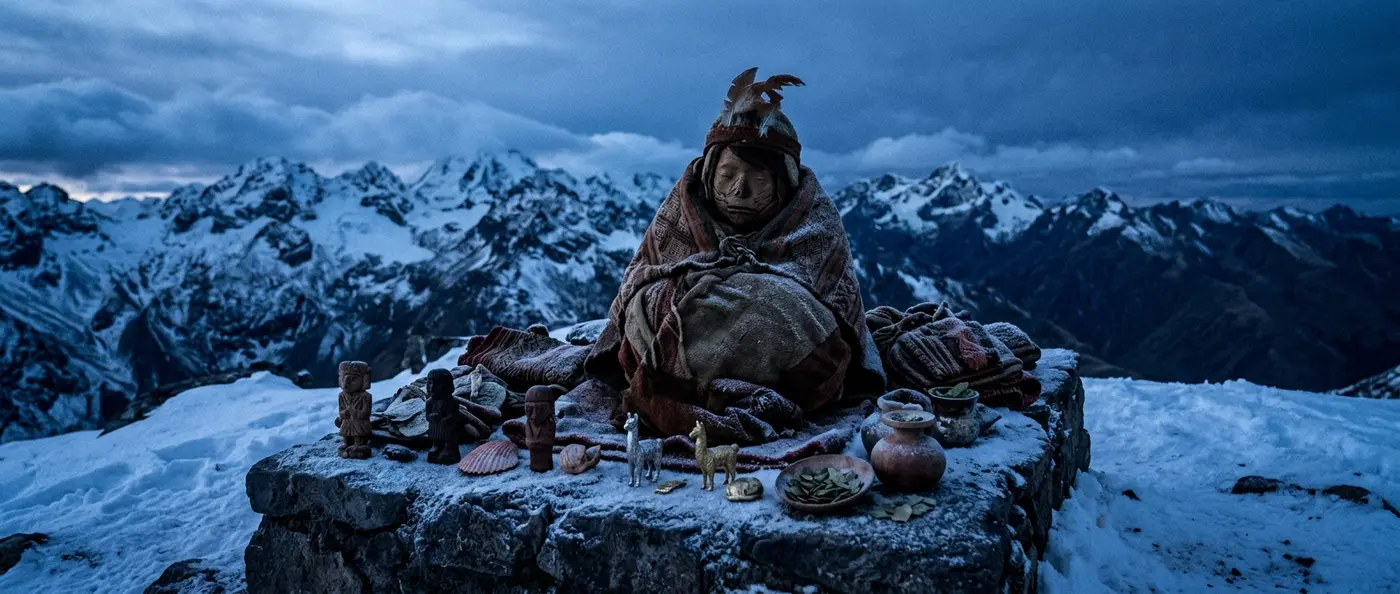
Twenty thousand feet up in the Andes, where oxygen runs thin and temperatures never climb above freezing, archaeologists found something that stops you cold: perfectly preserved mummies of children sacrificed to Inca gods 500 years ago. Modern CT scanners now peer inside these frozen time capsules, revealing the final moments of young lives offered to mountain spirits with chilling precision.
🏔️ The Capacocha Ritual
Capacocha wasn't just another religious ceremony in the Inca empire. It was the ultimate sacrifice — offering the purest, most beautiful children to the gods, especially Inti, the sun deity. These weren't random victims. Families across the empire considered it an honor to provide a child for this sacred purpose, believing their offspring would achieve immortality.
The ritual triggered during times of crisis: droughts that withered crops, earthquakes that toppled temples, plagues that swept through cities. When the natural world turned hostile, the Incas believed they needed divine intervention. Apu Illapu, the rain god, demanded the highest price for his favor — young lives offered on mountain peaks where earth touched sky.
Selected children underwent months of preparation. They wore the finest textiles woven from vicuña wool, ate delicacies reserved for nobility, and learned they would become immortal, living forever with the gods on mountain summits. The psychological conditioning was complete — these children walked to their deaths believing they were ascending to godhood.
⚗️ What CT Scans Revealed
CT technology has revolutionized how we study Andean mummies. Without disturbing the remains, scientists can now examine every detail inside these bodies — from intact organs to stomach contents. The scans paint a disturbing picture of the children's final hours.
Many had consumed coca leaves and alcohol (chicha) before death. These substances likely calmed them during the grueling journey to mountain peaks. Hair analysis shows consumption of these drugs increased dramatically in their final months — a chemical timeline of their preparation for sacrifice. The Incas weren't just killing these children; they were systematically drugging them into compliance.
The preservation is extraordinary. Hearts, lungs, even brains remain intact after five centuries. The frigid, dry Andean climate created perfect natural mummification conditions. Internal organs show these children were healthy and well-fed — premium offerings to demanding gods. No signs of disease or malnutrition. The Incas selected only the finest specimens for their mountain deities.
🗿 The Famous Llullaillaco Mummies
In 1999, on the Llullaillaco volcano straddling the Argentina-Chile border, archaeologists discovered three of the world's best-preserved mummies. Three children: a 15-year-old girl known as "La Doncella" (the Maiden), a 7-year-old boy, and a 6-year-old girl. CT scans revealed shocking details about their lives and deaths.
Genetic Analysis
DNA testing showed the children weren't related, indicating they were selected from different regions of the empire — a deliberate diversity in the sacrifice.
Health Status
Scans revealed healthy, well-nourished children with no signs of illness or malnutrition before death — prime offerings to the gods.
Cause of Death
No evidence of violence. They likely died from hypothermia after losing consciousness from alcohol and coca — a "gentle" death by ancient standards.
💎 Treasures of the Afterlife
Hundreds of precious artifacts accompanied these mummies. Gold and silver figurines, textiles woven from tropical bird feathers, ceramic vessels, and miniature animals carved from spondylus shells. Each object carried symbolic meaning, designed to accompany the children into their divine afterlife.
CT scans revealed hidden objects within the mummies' clothing. Tiny amulets, coca leaf pouches, and precious stones were strategically placed on the bodies. These findings highlight the ritual's complexity — every detail mattered in this elaborate dance with death. The Incas left nothing to chance when communicating with their gods.
🔬 Technological Revolution
Modern CT scanners create 3D images with sub-millimeter resolution, letting researchers digitally "unwrap" mummies without touching them. This preserves their integrity for future generations of scientists who may have even more advanced tools.
🌄 Sacred Mountains
To the Incas, mountains weren't geological features. They were living deities — the Apu — who controlled water, fertility, and weather. Choosing the highest peaks for sacrifices wasn't random. The higher you climbed, the closer you got to the gods. These weren't just ritual sites; they were cosmic meeting points between earth and heaven.
Archaeologists have identified over 200 sacrifice sites on Andean peaks. Each represents a miniature shrine with stone structures protecting bodies and offerings. Building these sanctuaries at such altitudes was an engineering marvel in itself — testament to the Incas' determination to reach their gods.
⚔️ Politics of Sacrifice
Capacocha sacrifices weren't purely religious. They were powerful political tools. When Inca emperors conquered new territories, they demanded local leaders send their most beautiful children to Cusco. This created bonds of submission and ensured loyalty from conquered peoples — your child's death bound you to the empire.
Selected children became symbols of imperial unity. They traveled thousands of miles, passing through major cities where they were honored as future gods. This journey reinforced the sense of belonging to something greater and demonstrated the Inca's power. The empire literally consumed its subjects' children to maintain divine favor.
📊 Comparison with Other Sacrifice Practices
🔱 Religious Worldview
The Inca cosmos was crowded with deities and spirits. Viracocha, the creator god, shaped earth, humans, and animals. Inti, the sun god, was considered the divine ancestor of Inca rulers and protector of agriculture. Mama Quilla, the moon goddess, regulated time and natural cycles. This wasn't a simple pantheon — it was a complex bureaucracy of divine beings.
Sacrificed children believed they would live forever alongside these gods. They weren't victims but chosen ones, destined to become intermediaries between earthly and divine realms. Their families gained high status and privileges within Inca society. Death wasn't an ending — it was a promotion to the cosmic civil service.
Selection criteria were strict. Children had to be physically perfect, without scars or imperfections. Their beauty reflected inner purity. They underwent exhaustive examinations by priests and officials before acceptance for their sacred duty. Only the finest specimens could represent humanity before the gods.
🏺 Secrets of Preservation
The exceptional preservation of Andean mummies results from a unique combination of factors. Altitudes above 20,000 feet create conditions with extremely low humidity and temperatures that rarely rise above freezing. Oxygen deprivation slows bacterial decomposition. Nature created perfect preservation conditions where the Incas chose to sacrifice.
CT scans show the Incas didn't use embalming techniques like the Egyptians. Preservation was entirely natural. However, positioning bodies in seated positions with knees to chest aided dehydration and shape retention. The Incas understood their environment well enough to let nature do the preservation work.
🔬 Future Research
Technology keeps evolving, opening new avenues for studying Inca mummies. Advanced DNA analysis methods can reveal information about the children's origins, diseases they may have carried, and even their diets. Isotopic analysis of hair and nails provides a timeline of their final months — a chemical diary of their last days.
Meanwhile, archaeologists continue discovering new sacrifice sites on remote Andean peaks. Each finding reveals more details about how the Incas orchestrated these high-altitude deaths. Modern satellite mapping and drone technology help locate potential unexplored sites. The mountains still hold secrets waiting to be uncovered.
This research has sparked heated debates. How should we treat these human remains? What's the boundary between scientific research and respect for the dead? Many Andean communities consider the mummies sacred and demand their return to the mountains. Museums in Argentina and Chile now limit access to the mummies, displaying them only briefly before returning them to controlled storage.