📖 Read more: China's Hanging Coffins: Ancient Sky Burials Defy Gravity
🏛️ Greatness Before the Fall
The Maya built a civilization that dwarfed its contemporaries. From 2000 BC to 900 AD, they created one of the most sophisticated civilizations in the Western Hemisphere. The Classic Maya period (200-900 AD) marked their peak, with cities like Tikal, Palenque, and Copán serving as centers of learning, art, and trade.
They pioneered fields that wouldn't be matched for centuries. The Maya developed the first complete writing system in the Americas, created mathematical systems that included the concept of zero, and built astronomical calendars so precise they could predict eclipses centuries into the future. Their famous Long Count calendar, which began on August 11, 3114 BC, demonstrates their profound understanding of time and cosmic cycles.
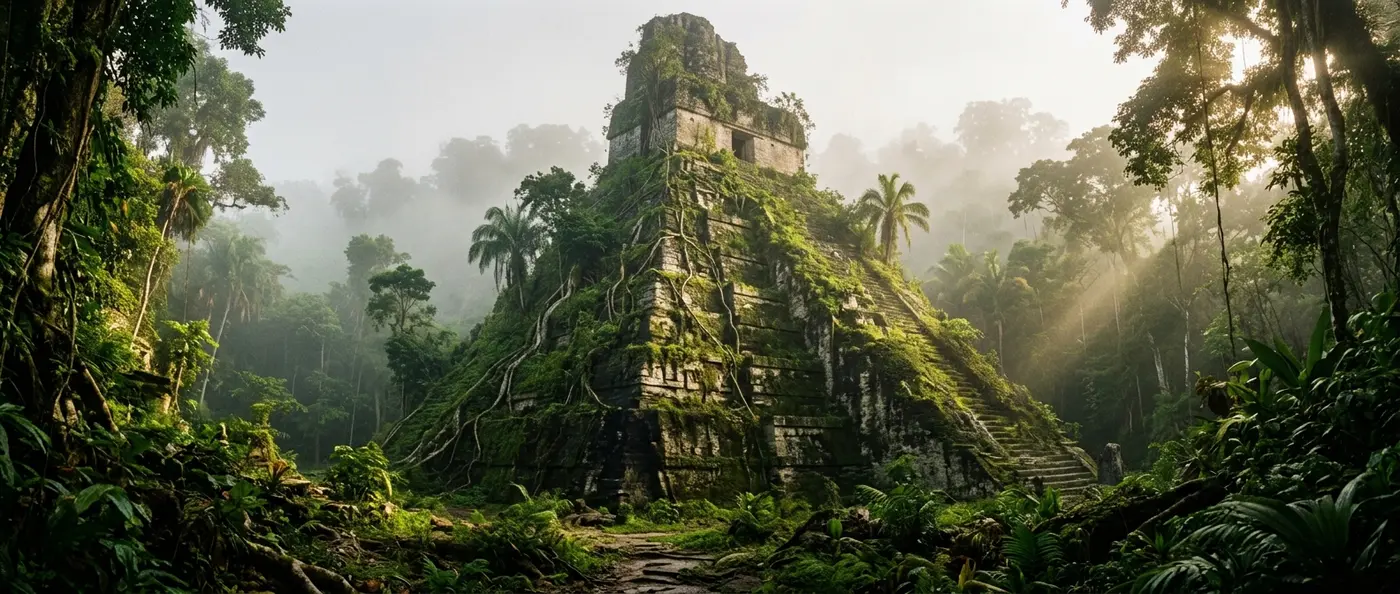
Their engineering prowess matched their scientific breakthroughs. The Maya built monumental pyramid-temples that still inspire awe today, developed complex irrigation and water purification systems, and created extensive trade networks connecting Central America with regions as distant as modern-day Mexico and South America.
⚡ First Signs of Collapse
Around 750 AD, something started going wrong. Archaeologists notice that construction of new monuments in many Maya cities began slowing down. Dated stelae, which were once placed regularly to honor rulers and record important events, gradually stopped appearing.
The phenomenon wasn't simultaneous everywhere. Some cities, like Copán in present-day Honduras, were abandoned earlier, while others, like Tikal in Guatemala, continued operating for several more decades. However, by 900 AD, the vast majority of major Maya centers in the southern lowlands had been abandoned.
Relations between city-states deteriorated dramatically. Trade declined, wars increased, and death rates skyrocketed. Something had deeply disrupted the balance that had kept Maya civilization united for centuries.
🌧️ The Great Drought Theory
One of the strongest theories for the Maya collapse is based on climate data. Scientists analyzing sediments from lakes and caves in the region discovered evidence of a series of severe droughts that struck Central America between 800 and 1000 AD.
The Maya depended heavily on seasonal rains for their agriculture. Corn, their staple food, needed consistent rainfall to thrive. A prolonged drought would have had catastrophic consequences for food production, leading to famines and social unrest.
But drought alone doesn't fully explain the collapse. The Maya had survived droughts before. Why was this time different?
💡 The Success Paradox
Perhaps the Maya's very success became the cause of their downfall. The population had grown so large that the environment could no longer support it. When drought came, there weren't enough resources for everyone.
🌳 Environmental Disaster and Overexploitation
The Maya used slash-and-burn techniques to clear jungle and create farmland. For centuries, this method worked well. But as population grew, they needed more and more land.
Deforestation had multiple consequences. Without trees, soil eroded easily, losing its nutrients. The loss of forest cover also affected the local water cycle, reducing rainfall and worsening drought conditions.
Intensive farming exhausted the soil. Crop yields declined just when the population needed more food than ever.
⚔️ Wars and Social Upheaval
As resources became scarcer, conflicts between Maya city-states intensified. Archaeological findings show increased fortifications and evidence of violence during the collapse period.
The Maya political structure, based on independent city-states with divine kings, began crumbling. The kings, who supposedly had special relationships with the gods and could ensure rain and good harvests, lost their legitimacy when disasters continued.
Loss of Authority
Maya divine kings lost the people's trust when they couldn't stop the disasters. Religious and political authority collapsed simultaneously.
Increased Warfare
Archaeologists find more and more fortifications from this period, indicating that wars between cities had become more frequent and destructive.
Mass Migration
Many Maya abandoned the great cities and moved to smaller settlements in the mountains or northern regions, seeking better living conditions.
🔬 New Discoveries and Modern Theories
Modern archaeologists continue discovering new evidence that sheds light on the mystery. Recent excavations have revealed that the collapse wasn't uniform. While cities in the southern lowlands were abandoned, some centers in the north, like Chichen Itza and Mayapan, continued thriving for centuries.
The evidence points to migration and adaptation rather than catastrophe. The Maya didn't vanish — they adapted. Many moved to new areas, adopted new ways of life, and continued their traditions in different forms.
Today, about 6 million Maya descendants live in Central America, maintaining many of their ancestors' ancient traditions, languages, and practices. Their story is one of resilience, not extinction.
📚 Lessons from the Maya Fall
The Maya experience mirrors today's environmental crises. It shows how even the most advanced civilizations can collapse when environmental degradation combines with climate change and social tensions.
The Maya weren't passive victims of circumstances. They tried to adapt, innovate, survive. And to a large extent, they succeeded. Their legacy survives not only in their descendants but in the knowledge they left us — from astronomy and mathematics to agriculture and architecture.
🏛️ Maya vs Other Collapsed Civilizations
🗿 The Mystery Remains
After decades of excavation, no single factor explains the Maya transformation. Most likely, there wasn't one single reason but a combination of factors that created the "perfect storm": climate change, environmental degradation, overpopulation, wars, and loss of trust in the political-religious system.
What we know for certain is that the Maya didn't "disappear" in the strict sense. They transformed, adapted, survived. Their pyramids may have been covered by jungle, but their legacy continues to live.
Each newly deciphered hieroglyph reveals how Maya rulers struggled with mounting crises. Perhaps someday we'll fully understand what happened to the Maya. Until then, the mystery of their collapse remains one of the most fascinating enigmas in human history.