📖 Read more: Sumerian King List: Ancient Myths Meet Historical Reality
🗿 The Samnites: Mountain Warriors Who Refused to Bow
The Samnites carved out their reputation with blood and bronze across central and southern Italy. From the 5th century BC onward, they controlled the mountainous heartland, speaking Oscan and building a warrior culture that would give Rome nightmares for centuries. When they moved into Pontecagnano around 500 BC, they transformed a sleepy trading post into a military stronghold.
These weren't weekend warriors playing dress-up. The Samnites fought three major wars against Rome (343-290 BC), each one a brutal slugfest that pushed the Roman legions to their breaking point. Even after their final defeat, they kept rebelling. The most famous rebel connected to Samnite tradition was Spartacus — the Thracian gladiator who in 73 BC led the largest slave uprising in Roman history, commanding an army that swelled to 100,000 men.
Their burial practices tell the story of a people obsessed with war. At Pontecagnano's cemetery, used from the 9th to 3rd centuries BC, archaeologists have uncovered over 10,000 graves. Samnite men went to their graves clutching spears, javelins, and those distinctive bronze warrior belts that marked them as fighters. Families buried together, weapons passed down like heirlooms.
⚔️ The Discovery That Breaks the Rules
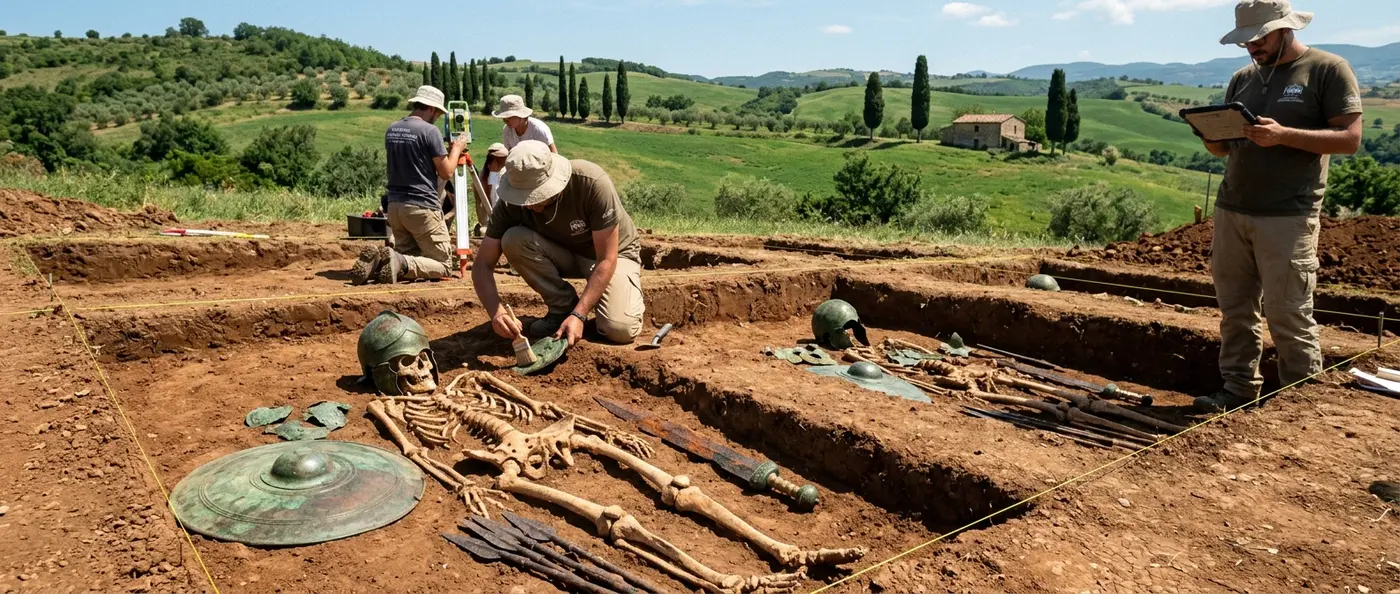
Digging beneath a former tobacco factory at Pontecagnano, archaeologists hit something that made them stop and stare. Thirty-four burials from the 4th and 3rd centuries BC. Half of them contained children aged 2 to 10 years old. That's unusual but not unprecedented.
What shattered expectations was finding two kids, aged 5-10, wearing those massive bronze warrior belts. These weren't toys or miniature versions — they were full-sized adult belts, the kind that marked elite Samnite warriors. Archaeologist Gina Tomay called the discovery "highly significant" — in archaeology-speak, code for "this breaks all our rules."
The children had been buried the traditional Samnite way — in pits covered with roof tiles, bodies curled on their sides with knees bent. Ceramic cups sat beside them, filled with food and wine for the afterlife journey. Everything followed protocol except for one glaring anomaly: children don't get warrior status symbols.
This wasn't the first time Pontecagnano had produced this puzzle. In 2021, archaeologists found a 12-year-old from the 4th century BC, also buried with a bronze warrior belt. Finding two more kids with similar grave goods suggests this wasn't a fluke — it was a pattern.
🏺 Pontecagnano: Where Cultures Collided
Pontecagnano's story stretches back to the 9th century BC, when Villanovan people first settled the area and brought advanced metalworking to southern Italy. Two centuries later, Etruscans turned the settlement into a trading hub where Greeks, Phoenicians, and Italians haggled over goods and ideas.
Excavations that began in the 1960s have revealed three major cemeteries containing over 10,000 burials. These graves provide a six-century timeline of changing burial practices and shifting cultures. Each layer tells a different story — Villanovan cremations, Etruscan luxury goods, and finally Samnite warrior burials.
Ceramic Vessels
Cups, bowls, and elaborate vessels filled with food and wine for the afterlife journey, ranging from simple pottery to ornate ceremonial pieces.
Warrior Weapons
Spears, javelins, and the distinctive bronze belts that marked warrior status in Samnite society.
Women's Jewelry
Rings and brooches that accompanied women to their graves, showing the gender divide in burial customs.
📖 Read more: Bronze Age Burial Mounds: Secrets of Ancient Monuments
💀 Theories About the Child Warriors
Why would children get adult warrior gear? Archaeologists have floated several theories. One possibility: the belts symbolized "the men these children could have become," similar to Anglo-Saxon child burials from 6th-century Britain where kids were buried with adult weapons.
Another theory points to high-status families — maybe warrior dynasties where combat prowess was inherited from birth. The presence of multiple such burials suggests this wasn't random but part of an organized practice.
🔍 The Mystery Persists
Despite the theories, the exact reason these children were buried as warriors remains unknown. Excavations continue, and archaeologists hope further discoveries will illuminate this puzzle of Samnite society.
🏛️ The Samnite Legacy
The Samnites left an indelible mark on ancient Italian history. Their stubborn resistance delayed Roman unification of the Italian peninsula for decades. Even after conquest, their warrior tradition lived on through gladiators — many of whom were captured Samnite fighters.
Spartacus's rebellion in 73-71 BC represents perhaps the most dramatic expression of this legacy. The Thracian gladiator, trained at a gladiator school in Capua — a region with strong Samnite presence — managed to gather an army of nearly 100,000 men. His forces occupied most of southern Italy and marched to the Alps, threatening Rome itself.
Spartacus's final defeat by Marcus Licinius Crassus in 71 BC marked the definitive end of Samnite resistance. About 6,000 prisoners were crucified along the Appian Way in a horrific display of Roman vengeance. Yet Spartacus's name survived the centuries as a symbol of resistance and freedom.
🔬 Ongoing Research
Excavations at Pontecagnano continue as construction projects uncover new sections of the ancient cemetery. The Archaeological Service of Salerno and Avellino plans to announce comprehensive results once research concludes. Archaeologists hope further digs will reveal more about Samnite life and customs.
Children buried with warrior belts challenge everything we thought we knew about Samnite society. Samnite warrior identity ran so deep it extended even to children who died before they could hold a real spear.
📊 Samnites vs Romans
As archaeologists continue digging at Pontecagnano and other sites across ancient Samnite territory, each new discovery adds another piece to the puzzle of this remarkable civilization. The Samnites may have been defeated by Rome, but their story — written in the graves and artifacts they left behind — continues teaching us about courage, resistance, and the mysteries of the ancient world.