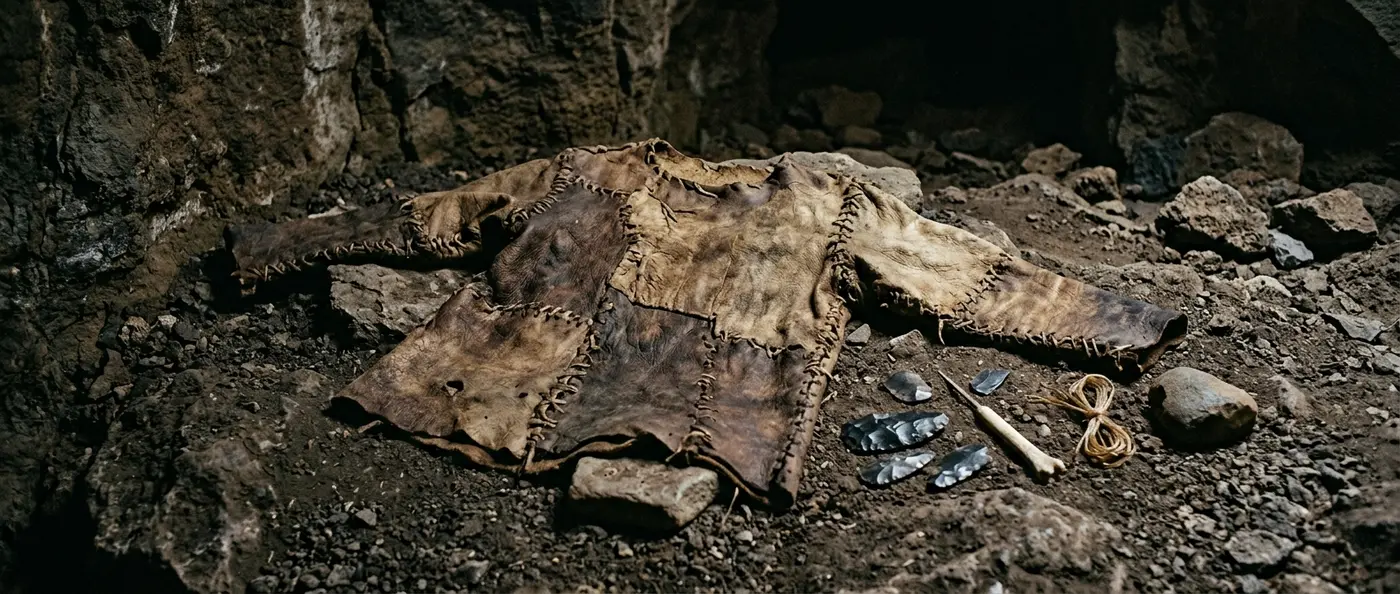
Three pieces of elk hide, stitched together with plant and animal fibers, sat hidden in an Oregon cave for 12,000 years. When archaeologists finally dated these fragments, they discovered the world's oldest known sewn clothing — and evidence that Ice Age Americans had cracked the code of survival in one of Earth's most brutal climate periods.
📖 Read more: Antikythera Mechanism: Ancient Greece's First Computer
🧵 The Discovery That Rewrote Fashion History
In 1958, an amateur archaeologist made a find that would sit in storage for over 60 years before anyone understood what they'd found. Deep in Oregon's Cougar Mountain Cave and Paisley Caves, researchers uncovered 55 fragments of processed animal and plant materials — including sewn hides, ropes, and threads that pushed back the timeline of sophisticated needlework by thousands of years.
The breakthrough came in February 2024 when Richard Rosencrance's team from the University of Nevada published their findings in Science Advances. Using radiocarbon dating, they pinpointed these artifacts to the Younger Dryas period — a sudden deep freeze that gripped the planet 12,900 to 11,700 years ago.
Three pieces of processed animal hide told the story. Hair removed. Edges carefully worked. Cordage made from plant fibers and animal hair stitched along the sides. Chemical analysis revealed the hides came from North American elk (Cervus canadensis), dating between 12,676 and 11,956 years ago. This wasn't just clothing. This was survival technology.
🪡 Ice Age Tailoring Technology
The clothing fragments weren't alone. Archaeologists examined 14 eyed needles and three eyeless ones, carved from bone, found in the same caves and nearby Connley Caves and Tule Lake Rockshelter. These needles represent sophisticated sewing technology that enabled fitted garments — the difference between life and death in Ice Age America.
The cordage was braided using three strands, crafted from sagebrush, dogbane, juniper, and bitterbrush fibers. Widths ranged from 0.33 to 2.5 centimeters, showing these ancient tailors understood different materials served different purposes. The variety of plants and techniques reveals deep environmental knowledge — these people knew their landscape intimately.
📖 Read more: Babylonians Used Pythagorean Theorem 1000 Years Before Pythagoras
❄️ Surviving the Big Freeze: Beyond Basic Function
During the Younger Dryas, temperatures plummeted. Ice sheets advanced. Survival in northern North America required more than just wrapping loose hides around your body — it demanded fitted clothing that trapped warm air and blocked wind. The stitched hide pieces show exactly how our ancestors solved this problem.
Fitted garments created insulating air pockets against the skin. Sewn seams prevented frigid wind from penetrating the clothing. Without this technology, permanent settlement in northern latitudes would have been impossible. These three fragments represent the moment humans conquered cold.
Cold Protection
Fitted clothing trapped air close to the body, creating an insulating layer that retained heat far more effectively than loose hides draped over the shoulders.
Wind Resistance
Sewn seams prevented freezing wind from penetrating the garment, providing superior protection from harsh weather conditions that could kill within hours.
Movement Freedom
Tailored garments allowed greater mobility for hunting and other activities without sacrificing warmth — a crucial advantage for survival in hostile environments.
🎨 Clothing as Art and Identity
But survival wasn't the whole story. Clothing wasn't just about survival. Archaeologists discovered four possible decorative objects in the Connley Caves, including a porcupine tooth with a hole drilled in the top and lines carved into its surface.
📖 Read more: Portugal's Roman Mosaics: Hercules and Medusa Unearthed
The abundance of bone needles and presence of decorative elements, along with extremely fine needles with tiny holes, suggests clothing served purposes beyond mere survival strategy. It was expression. Identity. Status. The Pleistocene Americans used clothing as both survival technology and social practice — just like we do today.
🦌 The Elk Connection
Chemical analysis revealed the hides came from North American elk. These animals were abundant in the region, and their hide was ideal for clothing due to its durability and flexibility. The hunter-gatherers of this era understood the properties of every material in their environment and selected the best for each specific use.
🔬 Modern Tech Reveals Ancient Secrets
Rosencrance's team used advanced radiocarbon dating techniques to determine the age of these finds. Though the objects were discovered in 1958, only recent technology allowed precise dating. This underscores the importance of preserving archaeological finds even when we can't immediately understand their significance with current methods.
The study confirmed all objects dated to the Younger Dryas period — an era of dramatic climate change. This 1,200-year cold snap had profound effects on human populations worldwide. In North America, residents were forced to develop new technologies to meet unprecedented challenges.
🌎 The Bigger Picture: Ice Age Civilizations
This discovery isn't isolated. It connects to a broader pattern of finds showing Late Ice Age humans were far more technologically sophisticated than previously believed. In Europe, similar evidence of needle use and sewing dates even earlier, suggesting these technologies developed independently across the globe.
📖 Read more: Roman Infant Burial Rituals with Plaster Casts
Recent DNA studies of the Blackfoot tribe in Montana and southern Alberta revealed modern descendants can trace their ancestry back to Ice Age humans from 18,000 years ago. This shows remarkable population continuity in the region and supports the idea that technologies like sewing were passed down through generations for millennia.
🌍 Ancient Clothing Technologies Compared
🔍 What This Discovery Teaches Us
The world's oldest sewn clothing teaches us that human creativity and adaptability aren't new traits. People have always found ways to overcome environmental challenges, whether facing the Ice Age or modern climate change. Innovation under pressure is fundamentally human.
The discovery also highlights the importance of preserving and studying archaeological finds. Objects that seem insignificant when discovered can reveal stunning information decades later when new technologies become available. Every fragment of hide or fiber could hold a piece of the human story.
Finally, this find reminds us that technology and art were never separate. From humanity's earliest days, people weren't satisfied with just functional. They wanted their objects to be beautiful, to express identity, to tell stories. This need for expression through material objects connects us to our ancestors across millennia — and explains why we still care so much about what we wear.