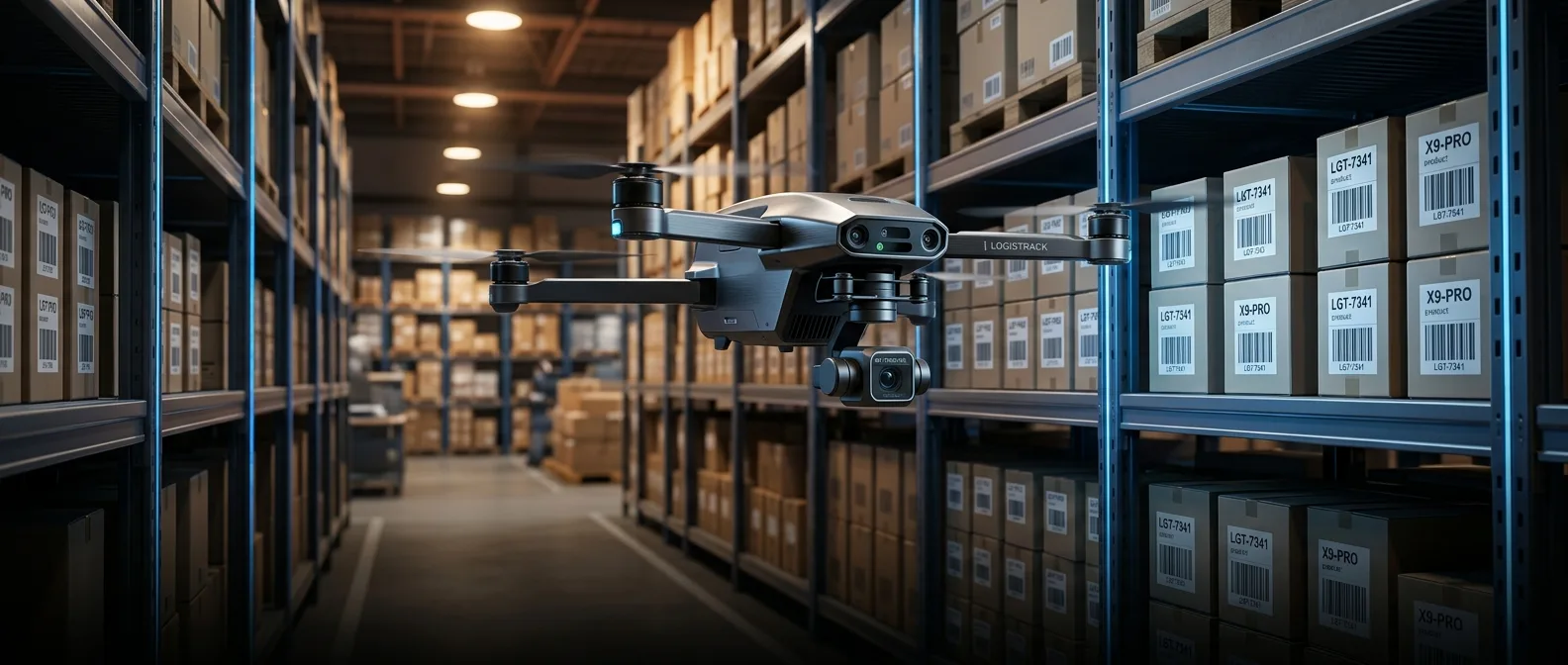
Forty autonomous drones work around the clock across nine Southern Glazer's Wine & Spirits distribution centers. For 18 months, they've been counting inventory without stopping a single warehouse operation. They've caught over 35,000 inventory discrepancies. The Corvus One system operates like the nerve center of an automation empire.
📖 Read more: AI and Drones: How Artificial Intelligence Changes Drones
🔍 Peak Autonomy — Drones That Work While We Sleep
Southern Glazer's doesn't train pilots. They don't need to — in 2026, warehouse managers watch flying robots scan pallets on their screens. A drone climbs to 40 feet, scans a barcode, snaps a high-resolution photo, and moves to the next location. The difference from a sci-fi movie? This happens now, every day.Corvus Robotics talks about autonomous inventory drones flying between active work areas without disrupting workflow. Reality is more impressive — 5,000 flights in 18 months prove the technology works.
How does this system work in practice? Each drone follows predetermined routes covering reserve storage zones. Classic inventory spots for hard-to-reach areas — places where someone used to climb up in a lift basket. Now a drone reaches them in seconds. The company leverages artificial intelligence to map and optimize flight paths. Machine learning algorithms "learn" where discrepancies occur most frequently — not by chance, but from patterns in inventory data.📊 35,000 Errors — What One Drone Flight Reveals
The numbers speak for themselves. Across 9 distribution centers, Corvus drones discovered 35,000 verified discrepancies. That means 35,000 times when WMS systems said "there are 50 cases here" but there were 47. Or 53.40 Drones in operation
35,000+ Discrepancies found
5,000 Autonomous flights
📖 Read more: Autonomous Drones: They Fly on Their Own 2026
⚡ From 3 Months to 2 Weeks — The New Inventory Count
The biggest change isn't technological. It's mentality. Previously inventory counts happened quarterly. Now every two weeks. This fundamentally changes how they approach stock management. Imagine learning about a problem in 6 weeks instead of 12. When a customer orders 500 cases of premium whiskey and you think you have them, but actually have 350. With quarterly counts, you'd learn when the order arrives. With biweekly validation, you see it earlier. Efficiency skyrockets. Each site saves 60-70 labor hours weekly that were dedicated to manual cycle counting. Workers now solve confirmed issues with concrete data instead of walking around with scanners.What's impressive is that improved inventory accuracy led to a 100-basis-point increase in cases processed per hour. Translated? Orders execute faster because there's less uncertainty about where products are located.Southern Glazer's operates at a scale where small improvements in accuracy have meaningful downstream impact
Jackie Wu, CEO of Corvus Robotics
🧬 AI That Learns Warehouse Patterns
These drones aren't just flying cameras. They use artificial intelligence to improve performance over time. Machine learning algorithms analyze patterns in data to predict where they'll find discrepancies. Do certain zones have chronically systematic problems? Maybe because they're near loading docks where there's more movement. Or because they store high-velocity products that change positions frequently.Computer Vision and Pattern Recognition
Each flight generates gigabytes of visual data. Computer vision algorithms read barcodes, recognize product categories, and can even spot damaged packaging from a distance. The system integrates directly with Warehouse Management Systems (WMS), providing real-time updates. No manual data entry or export/import procedures needed.Predictive Analytics for Inventory Management
With enough data, AI can predict where discrepancies will occur. Instead of waiting for the next flight, the system "knows" that specific locations need extra attention.📖 Read more: Lucid Bots Raises €18M for Cleaning Drones and Robotics