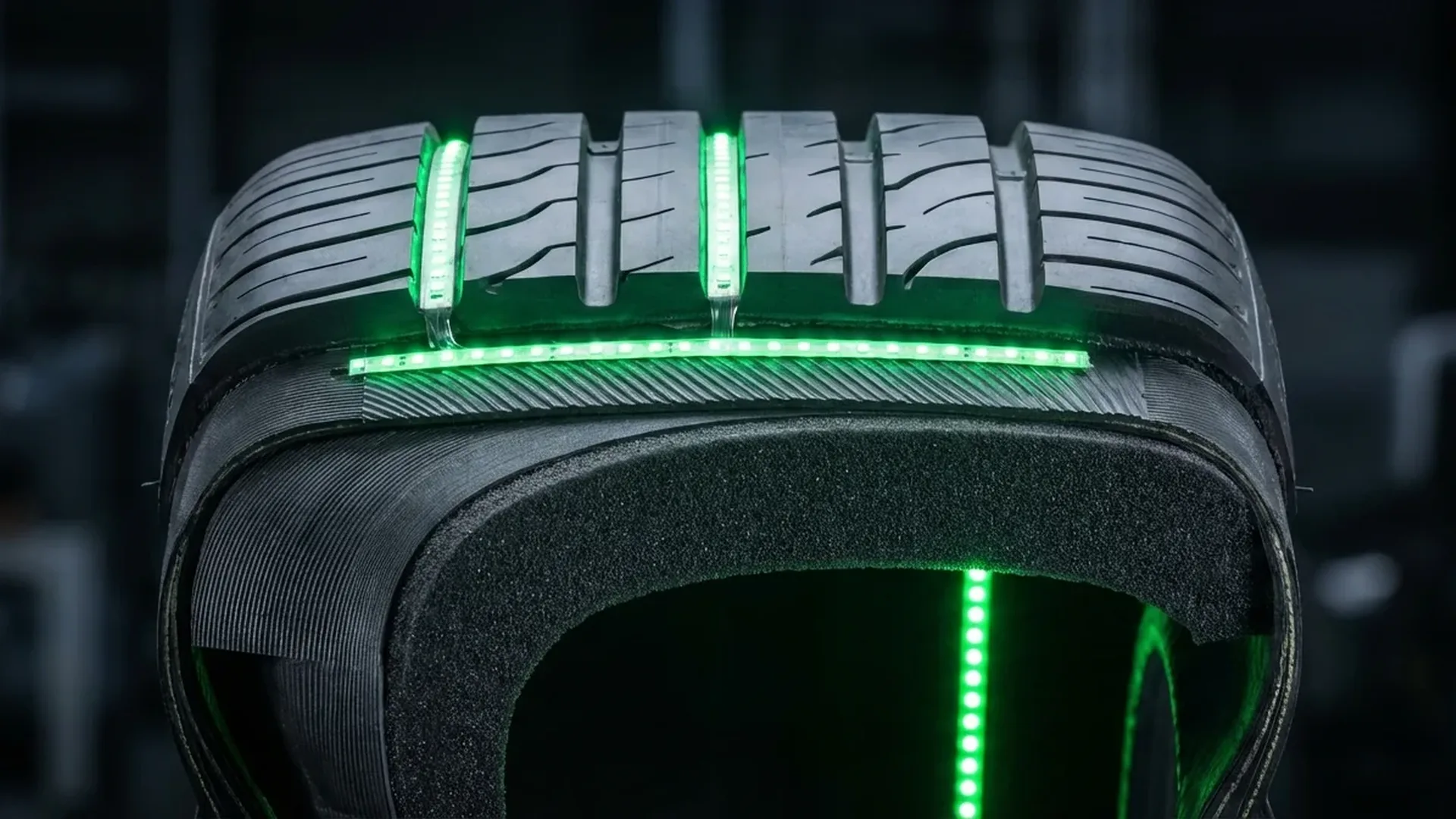
An electric car weighs 20-30% more than its gasoline equivalent. The battery — 400 to 700 kg in most models — fundamentally changes what’s demanded from the tires. 100% instant torque from a standstill, an extra half-ton of weight, and zero engine noise to mask tire sound. These three factors explain why regular tires won’t cut it — and why the EV-specific tire market is booming.
📖 Read more: EV Battery: How Many Years Does It Really Last?
The Weight Problem
A Tesla Model Y weighs around 4,363 lbs. An equivalent Toyota RAV4 gasoline: ~3,570 lbs. Those 800 extra pounds land 100% on four tires. The result: faster tread wear, higher operating temperatures, greater sidewall stress. On average, EV tires wear 20-30% faster than comparable ICE tires.
That’s why EV-specific tires use reinforced construction (XL — Extra Load rated), harder tread compounds, and strengthened sidewalls. Goodyear, for example, designed its ElectricDrive 2 with long-lasting tread compounds specifically for EV weight. Bridgestone developed the Turanza EV to handle “the heavier torque of electric vehicles” in all seasons.
Instant Torque
An electric motor delivers 100% of its torque from 0 RPM. There’s no gradual power buildup — maximum force goes straight to the wheels. This stresses tires completely differently than an ICE. Every launch, every maneuver, every regenerative braking event applies sudden lateral and longitudinal forces to the rubber.
EV-specific tires use asymmetric tread patterns designed precisely for this. The inner side is optimized for wet grip, the outer for cornering stability. ENSO — the world’s first tire company exclusively for EVs — engineered its Premium line “for instant torque and regenerative braking,” achieving an A/A EU label (top ratings for both energy efficiency and wet grip).
The Noise You Hear Now
In a gasoline car, the engine produces 65-85 dB of noise. Tire noise gets lost in it. In an EV, the motor produces nearly zero noise — meaning every dB from the tires is fully perceptible. Above 25 mph, tires become the primary noise source in the cabin.
The solution: foam inserts inside the tire. Goodyear uses SoundComfort Technology, Continental uses ContiSilent, Pirelli has its Noise Cancelling System — they all do the same thing: a thin polyurethane layer inside the tire absorbs vibration before it reaches the rim. According to a Goodyear survey of EV drivers, the two things they want most are a quiet ride and wet performance.
How They Affect Range
Rolling resistance is the single most important factor. At city speeds, it accounts for ~30% of energy consumption. Tires with 10% lower rolling resistance can deliver 3-5% more range — on a 77 kWh battery, that translates to 10-15 extra miles.
EV tires use low-resistance compounds without sacrificing grip (the old trade-off). Latest-generation silica technology (e.g., rice husk ash silica in Goodyear) reduces rolling resistance while maintaining excellent wet grip. Meanwhile, aerodynamic sidewalls reduce air turbulence around the wheel.
“We engineered ENSO Premium for the specific needs of EVs — from instant torque to regenerative braking. We’re delivering a tire that not only performs well but also helps EV drivers get more miles from every charge.”
📖 Read more: EV Battery Warranty: What Every Brand Covers
— Gunnlaugur Erlendsson, CEO & Co-founder, ENSO
Best EV Tires (2025-2026)
| Tire | Type | Foam | Key Feature |
|---|---|---|---|
| Michelin Pilot Sport EV | Summer | ✓ Acoustic | Top grip, low RR |
| Continental EcoContact 6 Q | All-Season | ✓ ContiSilent | Max range, AA EU label |
| Goodyear ElectricDrive 2 | All-Season | ✓ SoundComfort | 50% sustainable, wet A |
| Hankook iON evo AS | All-Season | ✓ Sound Absorber | Range + quiet, XL |
| Pirelli P Zero E | Summer | ✓ PNCS | Premium sport, Elect tech |
| Bridgestone Turanza EV | All-Season | ✓ B-Silent | Grand touring, Tesla OE |
| ENSO Premium UHP | All-Season | — | A/A EU, 100% EV-focused |
What to Look For When Buying
If you drive an EV, these are the key factors when choosing tires:
- Load Index (XL): Must handle the weight. Look for “XL” or “Reinforced”
- Rolling Resistance A/B: Check the EU label — A = top, B = very good
- Foam Insert: If you want silence, it’s a game-changer
- “EV” or “Elect” Marking: Indicates designed specifically for electric vehicles
- OE Size: Use exactly the size specified by the manufacturer
- Wet Grip A/B: Don’t sacrifice grip for range
Cost vs. Value
Yes, EV-specific tires cost more — typically $25-70 per tire above a comparable all-purpose tire. A set of four Michelin Pilot Sport EVs runs about $700-950, while more affordable Hankook iON evos start at ~$140 each. Are they worth it?
The answer depends on your priorities. If maximum range matters to you, lower rolling resistance saves kilowatt-hours — translating to fewer charges and lower electricity costs. If you want cabin quiet, foam inserts make a noticeable difference. If neither is a priority, you can stick with standard tires — as long as they’re XL rated. But the faster wear will follow you regardless.
Sustainability & the Future
Sustainability is becoming a key criterion. The Goodyear ElectricDrive 2 is made from 50%+ sustainable materials: soybean oil, rice husk ash silica, sustainably sourced natural rubber. At CES 2023, Goodyear demonstrated a prototype tire with 90% sustainable materials. ENSO, the only certified B-Corporation in the tire industry, designs exclusively for EVs — with the philosophy that if you drive electric for environmental reasons, your tires shouldn’t undo that effort.
Why it matters: microplastics from tire wear are a significant pollution source — an estimated 6 million tons of tire dust are released globally every year. Tires with sustainable materials and lower wear rates dramatically reduce this footprint.
Conclusion
Electric cars don’t just need “tires” — they need tires engineered for increased weight, instant torque, and zero engine noise. Technology is advancing rapidly: foam inserts, last-generation silica, sustainable materials, aerodynamic sidewalls. If you’re unsure, look for the “EV,” “Elect,” or “Electric” marking on the sidewall. The right tires mean more miles, less noise, greater safety — and fewer emissions.