Remember when your car was exactly the same from the day you bought it to the day you sold it? Those days are over. With OTA (Over-the-Air) updates, your electric vehicle can actually get better over time — new features, improved range, even more horsepower, without ever setting foot in a service center.
Tesla was the first to bring OTA updates to the automotive world, but now almost every serious EV manufacturer offers them. In this guide, we'll explore how they work, what changes they can make, which brands support them, and what risks are involved.
How Do OTA Updates Work?
An OTA update works just like a software update on your smartphone — but instead of new emojis, you might get 50 extra horsepower or 30 km of additional range. Here's the process:
📲 Step-by-Step OTA Update
- Development: The manufacturer's software team develops the update
- Testing: Extensive testing in the lab & test fleet
- Release: Gradual rollout — first to a few vehicles, then to all
- Notification: The car or app notifies you that an update is available
- Download: Downloaded via WiFi or 4G/5G (usually on WiFi)
- Installation: Takes place while the car is parked (20-45 minutes)
- Completion: Restart — the car “wakes up” upgraded
There are two categories of OTA updates: SOTA (Software OTA) which covers infotainment & non-critical systems, and FOTA (Firmware OTA) which can change the operation of critical systems like ADAS, battery, and suspension. FOTA updates are far more complex and require stricter certification.
Types of OTA Updates
OTA updates can change almost everything in your car:
Which Brands Support OTA Updates?
While Tesla pioneered the concept, today almost all EV manufacturers offer OTA updates — though to very different degrees:
Notable OTA Updates in History
Some OTA updates have made history:
🏎️ Tesla — +50 hp Boost
Tesla added 50 horsepower to the Model 3 Performance via OTA, for free. The 0-100 time improved by 0.5 seconds. Unprecedented in the industry.
🔋 Tesla — +30 km Range
BMS optimization increased range by 5-7%. Owners woke up with more kilometers without doing anything.
🌪️ Tesla — Hurricane Irma
During Hurricane Irma in Florida (2017), Tesla unlocked extra range on batteries that were software-locked, helping owners evacuate.
🛑 Tesla — Braking Distance
After a negative Consumer Reports review, Tesla improved braking on the Model 3 by 6 meters — within days, via OTA.
🎮 BMW — Gaming & Heated Seats
BMW added gaming to iDrive, new widgets, and (controversially) heated seats as a monthly subscription via OTA.
🚀 Polestar — Performance Pack
Polestar offers a performance upgrade (+68 hp) as an OTA download. Cost €1,200 — but no dealer visit required.
Pros & Cons of OTA
✅ Advantages
- 🚀 Your car improves over time — instead of losing value, it gains features
- 🔧 Recalls without a dealer visit — saving time & money
- 🔒 Fast patching of security vulnerabilities (cybersecurity)
- ⚡ Range & charging improvements without hardware changes
- 🆕 New features that didn't exist at the time of purchase
- 💰 Ability to purchase premium features à la carte
- 🌍 Customization — each market can get localized features
❌ Disadvantages & Risks
- 🔐 Cybersecurity risks — if an OTA is hacked, millions of cars are at risk
- 💸 Features as a subscription — heated seats, ADAS as a monthly cost (BMW controversy)
- 🐛 Buggy updates — rare but real (Tesla phantom braking issues)
- 📶 Connectivity dependence — you need WiFi or a data connection
- ⏱️ Downtime — you can't drive during installation (20-45 min)
- 🔒 Vendor lock-in — the manufacturer fully controls which features you have
- 📉 Feature removal — theoretically, a manufacturer can remove features
⚠️ The “Features as a Service” Debate
BMW caused a firestorm when it offered heated seats as a monthly subscription at €18/month — even though the hardware was already installed in the car. While it was eventually withdrawn in many markets, the “pay-per-feature” model remains controversial. Toyota, Mercedes, and VW are exploring similar models. The market will decide whether this is “innovation” or “exploitation”.
Safety & Regulations
The EU now requires strict certification of OTA updates through the UNECE R156 regulation:
- 📜 Every OTA update affecting safety-critical systems must be approved
- 🔒 Mandatory end-to-end encryption for every download
- ⏪ Ability to rollback to a previous version in case of errors
- 📝 Complete log of all changes — the owner must be informed
- 🛡️ Cybersecurity management system (CSMS) mandatory for every manufacturer
The Future of OTA Updates
OTA updates will become even more important in the future:
- Software-Defined Vehicles (SDV): Cars designed from the ground up around software. VW, Mercedes, and Hyundai are investing billions.
- AI-powered updates: Personalized optimization based on driving habits
- V2G activation: Tesla is expected to enable Vehicle-to-Grid via OTA
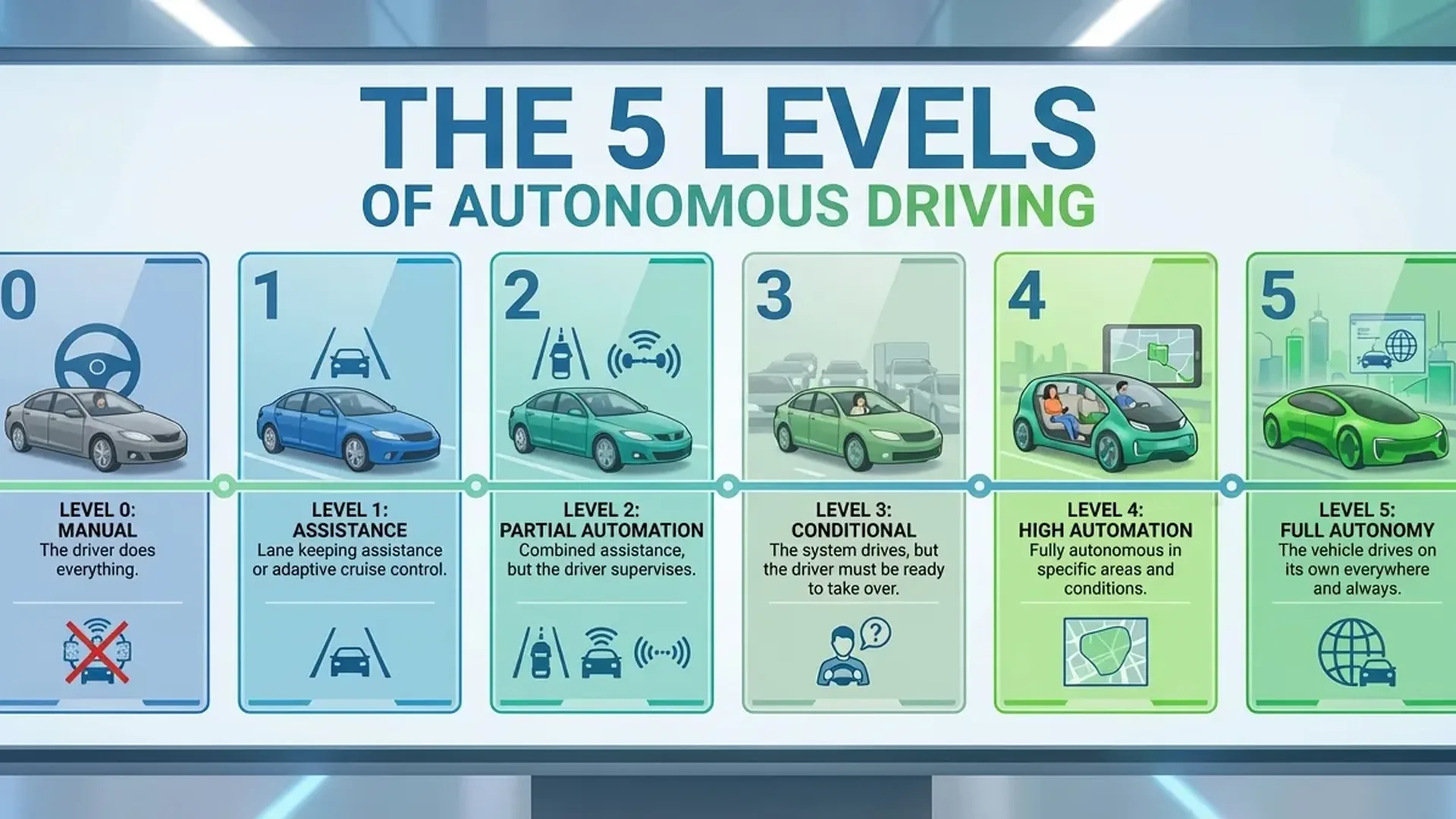
- FSD / Autonomous driving: Level 3-4 autonomous driving via OTA updates
- Digital twin: Every car will have a digital replica in the cloud for simulation updates
💡 Tip for EV Buyers
When buying an electric vehicle, ask specifically about OTA capabilities: What types of updates are supported? How often do they come? Are they charged? Can I refuse an update? Ask owners in forums about the real-world experience. A car with excellent OTA support (Tesla, BYD, Volvo) can literally be better in 3 years than when it was new.
⚡ Conclusion
OTA updates have fundamentally changed what it means to “buy a car”. You're no longer buying a static product — you're buying an evolving platform that improves over time. Tesla showed the way, but BMW, BYD, Volvo, and Hyundai are following aggressively. The era of selling your car because it was “outdated” is coming to an end. The future belongs to cars that wake up every morning a little bit better.
📖 Also Read
- → Tesla FSD vs Waymo: The Battle for Autonomous Driving
- → Tesla Model Y 2026 Juniper: Everything We Know
- → Vehicle-to-Grid V2G: Earn Money with Your EV
- → Xiaomi SU7: Chinese Tesla Killer?
- → More Articles on EV & Cars