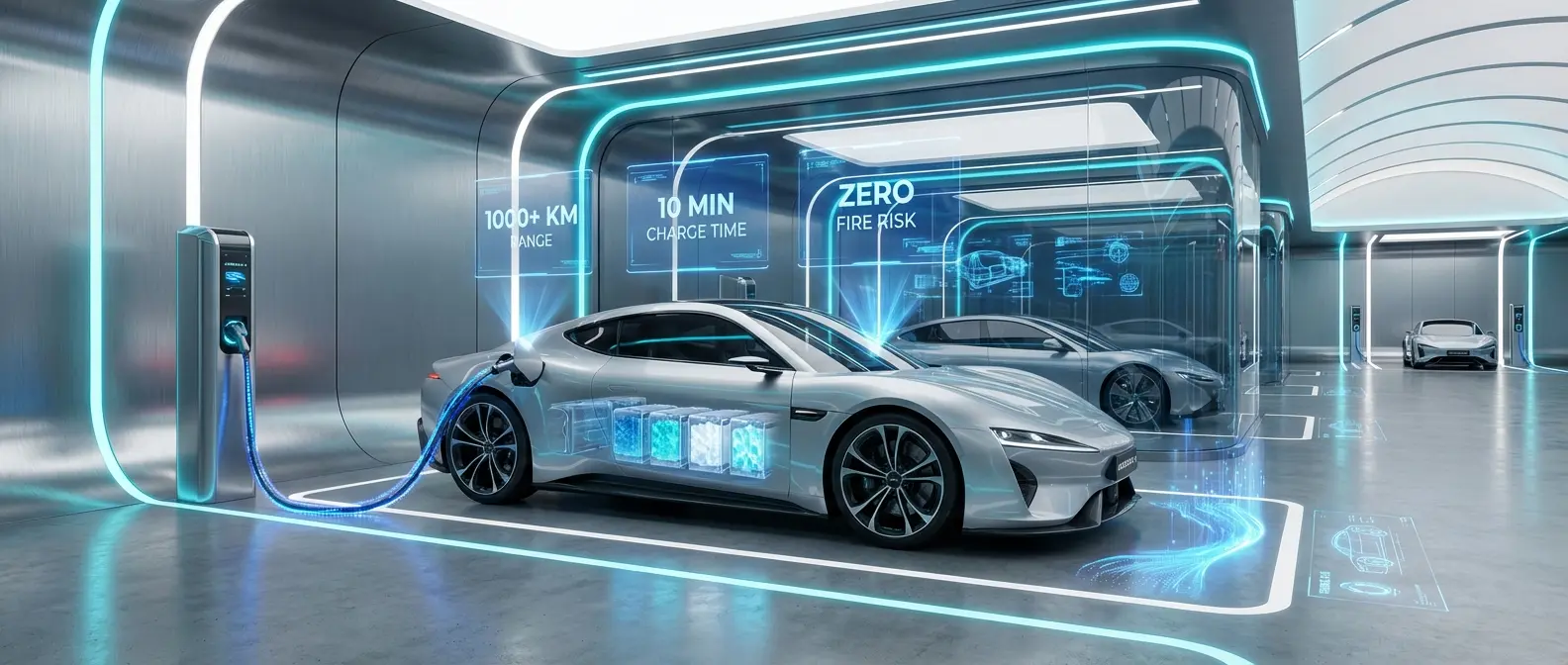
Electric cars have one big problem: their batteries. Limited range, slow charging, heavy weight, fire risk. But a new technology promises to change everything: solid-state batteries.
📖 Read more: Toyota CEO Change: Koji Sato and the New EV Era
⚡ The promise: 1000+ kilometers of range, charging in 10 minutes, double the lifespan, zero fire risk. And it's coming sooner than you think.
What Are Solid-State Batteries?
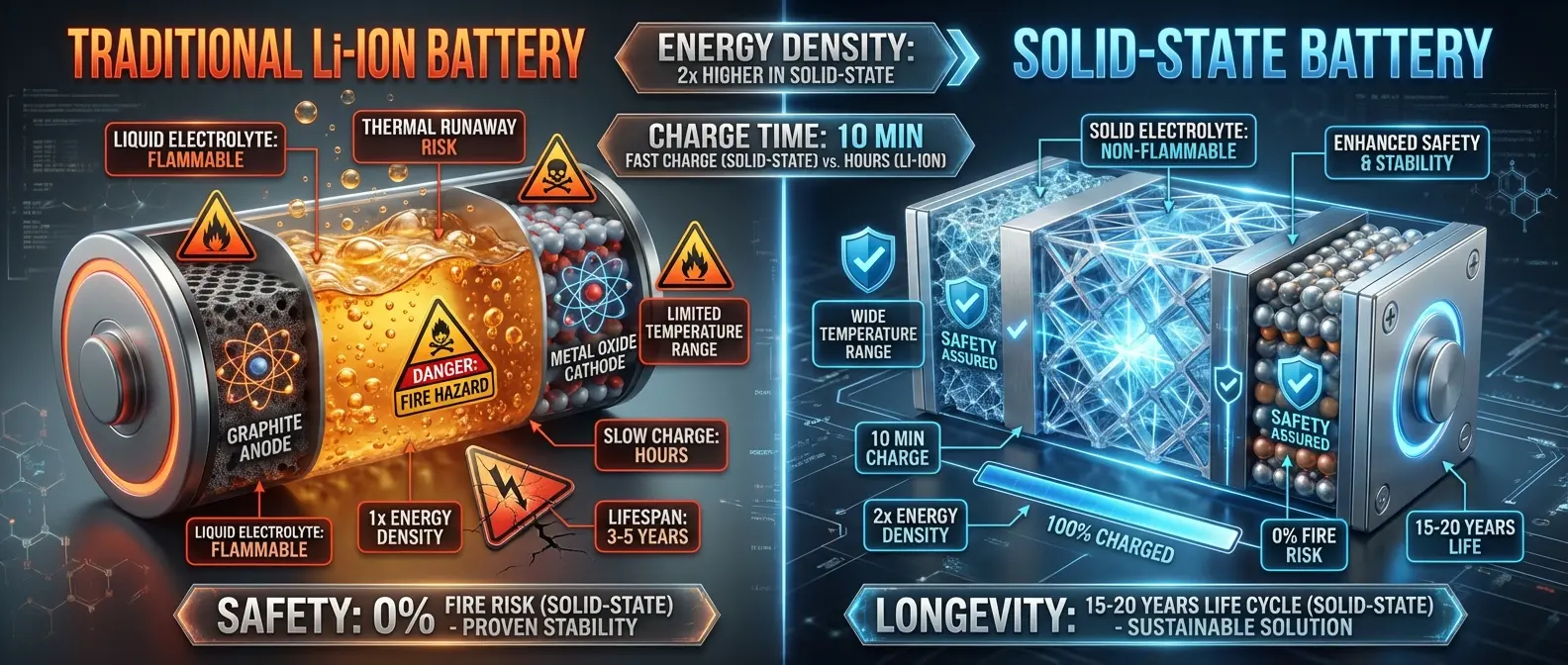
Today's lithium-ion (Li-ion) batteries use a liquid electrolyte to transport ions between the anode and cathode. Solid-state batteries replace this liquid with a solid material - usually ceramic or glass.
Why Are They So Important?
The Advantages in Depth
- Greater range: Higher energy density means more kilometers with the same amount of battery
- Faster charging: The solid electrolyte allows greater current flow without overheating
- Safety: No flammable liquid - zero risk of fire or explosion
- Longer lifespan: 15-20 years instead of 8-10 with current batteries
- Lower weight: Less weight = better performance and range
- Fewer rare materials: Reduced dependence on cobalt and nickel
Comparison: Li-ion vs Solid-State
| Feature | Li-ion (Today) | Solid-State (Tomorrow) |
|---|---|---|
| Energy density | 250-300 Wh/kg | 400-500+ Wh/kg |
| Charging time (0-80%) | 30-45 minutes | 10-15 minutes |
| Lifecycle | 1,000-2,000 | 5,000-10,000 |
| Fire risk | Present | Nearly zero |
| Operating temperature | 15-45°C | -30 to 100°C |
| Cost (per kWh) | $100-150 | $80-100 (2030 target) |
📖 Read more: EV 2030: What Experts Predict for the Future
The Major Players
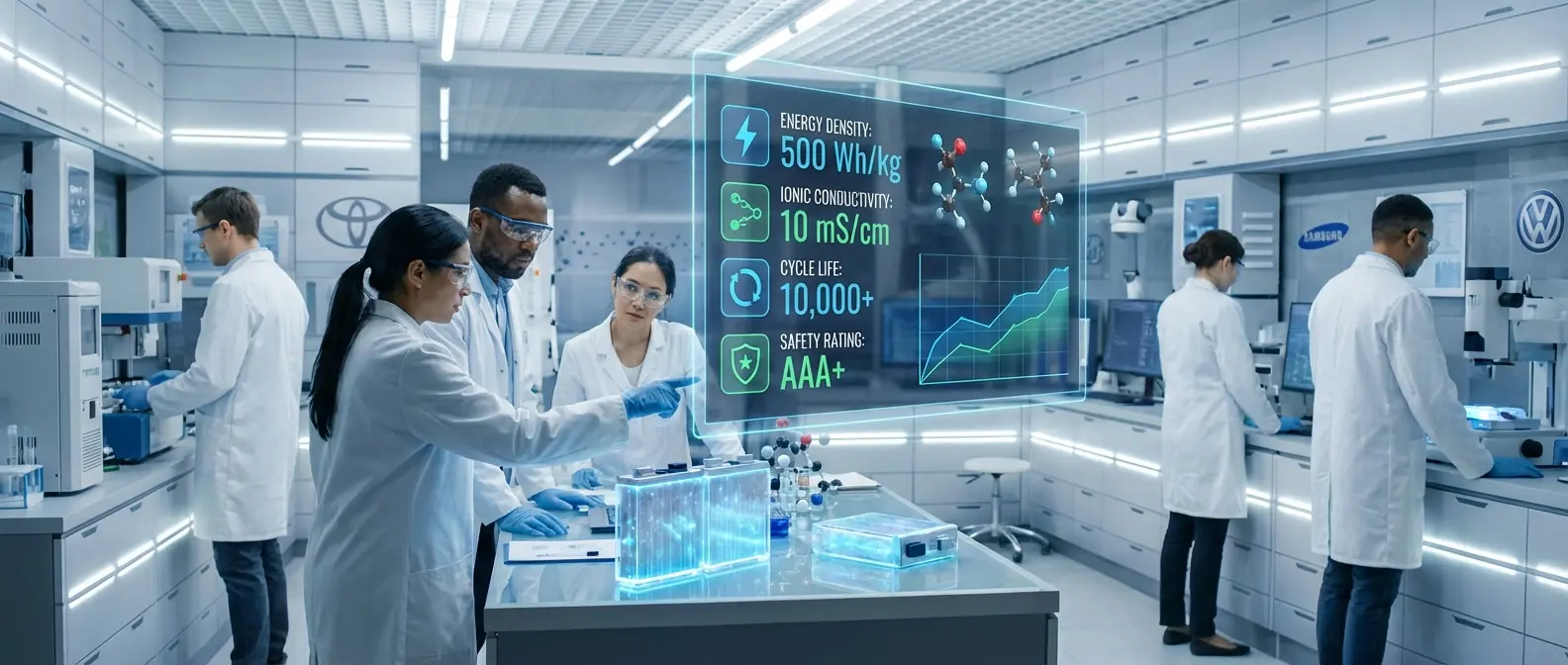
Dozens of companies are investing billions in solid-state battery development. The key players:
How Do They Work?
In a solid-state battery, the solid electrolyte functions as both a separator and ion conductor simultaneously. Lithium ions move through the solid material, which can be:
- Oxides (LLZO, LATP): High conductivity, stability
- Sulfides (Li₆PS₅Cl): Very high conductivity, more fragile
- Polymers: Flexible, lower conductivity at low temperatures
The key advantage is that the solid electrolyte allows the use of lithium metal as the anode instead of graphite. Lithium metal has 10 times greater capacity!
The Challenges
If solid-state batteries are so good, why don't we have them already? There are significant technical challenges:
✅ Advantages
- Higher energy density
- Faster charging
- Greater safety
- Longer lifespan
- Wider temperature range
❌ Challenges
- High production cost (still)
- Difficulty scaling up
- Interface problems
- Dendrite formation
- Material fragility
The Dendrite Problem
The biggest obstacle was dendrites - microscopic “needles” of lithium that form during charging. These can penetrate the electrolyte and cause a short circuit.
📖 Read more: Regenerative Braking in EVs: How It Works & Maximise It
In recent years, companies like QuantumScape have solved this problem with specially designed ceramic electrolytes that resist dendrite penetration.
Timeline: When Are They Coming?
First solid-state batteries in premium electronics (smartphones, wearables)
Pilot production for electric cars (VW, BMW)
First commercial cars with solid-state batteries (Toyota, Mercedes)
Mass production, cost reduction to competitive levels
Solid-state as the standard in electric cars
📖 Read more: Wireless EV Charging: The Cable-Free Future is Coming
Impact on Electric Cars
Solid-state batteries will eliminate the main problems that stop many people from buying an electric car:
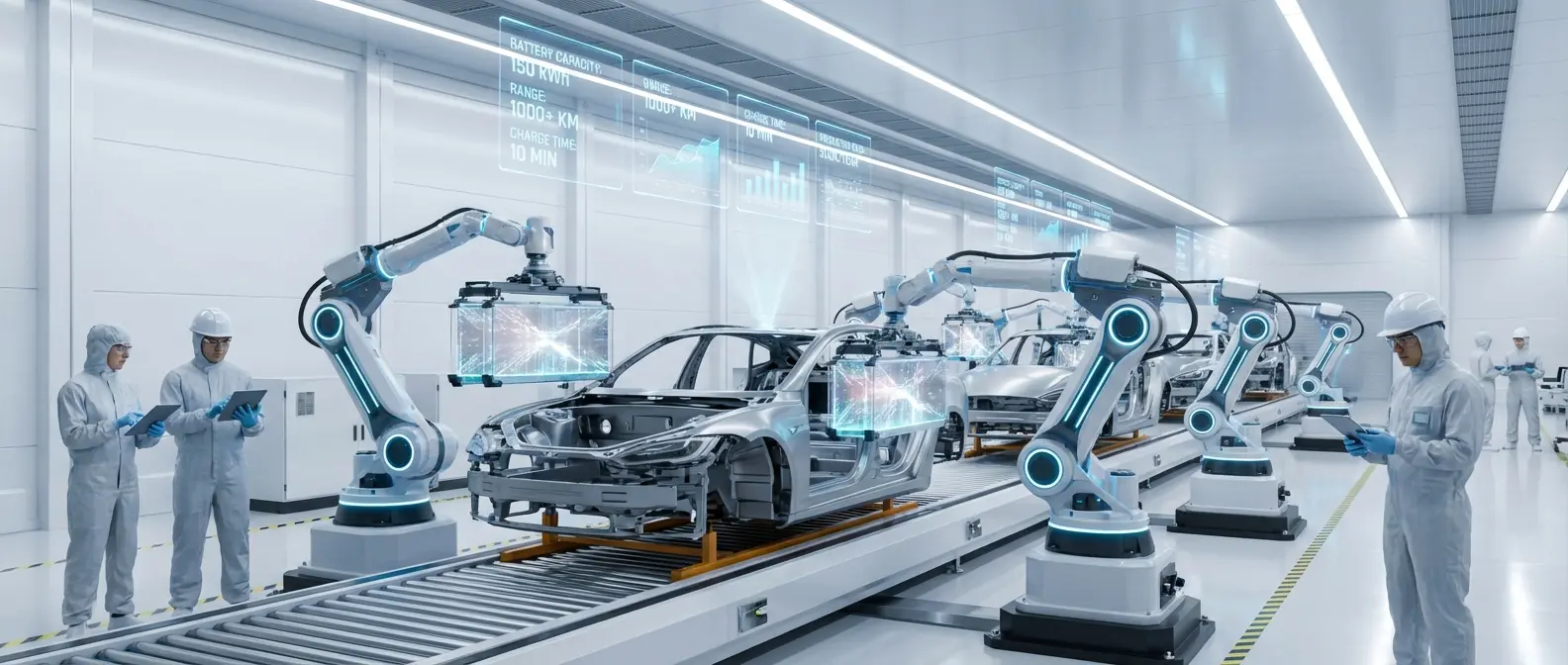
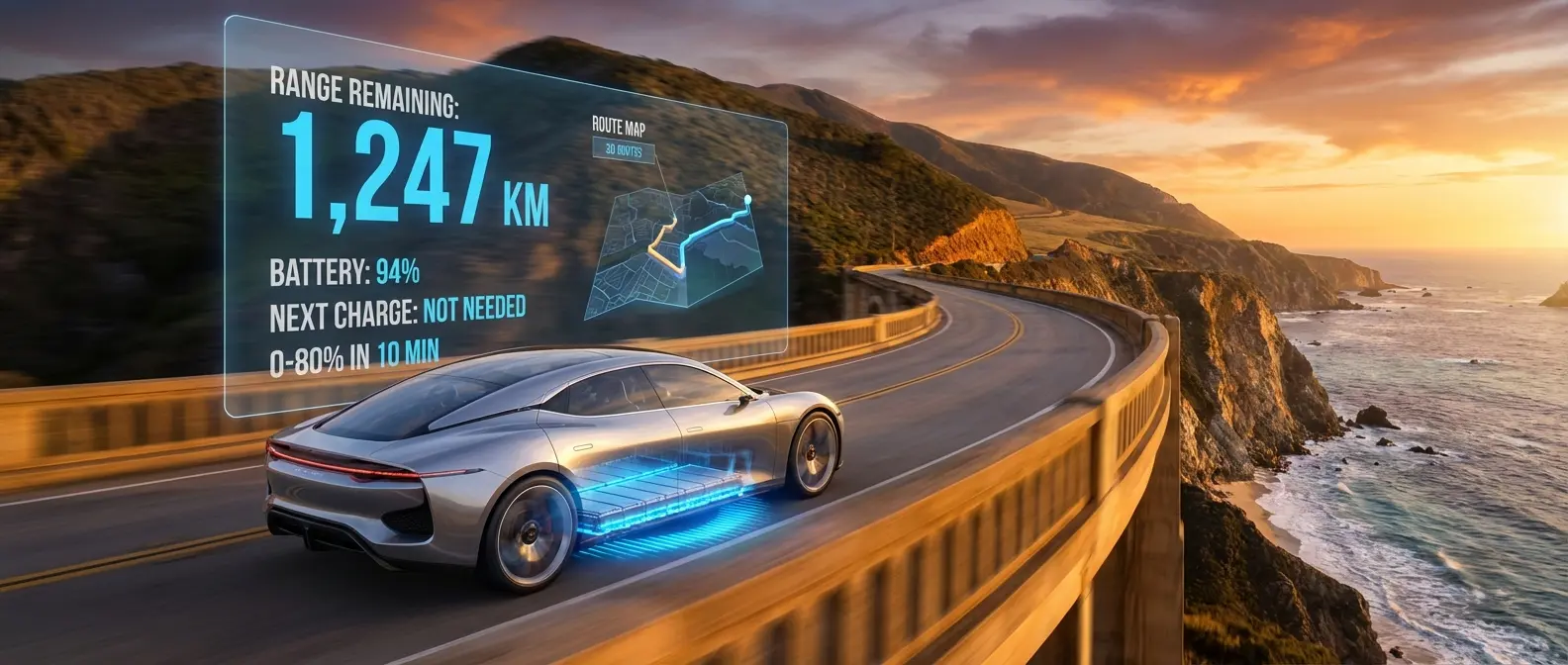
- Range anxiety: With 1000+ km of range, you won't need to charge for days
- Charging time: 10 minutes = the same as a coffee stop
- Safety: No more news about EVs catching fire
- Resale value: A battery that lasts 15+ years
- Price: In the long run, cheaper cars
🚗 The change: An EV with a solid-state battery could travel from Athens to Thessaloniki and back without charging. And if needed, 10 minutes at a fast charger adds another 500 km.
Beyond Cars
Solid-state batteries will also impact other sectors:
- Smartphones: A battery that lasts a full week
- Laptops: 24+ hours of use
- Electric aircraft: Finally feasible for medium distances
- Grid storage: Renewable energy storage
- Medical implants: Longer lifespan, smaller size
Conclusion
Solid-state batteries are no longer science fiction - they are a technology we will see on the roads within the next 2-3 years. Toyota, Samsung, VW and dozens of other companies are investing billions because they know that this is the revolution that will make electric cars better than gasoline-powered vehicles in every way.
1000 km range. 10-minute charging. 20-year lifespan. Zero fire risk. This is the future - and it's coming faster than you imagine.