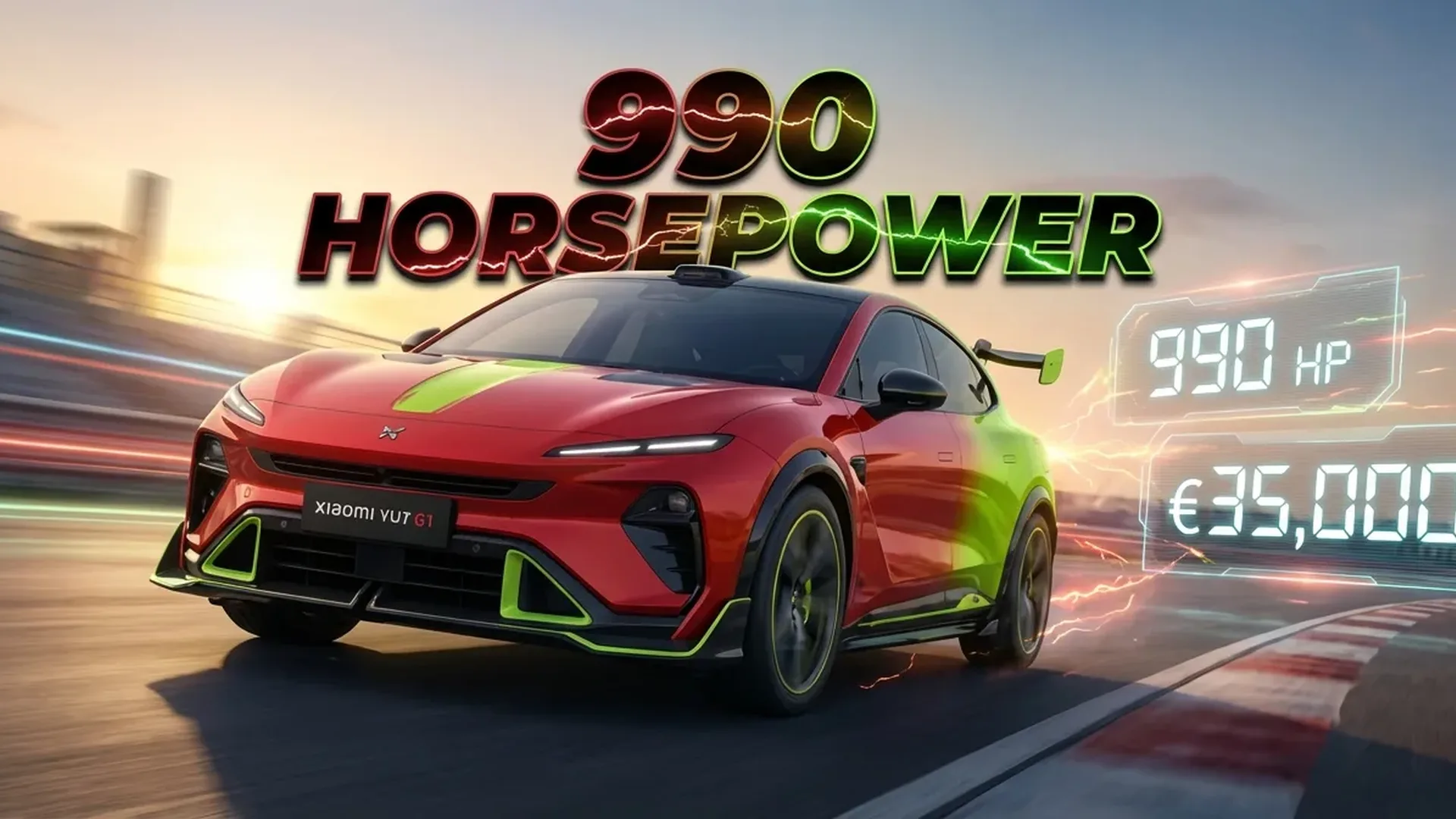
Xiaomi, the Chinese tech giant known for smartphones and smart home devices, has made a bold entry into the automotive industry with the SU7 — a full-size electric sedan that directly competes with the Tesla Model S and Porsche Taycan. With sales exceeding 380,000 units in less than 2 years, the Xiaomi SU7 proves that the “Tesla Killer” title is no exaggeration.
📖 Read more: VW ID.7 Review 2026: 700km Range Electric Business Sedan
From Smartphones to Cars
In March 2021, Xiaomi founder and CEO Lei Jun announced that the company would invest 10 billion yuan (approximately $1.4 billion) in electric vehicle development. Xiaomi Automobile was founded the same year in Beijing and received its manufacturing license in August 2023. Production began in December 2023 and the official launch took place on March 28, 2024.
The design team, led by chief designer Sawyer Li (recruited from BMW), used the Porsche Taycan and Tesla Model S as benchmarks. Lei Jun rejected three design proposals before approving the final one. The result? A sedan measuring 4,997 mm in length with a 3,000 mm wheelbase, a drag coefficient (Cd) of just 0.195 — the lowest in the world according to the manufacturer — and 571 liters of trunk space plus a 105-liter frunk.
Four Versions — From Basic to Extreme
Technology & Interior — Xiaomi Ecosystem
The SU7's interior reflects Xiaomi's “tech ecosystem” philosophy. At its heart sits a 16.1-inch infotainment display with 3K resolution, powered by the Qualcomm Snapdragon 8295 processor and the Android-based Xiaomi HyperOS operating system. There's also a 7.1-inch digital instrument cluster that rotates to a closed position when the car turns off, and a 56-inch AR Head-Up Display projected onto the windshield.
Integration with the Xiaomi ecosystem is complete: smartphone mirroring, Mi Band connectivity, smart home device control (even the robot vacuum!) directly from the car. For non-Xiaomi devices there's Apple CarPlay support. Two wireless chargers, tablet mounting points on the rear seats (iPad compatible), and a 4.7-liter refrigerator as an option.
Autonomous Driving — Xiaomi Pilot & HAD
The base Xiaomi Pilot system includes 16 ADAS functions, uses vision-based sensors and an NVIDIA Drive Orin X SoC (254 TOPS). On the higher-end models (Max, Ultra), the Xiaomi HAD system uses two Orin X chips (508 TOPS), LiDAR (Hesai AT128), 3 mmWave radars, 11 cameras, and 12 ultrasonic sensors. Through OTA updates, autonomous driving (NOA) has expanded from highways to urban conditions. The Ultra upgrades to 3 LiDARs, 5 mmWave radars, and 12 cameras.
📖 Read more: BMW i3 2026: The Electric 3 Series Is Coming
SU7 Ultra — Nürburgring Record
The flagship SU7 Ultra represents an impressive technological achievement. Three electric motors (two HyperEngine V8s at the front + one V6s at the rear) produce a combined 1,138 kW (1,526 hp) and 1,770 Nm. The Qilin 2.0 NMC battery (93.7 kWh), developed in partnership with CATL, operates at 897V and accepts charging up to 490 kW, achieving 10-80% in just 11 minutes.
The performance numbers are mind-blowing: 0-100 km/h in 1.98 seconds, 0-200 km/h in 5.96 sec, 0-300 km/h in 15 sec, top speed exceeding 350 km/h (measured at 359.71 km/h on a test track). On April 1, 2025, the SU7 Ultra claimed the Nürburgring Nordschleife lap record for a production EV, with a time of 7:04.957, beating the Rimac Nevera and Porsche Taycan Turbo GT. The prototype achieved an even faster time of 6:22.091, placing it 3rd in the world rankings behind only the Porsche 919 Evo and VW ID. R!
SU7 Ultra Track Records
Modena Platform & Suspension
The SU7 is built on the Modena platform developed by Xiaomi. On the higher-end models, the air suspension with adaptive dampers offers four ride height levels, while the active rear spoiler has four adjustment levels. The chassis structure is composed of 90.1% high-strength steel and aluminum. Xiaomi uses top-tier international suppliers: Bosch, Brembo, Continental, ZF, ThyssenKrupp, Schaeffler and Nexteer Automotive.
On the Ultra, the carbon ceramic brakes (430mm front discs with 6-piston Akebono calipers) bring the car to a stop from 100-0 km/h in just 30.8 meters. The aerodynamics are enhanced with 17 carbon fibre components, generating 285 kg of downforce.
📖 Read more: Mazda 6e: The Electric Sedan Coming to Greece
2026 Facelift & Future Plans
In January 2026, Xiaomi opened pre-orders for the refreshed SU7 2026 model year, with the official launch in April 2026. New additions include a backup power supply system for the door locks, redesigned steering wheel, wider rear tires (265mm) across all models, and 4-piston front calipers as standard on every version. The starting price is $32,800.
Additionally, Xiaomi is planning a long-wheelbase SU7 L (codename MS11-L), set to launch in 2026 alongside the YU9 (large SUV) and YU7 GT. Also in the pipeline are 132 kWh and 150 kWh batteries for even greater range.
Commercial Success — The Numbers Speak
The SU7's sales figures are impressive. Within 230 days of launch, Xiaomi delivered 100,000 units. By the end of 2024, confirmed orders exceeded 248,000. In March 2025, the 200,000th unit was delivered just 348 days after launch. Total sales in 2024 were 139,487 and in 2025 242,291 SU7 + 15.728 SU7 Ultra.
Notably, the SU7 Ultra received over 6,900 orders within 10 minutes of pre-orders opening, 10,000 in two hours, and over 23,000 total — more than double the annual target. Xiaomi became the 8th largest EV startup in China just a few months after its first model launched.
Safety — 5-Star C-NCAP
In the C-NCAP tests (March 2025), the SU7 Max achieved 5 stars with the highest overall score among all vehicles tested under the 2024 standards. Specifically: Occupant Protection 94.31%, Vulnerable Road Users 90.42%, and Active Safety 95.25%. The vulnerable road users score was 13.14 percentage points above the average.
Recall & Safety Incident
In September 2025, Xiaomi recalled 116,887 SU7 Standard units due to insufficient recognition of edge-case scenarios in the L2 highway cruise assist. Additionally, in March 2025, an SU7 was involved in a fatal accident on a highway in China with the driver assistance system activated. These events highlight the challenges of autonomous driving.
📖 Read more: XPeng GX: Premium Chinese EV at a Bargain Price
Will It Come to Europe?
Currently, the Xiaomi SU7 is sold exclusively in China. Although Xiaomi mentioned showcasing the SU7 Ultra in Europe in March 2025, there are no official plans for a European launch yet. However, the strong presence of Chinese EV brands in Europe (BYD, MG, XPeng) suggests that Xiaomi could follow suit. If it launches in the EU, the price would be significantly affected by European tariffs on Chinese EVs. In any case, the SU7's value-for-money proposition — with specs that rival cars 3-4 times more expensive — makes Xiaomi's transition from phones to cars truly impressive.
SU7 Max vs The Competition
Pros & Cons
Pros
- ✅ Best price-to-performance ratio globally
- ✅ Excellent tech ecosystem & HyperOS
- ✅ Impressive range (up to 830 km CLTC)
- ✅ Ultra: Nürburgring record, 1,526 hp
- ✅ 5-star C-NCAP (top score)
- ✅ 800V architecture on Max/Ultra
- ✅ Design inspired by Porsche & Tesla
Cons
- ❌ Not sold in Europe (China only)
- ❌ Recall of 116,000+ units for ADAS
- ❌ New brand with no automotive heritage
- ❌ CLTC range ≠ real-world (reduced ~30%)
- ❌ Weight >2 tons in every version
- ❌ Uncertain after-sales outside China
- ❌ Fatal accident with ADAS activated
Our Verdict
The Xiaomi SU7 is perhaps the most impressive new-manufacturer entry into the electric car market. With a base model price of around €30,000, it offers 700 km of range, 295 hp, excellent build quality, and a tech ecosystem that no traditional manufacturer can match. The Ultra version, with its Nürburgring records and 1,526 hp, proves that Xiaomi isn't just playing — it's changing the rules of the game. The only question is: when will it reach Europe?