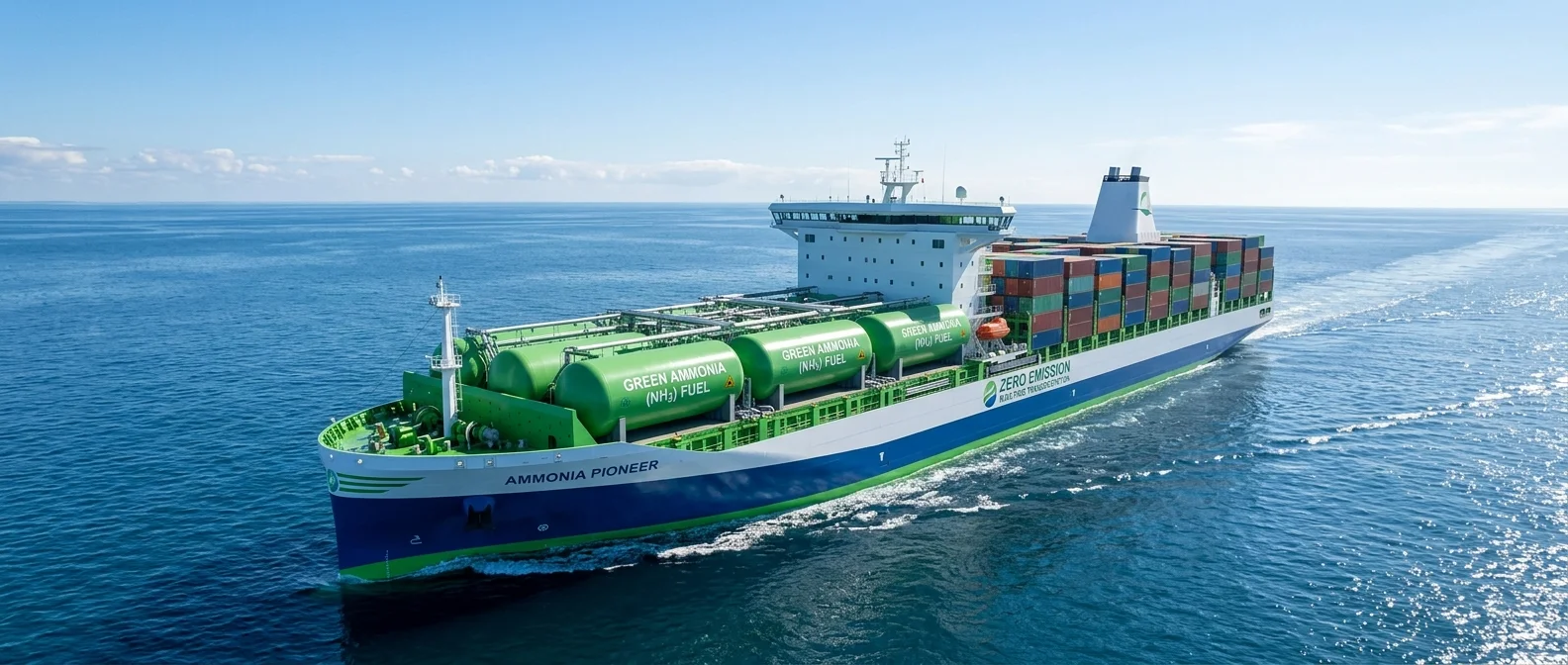
An Industry Under Pressure
International shipping carries over 80% of global trade. The massive container ships, tankers, and bulk carriers that cross the world's oceans consume roughly 300 million tonnes of marine fuel every year. That consumption produces a carbon footprint comparable to entire nations. If shipping were a country, it would rank among the top emitters of greenhouse gases on the planet.
In 2023, the International Maritime Organization (IMO) adopted a revised greenhouse gas strategy that set targets once considered impossible. The strategy calls for emission reductions of at least 20% (striving for 30%) by 2030, at least 70% (striving for 80%) by 2040, and net-zero emissions by or around 2050, compared to 2008 levels. Additionally, zero or near-zero emission fuels must represent at least 5-10% of the energy used by international shipping by 2030.
Since January 2023, every ship must calculate its Energy Efficiency Existing Ship Index (EEXI) and establish its annual operational carbon intensity indicator (CII). Ships receive ratings from A to E, where those running on low-carbon fuels earn better scores. The regulatory squeeze is intensifying.
What Makes Ammonia Different
Ammonia (NH3) is a compound of nitrogen and hydrogen. It's produced in massive quantities today, primarily for fertilizers, meaning storage and transportation infrastructure already exists at numerous locations worldwide. Hydrogen, by contrast, demands building entire supply chains from zero.
When ammonia burns in a ship engine, it produces zero CO2, zero SOx (sulfur oxides), and virtually no particulate matter. This sets it apart even from LNG (liquefied natural gas), which, while cleaner than heavy fuel oil, still emits CO2 during combustion.
Green ammonia: Produced by combining nitrogen extracted from atmospheric air with hydrogen separated from water using renewable electricity. Production is expected to expand significantly in the coming years, with ammonia potentially having the lowest production cost of all green fuels.
The core advantages of ammonia as a marine fuel:
- Zero CO2 emissions during combustion
- Significant reduction in SOx and particulate pollutants
- Relatively easy storage compared to hydrogen
- Existing infrastructure thanks to the fertilizer industry
- Lowest expected cost among green fuels
MAN Energy Solutions' Ammonia Engine
At the Research Centre Copenhagen (RCC) of MAN Energy Solutions, engineers are developing the first two-stroke, dual-fuel ammonia engine capable of virtually eliminating a ship's emissions. The program began in 2019 with a feasibility study, followed by supply and safety infrastructure preparation, and the test engine was modified so that one cylinder could burn ammonia.
On July 3, 2023, the team achieved a critical milestone: the first successful run of a test engine on ammonia. Combustion remained stable throughout the test. After more than 12 months of testing in single-cylinder configuration, full-scale testing on a four-cylinder engine began in November 2024.
Ammonia is a slow-burning fuel, making the two-stroke, slow-speed diesel cycle engine ideal for it. The 60-bore engine under development will be suitable for a wide range of vessel types, from container ships to car carriers and ammonia tankers.
The Critical Safety Challenge
Ammonia is toxic. The engineers in Copenhagen don't downplay this reality. The five-tonne ammonia storage tank at the RCC facility is housed in a separate building at a safe distance from the engine, with fuel delivered through secured pipes. Given that Copenhagen's South Harbor area now includes residential apartments, the team developed enhanced safety protocols for the entire facility.
The IMO has already issued interim guidelines for the safety of ships using ammonia as fuel (MSC.1/Circ.1687). Safety measures developed for ammonia vessels include:
- Ammonia sensors at critical points throughout the ship
- Dedicated ventilation systems specifically designed for ammonia
- Double-walled piping to prevent leaks
- Water screens for full containment in the event of a leak
One particular technical concern was the potential emission of nitrous oxide (N2O), known as laughing gas, which is a potent greenhouse gas. The RCC team managed to control these emissions through engine tuning, achieving very low levels.
First Ammonia-Powered Ships
Who will install ammonia engines first? According to MAN Energy Solutions experts, two categories of vessels are expected to lead the way. The first includes ships carrying cargo closely tied to end consumers, such as car carriers and container ships. Pressure from consumers and ESG regulations makes these companies ready to invest in green propulsion.
The second category is ammonia carriers themselves. For these vessels, the logic is circular: they already transport the fuel they can use for propulsion.
MAN Energy Solutions expects the first ammonia engines in operational ships within 2026. Simultaneously, the ability to retrofit existing ships will be a decisive factor, given that the average lifespan of a commercial vessel reaches 25-30 years. Converting existing engines to dual-fuel operation is already under discussion.
The Geopolitical Dimension
Green ammonia is reshaping global energy trade. Countries with abundant renewable energy sources, such as Australia, Chile, Saudi Arabia, and Morocco, are already developing production facilities for green hydrogen and ammonia, aiming to become clean energy exporters. Ammonia also functions as a hydrogen carrier: it can transport energy in liquid form more easily than pure hydrogen, which requires extremely low temperatures or high pressures.
European shipping, with Greece operating the world's largest fleet by capacity, faces enormous decisions. The transition to ammonia means new engine investments, crew training, port upgrades for bunkering, and reorganized supply chains.
IMO Net-Zero Framework: In April 2025, the Marine Environment Protection Committee (MEPC 83) finalized a legal text comprising marine fuel standards and a maritime GHG emissions pricing mechanism. Adoption of these binding measures was adjourned to 2026. Once approved, it will create a level playing field and make green fuels economically viable.
The Road to 2035
The engineering challenges run deep. Ammonia requires higher ignition energy than conventional fuels, onboard storage volume is larger, and safe handling demands specialized expertise. Green ammonia will also initially cost more than conventional marine fuels, meaning the industry needs global regulation, a CO2 tax, or some compensation mechanism to cover the additional costs.
Industry projections are aggressive. The first commercial ammonia engines are expected in ships by 2026. By 2030, ammonia is projected to become one of the preferred fuels for new shipbuilding orders. And by 2050, approximately 25% of maritime shipping's energy consumption could come from ammonia.
The challenge is no longer technological but one of scale. Producing enough green ammonia, building a global bunkering network, training thousands of seafarers, and establishing a fair regulatory framework will determine whether shipping meets its targets. The signs, however, point clearly in one direction: ammonia is no longer experimental technology. It's an engineering reality with a delivery date.
IMO – IMO's work to cut GHG emissions from ships
MAN Energy Solutions – Ammonia for shipping
MAN Energy Solutions – Ammonia engine testing at Research Centre Copenhagen