Two hundred years may sound like an eternity, but if we look back — in 1825, doctors still believed in bloodletting as a treatment for most diseases — we realize just how radically medicine can change. The revolution ahead will make today's medicine seem as archaic as medieval practices look to us now.
In this article, we'll explore how technology, artificial intelligence, biotechnology, and nanotechnology will converge to create a healthcare system we can only dream of today.
🔬 Surgery in 2225: No Scalpels, No Blood
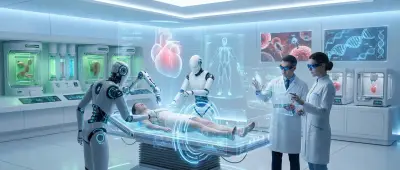
The word “surgery” will carry an entirely different meaning in 2225. Scalpels, incisions, and sutures will be archaeological artifacts in medical history museums. Instead, surgery will be performed by nanobots working from inside the body.
The surgical beds of the future will be equipped with holographic displays projecting the body's interior in real time, robotic arms with nanometer precision, and AI systems analyzing every movement. The doctor won't even touch the patient — they'll guide the nanobots through hand gestures and voice commands.
Robotics in 2225 will have reached a level that seems like magic today. Robotic arms with thousands of micro-joints will perform movements impossible for the human hand. Tremors, fatigue, human error — all of these will be a thing of the past.
🧬 Organ Regeneration: The End of the Waiting List
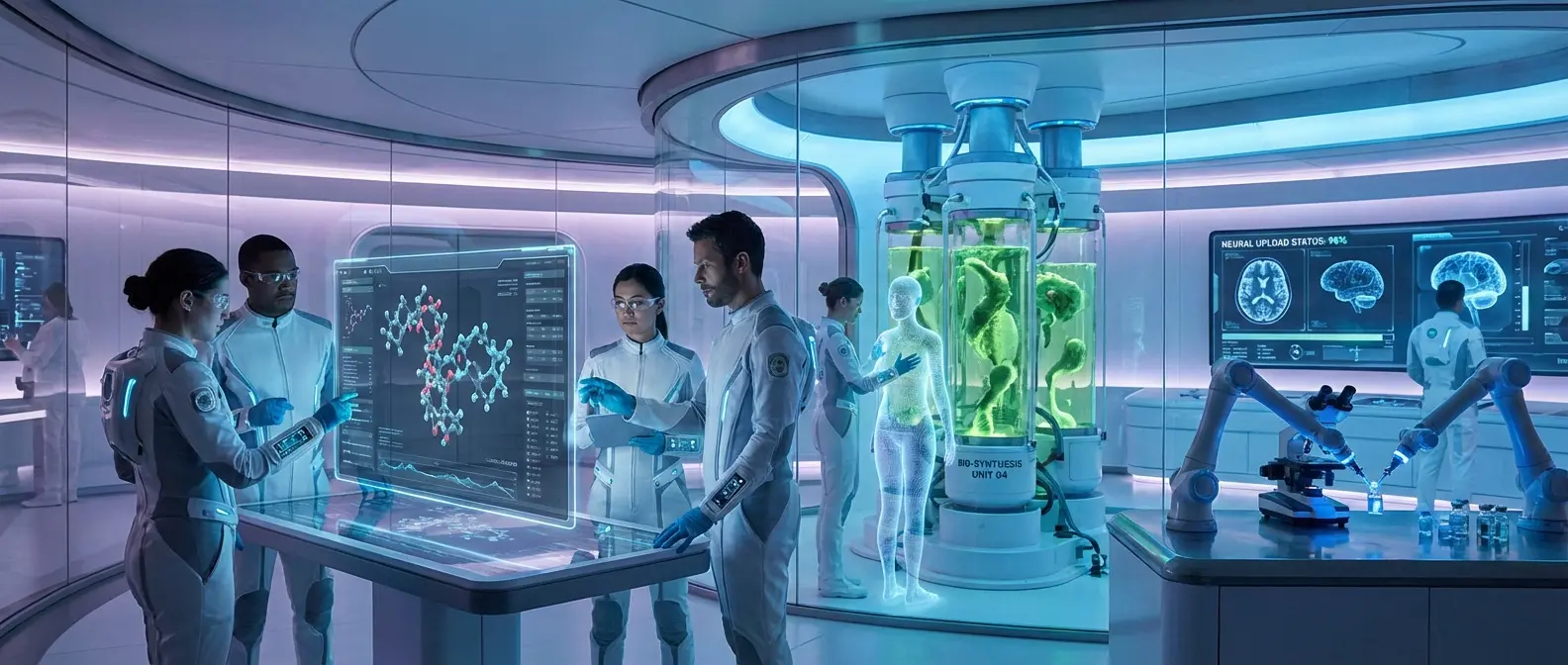
Today, thousands of people die every year waiting for organ transplants. By 2225, the word “transplant” will have been replaced by “regeneration.” Why wait for an organ from someone else when you can grow your own?
Stem cell technology will have fully matured. From a small sample of your cells, an entire organ can be grown — heart, liver, kidney — genetically identical to your own. No rejection, no need for immunosuppressive drugs.
"The greatest revolution in medicine won't be curing diseases, but the complete regeneration of the human body. We'll be able to replace worn-out parts like changing tires on a car."
3D Bioprinting: Printing Life
The 3D printers of the future won't print plastic — they'll print living tissue. Layer by layer, cell by cell, they'll create fully functional organs. Need new skin after a burn? It's printed on the spot. Your retina is damaged? A new one can be ready in hours.
This technology already exists in a primitive form — scientists have already printed functional skin and cartilage. In 200 years, the precision and complexity will have advanced to the point where printing a brain becomes possible.
🏨 The Patient Room of the Future
Forget hospitals as you know them — noisy corridors, shared rooms, and the smell of antiseptic. The patient room of 2225 will look more like a luxury hotel suite that happens to house the most advanced technology on the planet.
Every surface in the room will be “smart.” The bed will continuously measure vital signs, detect pain and anxiety, and automatically adjust its position for optimal circulation. The walls will be screens that can display anything the patient wants — from natural landscapes to video calls with loved ones.
Hospital 2026
- Shared rooms for 4–6 patients
- Nurses check every 2–4 hours
- Manual data recording
- Limited visiting hours
- Standardized meals
Hospital 2225
- Private suites with full autonomy
- AI monitoring 24/7 in real time
- Automatic analysis and prediction
- Holographic presence of loved ones
- DNA-personalized nutrition
AI Nurses: Never Tired, Never Distracted
The robotic nurses of 2225 won't be mere machines — they'll possess emotional intelligence surpassing many humans. They'll recognize facial expressions, sense pain before the patient even voices it, and offer emotional support when needed.
The difference? They never get tired. They never make mistakes from inattention. They never forget medications. And they're available 24 hours a day, 7 days a week, 365 days a year.
🏠 Home Care: The Room That Heals You
But why go to a hospital at all? For most cases, your home will be the best “hospital.” Recovery rooms in 2225 will be equipped with technology currently found only in intensive care units — but invisible, embedded in the walls and furniture.
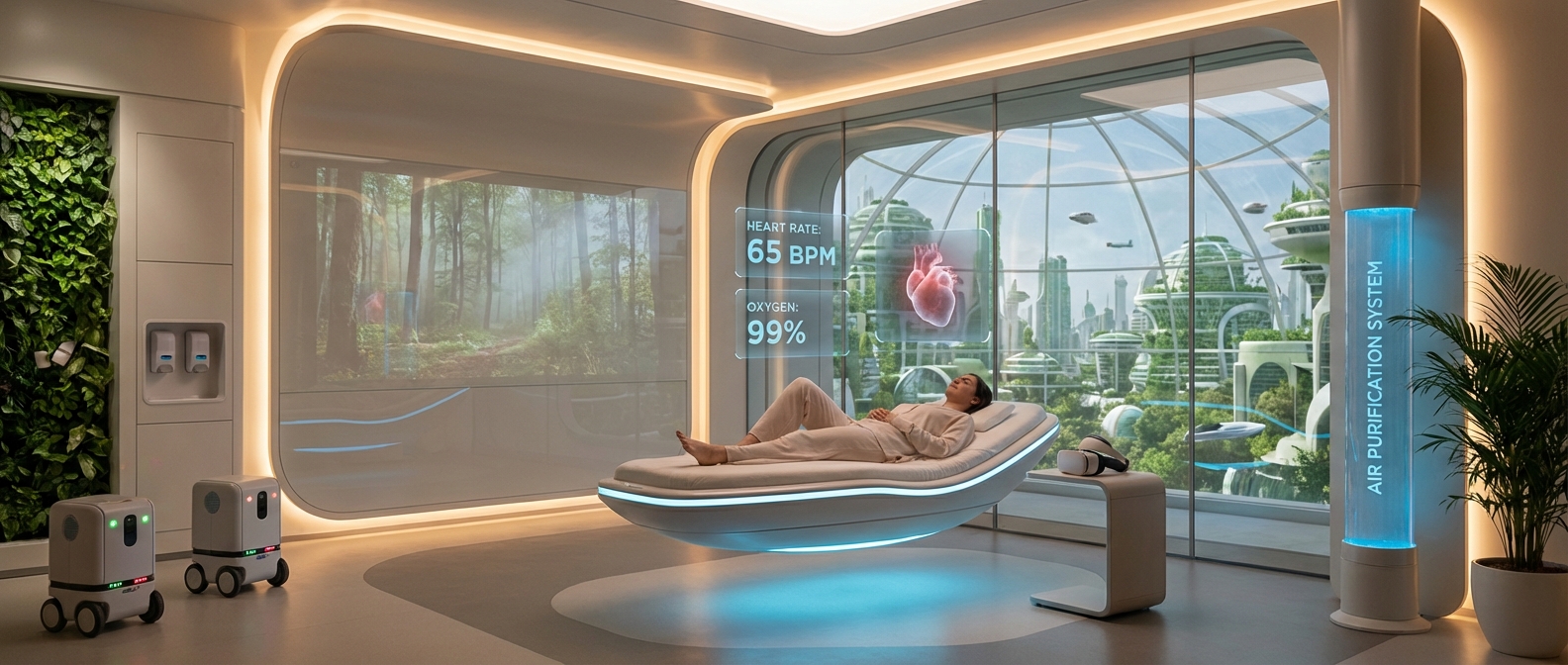
Your bathroom mirror will analyze your skin, eyes, and tongue — detecting early signs of dozens of diseases. Your toilet will run a daily biochemical analysis. Your bed will monitor sleep and vital functions. And all of this will communicate with your personal AI doctor, who will analyze the data and intervene before you even realize something's wrong.
Prevention vs. Treatment: The Great Shift
Medicine in 2225 will focus almost exclusively on prevention. Diseases will be detected and addressed at the cellular level, before symptoms ever appear. Imagine never getting sick — not because you were cured, but because the illness was prevented before it even started.
💊 Drugs Personalized to Your DNA
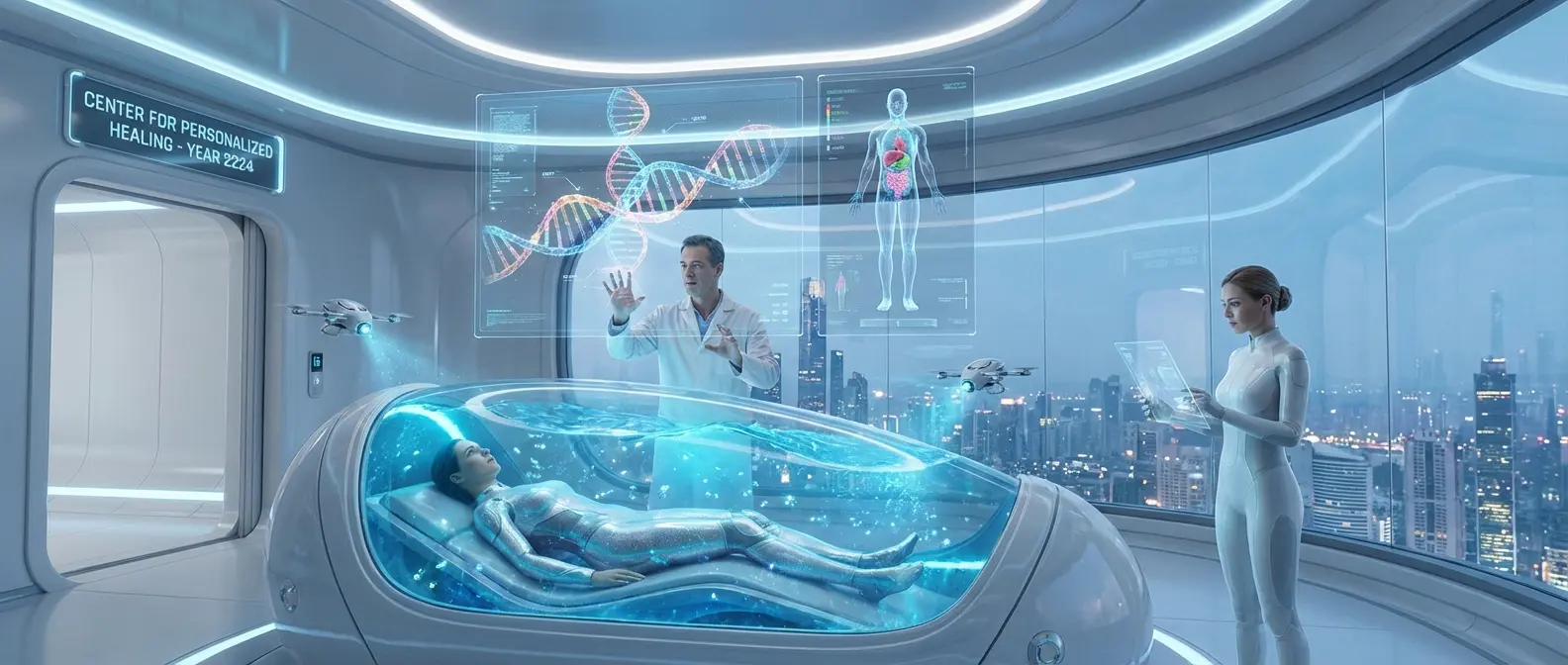
The era of “generic” drugs will be over. Every medication will be designed specifically for your genome, your biochemistry, your needs. Dosages will be calculated with nanogram precision.
But what's even more impressive: drugs will be “smart.” Microscopic capsules will know exactly where to go in your body, release the medication only where it's needed, and self-destruct once their job is done. No more side effects from drugs that affect the entire body to treat a single spot.
🧠 The Brain: The Final Frontier
The brain remains the most mysterious organ — but not for much longer. By 2225, we'll have a complete map of every neuron, every synapse. Neurological conditions like Alzheimer's, Parkinson's, and depression will be fully treatable.
Brain enhancement will become routine. Implants that improve memory, accelerate thought, and enable direct communication with computers — all of this is already being tested in early forms (e.g., Neuralink). In 200 years, they'll be as common as smartphones are today.
⚠️ The Challenges We Must Face
Of course, this bright future is not guaranteed. Enormous challenges remain:
- Inequality: Who will have access to these technologies? Will it create a “superhuman elite” and leave everyone else behind?
- Ethics: Where do we draw the line on genetic modification? What does it mean to be “human”?
- Overpopulation: If no one dies, how will we all fit on this planet?
- Psychology: Are we prepared for eternal life? What meaning does life have without an end?
- Security: What happens if someone hacks the nanobots inside you?
The decisions we make today — about regulation, ethics, and resource allocation — will determine whether medicine in 2225 becomes a utopia or a dystopia.
🚀 The Journey Starts Today
Medicine in 2225 isn't just a fantasy. It's the logical continuation of technologies already in development. CRISPR gene editing, the first nanobots, AI-powered diagnostics, 3D-printed organs — all of these exist today in primitive form.
Children born today may live to see this world. Their grandchildren almost certainly will. The question isn't “if” but “how” — and “for whom.”
Just as the cities of the future will transform how we live, medicine in 2225 will redefine the very meaning of human existence. It's a future that may be frightening — but also deeply inspiring.