📖 Read more: Asteroid Mining: Trillions in Space
How Plasma Works
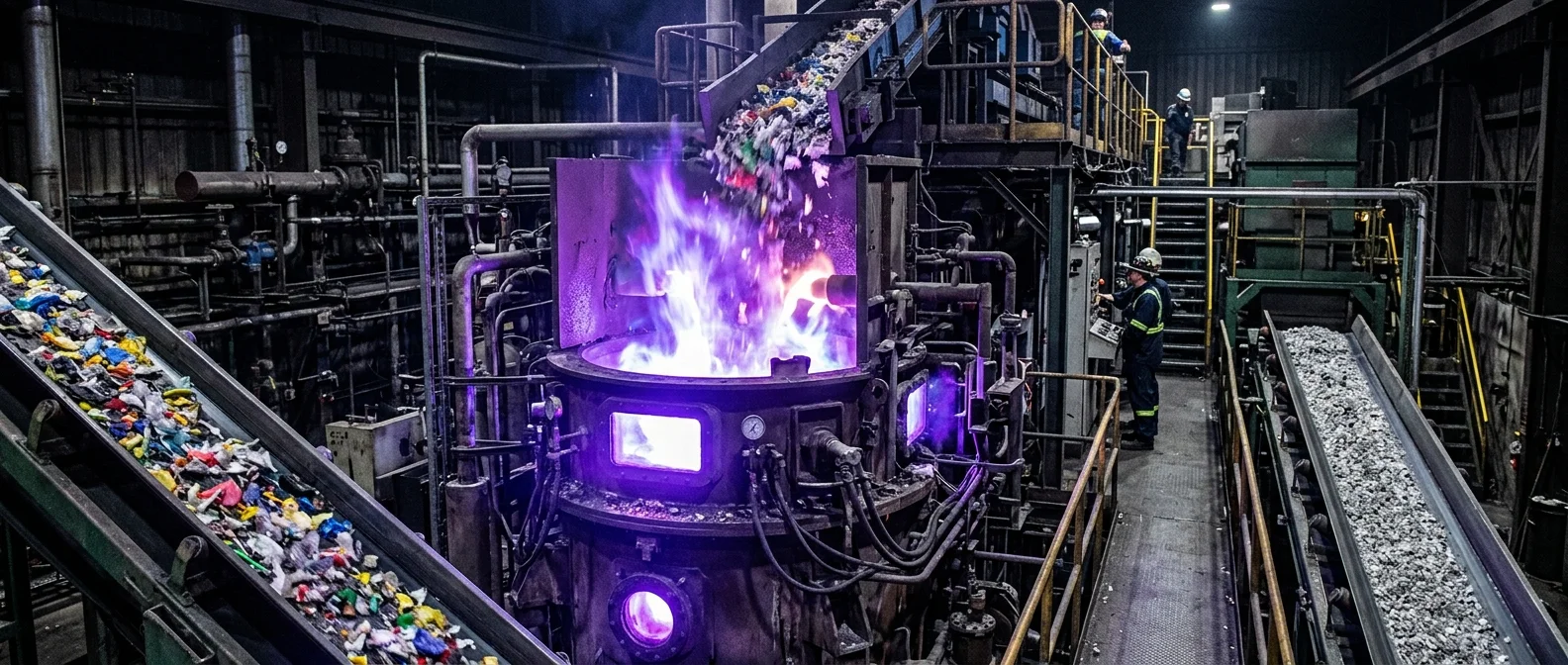
A plasma torch passes strong electric current between two electrodes, creating an electric arc. Gas passing through the arc becomes ionized, forming plasma — the fourth state of matter, the same substance we see in lightning bolts. According to the U.S. Department of Energy, temperatures range from 2,000 to 14,000°C.
At these temperatures, nothing survives intact. Molecular bonds shatter in a process called molecular dissociation. Organic materials turn into gas (synthesis gas, or syngas), while inorganic compounds melt into vitrified slag — hard as obsidian, chemically inert, safe to handle.
No Burning, Just Breaking
What makes plasma gasification fundamentally different from incineration is that there is no combustion. Incinerators burn waste through oxidation, producing dioxins and furans. Plasma gasification uses pyrolysis — intense heat breaks molecular bonds without oxygen. The reactor operates in an airtight environment.
This means the system can process almost anything: plastics, medical waste, chemically contaminated soil, rubber, asbestos. According to research from Georgia Tech, the slag weighs about 20% of the original waste and occupies just 5% of its volume. The only material that cannot be treated is heavy radioactive waste.
📖 Read more: Digital Passport ID: One Chip for Everything
What Comes Out
Three things. First, syngas — a mixture of hydrogen and carbon monoxide that can fuel gas turbines to generate electricity, or be synthesized into chemicals. Second, slag — which comes out as black, glassy rocks resembling obsidian that can be used in concrete, asphalt, or molded into bricks. Third, heat that generates steam to power the plant itself.
If compressed air is blown through the molten material, it produces rock wool — an insulation material twice as effective as fiberglass, light enough to float on water, and absorbent enough to contain oil spills. Since it's a byproduct rather than a mined product, it could sell for a tenth of the current price.
Plasma gasification outputs:
• Syngas: fuel, electricity generation, chemical synthesis
• Slag: bricks, concrete aggregate, construction material
📖 Read more: Dyson Sphere: Energy from an Entire Star
• Rock wool: insulation, oil spill containment
• Metals: recovered from slag and sold as scrap
Facilities Around the World
The first commercial plants went operational in Japan. Hitachi Metals launched a pilot in Yoshii in 1999. At Mihama-Mikata, a facility has processed 24 tonnes of waste per day since 2002. The plant at Utashinai reached 300 tonnes/day, generating 7.9 MWh of electricity and selling 4.3 MWh back to the grid.
In France, Europlasma uses plasma to neutralize asbestos and vitrify fly ash in Bordeaux. The U.S. Navy deploys the Plasma Arc Waste Destruction System (PAWDS) on its newest Gerald R. Ford-class aircraft carriers, handling all combustible solid waste at sea.
📖 Read more: Exoskeletons: Superpowers for Everyone
Advantages and Obstacles
The numbers speak for themselves: over 95% diversion from landfills, no toxic emissions when properly quenched, electricity generation, and safe destruction of hazardous materials including medical waste and contaminated soil.
But challenges remain. Construction costs are high, facilities are largely custom-built, and wet feedstock reduces syngas output. For years, cheap landfill tipping fees made the technology economically unviable. But as landfills fill up and environmental regulation tightens, plasma economics are shifting.
The Future of Garbage
One promising concept is in-situ treatment: portable plasma torches inserted directly into existing landfills, converting waste underground into gas and slag without building an entire plant. Another approach is co-locating plasma chambers with existing power plants, cutting facility costs by roughly 50% since the gas treatment infrastructure is already in place.
Scale this technology and landfills disappear. Every plastic bottle, every medical waste container, every toxic material breaks down to its elemental components — clean, inert, reusable. Garbage becomes building materials and electricity, processed in temperatures that exceed the sun's surface.