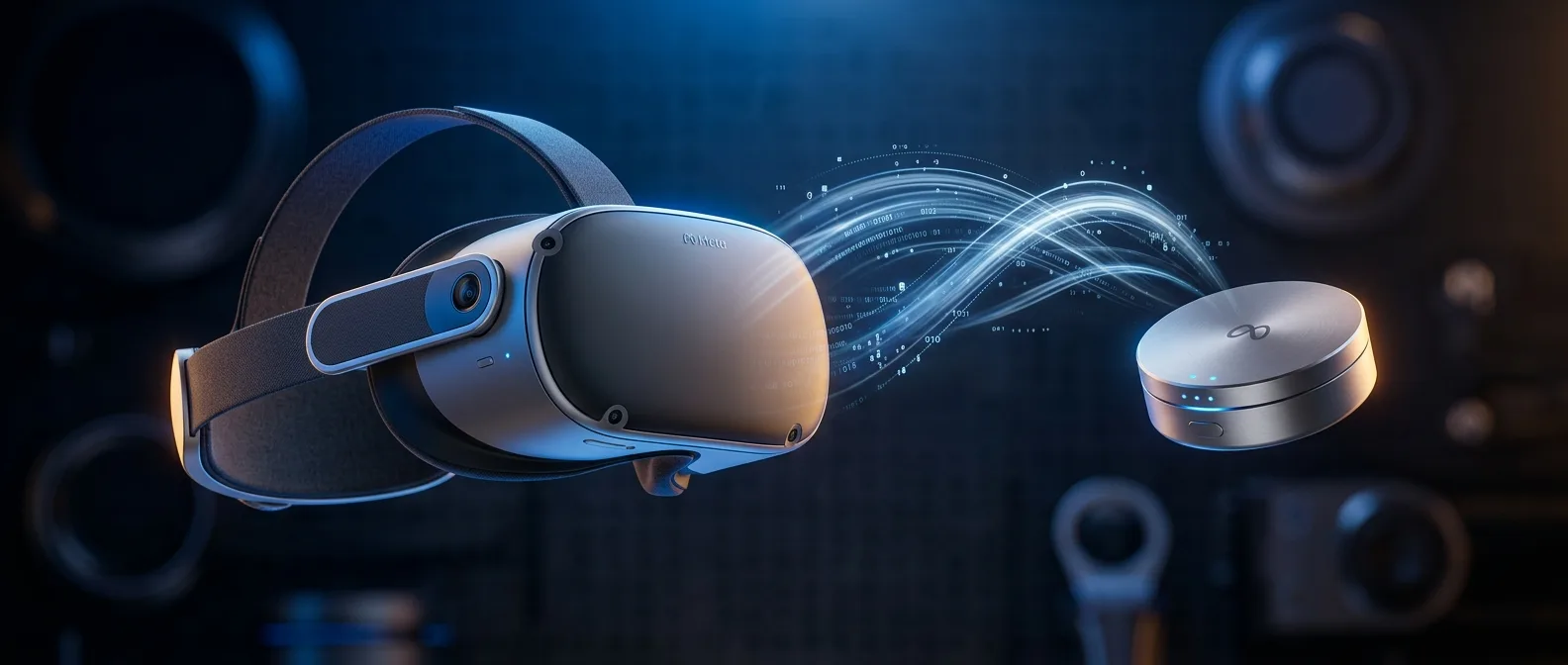
Meta just torched its Quest 4 roadmap. The company canceled two flagship products and bet everything on Puffin: an ultra-light headset with a compute puck launching mid-2026.
The plan? A VR headset weighing under 110 grams, with all processing power housed in a separate device. Sounds radical, but it might be Meta's only shot at making headsets people actually want to wear.
🎯 Pismo Projects Dead — What Quest 4 Cancellation Means
The former Quest 4 favorites, codenamed Pismo Low and Pismo High, got the axe. Canceled. Instead, Meta's pushing a radical experiment: Puffin, an open-periphery headset running the same Horizon OS as current Quest devices, but sharing almost no hardware DNA.
Anyone expecting a classic upgrade with better displays and faster chips will wait until 2027. That's what internal Menlo Park whispers suggest. This isn't Meta's first roadmap pivot — the company has killed countless projects before.
Susan Li, Meta's CFO, admitted to investors that Quest 3S sales momentum stalled after Christmas. Maybe that explains why the company's hunting for a completely different approach.
⚡ Compute Puck: The Weight Problem Solution
Puffin's concept is simple — strip everything non-essential from your head. Battery, processor, even the cooling system moves to a compute puck that hangs on your belt or fits in your pocket.
The result? What The Information describes as a "bulky glasses frame." It'll use gaze-and-pinch input like Apple Vision Pro — no controllers.
Split Design Advantages
This isn't just about weight. The compute puck lets Meta cram powerful chips without worrying about face heat. Plus, the battery can be multiple times larger.
But there's a flip side. A tethered headset means cables — and cables mean movement restrictions. For immersive gaming, that could be a deal breaker.
🖥️ Virtual Screens: The Main Selling Point
Meta appears to target different use cases than Quest. Puffin will focus on virtual screens — multiple virtual displays for productivity and entertainment. Think multi-monitor setup, but without physical screens.
Smart move? Current standalone headsets already do this, but none are light enough for all-day wear. Puffin could change that game.
Interesting detail: Meta's testing different display systems for Puffin across various price points. They haven't decided which to ship — a sure sign the project remains fluid.
📊 The Bigger Picture: Reality Labs in Crisis
Q1 2025 numbers weren't encouraging for Reality Labs. Revenue dropped 6% year-over-year, despite Quest 3S's strong holiday launch. Meta needs something that sells beyond Christmas.
Meanwhile, Ray-Ban Meta glasses showed sales growth — suggesting people prefer lighter form factors. Puffin could bridge that gap.
Partnership Strategy
The Wall Street Journal reports Meta's partnering with Disney and A24 for exclusive immersive content. Episodic series, standalone experiences based on known brands. The idea is connecting premium hardware with premium content — something they tried with James Cameron last year.
The bet is huge. If Puffin fails, all these content deals will run on old Quest headsets. Win-win situation for Meta.
🤔 Asus ROG and Gaming VR's Future
While Meta pivots toward productivity/entertainment, gaming VR isn't orphaned. Asus ROG is preparing a performance gaming headset running Horizon OS, with rumors of eye tracking and advanced displays surpassing Quest 3.
Lenovo's also working on a Horizon OS headset. Meta's essentially turning Horizon OS into a platform supporting multiple manufacturers — exactly what Google does with Android.
Ultra-Light Design
Under 110 grams with compute puck holding all processing power
Gaze-and-Pinch Input
No controllers — uses eye tracking and hand gestures like Apple Vision Pro
Virtual Screens Focus
Targets multi-monitor productivity and entertainment over gaming
⏰ Timeline and Alternatives
Puffin targets release by end-2026, but Andrew Bosworth has explained how unpredictable Meta hardware projects are. From Pre-Discovery to Engineering Validation Test, the company cancels roughly half its projects.
If Puffin gets canceled? Traditional Quest 4 returns to the 2027 roadmap. Meta always works multiple projects in parallel — a safety net that's proved useful before.
"Meta always prototypes the craziest stuff, and roughly half the projects reaching final stages get canceled before hitting market."
Andrew Bosworth, Meta CTO
💰 Price Point and Market Positioning
The estimated sub-$1,000 price (around $950) places Puffin in the premium segment, but not at Apple Vision Pro's stratospheric levels. Is this the sweet spot that could make ultra-light VR mainstream?
The pricing strategy shows Meta isn't targeting mass market with Puffin. Instead, they want to create a niche for users seeking comfortable, all-day wearable computing.
Meta's Puffin bet is both technical and strategic. The company's testing whether 2026 consumers will accept a modular VR approach — headset for comfort, puck for power. If it succeeds, it could set new standards for the entire industry. If it fails, they can always return to traditional Quest designs for 2027.