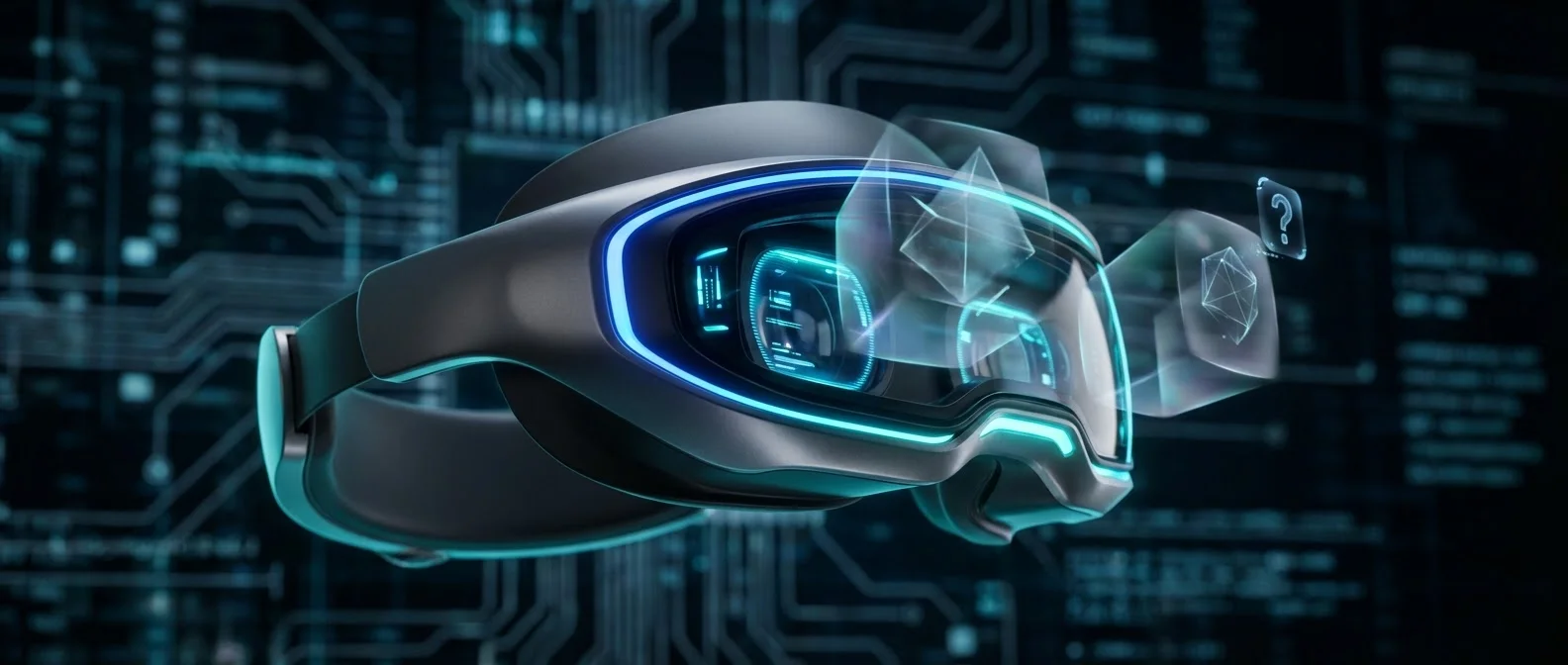
🔍 Two Models: Quest 4 and Quest 4S
According to an exclusive report from The Information, Meta is planning two headsets codenamed "Pismo High" (Quest 4) and "Pismo Low" (Quest 4S). The strategy is clear: a premium model with the best available technology, and a more affordable alternative — following the same playbook as the Quest 3 / Quest 3S split.
Both models are expected to share the same Snapdragon processor, RAM, and cameras, allowing developers to build games for both without modifications. The key differences will come down to design, displays, and premium features.
A Possible Name Change
According to rumors, Meta is considering dropping the “Quest” name entirely from the next generation. The rebrand could signal a new era for the company's VR headset lineup — possibly shifting the focus toward mixed reality and AI rather than VR gaming exclusively.
⚡ New Hardware: Snapdragon XR2 Gen 3
Although Meta had plans for custom silicon (its FAST chip team), it appears the company will continue relying on Qualcomm chipsets. The Snapdragon XR2 Gen 3 is expected to power both models, delivering a significant performance leap over the Quest 3's XR2 Gen 2.
According to Qualcomm SVP of XR Ziad Asghar, XR2 chipsets aren't simply redesigned mobile SoCs — they require different cores and power delivery networks focused on foveated rendering and camera processing. That said, the new generation is expected to incorporate Oryon cores similar to those in the Snapdragon 8 Elite, delivering impressive improvements in ray tracing and graphics.
There's also the enhanced NPU (Neural Processing Unit) to consider — Meta already integrated Meta AI into Quest headsets in August 2024, and the Quest 4 is expected to come with significantly more powerful AI capabilities for mixed reality queries and spatial understanding.
👁️ Eye Tracking: The Big Comeback
Mark Zuckerberg himself acknowledged that the Apple Vision Pro's eye tracking is “really nice” and stated he plans to “bring it back in the future” — given that the Quest Pro was actually the first headset with eye tracking. Leaks from Luna on X show that Meta is actively developing new eye tracking capabilities, including headset unlock via eye recognition.
Eye tracking is expected on the premium Quest 4, but likely not on the Quest 4S due to cost constraints. Beyond gaming, the technology will enable foveated rendering (performance improvement), automatic IPD calibration, and social features like more realistic avatars.
🖥️ Displays: The James Cameron “Wow Factor”
Perhaps the most exciting piece of information: director James Cameron tested a Quest 4 prototype and came away deeply impressed:
"A door opened for me. It was like the heavens parted, light shone down. There was an angel choir singing. I said 'ah!' — This is how people can see the movie the way I created it to be seen!"
— James Cameron, on a Quest 4 prototypeThe Quest 3 delivers 2064×2208 pixels per eye on LCD, translating to 1,218 PPI. Apple's Vision Pro hits 3,386 PPI. We expect the Quest 4 to significantly close that gap, while the Quest 4S will retain a lower resolution to keep costs down.
There's also the possibility of a switch to OLED displays. LCD panels are cheaper but suffer from poor contrast and higher power draw — OLED delivers richer colors, deeper blacks, and better battery life. However, OLEDs come with their own drawbacks including Mura effect, potential PWM flicker issues, and burn-in risk.
🧠 Neural Interface: The Controller of the Future
At Meta Connect 2024, the company showcased a wearable EMG (Electromyography) wristband as a controller for the Orion AR glasses. The technology interprets nervous system signals from the brain to the hand, enabling precise gesture controls.
Zuckerberg stated the technology is "close to product-ready" and will appear in a Meta product “in the next few years.” If Quest 4 adopts a design closer to smart glasses than a traditional VR headset, an sEMG bracelet could potentially replace conventional controllers entirely.
Eye Tracking
Foveated rendering, IPD calibration, eye-based unlock, social features. Likely Quest 4 exclusive.
sEMG Bracelet
Neural interface wristband for gesture controls. Already tested on Orion AR glasses with excellent results.
Cloud Gaming
Project Razor & Avalanche: streaming AAA titles beyond standalone hardware limitations.
Holocake Lenses
The evolution of pancake lenses: thinner visor, less weight. Working prototype already exists.
☁️ Cloud Gaming and Project Razor
Meta is actively developing cloud VR gaming. According to analyst Brad Lynch, Project Razor is a partnership between Meta and US ISPs/MNOs (Verizon, AT&T, and others) to improve connectivity infrastructure and make it “metaverse ready.”
Avalanche, a cloud gaming app, briefly appeared on the Quest Store in late 2024, letting users test classic Rift games like Lone Echo. The idea is that cloud-first content will enable more graphically demanding titles than the standalone processor can handle.
However, the biggest question remains latency — critical in VR, where even a few extra milliseconds can cause motion sickness. Meta is banking on 5G infrastructure advancement to solve this problem by the Quest 4's launch.
🔬 Varifocal and Holocake: The Future of Lenses
At SIGGRAPH 2023, Meta demonstrated its Butterscotch Varifocal prototype — the first headset to achieve varifocal with retinal resolution (60 PPD), sufficient for 20/20 visual acuity. For comparison, the Vision Pro reaches just 34 PPD.
With varifocal lenses, the headset can electronically focus on near or distant objects in the virtual world — fundamentally changing how VR games are designed. Unfortunately, this prototype had only a 50° FOV and was bulky.
Holocake lenses — the next evolution beyond pancake — add a holographic layer that eliminates the need for convex or concave lenses. If Meta can incorporate this technology, the Quest 4 would be significantly thinner and lighter up front — but whether it's ready for consumer pricing remains uncertain.
Quest 4 vs Quest 3 — What We Expect
💸 The Big Picture: What It Means for the Market
Meta has invested over $60 billion in Reality Labs since it began reporting the division's financials separately. At the same time, the company is working to cut costs by 20%, laying off dozens of directors and vice presidents.
While those numbers are staggering, the strategy reveals a shift: Meta now explicitly states it will “let VR be what it is and what it does great” — meaning gaming. The era of excessive focus on the metaverse as a digital workspace appears to be giving way to more realistic goals.
Meanwhile, competitors like the Samsung Galaxy XR, Valve Steam Frame, and PlayStation VR2 are pressuring Meta to innovate. The Quest 4 needs to deliver something no competitor can: an ecosystem of millions of users, thousands of apps, and the power of Meta AI.
📅 When Will It Launch?
As of February 2026, no official release date has been announced. Most reports point to the second half of 2026, though some rumors suggest a possible slip to 2027 — with a lighter model potentially arriving sooner.
Pricing remains unclear. Quest 3 launched at $499, Quest 3S at $299. If Meta follows a similar strategy, Quest 4 could land at $499–$599, while the Quest 4S would sit around $299–$399.
In any case, Meta Connect — typically held in September — should give us a much clearer picture. Until then, we'll keep watching for new leaks and prototypes.