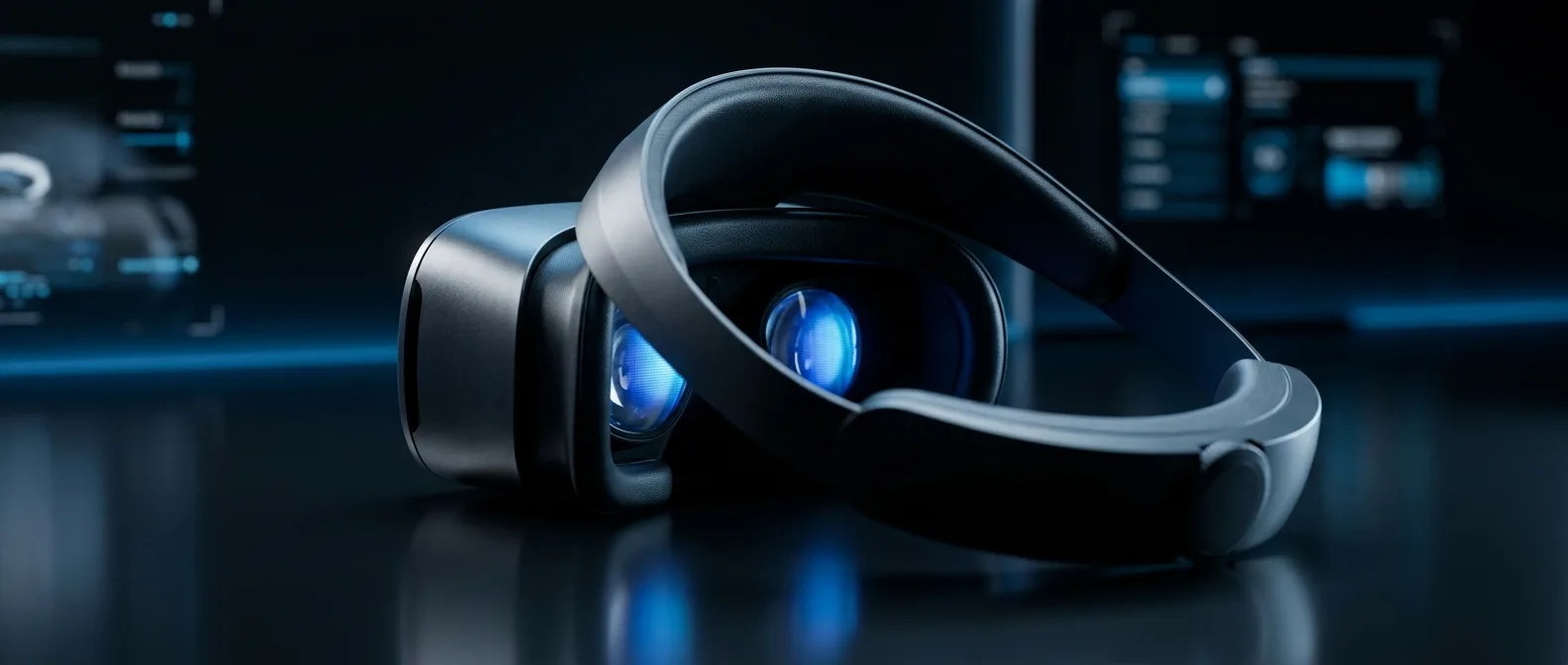
A GDC 2026 session titled "Bring Your Apps and Games to General Spatial Computing with Project Swan" broke the silence. ByteDance just revealed its most ambitious project yet — the Pico 2026, a VR headset with 4K micro-OLED displays and a custom R1-style chip that's gunning straight for Apple Vision Pro's crown. If it actually hits the promised 12 milliseconds latency, Cupertino has a serious problem on its hands.
🔬 R1 Meets Its Match — ByteDance's Technical Revolution
At ByteDance's annual scholarship ceremony in late 2025, VP of Technology Yang Zhenyuan dropped more than just hints about the technical specs. The custom chip his team developed starting in 2022 finished production in 2024 and is now in mass manufacturing. That's what makes the difference.
This chip targets 12 milliseconds system latency — exactly the same performance Apple claims for its R1. Put that in context: VR motion sickness typically kicks in around 20ms and above. So if ByteDance hits its target, it will have solved one of mixed reality's fundamental problems.
What Pico's R1-style chip does:
- Real-time processing of high-resolution mixed reality video
- Enhanced SLAM and motion compensation
- Inverse-distortion workloads with high compute efficiency
- Color camera processing under 12ms latency
Apple has held a monopoly on dedicated passthrough chips. Until now. Every other manufacturer — Samsung, Meta, Qualcomm — settles for the XR2 Gen 2's ISP. ByteDance apparently decided to take matters into its own hands.
📊 4K Micro-OLED — Pixel Wars at 4000 PPI
On the display front, this battle spans multiple fronts. The Pico 2026 will pack custom micro-OLED panels at roughly 4000 pixels per inch. For comparison: Vision Pro sits at 3386 PPI, while Meta Quest 3 manages a moderately embarrassing 25 PPD angular pixel density.
Pico promises 45 PPD at the lens center. Sounds impressive. But how realistic is it?
Pico tackled the micro-OLED brightness problem with microlens array (MLA) technology and optical compensation for uniform color and luminance. If you've tried Vision Pro, you know how crucial this is — especially in bright environments.
Weight That Matters
At 270 grams, the Pico 2026 will weigh roughly half a Quest 3. The trick? External compute puck, exactly what Meta is planning for its next Horizon OS design. Puck goes in your pocket, headset stays light. Smart approach — if it works in practice.
⚡ Project Swan — The Codename That Became a Brand
The "Project Swan" name isn't random. Reports from summer 2025 talked about slim MR "goggles" weighing just 100 grams. Looks like ByteDance shifted plans slightly — or maybe it's preparing a range of high-end options with different form factors.
The GDC 2026 session on March 12 marks Swan's first official mention. Title: "Bring Your Apps and Games to General Spatial Computing with Project Swan." We're talking about something that wants to become a platform, not just another VR headset.
Advanced Eye-Tracking
Custom data-capture systems for training advanced eye-tracking models
Gesture Recognition
Gesture-tracking systems built into the OS
Spatial Understanding
AI models for spatial understanding of environments
Pico OS 6 — The New Generation
The software running on Swan is Pico OS 6, which supports shared environments where 2D and spatial apps can run simultaneously. Sound familiar? Yeah, because Apple's Vision OS does exactly the same thing. ByteDance isn't hiding its influences.
🧬 ByteDance's Strategic Shift Since 2023
Something happened in 2023 that radically changed ByteDance's VR philosophy. As Yang Zhenyuan explained: "We decided to reduce investments in content and marketing, and focus more steadily on technology strategy. This happened because the hardware experience of our products wasn't mature enough for large-scale market applications."
Translation: they stopped burning money on advertising and decided to build the product first. This led to misunderstandings — many thought ByteDance was abandoning VR. In reality, it was doubling down on the work.
"Many said then that ByteDance was no longer following this direction. In reality, exactly the opposite happened."
Yang Zhenyuan, VP Technology ByteDance
ByteDance has now surpassed Meta in revenue. TikTok and Chinese Douyin generate insane money. This gives them the luxury to invest long-term in XR without worrying about quarterly results.
The Political Problem
There's a catch, though. Pico headsets usually don't sell in North America — and for good reason. ByteDance is careful to avoid additional regulatory scrutiny after the TikTok bans. Europe and Asia remain the primary target markets.
This limits potential market impact but doesn't eliminate it. Europe is a massive market, and Asia is even bigger. Plus, if Swan actually delivers the performance it promises, Apple will feel the pressure globally.
💰 Pricing Strategy — Above Meta, Below Apple?
Pico headsets historically cost more than Meta equivalents, which limits appeal in Meta-dominated regions. The Pico 4 Ultra, for example, launched at roughly €630 in Europe, while Quest 3 was €550.
For Swan, expect pricing that targets somewhere between Meta and Apple. If Quest 3 costs €550 and Vision Pro €3500, Swan could land at €1200-1500. Reasonable for a premium device with micro-OLED displays.
Expected Pricing Spectrum:
- Meta Quest 3: ~€550
- Samsung XR (2026): ~€900-1200
- Pico Swan (2026): ~€1200-1500
- Apple Vision Pro: ~€3500
🎯 Frequently Asked Questions
When will the Pico 2026 launch?
According to ByteDance statements, the headset will launch sometime in 2026. The March GDC session might provide a more concrete timeline.
Will it be available globally?
Previous Pico headsets launched in Europe, so there's a good chance Swan will reach international markets. ByteDance only avoids North America for political reasons.
Will it actually compete with Vision Pro?
On paper, it has better specs in some areas (higher PPI, lighter weight). But Vision Pro has Apple's ecosystem and years of optimization. The battle will be decided by user experience and software ecosystem.
ByteDance's Swan project shows the VR game is changing radically. A Chinese company that started with short videos decided to take on the world's most advanced XR systems. If their R1-style chip works as promised, Apple might lose the early advantage it had in premium AR/VR space. 2026 looks like a very interesting year for anyone following spatial computing evolution.
Sources: