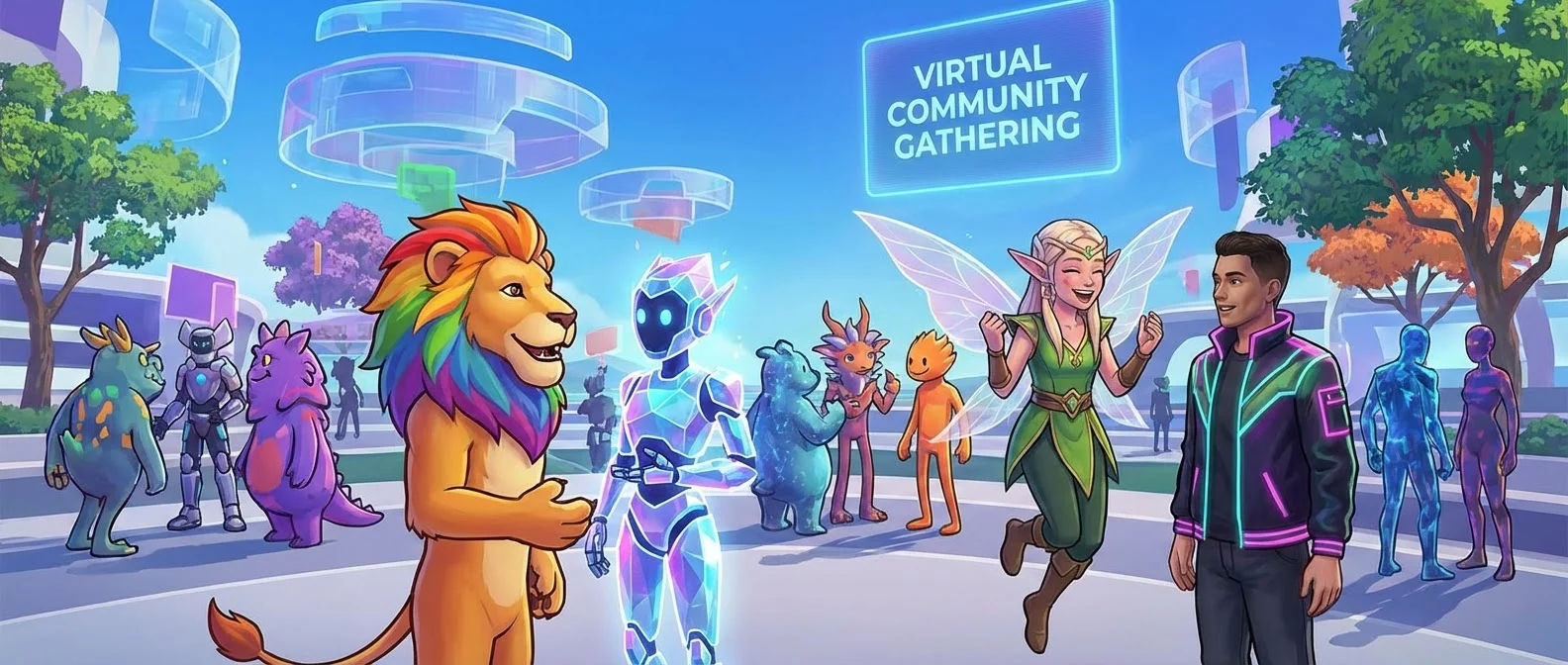
Social VR platforms are no longer just games — they are full-fledged digital worlds where millions of users meet, create, and share real-time experiences. From virtual parties and concerts to professional meetups, social life in VR is fundamentally reshaping how we interact with each other.
What Is Social VR?
Social VR refers to virtual reality platforms designed primarily for social interaction. Unlike traditional social media — built around text, photos, and videos — social VR platforms offer a three-dimensional, embodied presence through avatars in shared virtual worlds.
Users don't just scroll through a feed. They walk through virtual spaces, speak with spatial audio, gesture through motion tracking, and experience a sense of “presence” that no 2D medium can replicate. It's this very feeling that makes social VR platforms so compellingly addictive.
The Top Social VR Platforms
VRChat — The King of Social VR
VRChat remains the largest social VR platform in the world, with over 30,000 concurrent users at peak times and millions of monthly active users. Its strength lies in absolute creative freedom:
- 500,000+ user-made worlds: From fantasy taverns and anime schools to replicas of real cities
- Custom avatars: Full creation or import of 3D models — animals, robots, anime characters, anything you can imagine
- Events: Comedy nights, DJ sets, language exchange meetups, theatrical performances
- Full body tracking: Supports external trackers for realistic body movement
VRChat's community is widely regarded as extraordinarily creative — and gloriously chaotic — which is a core part of its charm.
Rec Room — The Cross-Platform Social Paradise
Rec Room stands out as the most accessible social VR platform with over 100 million registered users. It runs on VR headsets, PC, PlayStation, Xbox, iOS, and Android — making it truly cross-platform.
- Maker Pen: An in-game tool for building rooms, games, and experiences with zero coding required
- Mini-games: Paintball, laser tag, escape rooms, quests — always with company
- Creator economy: Creators earn real money selling items and experiences
Meta Horizon Worlds — Meta's Big Bet
Meta's flagship social VR platform represents Mark Zuckerberg's central metaverse vision. Although it faced criticism in its early stages for “legless” avatars, it has evolved significantly:
- Built into Quest: Pre-installed on every Meta Quest headset — zero entry cost
- Creator tools: Visual scripting tools for world building
- Events integration: Hosted events with tickets and branded experiences
📌 Historical Note: AltspaceVR
AltspaceVR was a true pioneer in social VR, offering virtual meetups, events, and community spaces. Microsoft acquired it in 2017 but shut it down in March 2023 to focus resources on Microsoft Mesh. AltspaceVR's legacy lives on in the platforms that followed.
Bigscreen VR — Watching Together
Bigscreen VR focuses on a specific but beloved experience: watching movies, streams, and content together in virtual cinema halls. It supports 3D films, desktop streaming, and private rooms for groups of friends.
Avatars: The Art of Digital Self-Expression
Avatars are not just icons — they are the digital extension of our identity. In social VR, choosing an avatar is a profound act of self-expression:
Full Customization
From realistic human models to fantastical creatures — no limits on creativity
Identity & Freedom
Many users explore aspects of their identity through avatars — gender, appearance, age
Movement & Expressions
Full body tracking, hand gestures, and face tracking bring your avatar to life
Avatar Economy
Buying and selling custom avatars and accessories — a growing digital economy
Virtual Meetups & Communities
Social life in VR goes far beyond random encounters. Organized communities with regular events have flourished:
- Educational meetups: Language classes, science lectures, art workshops
- Music events: DJ nights, karaoke, live concerts — some attracting thousands of attendees
- Support groups: Mental health support, LGBTQ+ communities, groups for people with disabilities
- Roleplay communities: Fantasy, sci-fi, or slice-of-life roleplay worlds with hundreds of regular members
- Professional networking: Startup meetups, developer conferences, portfolio showcases
Social Benefits of Social VR
Long-Distance Connection
Friends and families across different countries meet as if they were in the same room — the sense of presence makes all the difference
Accessibility
People with physical disabilities or social anxiety find in VR a space free from physical limitations
Reducing Loneliness
Studies show that social interaction in VR significantly reduces feelings of loneliness and isolation
Deeper Connections
Embodied presence creates stronger bonds than text chat or video calls
Risks & Challenges
Social life in VR is not without its dark side. The immersion that makes positive experiences so powerful makes negative ones equally intense:
- Harassment: Verbal and “physical” avatar harassment — immersion makes it more traumatic than text-based trolling
- Trolling & Griefing: Users who deliberately ruin others' experiences — crashers, loud audio spam, inappropriate content
- Addiction: The appeal of social VR can lead to excessive use and withdrawal from the real world
- Child safety: Many platforms struggle with very young users without appropriate supervision
Moderation Tools
Platforms have developed tools to address these challenges:
- Personal Bubble / Safe Zone: An invisible zone that prevents other avatars from getting too close
- Block & Mute: Instantly block and silence disruptive users
- Trust/Safety systems: VRChat uses a trust rank system — new users have limited capabilities
- AI moderation: Automated toxic behavior detection through voice analysis
Social VR Platform Comparison
| Platform | Cost | Platforms | Key Strength |
|---|---|---|---|
| VRChat | Free | PC VR, Quest, Desktop | Unlimited creativity |
| Rec Room | Free | VR, PC, Console, Mobile | Cross-platform, mini-games |
| Horizon Worlds | Free | Meta Quest | Quest ecosystem integration |
| Bigscreen VR | Free | PC VR, Quest | Cinema & streaming experience |
"VR doesn't replace human contact — it complements it. For millions of people who can't leave their homes, it's a window to the world."
The Future of Social VR
The evolution of social VR is at a critical juncture. These are the technologies that will change everything over the coming years:
- Photorealistic avatars: Meta's Codec Avatars and similar technologies will transfer our real facial expressions in real time
- Haptic feedback: Haptic gloves and vests will add physical sensation to virtual interactions
- AI NPCs: Artificial intelligence will populate worlds with lifelike non-player characters
- Interoperability: The ability to transfer avatars and items between platforms via open standards
- Mixed Reality social: Next-gen AR/VR headsets will allow virtual meetups in your real-world space
By 2028, analysts predict social VR platforms will host over 500 million monthly users, transforming them into mainstream social media.
🎯 Conclusion
Social life in VR is already a reality for millions of people. Platforms like VRChat, Rec Room, and Horizon Worlds are not mere “games” — they are new social spaces. With the right balance between freedom and safety, social VR can become the most human form of digital communication.