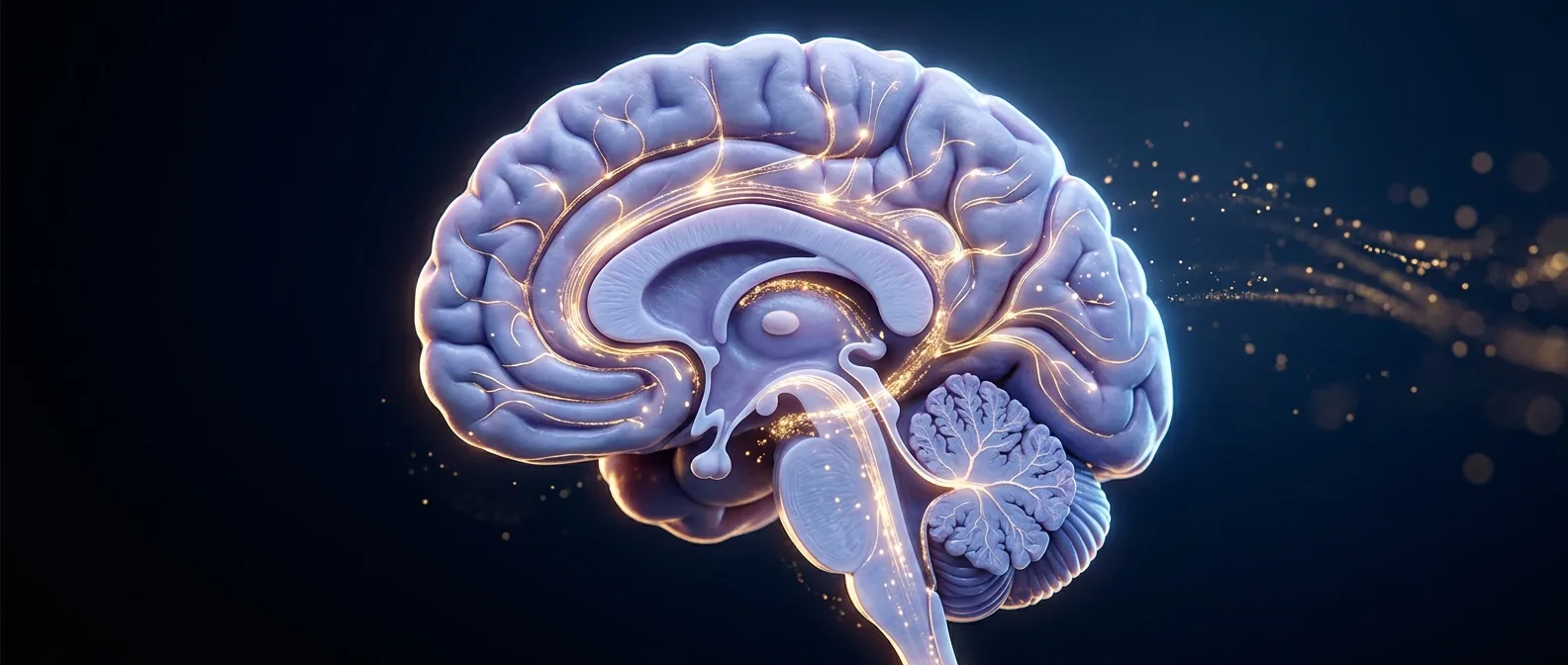
Forty volunteers. Forty pairs of logos and brand names. One brain that keeps surprising even the researchers studying it. This is the recipe for a discovery that's shaking the foundations of neuroscience in 2026.
A new study from the University of Nottingham and Cambridge shows that brain memory works completely differently than we believed. The most shocking part? The textbook separation between episodic memory and semantic memory that we've been teaching for decades simply... doesn't exist.
📖 Read more: 20-Minute Cardio Triggers 'Brain Ripples' That Boost Memory
🧠 The Big Shock: When Scientists Were Left Speechless
Dr. Roni Tibon, who led the research, admits it openly: "We were very surprised by what we discovered." For decades, the scientific community believed there were clear differences in how the brain handles different types of memory.
What happened? When researchers used fMRI technology to watch the brain "at work," they found something nobody expected. The same brain regions lit up whether participants were remembering events from their past or recalling simple facts.
What does this mean in practice?
Imagine trying to remember your first day of school (episodic memory) versus knowing that Athens is the capital of Greece (semantic memory). For years we believed these two processes used different "circuits" in the brain. Turns out we were wrong.
🔬 The Study That Changed Everything
The experiment was simple in concept, sophisticated in execution. Forty people entered the fMRI machine and had to remember combinations of logos and company names. Some combinations were real (like Nike's logo with its name), others they'd learned moments earlier in the lab.
The logic was clear: real combinations would use semantic memory, while "artificial" ones would tap episodic memory. What they saw in the brain scans was something entirely different.
fMRI Technology: Watching the Brain in Real Time
fMRI (Functional Magnetic Resonance Imaging) is like having a window into the brain. It measures blood flow carrying oxygen to neurons. The more active they are, the more blood they need. This lets us see which regions are "working" during any activity.
It's non-invasive, meaning no surgery required. You just lie in the machine and magnetic waves do their work.
⚡ Myth Busting: When Science Self-Corrects
To understand the magnitude of this discovery, we need to explain what we believed until now. Episodic memory lets us "travel" mentally to the past. Remember your first kiss? That's episodic memory.
Semantic memory is our fact warehouse. You know Napoleon lost at Waterloo, but you don't remember when or where you learned it. That's semantic memory.
The Traditional Theory That's Crumbling
Until today, neuroscientists believed these two memory types operated like separate "programs" in the brain. Different regions, different networks, different ways of storing and retrieving information.
This had practical consequences: research studied the two memory types separately. Rarely did anyone think to examine them together in the same experiment.
"We expected to see huge differences in brain activity, but the differences we saw were very subtle"
— Dr. Roni Tibon, University of Nottingham
🎯 What This Means for Alzheimer's Treatment
The implications go beyond basic research. If memory works differently than we thought, maybe we need to rethink how we approach memory diseases too.
Dr. Tibon is clear: "These findings will help us better understand diseases like dementia and Alzheimer's, as we begin to see that the whole brain is involved in different types of memory."
New Perspective
Instead of focusing on specific brain regions, we might need to view memory as an integrated system.
Treatment Approaches
New interventions could be developed based on understanding that the whole brain participates in memory.
From Theory to Practice
One study doesn't overturn decades of research overnight, but it opens new avenues for investigation. Maybe we need to rethink how we train doctors, design therapies, even understand the nature of memory itself.
The study was published in Nature Human Behaviour, one of the most rigorous scientific journals. That means it passed strict review by independent experts.
🔄 Rethinking Memory: Where Do We Go From Here?
Science works by testing assumptions against new evidence. When new data challenges old theories, we don't ignore it. We examine it, test it, verify it.
The Nottingham study demonstrates this process. Researchers designed an experiment to confirm something they already "knew." Instead of confirmation, they found something that upended everything.
What's Next?
Dr. Tibon believes "these results need to change the direction of research in this field." She's right. When a fundamental dogma collapses, you need to rebuild from scratch.
Now that we know episodic and semantic memory share brain regions, we need to understand exactly how this collaboration works. How does the brain decide when to "activate" which type of memory?
Questions That Remain Open
- How does the brain separate different types of information if it uses the same regions?
- What does this mean for people with brain damage in specific areas?
- Can we develop better learning techniques based on this new understanding?
🎯 Frequently Asked Questions
Does this mean there's no difference between episodic and semantic memory?
Not exactly. The functional difference exists — it's still different to remember your first day at work versus knowing the earth orbits the sun. What's changing is our understanding of how the brain processes this information.
How does this affect treatments for dementia and Alzheimer's?
If the whole brain is involved in memory, therapeutic approaches might need to be more holistic. Instead of targeting specific regions, we might need to think of the brain as an integrated system.
Does this study change everything we knew about memory?
Not everything, but it certainly challenges some basic assumptions. Science evolves continuously, and this is an important step in that process. We need more studies to confirm and extend these findings.
This discovery reminds us of something important: the brain is far more complex and interesting than we think. Every time we believe we've "figured it out," it surprises us with something new. And maybe that's the most beautiful thing about science — the continuous search for truth, even when it contradicts what we considered settled fact.