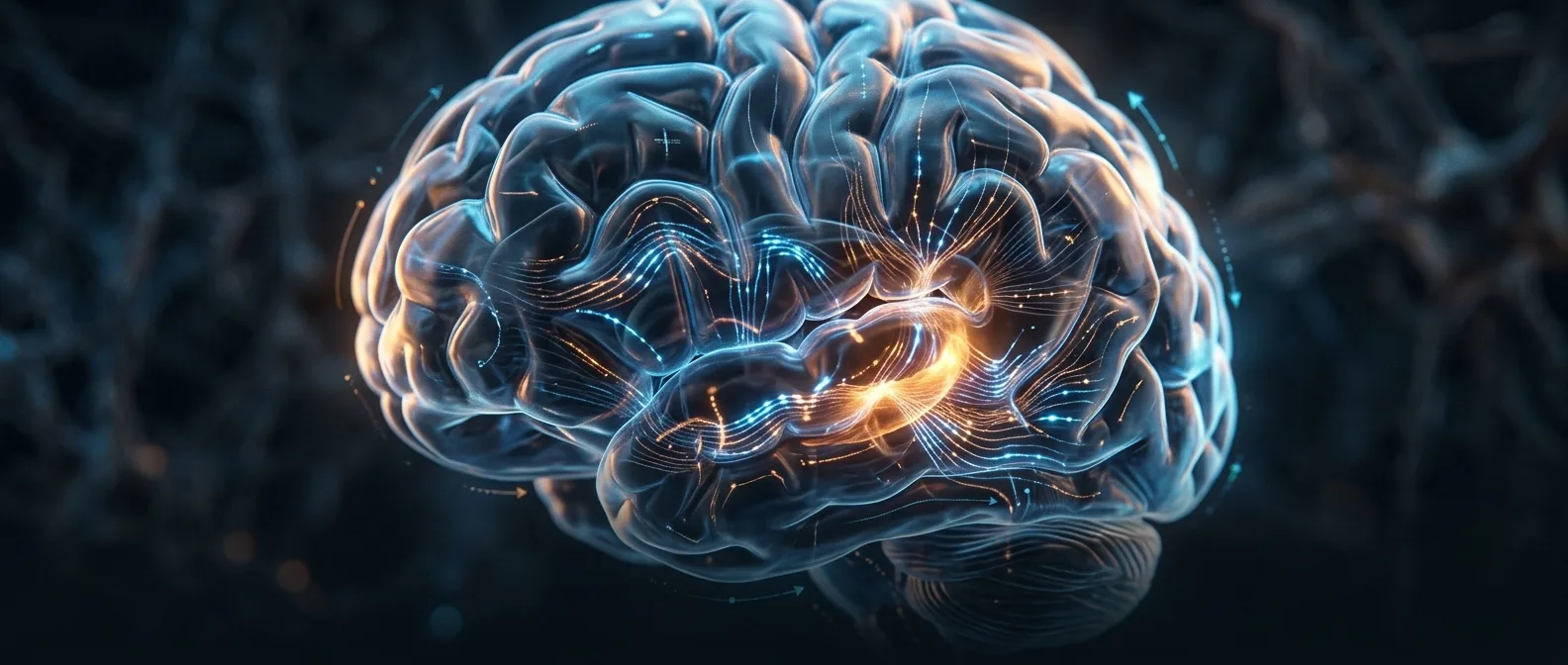
Twenty minutes on a bike. Neural ripples firing through the hippocampus. A groundbreaking 2026 study did something that seemed impossible — it recorded live how cardio exercise activates the brain's memory centers. The results are stunning: even a brief cycling session triggers a cascade of neural signals that supercharge memory connectivity.
We knew the "what" before this. Exercise improves memory, slows brain aging, cuts dementia risk. Now, thanks to research published in Brain Communications, we're seeing the "how" for the first time — from inside the living human brain.
University of Iowa scientists didn't just run another exercise study. They had something rare: direct access to the living human brain through electrodes already implanted for clinical reasons. So they started "listening" to what happens in neural circuits when someone begins pedaling.
🔬 The Mysterious Language of Brain Ripples
What are these brain ripples that suddenly became so crucial?
Sharp Wave-Ripples (SWRs) are brief bursts of high-frequency electrical activity born in the hippocampus and echoing through the cerebral cortex. For neuroscientists, these "waves" rank among the primary signals for creating and consolidating memories.
Picture your brain as an orchestra. Ripples are like moments when every instrument plays in perfect sync — creating a sound so clear and powerful it gets "etched" into memory forever.
In animals, these neural signals often appear during quiet rest or sleep after a learning experience. During those moments, the brain seems to "replay" patterns of neural activity from recent experiences, strengthening synapses in memory circuits.
But in the human brain? That remained largely unknown — until now.
⚡ Electrodes in the Living Brain
To study how exercise affects these ripples, researchers partnered with 14 patients suffering from drug-resistant epilepsy. These people already had electrodes implanted in their brains as part of their pre-surgical evaluation — a rare opportunity for science.
The procedure was relatively simple. First, participants rested while baseline brain activity was recorded. Then they cycled for 20 minutes on a stationary bike at moderate intensity. After exercise, they rested again while electrodes captured what happened in their brains.
What scientists observed had never been directly recorded in the human brain before.
The Secret Connection of the Default Mode Network
After exercise, recordings showed a clear increase in ripple activity. But most striking was where these bursts occurred: they were synchronized with activity in cortical networks that support learning and memory recall.
The most remarkable result was enhanced coordinated function between the hippocampus and the Default Mode Network (DMN) — a network that activates when we turn attention inward and process memories.
"By directly recording brain activity, our study shows, for the first time in humans, that even a single exercise session can rapidly change neural rhythms involved in memory."
Michelle Voss, cognitive neuroscientist, University of Iowa
📊 The Dose-Response Relationship
Another significant finding was a dose-response relationship. Participants who reached higher heart rates during exercise generally showed greater increases in ripple activity.
This means the physiological intensity of training can determine the strength of the neural response. No, you don't need to become an elite athlete. But a little extra effort seems to make the difference.
Heart Rate
Higher cardiac frequency = More intense ripple activity in the hippocampus
Coordination
Better cooperation between hippocampus and cortex for memory processing
Speed
Immediate change — neural activity increases within minutes of exercise
What Does This Mean for Daily Life?
While the study doesn't yet prove these ripples translate directly to higher scores on cognitive tests, it offers a neuroscientific explanation for the "post-exercise clarity" many people experience.
You know that feeling after a good workout? When your thinking feels sharper, memories more vivid, problem-solving easier? Looks like we now have a biological explanation for that.
🧬 The Bigger Neuroplasticity Puzzle
The new research bridges the gap between animal studies and human data. Decades of research had shown exercise leads to neurogenesis — the birth of new neurons — in the hippocampus of rodents. But in humans?
We had suspicions. We had indirect evidence from brain imaging. But never the direct, real-time recording of what happens in neural circuits the moment the body moves.
This 2026 study provides answers — but also raises new questions. How long do these effects last? Are there differences between different types of exercise? What happens with long-term training?
Limitations and Future Questions
The sample is small — 14 people aged 17 to 50 — and all had epilepsy. This could raise questions about whether findings generalize to healthy populations.
However, researchers note that the patterns they observed match those recorded in healthy adults through non-invasive brain imaging. This convergence of methods strengthens the reliability of results.
🎯 Practical Applications for 2026
What does all this mean for those wanting to optimize their mental performance in 2026?
20 minutes of moderate exercise appears to be the magic number. Not a marathon, not a HIIT workout that leaves you exhausted. Simple, consistent, moderate effort.
Timing might also play a role. If ripples truly enhance memory consolidation, then a short workout immediately after a learning session could be ideal for students, professionals training in new skills, or anyone wanting to "lock in" new information.
But let's not forget: this is just the beginning. The research doesn't solve all mysteries around the exercise-brain relationship — it simply opens a window into mechanisms we could only guess at before.
The Next Generation of Research
Scientists are already planning the sequel. Clinical trials in healthy humans, comparisons of different exercise types, long-term follow-up to see if these changes persist.
Meanwhile, other teams are exploring how drugs targeting iron metabolism and cell death could mimic or enhance exercise's protective effects — particularly for people who can't exercise due to physical limitations.
Here we find an interesting paradox: in the age of AI and smart drugs, the most impressive "nootropic substance" remains something as old as humanity itself. Movement.
2026 may have brought us new technologies for cognitive enhancement, but nature had already solved the puzzle millions of years ago. We just needed electrodes in the brain to figure it out.