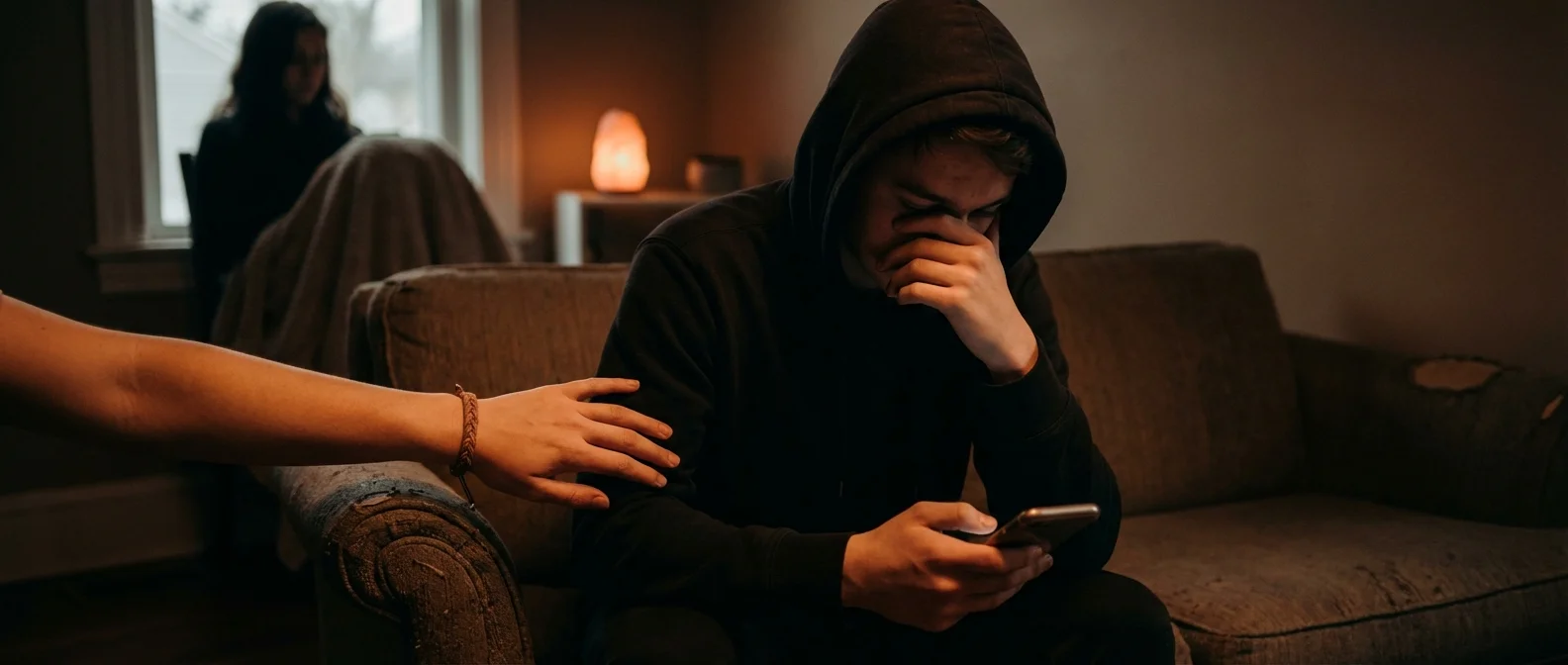
A message, a comment, a screenshot that goes viral — cyberbullying doesn't leave bruises on the body, but it leaves deep wounds on the soul. Unlike traditional bullying, cyberbullying follows the victim everywhere: at home, in bed, in their pocket. There is no safe haven.
What Exactly Is Cyberbullying?
According to the World Health Organization (WHO) and the definition adopted by researchers Smith et al. (2008), cyberbullying is defined as "an aggressive, intentional act carried out repeatedly by a group or individual, through electronic forms of communication, against a victim who cannot easily defend themselves."
The key difference from traditional bullying is that it's not confined to the schoolyard or workplace. Cyberbullying can happen at any time, on any platform — and its traces remain on the internet forever.
Forms of Cyberbullying
Psychologist Robin Kowalski (Clemson University) classifies cyberbullying into distinct categories, each with its own psychological dynamics:
Flaming
Public online arguments with offensive, violent, or abusive messages. The goal is humiliation in front of an audience.
Impersonation
Creating a fake profile using the victim's name/photos to “say” things they never said.
Outing & Trickery
Publishing personal information, photos, or messages without the victim's consent.
Exclusion
Deliberately excluding someone from online groups, group chats, gaming sessions, or social media circles.
Harassment
Repeated threatening or intimidating messages — in DMs, comments, emails, or gaming platforms.
Cyberstalking
Systematic monitoring, intimidation, and threats through digital means — the most serious form.
Psychological Consequences: What Research Shows
A large meta-analysis of 131 studies published in the Journal of Clinical Psychology (Kowalski et al., 2014), updated in 2023 by Zhu et al. in Frontiers in Psychiatry, shows that cyberbullying victims exhibit significantly elevated rates of:
🧠 Mental Health
- Depression: 2-3 times higher risk compared to non-victims
- Anxiety: Generalized anxiety disorder and social anxiety
- PTSD: Post-traumatic stress symptoms, flashbacks, hypervigilance
- Suicidal ideation: 2x increased risk (Hinduja & Patchin, 2019)
👤 Self-Esteem & Identity
- Low self-esteem: Internalization of negative messages
- Shame: Especially in outing/revenge porn cases
- Social withdrawal: Avoidance of online and real-world spaces
- Sense of helplessness: “I can't escape — it's everywhere”
🏫 Academic & Social Functioning
- Grade decline: Difficulty concentrating, unexplained absences
- School avoidance: School environment phobia
- Relationship difficulties: Distrust, avoidance of new friendships
- Physical symptoms: Headaches, stomachaches, insomnia
Why Does Cyberbullying Hurt More?
According to psychologist John Suler (Rider University), creator of the “Online Disinhibition Effect” theory, the internet creates an illusion of anonymity that releases moral brakes. Perpetrators say things online that they would never dare to say face-to-face.
But why is it psychologically more destructive than traditional bullying? Researchers identify at least 5 unique characteristics:
- It never stops (24/7): The bullying follows the victim home, to bed, into their pocket — there is no “end time”
- Massive audience: A screenshot can reach hundreds or thousands of people in minutes
- Permanence: What goes online, stays online. It's not easily deleted — screenshots, caches, reposts
- Perpetrator anonymity: The inability to identify the bully increases fear and insecurity
- Inability to respond: You can't “respond” to fake profiles — the power asymmetry is extreme
Age Groups: Who Is Most at Risk?
👦 Children Aged 8-12
The first generation to enter the internet from elementary school. According to research by the Internet Watch Foundation (2023), children of this age are exposed to cyberbullying mainly through gaming platforms (Roblox, Fortnite) and messaging apps. Their psychological resilience is still developing, making the consequences particularly severe.
🧑 Teenagers Aged 13-17
The most vulnerable group. A major study in JAMA Pediatrics (Hamm et al., 2015) shows that the teenage brain processes social rejection in the same centers as physical pain. An abusive comment on Instagram literally hurts. Identity is being formed, and the need for acceptance is paramount.
🧑💼 Adults
Cyberbullying doesn't end at 18. According to Pew Research (2024), 41% of adults in the US have experienced some form of online harassment. Workplace cyberbullying, trolling, revenge porn, online shaming — the forms change, but the psychological consequences are equally devastating.
The Role of Social Media Platforms
An independent report from Facebook/Meta (Frances Haugen leaks, 2021) revealed that the company knew Instagram was “toxic” for teenage girls — increasing rates of depression, body image concerns, and suicidal ideation. Despite this, no substantial measures were taken.
The structure of social media platforms — with likes, shares, comments, and algorithms that reward “engagement” — creates an environment where negative content (which triggers strong emotions) tends to go viral more easily than positive content.
📊 Platforms with Highest Cyberbullying Rates (Ditch the Label, 2023)
- TikTok — 64% of teens report cyberbullying incidents
- Instagram — 51% negative experiences
- Snapchat — 47% (especially “disappearing” messages)
- Facebook — 28% (mainly adults)
- X (formerly Twitter) — 26% (trolling, pile-on attacks)
How to Recognize That Someone Is a Victim
Cyberbullying victims rarely speak up — especially children and teenagers. According to Dan Olweus, pioneering bullying researcher, the most important signs are:
- Sudden change in technology use: Avoids their phone or, conversely, checks notifications constantly with anxiety
- Emotional instability: Anger, crying, irritability without apparent reason after device use
- Avoiding school/work: Feigning illness, “headaches,” unexplained absences
- Social withdrawal: Stops seeing friends, locks themselves in their room
- Declining grades/performance: Difficulty concentrating, disinterest in things they previously enjoyed
- Physical symptoms: Insomnia, weight loss/gain, chronic fatigue
- Deleting accounts: Sudden deletion of social media or creation of new “hidden” accounts
What You Can Do: A Coping Guide
If you're a victim:
- Don't respond. The bully wants a reaction — don't give them one. Every response feeds the cycle.
- Screenshot everything. Before blocking, save evidence — dates, usernames, messages.
- Report it. Use each platform's reporting tools. They work — especially with multiple reports.
- Block the bully. Block on every platform, without second thoughts.
- Talk to someone. A parent, friend, teacher, or psychologist — silence empowers the bully.
- Seek professional help. If you're experiencing depression, anxiety, or suicidal thoughts, speak to a psychologist — it's not weakness.
If you're a parent:
👨👩👧👦 Advice for Parents
- Create a safe communication environment: Your child needs to know they can talk to you without fearing they'll lose their device
- Don't blame the victim: “Why did you accept that friend request?” — this reaction closes every door to communication
- Learn the platforms: You can't protect against something you don't understand
- Intervene properly: Don't call the bully's parents. Report to the school, the platform, or the authorities
- Build psychological resilience: Teach your child that their worth isn't determined by likes and comments
The Legal Dimension
Many countries now have specific legislation addressing cyberbullying. In the EU, the Digital Services Act (DSA) requires platforms to remove harmful content quickly and provide effective reporting mechanisms. In the US, 48 states have anti-bullying laws that include cyberbullying provisions.
- Criminal harassment laws: Cover repeated threatening or intimidating online messages
- Defamation laws: Apply to false statements made online
- Privacy laws: Protect against unauthorized sharing of private communications
- Revenge porn laws: Criminalize non-consensual sharing of intimate images
If you're experiencing cyberbullying, document everything and report it to local law enforcement or dedicated cybercrime units.
Prevention: What Actually Works?
A meta-analysis of 24 prevention programs (Gaffney et al., 2019, Aggression and Violent Behavior) shows that effective programs reduce bullying by 15-20%. What do they do right?
Digital Citizenship Education
"Digital citizenship" classes — empathy, respect, and responsible internet use, integrated into the school curriculum.
Bystander Intervention
Training “bystanders” — those who witness cyberbullying are in the most critical position: they can stop the cycle.
School Policies
Clear rules, incident reporting, active teacher intervention — structured response, not ignorance.
Social-Emotional Learning (SEL)
Developing empathy, self-regulation, and social skills — the foundations for healthy online (and offline) relationships.
When Is Professional Help Needed?
🚨 Seek help immediately if:
- There are suicidal thoughts or thoughts of self-harm
- Depression or anxiety doesn't improve after 2+ weeks
- There is school/work avoidance for multiple days
- Significant changes in eating or sleeping patterns appear
- The victim expresses feelings of helplessness, hopelessness, or evaluates themselves negatively
Cognitive Behavioral Therapy (CBT) is considered the most effective approach for cyberbullying victims, according to a meta-analysis in Clinical Psychology Review (2022). It helps restructure negative beliefs ("it's my fault"), reduce anxiety, and develop coping mechanisms.
Helpful Resources & Helplines
Crisis Text Line
Text HOME to 741741 for 24/7 crisis support
StopBullying.gov
Official US government resource for bullying prevention
Cyberbullying Research Center
Research-based resources and practical tools
988 Suicide & Crisis Lifeline
Call or text 988 for mental health support
Conclusion
Cyberbullying is not a “kids' problem” nor “something that passes.” It's a form of psychological violence that can leave wounds lasting years — especially in teenagers whose brains and identities are still being shaped. Awareness, prevention, and proper response can save lives.
If you see cyberbullying: don't be a bystander. Be the reason someone felt safe.
📚 Sources & References
- Kowalski, R.M., Giumetti, G.W., Schroeder, A.N., & Lattanner, M.R. (2014). Bullying in the digital age. Psychological Bulletin, 140(4), 1073-1137.
- Hinduja, S. & Patchin, J.W. (2019). Connecting adolescent suicide to cyberbullying. Journal of School Violence, 18(3), 300-316.
- Zhu, C. et al. (2023). Cyberbullying and mental health: A systematic review. Frontiers in Psychiatry, 14.
- Hamm, M.P. et al. (2015). Prevalence and Effect of Cyberbullying on Children and Young People. JAMA Pediatrics, 169(8), 770-777.
- Gaffney, H. et al. (2019). Evaluating cyberbullying prevention programs. Aggression and Violent Behavior, 45, 111-133.
- Pew Research Center (2024). Online Harassment Survey.