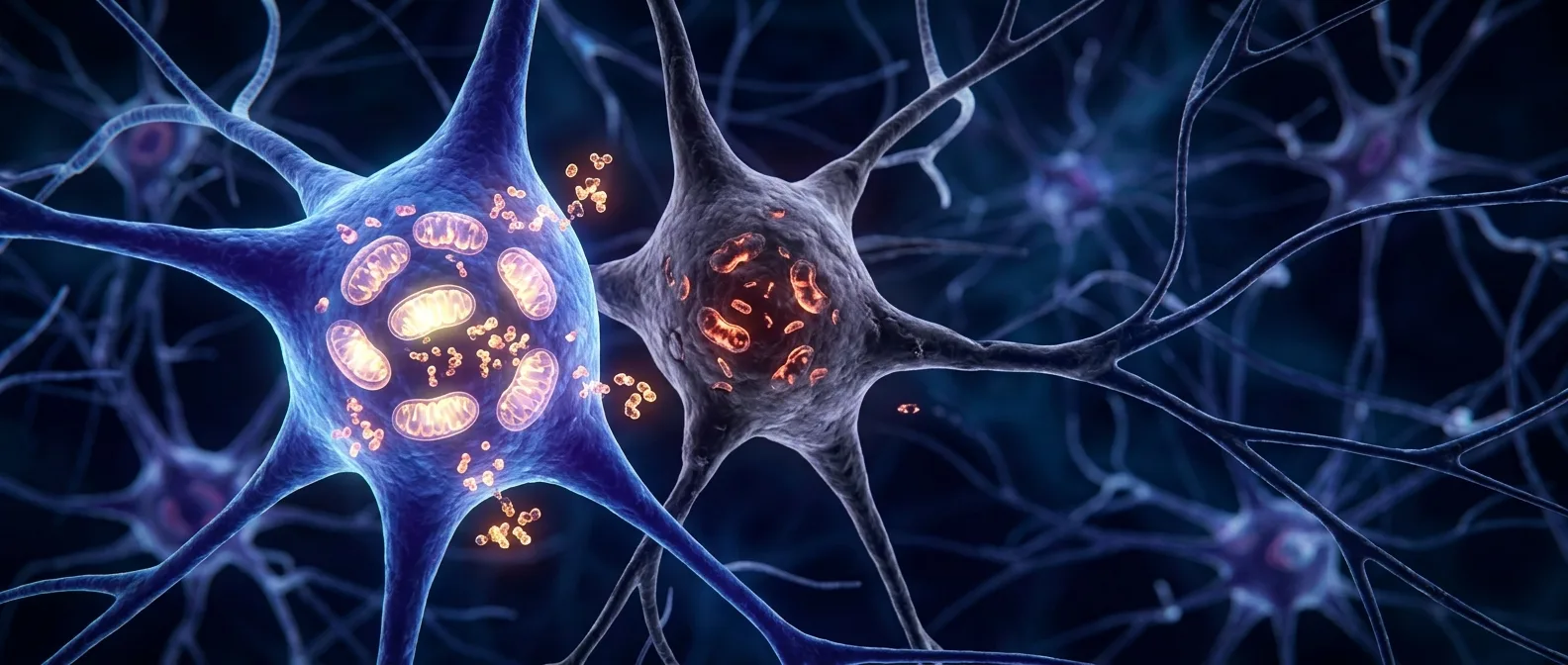
Your brain cells are running a marathon while you're sitting still. University of Queensland research reveals that depression begins with an energy crisis deep inside neurons. Scientists discovered that brain cells in people with depression don't produce too little energy — they produce too much, then burn it all doing nothing. This cellular chaos might explain why depression feels like exhaustion that sleep can't fix.
📖 Read more: Depression's Energy Paradox: Brain Cells Burn More Fuel
🔬 The Biology Behind Mental Collapse
Depression isn't just in your head. It's in your cells. A study published in March 2026 in Translational Psychiatry challenges current understanding of depression's biological roots. Instead of finding sluggish, energy-starved neurons, researchers discovered brain cells working overtime — even when they should be resting. The team from Queensland Brain Institute, working with the University of Minnesota, measured adenosine triphosphate (ATP) — the cell's energy currency — in both brain tissue and blood samples from 18 young adults aged 18-25 with diagnosed major depressive disorder. Dr. Susannah Tye, who led the research, puts it bluntly: "This is the first time we've measured these fatigue patterns in both brain and blood simultaneously." The result? A completely new lens for understanding how depression operates at the cellular level. What they found challenges decades of assumptions. These aren't tired cells struggling to keep up. These are cells burning fuel at maximum capacity while the person feels completely drained.📖 Read more: ATP and Depression: Why the Brain Runs Out of Energy
⚡ When Mitochondria Burn Out in Neutral
Picture a car engine revving at 4,000 RPM while you're parked at a red light. That's exactly what happens in the brain cells of people with depression.Cells from participants with depression produced more ATP molecules during rest periods but showed reduced ability to ramp up energy production when stressed.
Dr. Roger Varela from QBI describes the paradox: "This was surprising because you'd expect energy production to be reduced in people with depression." Instead, the mitochondria — cellular power plants — seem to be working overtime from the disease's earliest stages. This explains why depression fatigue feels different from normal tiredness. You haven't been running marathons or pulling all-nighters. Your cellular engines have been idling at maximum throttle, leaving no reserve power when you actually need to move. The exhaustion isn't from doing too much. It's from your cells doing everything wrong.The Cellular Burnout Chain
The study revealed a specific pattern of cellular dysfunction: - **Stage 1**: Mitochondria overproduce energy during rest periods - **Stage 2**: When extra energy is needed, the system fails to respond - **Stage 3**: Chronic overwork leads to long-term cellular problems "This suggests cells may be overworking early in the disease, which could lead to long-term problems," explains Dr. Varela. The cells aren't lazy — they're burning out from working too hard at the wrong times.📊 Blood Tests for Depression Diagnosis
Behind this discovery lies something even more significant — the possibility of diagnosing depression through a simple blood test. This could alter how we identify and treat mental illness.18-25 participant age range
2026 publication year
The End of Mental Health Stigma?
This research could shift how society views mental illness. Objective biological markers make depression as real and measurable as diabetes or heart disease. No more questioning whether someone is "really" depressed or just having a bad day.📖 Read more: Depression Mitochondria: Energy Crisis in Brain Cells
🧬 The Technical Breakthrough
The study's methodology was impressive. Researchers used 31P magnetic resonance spectroscopy imaging (31P MRSI-MT) on a 7 Tesla machine to measure ATP production in the brain's visual cortex. Simultaneously, they examined ATP levels in blood cells from the same participants. This represents cutting-edge technology that wasn't available for such studies until recently. The ability to "watch" the brain's energy production in real-time opens new possibilities for understanding psychiatric disorders. The precision is remarkable — scientists can now observe how individual brain regions handle energy stress, revealing patterns invisible to traditional brain scans.Fatigue is a common and difficult-to-treat symptom of depression, and it can take years for someone to find the right treatment.
Dr. Susannah Tye, Queensland Brain Institute
The Neuroenergetics Revolution
This study fits into a broader movement examining the relationship between energy and mental health. Researchers are beginning to understand that many psychiatric conditions may have deep metabolic roots. In 2026, this field is gaining serious momentum. From Alzheimer's to autism spectrum disorders, scientists are exploring how cellular energy disruptions connect to brain function. The connections extend beyond depression.📖 Read more: Hidden Brain Circuit: How Big Mistakes Supercharge Learning
🎯 What This Means for Patients
If these findings hold up in larger studies, they could lead to treatments targeting cellular energy improvement directly. Think supplements that enhance mitochondrial function, or drugs that help cells manage their energy production more efficiently.Early Detection
Identify depression through blood tests before symptoms fully manifest
Targeted Therapies
Drugs that improve cellular energy instead of just affecting neurotransmitters
Treatment Monitoring
Objective markers to measure how well a therapy is working