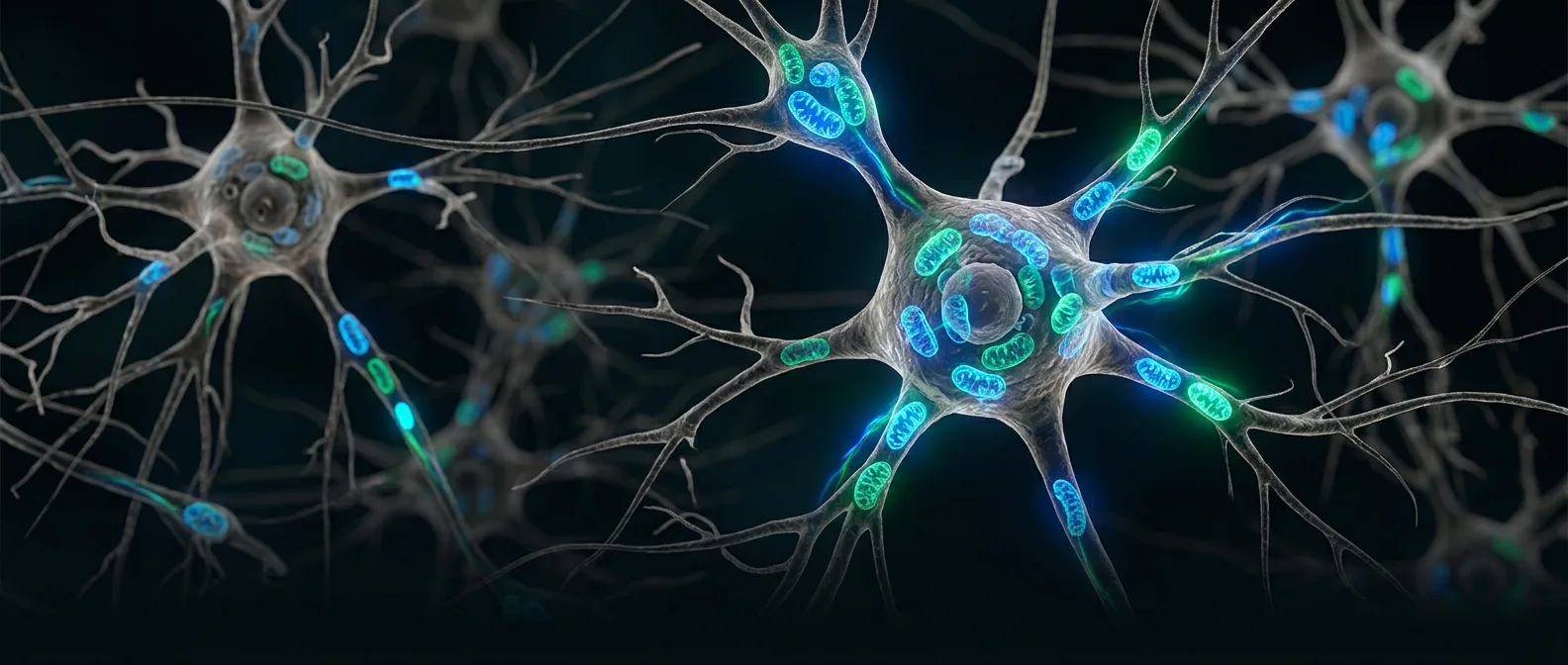
Two months ago, researchers at the University of Queensland shattered everything we thought we knew about depression. They discovered something counterintuitive: brain cells in depressed people don't produce less energy. They produce more.
But here's the twist. While these cells burn extra fuel at rest, they can't deliver when the brain demands more power. Think of a car engine stuck in high idle — burning gas constantly but unable to accelerate when you hit the pedal.
🔬 The Discovery That Rewrites Depression Science
The 2026 study focused on ATP (adenosine triphosphate) — the molecule scientists call the "energy currency" of cells. Researchers measured ATP levels in the brains and blood of 18 young adults with major depressive disorder, comparing them to healthy controls.
The results defied expectations. Depressed participants showed higher ATP production in the brain's visual cortex and blood cells during rest.
The Energy Paradox
Instead of producing less energy, cells burn more fuel at rest but fail to respond when stressed.
Mitochondria at Breaking Point
Dr. Roger Varela from the Queensland Brain Institute explained that "this suggests cells may be overworking early in the disease, which could lead to long-term problems."
The mitochondria — cellular "power plants" — appear to be running at maximum capacity already. When the brain needs extra energy to handle stress or cognitive demands, there's no reserve left to tap.
⚡ From Brain to Blood: A Body-Wide Phenomenon
Perhaps the most striking finding is that this pattern isn't limited to the brain. The exact same dysfunction appeared in blood cells.
This means two things: first, depression affects the entire body at the cellular level. Second — and this is the exciting part — it could lead to a blood test for depression diagnosis.
The 7 Tesla Technology
To measure ATP production in living brains, researchers used an advanced technique called 31P MRSI-MT in a 7 Tesla MRI scanner. It sounds technical, but the concept is simple: they eavesdrop on how energy molecules communicate inside living cells.
It's like listening to mitochondria having conversations while they work.
🧬 The Fatigue Connection Finally Makes Sense
Fatigue ranks among depression's most debilitating symptoms. Now we have a biological explanation that actually makes sense.
"The cells are like a car engine stuck in high idle. It burns fuel constantly, and when you try to drive, there's no extra power to give"
— Neuroscience News, 2026
This state of constant overactivity leads to the exhaustion that depressed people experience. It's not "in their heads" — it's real cellular dysfunction.
Symptoms That Finally Add Up
This discovery explains why depressed individuals feel:
- Deep fatigue even without exertion
- Lack of motivation for activities
- Slow thinking and concentration problems
- Inability to handle stress
All these symptoms connect to cells' inability to produce extra energy when needed.
📊 New Horizons for Diagnosis and Treatment
The research points to concrete diagnostic possibilities. If ATP patterns match between brain and blood, we can develop a blood test for depression diagnosis.
Biological Diagnosis
Blood tests instead of subjective questionnaires
Early Detection
Spotting depression in initial stages
Personalized Treatment Revolution
Dr. Susannah Tye from the Queensland Brain Institute highlighted something crucial: "every patient has different biology, and every patient is affected differently."
This means future treatments could target each person's unique energy "fingerprint." No more one-size-fits-all approaches.
🎯 What This Means for Patients
First and foremost: destigmatization. The research shows depression causes "multiple changes in the body, including the brain and blood, and that depression affects energy at the cellular level."
It's not weakness. It's not lack of willpower. It's measurable biological dysfunction that can be treated.
Early Disease Stages
The study focused on young adults aged 18-25 with recent diagnoses. This is crucial because it suggests energy dysfunction appears early — possibly as a compensatory mechanism.
But what happens long-term? This overactivity might lead to mitochondrial exhaustion — and perhaps that explains why chronic depression proves so treatment-resistant.
🧪 The Methodology Behind the Breakthrough
Researchers didn't just measure ATP levels. They used a technique called "mitochondrial uncoupling" to test what happens when cells face stress.
They found that after this "stress test," cells from depressed individuals showed significantly reduced ATP production capacity. The "reserve tank" is essentially empty.
"It suggests that in early-stage depression, mitochondria in the brain and body have reduced capacity to cope with higher energy demands"
— Dr. Roger Varela, Queensland Brain Institute
From Lab Bench to Clinical Practice
The test they used remains research-grade. It requires a 7 Tesla scanner (few exist worldwide) and specialized staff. But the similarity with blood results means more accessible tests are coming soon.
First clinical applications are expected within five years.
🔮 The Future of Antidepressant Therapy
This discovery targets mitochondrial dysfunction directly. Instead of focusing solely on neurotransmitters, we can target mitochondrial function directly.
Pharmaceutical companies are already searching for compounds that improve cellular energy regulation. Supplements like coenzyme Q10 and creatine are being tested as adjunct therapies.
Lifestyle Interventions with New Foundation
We already know exercise helps depression. Now we understand why: regular physical activity improves mitochondrial function and cellular energy efficiency.
This gives therapists a powerful argument for promoting physical activity — not as generic "good for health" advice, but as targeted intervention for bioenergetic dysfunction.
❓ What We Still Don't Know
The research left major questions unanswered. Is energy overactivity a cause or consequence of depression? Does it appear before symptoms or alongside them?
Also, what happens long-term? If mitochondria "burn out" early in the disease, how does this evolve in chronic depression?
The Next Step
We need larger studies with more participants and longitudinal tracking to understand the complete picture.
The Hundred-Million-Dollar Question
If energy dysfunction appears before clinical symptoms, can we predict who will develop depression? And most importantly: can we prevent it?
These questions demand larger studies with longitudinal tracking. The energy dysfunction pattern gives researchers their first measurable target for early intervention.