Saturday night, Queensland lab. Blood samples under the microscope show something weird. Cells from young people with depression burn more energy than normal — but can't boost production when they need it most. A paradox that might explain why exhaustion dominates this disorder.
New research from the University of Queensland, published March 2026 in Translational Psychiatry, challenges the standard view of depression. Instead of a purely psychological problem, we're looking at an energy crisis — a disorder that starts in the mitochondria.
🔬 The Study That Changed Everything
Associate Professor Susannah Tye and her team at the Queensland Brain Institute examined something nobody had studied systematically before. ATP levels (adenosine triphosphate) — the "energy currency" of every cell — in the brains and blood of 18 young people with major depressive disorder.
What they found wasn't what anyone expected. Not reduced energy, as you'd assume. But a completely backwards pattern.
The Critical Findings
- Higher energy at rest: Cells burned more ATP when there was no demand
- Failure under stress: Inability to increase production during high-demand periods
- Dual location: The phenomenon appeared in both brain and blood cells
How the Study Worked
Researchers from the University of Minnesota collected brain scans and blood samples from participants aged 18-25. The Queensland Brain Institute then analyzed the samples using advanced ATP imaging methods developed by professors Xiao Hong Zhu and Wei Chen.
"This is the first time we've detected these patterns in molecules related to fatigue," explains Dr. Tye. The parallel appearance in brain and blood suggests a systemic dysfunction.
⚡ Mitochondria: The Power Plants Breaking Down
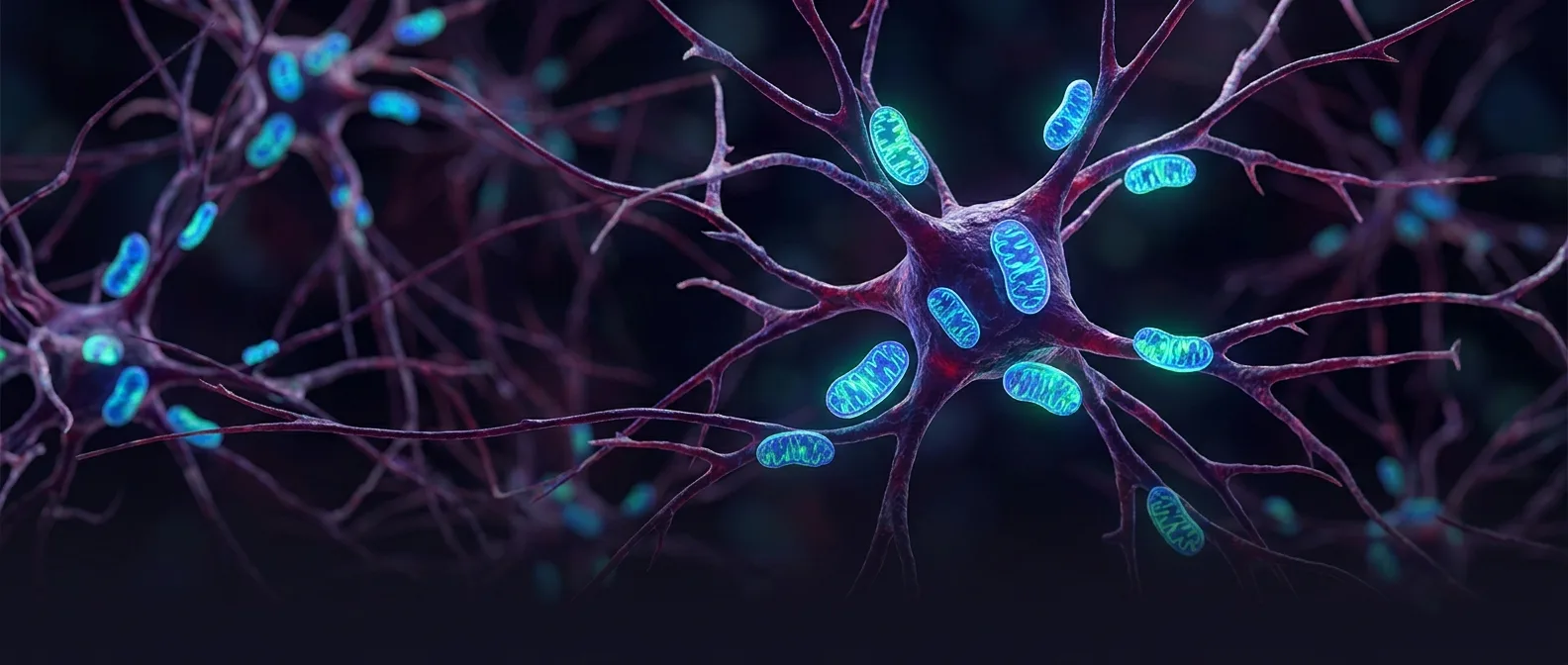
Dr. Roger Varela, co-researcher on the study, describes the phenomenon as cellular "burnout." The mitochondria — microscopic energy production units — appear to be overworking in the early stages of depression.
Think of an engine running constantly at high RPM. When you need more power — say, to climb a hill — it refuses to accelerate further. Something similar happens in the cells of people with depression.
Why Does This Happen?
"Cells may be overworking in the early stages of the disease," Varela explains. This "energy burning" at rest depletes reserves. When the moment comes that you actually need energy — for concentration, motivation, emotional processing — the mitochondria can't respond.
The result? Fatigue that doesn't go away with rest. Brain fog. Lack of energy for basic daily activities.
🧬 From Cell to Behavior
How exactly does mitochondrial dysfunction translate into depression symptoms? The pathway is simpler than we thought.
When neurons lack energy, specific brain regions get hit. The prefrontal cortex — responsible for executive function and motivation. The mesolimbic circuit — which regulates drive and reward.
"Depression isn't just emotional in nature, it involves real, measurable changes in the brain."
— Professor Gustavo Turecki, McGill University
Symptoms That Make Sense
With this model, classic depression symptoms gain biological grounding:
- Fatigue: Cells can't meet energy demands
- Difficulty concentrating: The brain operates on "limited power"
- Loss of interest: The reward circuit lacks necessary "fuel"
- Slow thinking: Cognitive functions require more energy than available
🎯 Toward New Treatment Approaches
If depression is — partly — an energy problem, then treatments need to shift focus. The traditional emphasis on neurotransmitters (serotonin, dopamine) remains important. But maybe we need an "energy" dimension too.
What could this approach include?
Energy Optimization
Targeted interventions for mitochondrial function through diet, supplements, or medications
Early Detection
Simple blood test measuring cellular energy production before symptoms appear
Personalized Treatment
Different approaches based on each patient's "energy profile"
How Would This Work in Practice?
Imagine a doctor who, beyond clinical assessment, orders an "energy" blood test. Results show your cells' ATP patterns. If there's the characteristic depression signature — high production at rest, low flexibility under stress — intervention starts early.
Treatment might combine cognitive-behavioral therapy with targeted mitochondrial interventions. CoQ10, NAD+ precursors, specific exercises that improve mitochondrial function.
📊 What Other Studies Show
The Queensland research isn't isolated. Recent studies from Canada identified specific types of brain cells affected by depression. Researchers at McGill and the Douglas Institute analyzed samples from 59 people with depression, mapping gene activity at the cellular level.
Their findings? Two specific cell types showed changes: excitatory neurons that regulate mood, and microglial cells that control inflammation. In both, gene expression changes in depression.
Combining this data with the energy dysfunction discovery, a comprehensive biological model of depression starts forming.
A Holistic Understanding
We're not talking about a one-dimensional explanation. Depression remains a complex disorder with psychological, social, and biological components. But cellular energy provides a key biological component.
That's why mental health specialists are starting to incorporate "energy" interventions — from exercise to sleep regulation — into their therapeutic approaches.
🔮 The Future of Treatment
If Queensland's research holds up in larger studies, it will radically change how we approach depression. From diagnostic tests to treatment protocols.
Already, biotech companies are exploring methods to improve mitochondrial function. New drug categories targeting cellular energy rather than just neurotransmitters. Even AI algorithms that predict depression likelihood from energy patterns.
Of course, open questions remain. Is energy dysfunction a cause or consequence of depression? Does it appear in all forms of the disorder or only in patient subgroups? How effective will mitochondrial therapies prove to be?
Practical Implications for 2026
- New diagnostic tests measuring cellular energy
- Therapies combining psychotherapy with "energy" interventions
- Early risk detection before classic symptoms appear
- Personalized protocols based on biological profiles
🎯 Frequently Asked Questions
Can I improve my mitochondrial function on my own?
Certain interventions — like regular exercise, quality sleep, and antioxidant-rich diet — might help. However, if depression symptoms exist, professional evaluation is essential.
Will this approach replace traditional therapies?
No — it will likely complement them. Psychotherapy and antidepressant medications remain effective. The energy approach adds a new dimension to therapeutic intervention.
When will cellular energy testing be available?
The technology exists, but more studies are needed to standardize and approve it for clinical use. We're probably looking at 3-5 years before it becomes widely available.
When Dr. Varela first observed those abnormal patterns in cells, he didn't imagine he might be looking at a potential shift in how we approach depression. Today, two years after the discovery, the "energy" theory of depression is starting to change labs and clinics worldwide. The research continues.