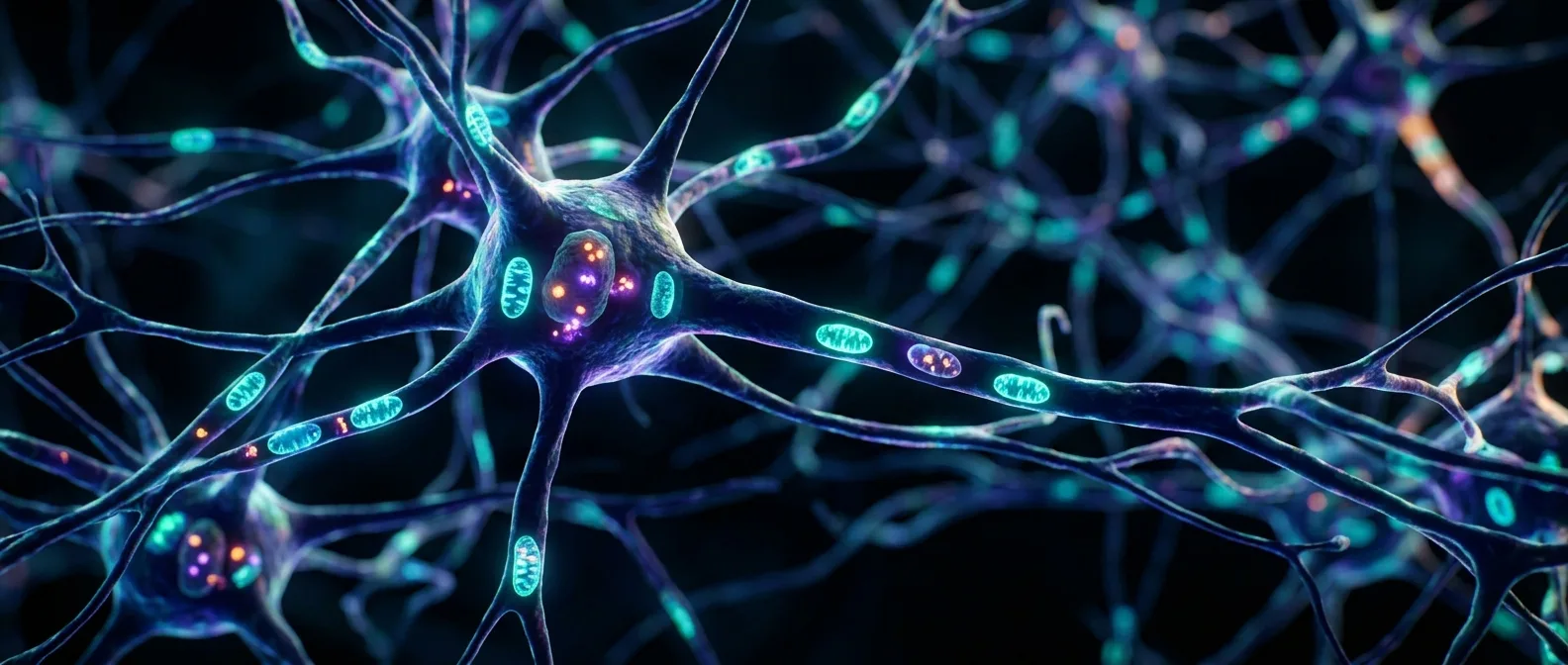
Your phone battery dies at 3%. Your car runs out of gas on the highway. Your brain cells face the same predicament — producing energy but unable to ramp up when you need it most. University of Queensland researchers just discovered that depression might be exactly this kind of cellular power crisis.
📖 Read more: Depression & Mitochondria: Energy Crisis in Brain Cells
🔬 ATP and Mitochondria: Your Brain's Power Grid
ATP is cellular currency. Every thought, every memory, every emotion costs ATP to process. Mitochondria manufacture this energy inside nearly every cell, working overtime to keep your brain running. Your brain burns through 20% of your body's total energy — making it incredibly vulnerable when the power grid starts failing. Queensland Brain Institute researchers examined ATP levels in both brain tissue and blood samples from young adults with major depressive disorder. Their findings contradicted conventional wisdom. The depressed brain cells weren't producing less energy. They were producing more.The Energy Overproduction Paradox
Here's where it gets weird. Brain cells from people with depression showed higher ATP production during rest periods. But when these cells needed to surge energy production — to handle stress, process complex thoughts, or adapt to challenges — they couldn't deliver. "This suggests cells may be overworking early in the disease, which could lead to long-term problems," explains Dr. Roger Varela from QBI. Think of it like a car engine stuck in high RPMs. It's burning fuel constantly but can't shift gears when you need acceleration.⚡ Mitochondrial Dysfunction: When Your Engine Overheats
Mitochondrial dysfunction isn't just a broken part. It's an entire system running at the wrong speed for the wrong reasons. This pattern explains why people with depression feel exhausted even when they haven't done anything particularly demanding.20% Brain's share of total body energy
18-25 Age range of study participants
Why Depression Fatigue Feels Different
Depression fatigue isn't "being tired." It's cellular inflexibility. Your brain cells can't upshift when you need focus, can't downshift when you need rest. They're stuck in one gear, burning energy inefficiently while failing to meet demand. This explains why depressed people often feel simultaneously wired and exhausted — their cells are overproducing energy but can't direct it where it's needed.📖 Read more: Depression's Energy Paradox: Brain Cells Burn More Fuel
🧬 The Study: Brain Scans Meet Blood Tests
The 2026 study, published in Translational Psychiatry, examined 18 participants aged 18-25 with diagnosed major depressive disorder. University of Minnesota researchers collected brain scans and blood samples, which Queensland Brain Institute then analyzed using cutting-edge ATP measurement techniques.The breakthrough? Changes appeared in both brain cells and blood cells. This isn't just a brain problem — it's systemic mitochondrial dysfunction affecting the entire body."This shows that multiple changes are happening in the body, including the brain and blood, and that depression affects energy at the cellular level"
Dr. Roger Varela, Queensland Brain Institute
Advanced Brain Imaging Technology
The ATP measurement method was developed by professors Xiao Hong Zhu and Wei Chen. This technology allows non-invasive monitoring of energy activity in living brain cells for the first time. Previous studies could only examine mitochondrial function in lab conditions. This new approach opens doors to understanding energy dysfunction in real-world scenarios.Why This Matters: For the first time, scientists can watch energy production problems unfold in living brains, not just tissue samples. This could revolutionize how we diagnose and treat energy-related mental health conditions.
📊 Early Detection Implications
The most exciting part isn't what this research found — it's what it promises. If depression begins with cellular energy problems, we might detect it years before classic symptoms appear. Scientist Susannah Tye notes: "Fatigue is a common and difficult-to-treat symptom of major depressive disorder, and it can take years for someone to find the right treatment." Imagine catching depression at the cellular level, before mood changes, before cognitive symptoms, before the condition becomes entrenched.Personalized Treatment Approaches
If every patient has different biology — which this research strongly suggests — then treatments need to become more individualized. Instead of one-size-fits-all approaches, we could develop therapies targeting each person's specific mitochondrial dysfunction patterns.Early Detection
Spot energy problems before symptoms appear
Personalized Medicine
Treatments tailored to specific mitochondrial dysfunction