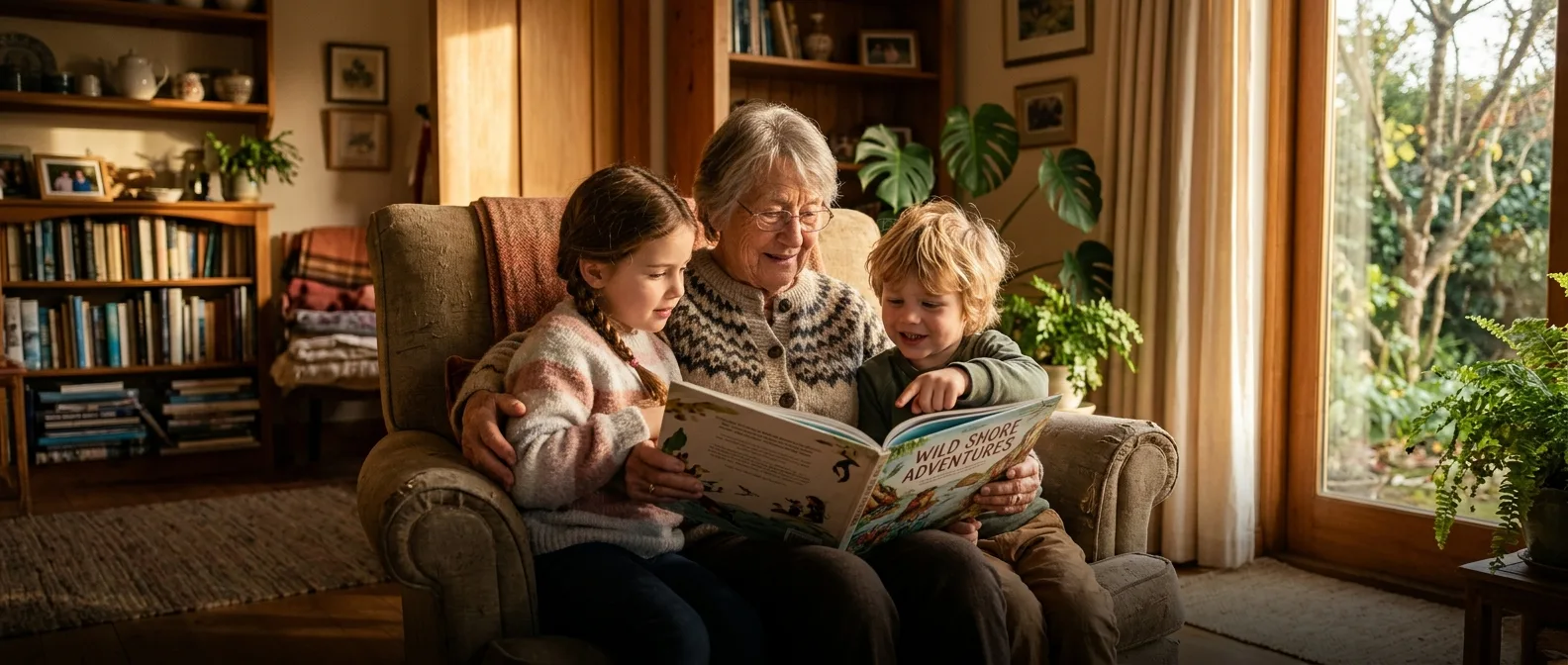
Three thousand grandparents. Six years of tracking. One discovery: those who care for grandchildren have sharper memory and less cognitive decline than those who don't. What surprised researchers at Tilburg University wasn't the frequency of care, but the simple fact of involvement itself.
📖 Read more: Birdwatching Rewires Your Brain to Fight Cognitive Decline
🧠 Cognitive Shield from Caregiving
The research published in January 2026 in Psychology and Aging reveals new patterns in cognitive aging. Researchers led by Flavia Chereches followed 2,887 grandparents over 50 for six years — showing clear differences in cognitive outcomes. Grandparents who provided any form of care to grandchildren scored higher on memory tests and verbal fluency assessments. The kicker? Didn't matter if they watched kids all day or just helped with homework. What counted was being involved in caregiving at all.The results held steady even after researchers controlled for age, general health, and economic factors. The protection against cognitive decline appeared to stem from the caregiving experience itself.
The Magic of Focus
Why does this happen? The answer might lie in the nature of interacting with children. When a grandparent cares for a grandchild, they're forced to focus exclusively on one activity. No multitasking, no scattered attention — just play, reading, or conversation. This "mono-activity" is something we lose with age. We typically become less mentally flexible, more rigid in our behaviors. But grandchildren force us into their world — and there we need problem-solving skills, creativity, even storytelling abilities.📊 The Numbers Tell the Story
2,887 Participating grandparents
67 Average age of participants
6 Years of follow-up
Spectrum of Caregiving Activities
What counts as "caring for grandchildren"? The study captured an impressive range: - Overnight stays with grandkids - Caring for sick children - Play and recreational activities - Help with school assignments - Transportation to school and extracurriculars - Meal preparation All activities showed similar protective effects on cognitive function.📖 Read more: Brain Memory Study Rewrites Everything We Thought We Knew
⚡ Gender Differences in Cognitive Benefits
Grandmothers appear to benefit more from caring for grandchildren — at least long-term. The study showed grandmothers who provided care experienced less cognitive decline over time compared to those who didn't. Why this difference? Researchers don't offer a definitive answer, but theories exist. Traditionally, women have more experience caring for children, so they might feel more comfortable in this role. Alternatively, they might engage more emotionally, activating different neurological processes."What surprised us most was that the mere fact of taking on a caregiving role seemed to matter more for cognitive function than how often grandparents provided care."
Flavia Chereches, Tilburg University
📖 Read more: Cortisol Hijacks Your Brain's GPS: Why Stress Makes You Lost
🔬 Neurological Hypotheses
How exactly does caring for grandchildren protect against cognitive decline? Several theories deserve examination.The Neuroplasticity Theory
The brain remains "plastic" throughout life — meaning it can form new neural connections. Interacting with children requires processing complex social cues, switching between activities, and constantly adapting to the child's needs. This might function as "exercise" for the brain.Social Engagement and Stress
Social isolation is a known risk factor for cognitive decline. Caring for grandchildren ensures regular social contact, life purpose, and feelings of usefulness. Simultaneously, it might reduce stress levels — unless the situation becomes overwhelmingly burdensome.Executive Functions
Planning activities, supervising play, managing time
Language Skills
Reading stories, explaining concepts, word games
Problem Solving
Handling tantrums, settling disputes, finding solutions
🎯 Context Matters
But there's another side to this coin. Not all grandchild care is beneficial. Researchers emphasize that family context plays a crucial role. Voluntary caregiving within a supportive environment can have completely different effects from care provided under pressure or in stressful circumstances. When grandparents feel caregiving is a burden rather than a choice, the benefits might vanish.Generational Conflicts
In clinical practice, as psychologists note, many multigenerational families face boundary and expectation problems. Some grandparents feel exploited, while others complain they're not consulted about child-rearing decisions. These conflicts might cancel out the neurological benefits of caregiving. Stress from family tensions is known to negatively affect cognitive function.📖 Read more: Digital Detox: A Complete Guide to Screen Detoxification