📖 Read more: Burnout: 10 Signs You've Reached Your Limit
Why It Happens
Anticipatory Anxiety
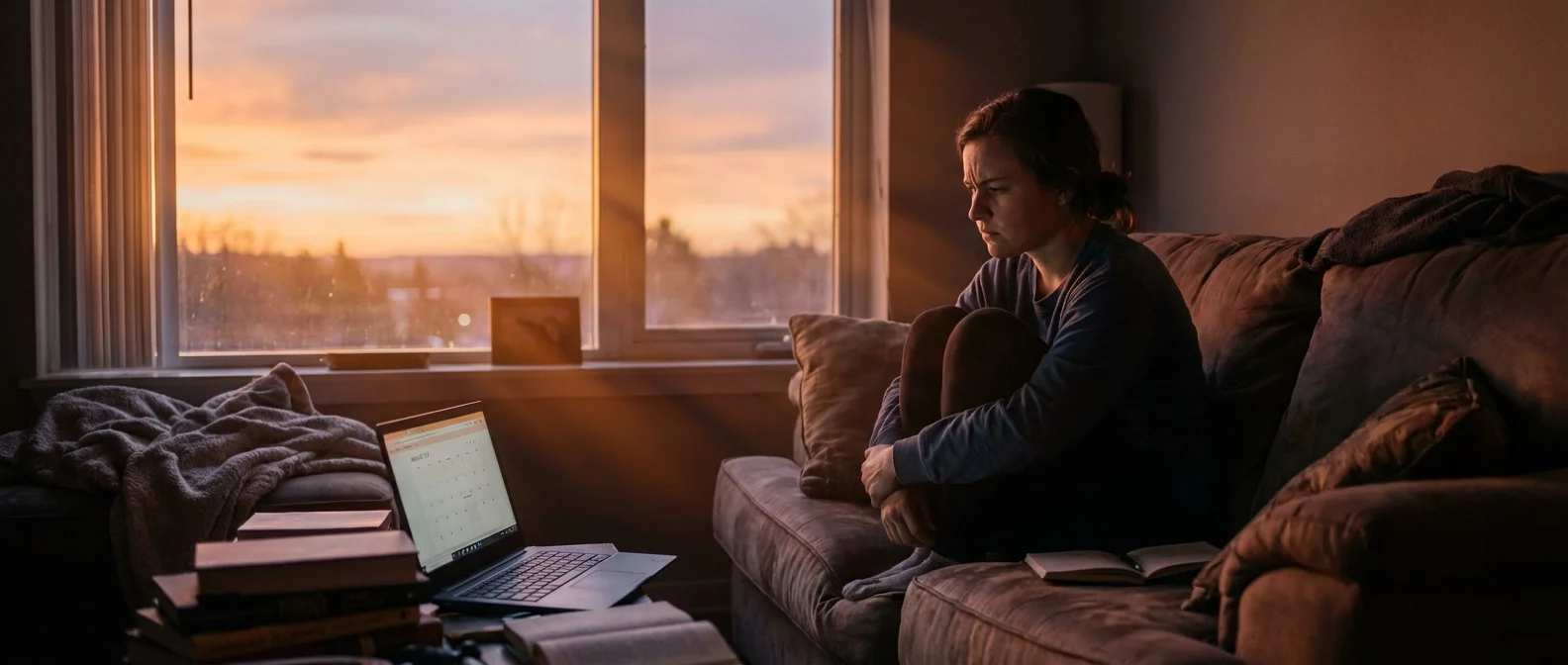
The brain predicts stressful situations before they even happen. Monday hasn't arrived yet, but the body is already reacting as if it's here.
Social Jet Lag
On weekends you change your sleep schedule (Tsai & Li, 2004). The body has to abruptly readjust on Sunday — and this sudden transition increases stress.
Insufficient Detachment
Sonnentag & Fritz (2015) show that those who don't psychologically disconnect from work on weekends feel more exhausted on Sunday.
📖 Read more: Insomnia & Anxiety: The Vicious Cycle & the Way Out
What You Can Do
Keep a consistent sleep schedule even on weekends. Don't stay up late Friday/Saturday and expect to feel fine on Sunday.
Make a plan for Monday. Write down 3 things you'll do Monday morning. Anxiety decreases when there's a plan.
Create a Sunday night ritual you enjoy: a bath, a movie, cooking. Something to look forward to.
Don't check emails. Seeing work messages on Sunday activates your “work brain” during rest time.
📖 Read more: Panic Attacks: Causes, Symptoms & Treatment
Sunday Scaries aren't weakness. They're a signal that something needs to change in your relationship with work or your free time.
Scientific Sources
- Sonnentag, S. & Fritz, C. (2015). Recovery from job stress: The stressor-detachment model. Journal of Organizational Behavior, 36(S1), S72–S103. DOI: 10.1002/job.1924
- Tsai, L. L. & Li, S. P. (2004). Sleep patterns in college students. Journal of American College Health, 53(5), 231–238. DOI: 10.3200/JACH.53.5.231-238
- LinkedIn Workforce Confidence Survey (2021). Sunday evening anxiety in professionals.