💉 HPV: The Invisible Enemy Behind Millions of Cancers
The human papillomavirus (HPV) is the most widespread sexually transmitted virus in the world. Nearly every sexually active adult will come into contact with it at some point in their life. In most cases, the immune system neutralizes the virus without symptoms. However, certain high-risk strains — particularly HPV16 — can lead to cancer, often decades after the initial infection.
HPV is responsible for nearly 99% of cervical cancers, but its threat extends far beyond that. A significant percentage of oropharyngeal, laryngeal, anal, and penile cancers are also linked to the virus. Globally, over 690,000 new cancer cases each year are attributed to HPV — making it the second most common virus-related cause of cancer. Preventive vaccines, such as Gardasil 9, have dramatically reduced new infections in young people. However, these vaccines don't help those who are already ill — and that's exactly where therapeutic vaccines come into play.
🧬 From Prevention to Treatment: A New Generation of Vaccines
Unlike classic preventive vaccines that block infection, therapeutic vaccines are designed for people who have already developed HPV-related tumors or precancerous lesions. Their goal is bold: to “wake up” the immune system so it recognizes and attacks cancer cells carrying viral proteins. It is essentially a form of immunotherapy through vaccination.
Multiple research teams across Europe and America are working simultaneously in this field, using different technological approaches — from modified viral vectors and silica nanoparticles to spherical nucleic acids and lipid nanoparticles. The common thread: all target the E6 and E7 oncoproteins, the molecules HPV16 uses to disable the cell's anti-cancer defense mechanisms and transform healthy cells into cancerous ones.
🔑 How Does a Therapeutic HPV Vaccine Work?
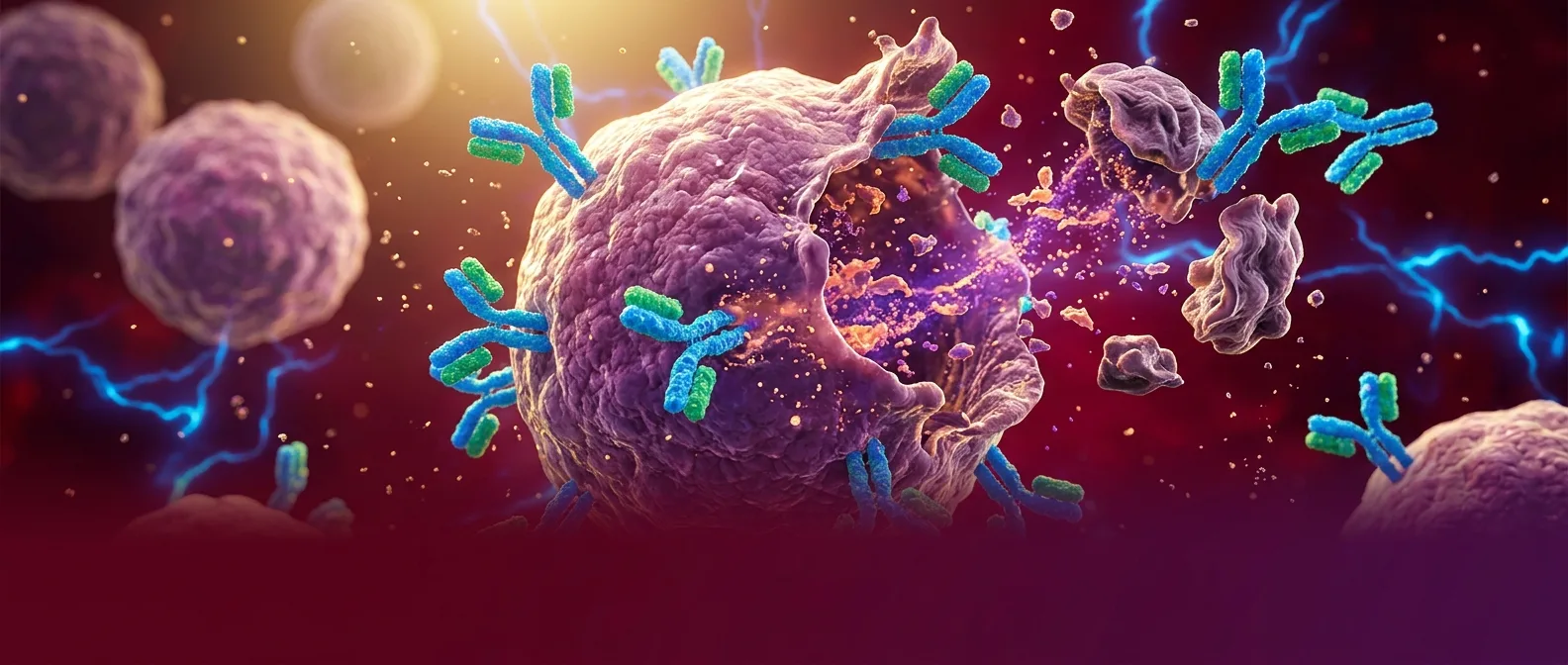
Therapeutic vaccines deliver fragments of the viral proteins E6 and E7 to antigen-presenting cells of the immune system. These, in turn, activate cytotoxic T cells — the immune system's “killer soldiers” — which specifically recognize and destroy cells expressing the viral proteins. In other words, the vaccine turns the patient's own body into a living weapon against cancer.
🔬 Impressive Clinical Results
The most advanced therapeutic vaccine, Vvax001, was developed at the University Medical Center Groningen in the Netherlands. It is based on a modified Semliki Forest virus that cannot replicate and produces the E6 and E7 oncoproteins expressed exclusively by HPV16-infected cells. In a Phase II clinical trial, 18 patients with HPV16-positive CIN3 lesions — the highest stage before invasive cervical cancer — received three doses of the vaccine at three-week intervals.
The results were impressive: nine of the 18 patients showed lesion regression, of whom three had complete disappearance of all traces of dysplasia. Ten of the 16 evaluated patients achieved complete elimination of the HPV16 virus. After a median follow-up of 20 months, no patient experienced a relapse. "If confirmed in a larger trial, our results could mean that at least half of CIN3 patients would avoid surgery," said Dr. Refika Yigit, lead researcher of the study.
Meanwhile, researchers at Northwestern University developed a vaccine based on spherical nucleic acids (SNAs) — spherical DNA nanoparticles that enter immune cells far more effectively than linear DNA. Each SNA particle consists of a lipid core, surrounded by an adjuvant that mimics bacterial DNA, and a fragment of HPV protein from cancer cells. Placing the antigen on the outer surface of the nanoparticle proved critical: cytotoxic T cells produced up to eight times more interferon-γ, a key anti-cancer signaling protein.
In tests on tissues from patients with HPV-positive head and neck cancer, this vaccine destroyed two to three times more cancer cells compared to alternative designs. "This result didn't come from adding new ingredients or increasing the dose. It came from presenting the same elements in a smarter way," said Dr. Jochen Lorch, director of medical oncology at Northwestern Medicine. The study was published in February 2026 in the journal Science Advances.
🛡️ Nanotechnology in the Service of Immunology
A third groundbreaking vaccine comes from the collaboration between the German Cancer Research Center (DKFZ) and Heidelberg University. Angelika Riemer's team uses silica nanoparticles — an extremely stable and biocompatible material known as silicon dioxide — as a vaccine carrier. The particles are first coated for biocompatibility and then loaded with viral protein fragments recognized by the human immune system.
After injection, specialized immune cells — antigen-presenting cells — absorb the nanoparticles and display the viral epitopes on their surface, activating cytotoxic T cells. In mice with “humanized” immune systems, the vaccine achieved partial or complete suppression of HPV-positive tumors, while vaccinated animals survived significantly longer. A critical advantage of this approach is thermal stability: silica-based vaccines don't require a strict cold chain, making them ideal for use in developing countries in Africa and Southeast Asia, where cervical cancer remains particularly deadly.
"These are encouraging results that confirm our decision to continue developing the nanoparticle vaccine system. It is versatile and could be used in the future not only against HPV-related cancers, but also against other tumors or infectious diseases."
🏥 The Road to the Treatment of the Future
Researchers emphasize that therapeutic vaccines do not replace conventional treatments — at least, not yet. Their greatest promise lies in combining them with surgery, radiation therapy, and immunotherapy. As Dr. Ezra Cohen, a head and neck cancer specialist at UC San Diego Health, noted, "one can envision a multimodal approach that initially clears the disease and then the vaccine prevents relapses."
The structure of these vaccines is increasingly emerging as a critical success factor. "The fundamental discovery is that vaccine structure makes a significant difference," Cohen emphasized. "A successful vaccine strategy isn't just about choosing the right antigens but also placing them in the right sequence with the other vaccine components." SNA inventor Chad Mirkin from Northwestern believes this approach could revive older vaccine formulations that initially seemed promising but failed — perhaps simply because their components were “in the wrong arrangement.”
Meanwhile, at UMass Amherst, researchers created a dual-adjuvant lipid nanoparticle vaccine that achieved prevention of up to 88% of aggressive cancers in animal models — including melanoma, pancreatic cancer, and triple-negative breast cancer. Vaccinated mice that survived the initial tumor challenge remained cancer-free even after a second exposure months later, demonstrating that the immune system creates long-term memory. This platform has already led to the creation of NanoVax Therapeutics, aiming to transition to human clinical trials.
The challenge remains significant: laboratory and animal model results don't always translate successfully to humans. “The real test is in humans,” Cohen acknowledged. However, the strong preclinical data significantly increase the chances of success. And in the case of Vvax001, human results are already here — and they clearly show that the treatment works.
As nanoparticle technology, spherical nucleic acids, and new immunotherapy methods converge, the idea of a vaccine that treats — and perhaps permanently cures — HPV cancer is becoming increasingly real. For the millions of patients worldwide already living with HPV-related tumors or precancerous lesions, hope has never been so tangible and so grounded in science.
📚 Sources
- ScienceDaily - A therapeutic HPV vaccine could eliminate precancerous cervical lesions
- Phys.org - Therapeutic vaccination against HPV-related tumors: Nanoparticles make difference
- Live Science - Cancer vaccine shows promise against HPV-related throat tumors
- New Atlas - Next-gen vaccine prevents up to 88% of aggressive cancers