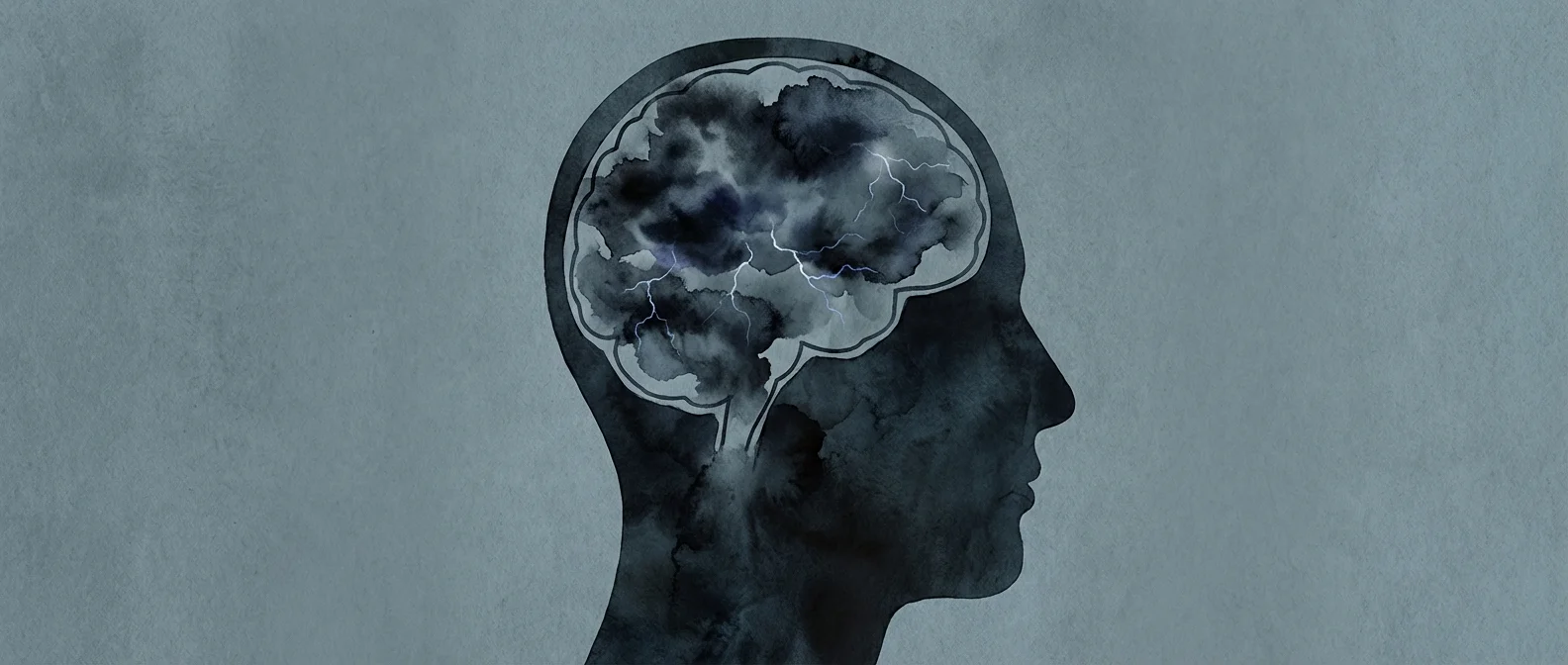
🧠 When Melancholy Hides Something Deeper
Depression is often considered a normal response to aging — loss of loved ones, loneliness, physical limitations. But new scientific evidence shows that, in some cases, depression in older adults is not merely psychological — it is neurological. The brain may already be undergoing changes that will lead, years later, to Parkinson's disease or dementia.
A landmark study published in February 2026 in the journal General Psychiatry provides the most detailed longitudinal evidence to date. Researchers from Denmark, led by Christopher Rohde, analyzed the country's national health registries and identified 17,711 individuals diagnosed with Parkinson's disease or Lewy body dementia between 2007 and 2019. They compared them with patients of similar age and sex who suffered from other chronic conditions — rheumatoid arthritis, chronic kidney disease, osteoporosis.
The results were striking: depression appeared more frequently and earlier in those who later developed Parkinson's or Lewy body dementia, compared to patients with other chronic diseases. The risk of depression increased steadily in the years before diagnosis, peaking in the three years preceding it.
🔬 Neurodegeneration: The Invisible Beginning
Why does depression appear first? Neuroscience offers an explanation: neurodegenerative changes in the brain begin long before the characteristic motor or cognitive symptoms become apparent. In Parkinson's disease, the destruction of neurons in the substantia nigra — the region that produces dopamine — begins decades before tremors or rigidity manifest. But dopamine doesn't just control movement: it also regulates mood, motivation, and the sense of pleasure.
Meanwhile, the serotonin neural circuits — involving the key neurotransmitter associated with depression — are affected earlier by the accumulation of abnormal proteins. In Lewy body disease, the protein alpha-synuclein accumulates in brain regions that regulate mood before reaching the motor areas. Depression, therefore, is not a reaction to the disease — it is a symptom of the earliest brain changes.
💡 Why Is Lewy Body Dementia Even More Closely Linked to Depression?
The findings were particularly striking for Lewy body dementia: depression rates were higher even than in Parkinson's disease, both before and after diagnosis. This is likely explained by the greater diffuse damage that Lewy bodies cause in brain regions controlling both mood and cognitive function, creating a more complex clinical profile.
🩸 Biomarkers: The New Generation of Early Diagnosis
The discovery that depression may signal neurodegeneration doesn't stand alone. Recent research has developed tools that can confirm whether a patient's depression is caused by neurodegenerative changes. A study from King's College London, published in Nature Communications, revealed that the NfL protein (Neurofilament Light Chain) — a marker of neuronal destruction — can be detected through a simple blood test and reveal whether depression is linked to underlying neurodegeneration.
This test was able to identify 13 different neurodegenerative conditions, including Parkinson's disease, frontotemporal dementia, and Alzheimer's disease. While it cannot diagnose exactly which disease is present, it can serve as an alert marker in memory clinics, helping doctors determine whether a patient's cognitive or psychiatric problems are linked to neurodegeneration or other causes.
Meanwhile, research data from Harvard Medical School strengthened the hypothesis that amyloid plaque levels — the key pathological hallmark of Alzheimer's disease — are directly correlated with the severity of depressive symptoms. In a study of 276 cognitively healthy elderly individuals followed for seven years, those with the highest initial amyloid levels showed the greatest increase in depression and cognitive decline.
⚕️ Depression or Apathy? The Importance of Distinction
The relationship between psychiatric symptoms and neurodegeneration is more complex than it appears. Researchers from the University of Cambridge emphasize that apathy — a state of reduced motivation and goal-directed behavior — is different from depression and may be an even more accurate marker of early dementia.
In a study of over 450 individuals with cerebral small vessel disease, increasing apathy was significantly associated with subsequent development of dementia — something that did not hold true for depression alone. This means that the confusion between apathy and depression in clinical scales may partly explain the contradictory research findings.
This distinction has practical significance: an elderly person who “no longer cares about anything” may not be suffering from classic depression but rather exhibiting apathy due to damage in the brain's white matter networks — an early sign of neurodegeneration that requires a different approach to treatment.
"Depression that appears before the diagnosis of Parkinson's or Lewy body dementia cannot be fully explained as an emotional reaction. This suggests that it reflects early neurodegenerative changes in the brain."
🛡️ What This Means for Patients and Doctors
These findings do not mean that every elderly person with depression will develop Parkinson's or dementia. Depression is a multifactorial disease with many causes. However, researchers emphasize that new-onset depression in older adults deserves particular attention.
The clinical significance is enormous: early recognition of psychiatric symptoms as potential prodromal signs of neurodegeneration can open a therapeutic window. Although there is still no cure for Parkinson's disease or Lewy body dementia, early intervention — antidepressant treatment, cognitive stimulation, physical exercise — can significantly improve quality of life and potentially slow cognitive decline.
The study recommends systematic screening for depressive symptoms in patients with Parkinson's and Lewy body dementia, but also the reverse: elderly individuals experiencing depression for the first time should also be evaluated neurologically. Incorporating blood tests for biomarkers like NfL could make this process faster, cheaper, and less invasive.
The brain, ultimately, speaks before the disease finds its name. Depression may be the first word of a story that is just beginning — and medicine must learn to listen.
📚 Sources
- Rohde, C. et al. (2025). «Depression preceding and following the diagnosis of Parkinson's disease and Lewy body dementia.» General Psychiatry, 38(6), e102405. DOI: 10.1136/gpsych-2025-102405
- ScienceDaily. «Depression may be the brain's early warning sign of Parkinson's or dementia.» ScienceDaily, Feb 2026
- Gatchel, J. et al. (2019). «Amyloid-β and Tau Associations with Depression and Cognitive Decline.» JAMA Network Open. JAMA Network Open
- Hye, A. et al. (2021). «Blood NfL as a biomarker for neurodegeneration.» Nature Communications. Nature Communications
- Tay, J. et al. (2020). «Apathy as an early sign of dementia.» Journal of Neurology, Neurosurgery, & Psychiatry. JNNP