🔬 The Discovery of the CaMKK2 Enzyme
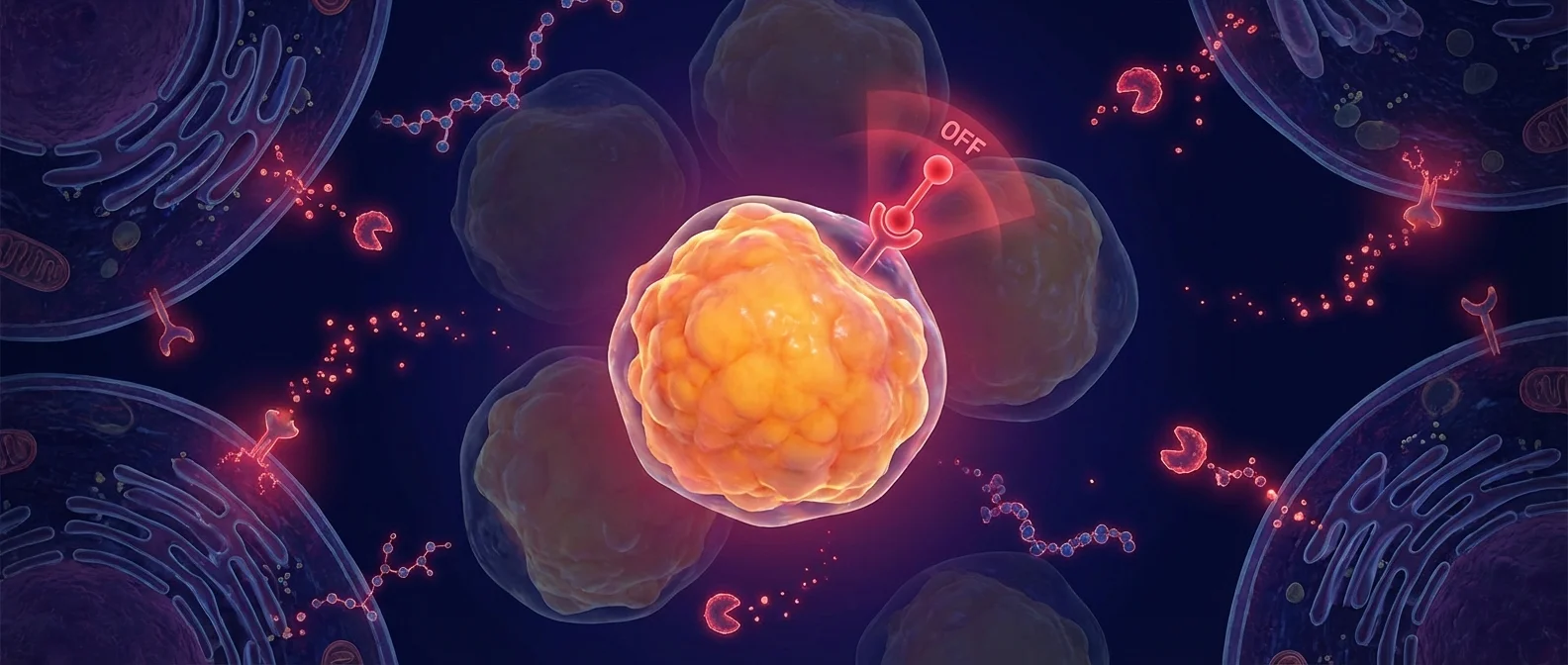
A team of researchers from Monash University in Melbourne and Baylor College of Medicine in Texas published a landmark study in the scientific journal Molecular Metabolism, highlighting the key role of an enzyme called CaMKK2 (calcium/calmodulin-dependent protein kinase kinase 2). This molecule functions as a central regulator of energy metabolism throughout the body, while also coordinating the inflammatory responses of macrophages — immune cells found in our tissues that are responsible for “engulfing” bacteria, damaged cells, and invaders.
As Dr. John Scott, senior researcher at the Monash Institute of Pharmaceutical Sciences, explains: "Obesity is associated with a continuous, low-grade inflammation in key organs that control metabolism, such as the liver, adipose tissue, and muscles. This inflammation plays a role in conditions like insulin resistance and type 2 diabetes." The primary driver of this process is the accumulation of macrophages in these organs: when the body is under stress — for example, from a high-fat diet — inflammatory macrophages shift to faster but less efficient modes of energy production.
🧪 The Experiment: Mice Without CaMKK2
The scientists created genetically modified mice in which the CaMKK2 enzyme was removed exclusively from myeloid cells — a group of immune cells that includes macrophages, neutrophils, and dendritic cells. The modified mice, along with normal control mice, were fed a high-fat diet for several weeks.
The results were remarkable. While the normal mice gained significant weight, the mice without CaMKK2 fully resisted weight gain and fat mass increase — despite eating the same amount of food. The reason? The modified animals burned more energy. They also showed lower blood sugar levels, improved glucose tolerance, better insulin sensitivity, and complete protection from fatty liver disease.
⚙️ How the Switch Works
In normal obesity, macrophages in adipose tissue shift into an inflammatory state, which leads to insulin resistance. Without CaMKK2, the researchers discovered that this chain reaction is radically reversed. Macrophages lacking the enzyme had an anti-inflammatory profile, produced minimal inflammatory signals, and showed a clear preference for burning fat as fuel through increased fatty acid oxidation.
Meanwhile, the mitochondrial function of these cells improved dramatically — the mitochondria, the cell's “energy factories,” worked more efficiently. The effect was not limited to immune cells: the entire adipose tissue was remodeled. It exhibited a “beiging” phenomenon, in which genetic programs promoting fat burning and thermogenesis were activated.
🔑 Why This Discovery Matters
Unlike GLP-1 drugs (such as Ozempic) that primarily reduce appetite, targeting CaMKK2 acts on an entirely different level: it reprograms the way immune cells manage energy. The mice didn't eat less — they burned more. This means a combination therapy could be developed, attacking obesity simultaneously on two fronts: reducing food intake and increasing energy expenditure.
🧬 From White to Beige: The Magic of Thermogenesis
To fully understand the significance of this discovery, a brief explanation of adipose tissue types is needed. Our body contains three basic types of fat: white, which stores energy; brown fat, which burns energy by producing heat; and beige, which sits somewhere in between — it starts as white but can be “activated” to burn energy like brown fat.
The conversion of white adipocytes to beige — the so-called “beige transformation” — is one of the most attractive therapeutic targets in obesity research. Instead of removing fat, you force it to burn internally. The CaMKK2 study showed that deactivating the enzyme in macrophages triggers exactly this process in adipose tissue.
This discovery is not isolated. A historic study by MIT and Harvard Medical School, published in the New England Journal of Medicine, previously revealed the corresponding genetic mechanism: in the FTO genomic region, a single nucleotide change determines whether the IRX3 and IRX5 genes will be activated, shutting down thermogenesis and leading to fat accumulation. Using CRISPR/Cas9, researchers were able to toggle between “lean” and “obese” metabolic profiles in human cells.
"Our findings show that when the CaMKK2 gene is removed from certain immune cells, adipose tissue shifts its activity toward a healthier direction. The genes in fat begin to function in ways that support better metabolism and reduce harmful inflammation."
🏥 The Bigger Picture: New Fronts Against Obesity
The CaMKK2 discovery is part of a wave of recent research that is radically changing the understanding of obesity as a disease. In January 2026, KAIST researchers in South Korea identified an epigenetic switch through the YAP and TAZ proteins, which can block the creation of new adipocytes by inhibiting the “master regulator” PPARγ. In mice, deactivating the Hippo system that regulates YAP/TAZ led to reversal of adipocyte maturation — the cells “unlearn” how to be fat cells.
Meanwhile, in December 2025, researchers in Brazil discovered that the hormone FGF19 — produced primarily in the small intestine — sends signals to the hypothalamus in the brain, activating thermogenic adipocytes through the sympathetic nervous system. FGF19 not only increases energy expenditure but also reduces inflammation in peripheral tissues. This approach resembles the mechanism of action of semaglutide (Ozempic), but operates through entirely different receptors.
Each of these discoveries offers a different “button” on the metabolism control panel. Targeting CaMKK2 changes immune cell behavior. YAP/TAZ affects the creation of adipocytes. FGF19 activates brain thermogenesis pathways. Together, they outline a multi-layered strategy against obesity that could replace — or complement — today's drugs.
⚠️ Challenges and Next Steps
Despite the excitement, there are significant limitations. The findings come primarily from animal models and have not yet been applied to humans. The compound STO-609, used to inhibit CaMKK2, is not selective enough and has poor pharmacokinetic properties, making it unsuitable for clinical use. The development of new, selective inhibitors with pharmaceutical potential is needed.
Additionally, while macrophages showed increased fatty acid oxidation in laboratory dishes, it was not directly proven that this occurs to the same degree in living organisms. However, the research team is optimistic: given that macrophage-driven inflammation is also involved in atherosclerosis, infections, and certain cancers, CaMKK2 inhibition could have much broader benefits.
Obesity is no longer a simple equation of “calories in, calories out.” These discoveries show that hidden molecular switches determine whether our body will store or burn energy — and that science is closer than ever to manipulating them. If laboratory promises translate into treatments, the next generation of anti-obesity drugs may not simply ask us to eat less — but “reprogram” the way our body processes fat.
📚 Sources
- • Scott, J. et al. (2025). CaMKK2 in myeloid cells and diet-induced obesity. Molecular Metabolism. Monash University / Baylor College of Medicine.
- • Claussnitzer, M. et al. (2015). FTO Obesity Variant Circuitry and Adipocyte Browning in Humans. New England Journal of Medicine. MIT / Harvard.
- • Lim, D.S. et al. (2026). Epigenetic control of adipocyte differentiation via Hippo-YAP/TAZ. Science Advances. KAIST.
- • Zangerolamo, L. et al. (2025). Central FGF19 signaling and adipose tissue thermogenesis. American Journal of Physiology. UNICAMP / Harvard.