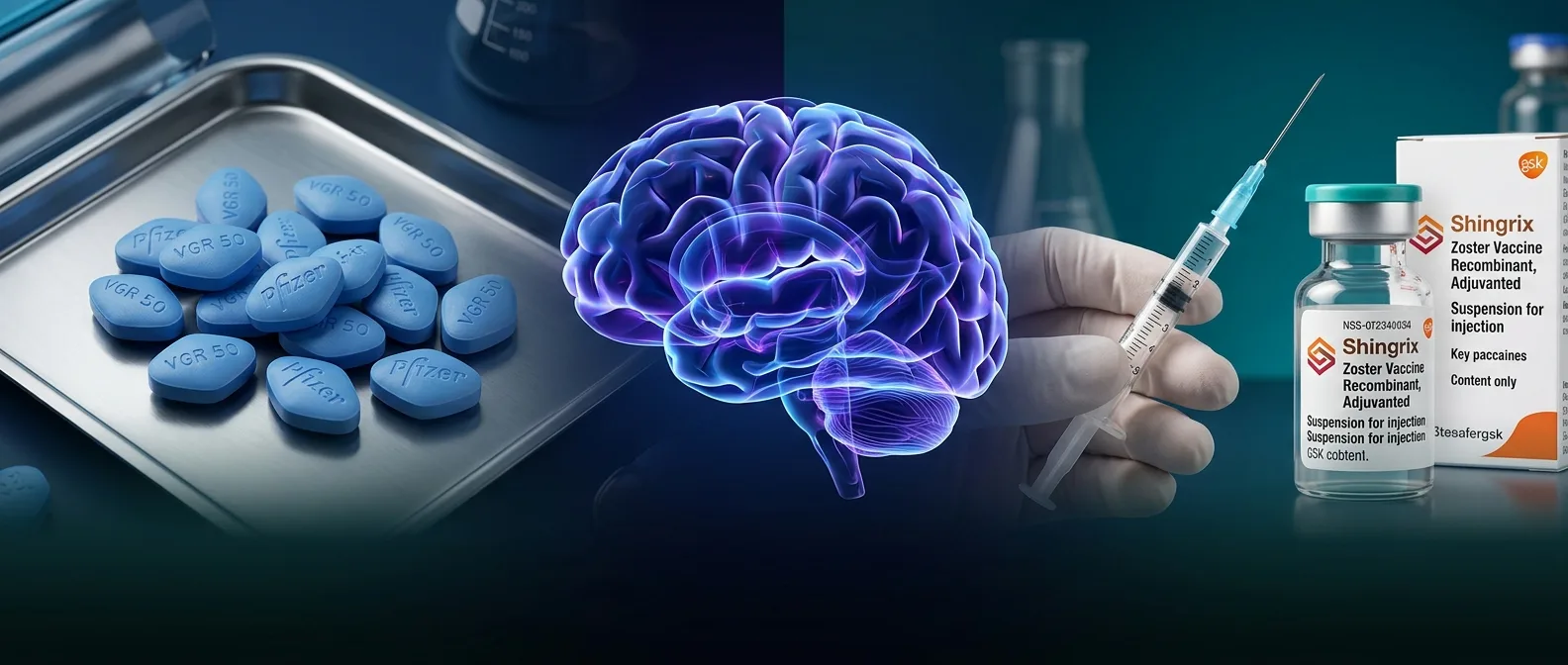
Developing a new Alzheimer's drug from scratch costs over a billion euros and takes 10–15 years — and most candidates fail. But what if the solution was already sitting on pharmacy shelves? An international panel of 21 dementia specialists systematically reviewed 80 existing drugs and identified three standout candidates: the shingles vaccine, sildenafil (Viagra), and riluzole are now priority targets for Alzheimer's prevention trials.
💊 The Case for Drug Repurposing
Drug repurposing — using approved medications for new indications — drastically reduces the time and cost of getting treatments to patients. Approved drugs already have established safety profiles, known side effects, existing manufacturing infrastructure, and often lower costs than novel biologics. In Alzheimer's disease, where every approved drug took decades of development and still only works in early stages, repurposing offers a faster path.
Professor Anne Corbett of the University of Exeter led a panel of 21 international dementia specialists who systematically evaluated 80 existing drugs for Alzheimer's potential. The study was published in Alzheimer's Research and Therapy (DOI: 10.1186/s13195-025-01895-4) on February 18, 2026, funded by the Alzheimer's Society and the National Institute for Health and Care Research (NIHR).
🏆 The Three Priority Candidates
After systematic evaluation, the team identified three priority drug candidates for immediate clinical trials: the Zostavax shingles vaccine, sildenafil (Viagra), and riluzole. Five additional drugs were shortlisted but didn't reach the top tier: fingolimod, vortioxetine, lithium micro-dosing, dasatinib, and cytisine.
💉 1. Shingles Vaccine (Zostavax) — Strongest Signal
The shingles vaccine (Zostavax) is the strongest candidate: previous epidemiological studies show that vaccinated individuals have a 16% lower likelihood of developing dementia compared to unvaccinated peers. The suspected mechanism: the varicella-zoster virus (which causes shingles) can invade the brain and contribute to the neuroinflammation that drives Alzheimer's progression.
The vaccine requires only 2 doses and carries an excellent safety record from decades of use in older adults. This makes it particularly attractive — the risk-benefit calculus for a clinical trial is vastly more favorable than with an experimental molecule.
❤️ 2. Sildenafil (Viagra) — Neuroprotective Properties
Sildenafil was originally developed for cardiovascular conditions. In recent years, studies have shown it can protect nerve cells, reduce tau protein accumulation (one of Alzheimer's hallmark pathologies), and improve cerebral blood flow. Large-scale analyses of electronic health records found that long-term sildenafil users showed reduced rates of Alzheimer's diagnosis in longitudinal follow-up.
Randomized clinical trials are needed to establish causation rather than correlation, but the convergence of mechanistic evidence and population-level data makes sildenafil one of the most scientifically interesting candidates in this field.
🧠 3. Riluzole — From Motor Neurone Disease to Alzheimer's
Riluzole is an approved treatment for motor neurone disease (ALS). Animal studies have shown it improves cognitive performance and reduces brain tau levels — both directly relevant to Alzheimer's disease. The mechanism involves regulation of glutamatergic transmission, which plays a role in both ALS and neurodegeneration more broadly.
"Drug repurposing is a vital part of the research toolkit — turning today's medicine for one condition into tomorrow's treatment for another."
— Professor Anne Corbett, University of Exeter🔬 Why This Research Matters
Alzheimer's disease affects approximately 55 million people worldwide. The two most recently approved treatments (lecanemab and donanemab) work only in very early stages and carry significant side effects including brain bleeds. There is a critical unmet need for preventive strategies — drugs that could delay or prevent the onset of dementia altogether in high-risk populations.
The drugs identified by the Corbett team already have established safety records, are cheaper than novel biologics, and could enter Phase II clinical trials within a relatively short timeframe — potentially within 5–6 years, versus the 10+ years that traditional drug development requires.
📋 Next Steps
The team is calling for immediate funding of randomized clinical trials for all three priority drugs. The goal is not just treatment but prevention — targeting high-risk populations such as people with mild cognitive impairment or those carrying genetic risk factors like the APOE4 allele. If even one of the three candidates is confirmed in trials, it could influence millions of lives worldwide.