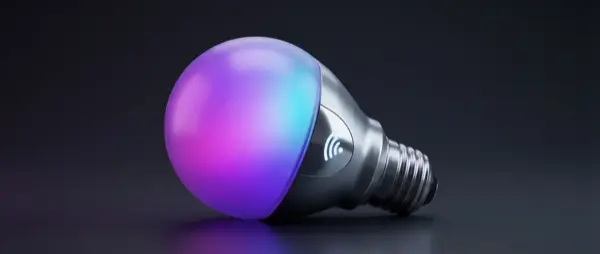
LIFX: From Kickstarter to Smart Lighting Pioneer
LIFX was founded in Melbourne, Australia in 2012 and launched through a Kickstarter campaign that raised over $1.3 million — one of the first major crowdfunded smart home products. The company's revolutionary idea was simple: a WiFi light bulb that connects directly to your home network, eliminating the need for any bridge or gateway device. This approach was in direct contrast to Philips Hue, which requires a Zigbee bridge to operate.
After years of independent growth, LIFX was acquired by Feit Electric in 2022, which brought improved manufacturing capabilities and a wider retail distribution network. In 2026, LIFX operates as a subsidiary of Feit while maintaining its distinct product identity and app ecosystem. The brand is particularly popular among tech enthusiasts who value color quality and ease of setup over all-in-one ecosystem features.
Complete LIFX Product Lineup 2026
LIFX A21 Color (Flagship)
The LIFX A21 is the company's flagship smart bulb, delivering an impressive 1,600 lumens of brightness — more than most competitors, including Philips Hue's standard color bulb (1,100 lumens). It supports 16 million colors with a color temperature range of 1,500K to 9,000K, which is notably wider than most smart bulbs that typically cap at 6,500K. This means you can achieve both warmer candlelight tones and cooler daylight whites. Current pricing hovers around €38-45 per bulb in European markets.
LIFX A19 Color
The A19 variant offers a more standard brightness level of 1,100 lumens while maintaining the same 16 million color palette and wide temperature range. It fits the most common E27/E26 socket types and is priced somewhat lower than the A21 at approximately €30-38 in Europe. For rooms where extreme brightness isn't critical — bedrooms, hallways, accent lighting — the A19 represents a slightly more economical entry point.
LIFX Mini Color
Designed for smaller fixtures and lamps, the LIFX Mini delivers around 800 lumens in a compact form factor. It maintains the full color spectrum but trades brightness for compatibility with fixtures that can't accommodate larger bulbs. Pricing sits around €28-35, making it one of the more approachable LIFX options for building a multi-room setup.
LIFX Beam & LIFX Z Strip
Beyond traditional bulbs, LIFX offers decorative lighting with the Beam (modular light bars, similar to Nanoleaf) and the Z Strip (LED light strips with per-zone color control). The Beam kit starts at approximately €90 for a starter set, while the Z Strip runs about €70-85 for a 2-meter starter. These products are aimed at entertainment spaces, gaming setups, and ambient lighting enthusiasts who want sophisticated light scenes without a hub.
LIFX Candle Color (E14)
The Candle Color uses a smaller E14 base designed for chandeliers and decorative fixtures. Despite its compact size, it supports polychrome technology — meaning different parts of the single bulb can display different colors simultaneously. Brightness is limited to around 480 lumens, but the design possibilities are unique in the market. Pricing typically ranges from €35-42.
Key Advantage: Zero Hub Required
Unlike Philips Hue (Zigbee bridge required), IKEA DIRIGERA, or Samsung SmartThings, LIFX bulbs connect directly to your WiFi router. This means you can install a single bulb and start using it immediately through the app — no bridge purchase, no additional configuration. The downside: each bulb occupies a slot on your WiFi network, which can be a concern in homes with many connected devices.
Strengths: Where LIFX Excels
1. Color Quality & Brightness
LIFX consistently produces some of the most vivid and saturated colors in the smart bulb market. The A21 model at 1,600 lumens is bright enough to serve as the primary light source in a room, unlike some color bulbs that are too dim for practical use. Colors appear rich and true-to-life, with particularly impressive deep reds, greens, and blues that many competitors struggle to reproduce accurately.
2. Simplicity of Setup
The zero-hub-required approach means setup literally takes 2-3 minutes per bulb: screw it in, download the app, connect to WiFi. There's no bridge to position, no range extenders to consider, and no gateway firmware to update. For users who want one or two smart bulbs without investing in an entire ecosystem, this simplicity is hard to beat.
3. Wide Platform Support
LIFX supports Amazon Alexa, Google Home, Apple HomeKit, Samsung SmartThings, IFTTT, and most recently, the Matter protocol. This means regardless of which voice assistant or smart home platform you use, LIFX will integrate seamlessly. HomeKit support in particular is notable — many budget smart bulbs lack it entirely.
4. Extended Color Temperature Range
The 1,500K to 9,000K range is one of the widest available. The ultra-warm 1,500K setting creates a cozy candlelight ambiance that most smart bulbs simply cannot achieve, while the 9,000K daylight creates an energizing blue-white that's useful for task lighting and focus work.
Weaknesses: Where LIFX Falls Short
1. Premium Pricing
At €38-45 for a single A21 Color bulb, LIFX is one of the most expensive options available. By comparison, a WiZ color bulb costs around €12-15, and IKEA's TRÅDFRI color option runs about €18-22. Even Philips Hue, traditionally considered premium, costs less per individual bulb (around €30-35 for the standard color). Over a 10-bulb setup, the cost difference becomes substantial — potentially €200+ more than equivalent WiZ setups.
2. WiFi Congestion Concerns
Since each LIFX bulb connects individually to your WiFi network, a setup with 15-20 bulbs means 15-20 additional WiFi clients. Older routers may struggle with this many connected devices, potentially affecting both the bulbs' responsiveness and your overall network performance. Zigbee-based systems like Hue or IKEA avoid this issue entirely by running on a separate mesh network that doesn't touch your WiFi bandwidth.
3. App Experience
While functional, the LIFX app has historically lagged behind the Philips Hue app in terms of polish, automation options, and scene management. Group controls can feel sluggish with many bulbs, and some users report occasional connectivity drops that require app restarts. Under Feit Electric's management, app updates have been less frequent than the independent LIFX era.
4. Cloud Dependency
Remote access and some automation features depend on LIFX cloud servers. If LIFX servers experience downtime, remote control capabilities are interrupted. Local network control via HomeKit or Home Assistant continues to work, but the native app's smart features rely on cloud connectivity. This contrasts with Matter-enabled local control, which LIFX is slowly implementing.
LIFX vs Philips Hue vs WiZ: Head-to-Head Comparison
| Feature | LIFX A21 | Philips Hue Color | WiZ Color |
|---|---|---|---|
| Price (per bulb) | €38-45 | €30-35 | €12-15 |
| Hub Required | No | Yes (Hue Bridge) | No |
| Max Brightness | 1,600 lm | 1,100 lm | 810 lm |
| Color Temperature | 1,500-9,000K | 2,000-6,500K | 2,200-6,500K |
| Protocol | WiFi | Zigbee | WiFi |
| HomeKit Support | Yes | Yes | No |
| Matter Support | Yes (firmware update) | Yes | Yes |
| Color Accuracy | Excellent | Very Good | Good |
| Ecosystem Depth | Medium | Extensive | Basic |
| Entertainment Sync | LIFX Cloud Scenes | Hue Sync Box | Basic Sync |
Installation & Setup Guide
Setting up a LIFX bulb takes less than five minutes. Here's the process step by step:
- Physical Installation: Screw the LIFX bulb into any standard E27 socket and turn on the power. The bulb will glow to indicate it's ready for pairing.
- Download the App: Install the LIFX app from the App Store or Google Play. Create an account or sign in.
- WiFi Connection: The app will detect the new bulb. Select your 2.4GHz WiFi network (LIFX does not support 5GHz) and enter your password. The bulb connects within 30-60 seconds.
- Name & Assign: Give the bulb a name and assign it to a room or group for easier control.
- Platform Integration: To add to Alexa, Google Home, or HomeKit, use the respective app's “Add Device” flow and link your LIFX account.
Important: 2.4GHz WiFi Only
LIFX bulbs only connect to 2.4GHz WiFi networks. If your router uses a combined 2.4/5GHz network (common with newer mesh routers), you may need to temporarily split the bands during setup, or position yourself close to the router to ensure the 2.4GHz band is selected. After initial setup, the bulb will always connect to 2.4GHz automatically.
Matter Protocol Support
In 2025, LIFX rolled out Matter protocol support via firmware updates for its newer models (A21, A19, and select accessories). Matter enables local control without cloud dependency — meaning your bulbs respond to commands directly through your smart home controller rather than routing through LIFX servers. This significantly improves reliability and response time.
For Greek users, Matter support is particularly beneficial because it reduces dependence on LIFX's cloud infrastructure. Even if LIFX were to discontinue their cloud service, Matter-enabled bulbs would continue to function through any Matter-compatible controller, including Apple Home, Google Home, Amazon Echo (4th gen and newer), and Home Assistant. This provides important long-term device security for what are expensive individual purchases.
Value Assessment for the Greek Market
LIFX's availability in Greece is primarily through Amazon.de, which ships to Greece with delivery times of 3-7 business days. Some specialized electronics retailers carry limited LIFX stock, but selection is inconsistent. This import-dependent supply chain means pricing is typically 10-20% higher than in core EU markets like Germany or Netherlands.
For a typical three-room smart lighting setup (bedroom, living room, kitchen), you'd need approximately 6-8 bulbs. With LIFX, that translates to €230-360, compared to roughly €90-120 for equivalent WiZ bulbs or €180-280 for Philips Hue (plus €55 for the bridge). The LIFX premium is significant, especially for budget-conscious Greek consumers dealing with high energy costs.
Who Should Buy LIFX in 2026?
LIFX is ideal for a specific type of user. Consider LIFX if:
- You want 1-5 smart bulbs without investing in a hub/bridge ecosystem
- Color accuracy is your top priority — photographers, designers, content creators
- You need maximum brightness — the 1,600 lumen A21 is hard to match
- You use Apple HomeKit and want hub-free HomeKit-compatible bulbs
- You value wide color temperature range — 1,500K for ultra-warm to 9,000K for daylight
Skip LIFX if:
- You're building a whole-home system — cost and WiFi congestion become issues at scale
- Budget matters — WiZ offers 80% of the experience at 30% of the price
- You want advanced automations — Philips Hue's app and ecosystem are far richer
- Your router is older — WiFi-based bulbs need a capable router
Alternatives Worth Considering
Philips Hue (Premium Ecosystem)
If you want the most complete smart lighting ecosystem with entertainment sync, motion sensors, outdoor lights, and deep third-party integration, Hue remains the gold standard. The bridge requirement adds cost initially but enables Zigbee mesh networking that's more robust than WiFi for large installations.
WiZ (Budget WiFi)
Owned by Signify (same parent company as Hue), WiZ uses WiFi like LIFX but at a fraction of the price. Color quality is decent but noticeably below LIFX. The WiZ app is improving rapidly, and Matter support is included. For most users, WiZ represents the best value in smart lighting.
IKEA TRÅDFRI + DIRIGERA
IKEA's smart lighting is the most affordable branded option, especially at Greek IKEA stores. The DIRIGERA hub acts as a Matter bridge, future-proofing the investment. Color options are more limited than LIFX, but white ambiance bulbs are excellent for practical lighting needs.
Govee (Ambient & Entertainment)
For decorative and entertainment lighting specifically — LED strips, light bars, ambient backlighting — Govee offers tremendous value with creative features like music sync and screen mirroring that LIFX doesn't match at the same price point.
Final Verdict
LIFX remains a technically impressive product line with best-in-class color reproduction and brightness. The zero-hub approach is genuinely convenient for small setups, and Matter support adds important future-proofing. However, in 2026's competitive market, the premium pricing is difficult to justify for most users.
For Greek consumers, the recommendation depends heavily on scale. For 1-3 accent bulbs where color quality matters (behind a desk, in a creative space, for content creation), LIFX delivers something special. For whole-home smart lighting on a reasonable budget, WiZ or IKEA TRÅDFRI with DIRIGERA hub offer significantly better value. And for users who want the richest overall ecosystem with room for growth, Philips Hue remains the safer long-term investment — even with the bridge requirement.
Our Rating: 7.5/10 — Outstanding hardware limited by premium pricing and a WiFi-only architecture that scales poorly. Best for selective, quality-focused use rather than whole-home deployments.