📖 Read more: Roborock 2026 Guide: Which Robot Vacuum Is Worth It?
How the Self-Cleaning Dock Works
The self-cleaning dock station is the "brain" of the operation. When the robot vacuum finishes its cleaning cycle (or when the battery runs low), it automatically returns to the dock. There, 3-4 maintenance functions happen automatically:
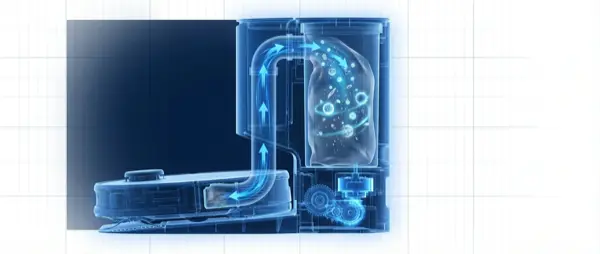
1. Auto-Empty Dock (Automatic Dust Disposal)
The dock automatically suctions dust from the robot's bin into a larger capacity bag or container (2.5-4 liters). This means you don't need to empty the bin every day — once every 30-60 days is enough.
The suction is handled by a powerful motor (16,000-25,000Pa) and takes just 10-15 seconds. Yes, it's noisy — like a vacuum cleaner for a few seconds. You can set DND mode so it won't empty at night.
2. Self-Wash Mop (Automatic Pad Cleaning)
After mopping, the robot returns to the dock and its mop pads are automatically washed with clean water. Premium models like the Roborock S8 MaxV Ultra and Dreame X40 Ultra use 60°C hot water for more effective stain and bacteria removal.
The wash happens in a shallow channel — the pad spins over textured ribs that mechanically scrub away dirt. Dirty water flows into a separate dirty water tank. This two-tank system ensures your floors are always cleaned with fresh water.
3. Hot Air Drying
After washing, heated air at 40-45°C blows through the pads for 2-3 hours, drying them completely. This prevents odor, mold, and bacteria growth — the biggest problem with older mopping robots that left wet pads sitting in the dock.
4. Auto-Refill (Automatic Water Replenishment)
Some models (Roborock S8 MaxV Ultra, Dreame L20 Ultra) can connect directly to your water supply (faucet) so the clean water tank refills automatically. Alternatively, you manually refill every 3-5 uses depending on your home size.
How the Robot Cleans
Vacuuming
The robot vacuum uses brushes (roller brush or dual rubber brushes) and powerful suction (6,000-12,000Pa on premium 2026 models) to pick up dust, hair, and debris. LiDAR or AI camera technology maps your home, avoids obstacles, and follows a methodical cleaning path for complete coverage.
Mopping
Modern models use dual spinning mop pads or vibrating pads instead of simple dragging. Downward pressure reaches 6-12 Newtons, effectively removing dried stains and sticky residue. The robots detect carpets automatically and lift their mop pads (carpet detection + mop lift) to avoid wetting them.
📖 Read more: Budget Robot Vacuum 2026: Under €300
Top Self-Cleaning Models 2026
| Model | Price | Suction | Hot Water | Hot Dry |
|---|---|---|---|---|
| Roborock S8 MaxV Ultra | €1,100-1,300 | 11,000Pa | 60°C | ✅ |
| Dreame X40 Ultra | €1,000-1,200 | 12,000Pa | 60°C | ✅ |
| Narwal Freo X Ultra | €800-1,000 | 8,200Pa | 50°C | ✅ |
| Ecovacs X5 Pro | €900-1,100 | 12,800Pa | 55°C | ✅ |
Is It Worth the Investment?
Ideal For
- Pet owners (hair, dander, muddy paws)
- Homes with tile or hardwood floors
- Those who want hands-off cleaning
- Busy professionals and families
Don't Expect
- Perfect mopping like hand scrubbing — covers 80-90%
- 100% corner coverage — circular shape makes it impossible
- Silent operation — suction inherently makes noise
Maintenance: What You Still Need to Do
Despite the autonomy, some things still require human intervention. Every 2-4 weeks you should clear the main brush of tangled hair and threads. HEPA filters need replacement every 3-6 months (€10-20 per set). The dirty water tank should be emptied every 2-3 mopping cycles to prevent buildup and odor.
Mop pads last 3-6 months depending on usage frequency. Replacements are available online (AliExpress, Amazon) for €8-15 per pair. Auto-empty bags (if your model uses bags rather than a bin) cost €15-25 for a pack of six and last around 60 days each.
Tips for Maximum Performance
1. Schedule daily runs on low suction — it's quieter and sufficient for light dust. 2. Enable DND mode (Do Not Disturb) during sleeping hours so the dock doesn't empty at night. 3. Pick up cables and small objects before each run — despite AI obstacle avoidance, nothing is perfect. 4. Set no-mop zones in the app for carpets and sensitive flooring areas.
Conclusion
The self-cleaning robot vacuum of 2026 is the most hands-off cleaning solution ever created. Auto-empty, self-wash, hot air drying, auto-refill — you literally don't need to do anything for weeks. The €800-1,300 price tag isn't cheap, but the time savings and consistent cleanliness make it a worthwhile investment. If you're looking for a robot that handles everything on its own — auto-empty, self-wash, hot dry — the Roborock S8 MaxV Ultra and Dreame X40 Ultra are today's top choices.