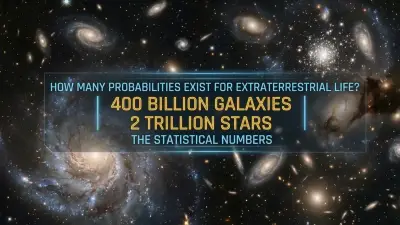
🧮 The Drake Equation: The Math of Alien Life
In 1961, astronomer Frank Drake formulated an equation that would become the foundation of astrobiology. The Drake Equation attempts to calculate the number of technologically advanced civilizations in our galaxy that could communicate with us.
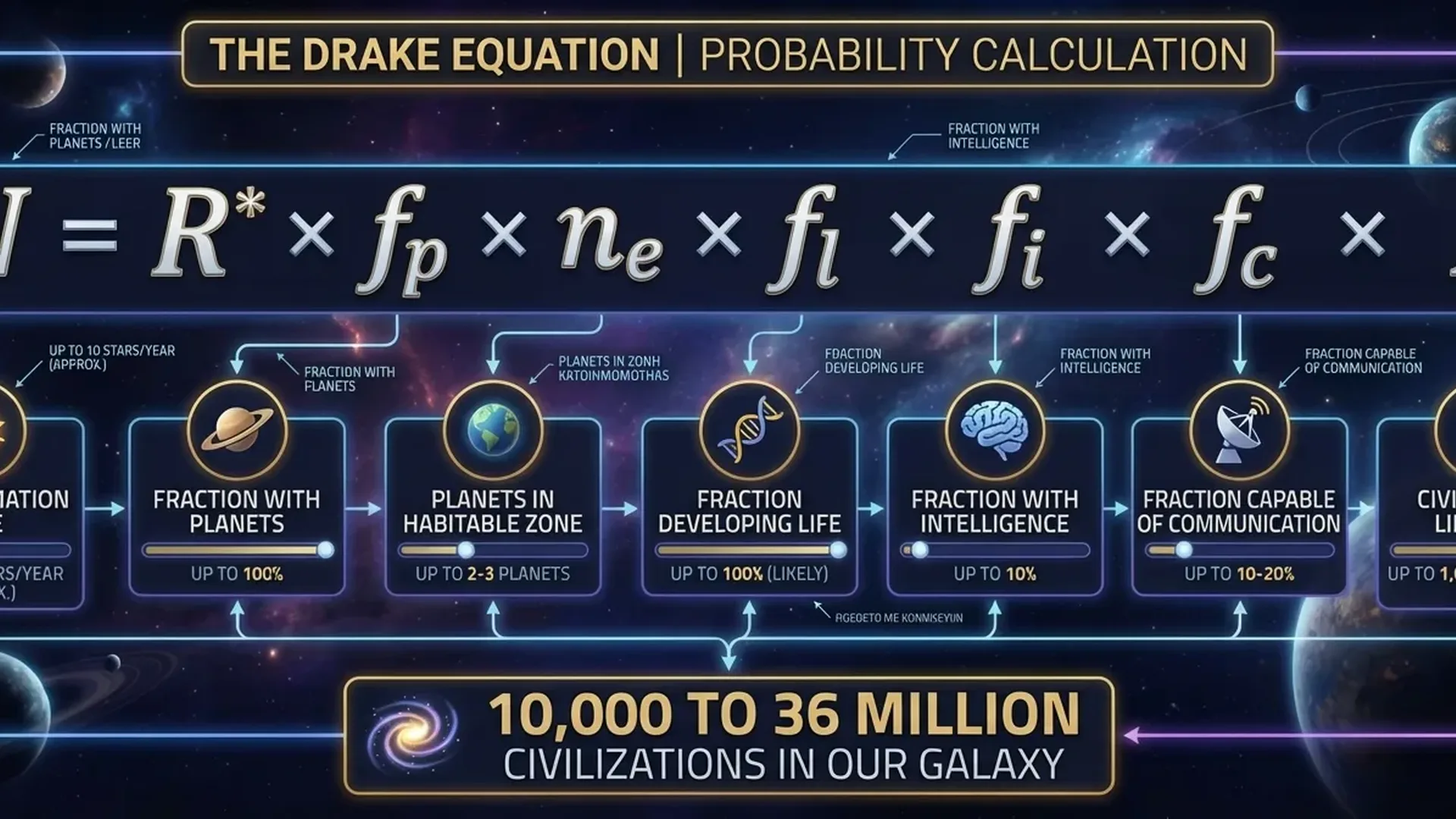
The Drake Equation | N = R* × fp × ne × fl × fi × fc × L | 10,000 to 36 million civilizations
Each variable represents a filter: the rate of star formation, the fraction with planets, the habitable ones, those that developed life, intelligent life, communication technology, and the lifespan of the civilization.
The estimates vary dramatically. Using the most optimistic parameters, Drake calculated 10,000 to 36 million civilizations. With the most conservative ones, the number drops close to zero. A 2020 study from the University of Nottingham estimated that there are approximately 36 active civilizations in our Galaxy right now.
🌍 Habitable Zones: The Goldilocks Planets
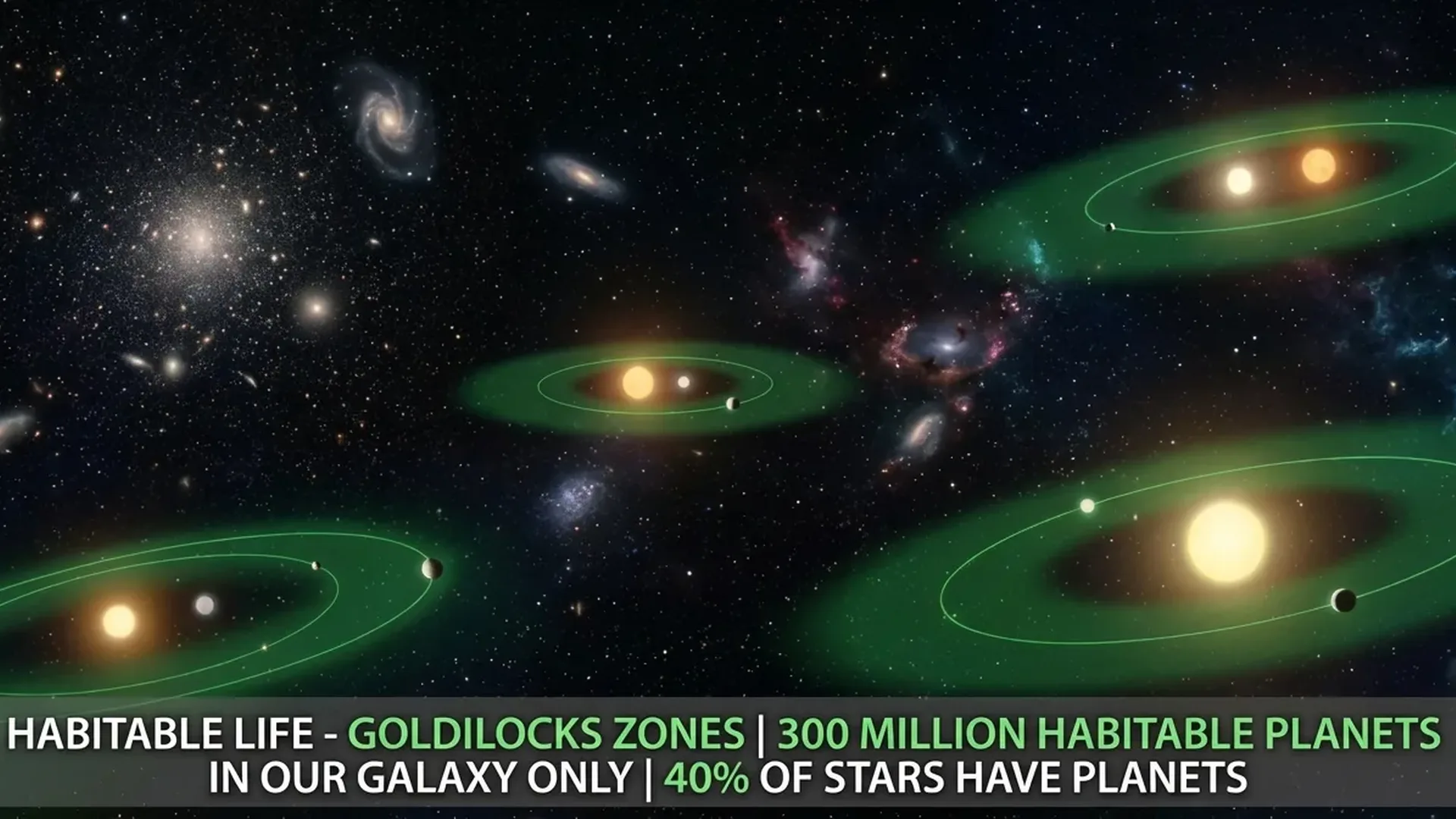
Goldilocks habitable zones | 300 million habitable planets in our galaxy
The “habitable zone” (Goldilocks Zone) is the region around a star where conditions allow liquid water to exist — not too hot, not too cold. According to data from the Kepler space telescope, there are approximately 40 billion Earth-sized planets in habitable zones in our Galaxy alone.
Of those, an estimated 300 million have the right conditions for life as we know it. The nearest one is just 12 light-years away.
❓ The Fermi Paradox: “Where Is Everybody?”
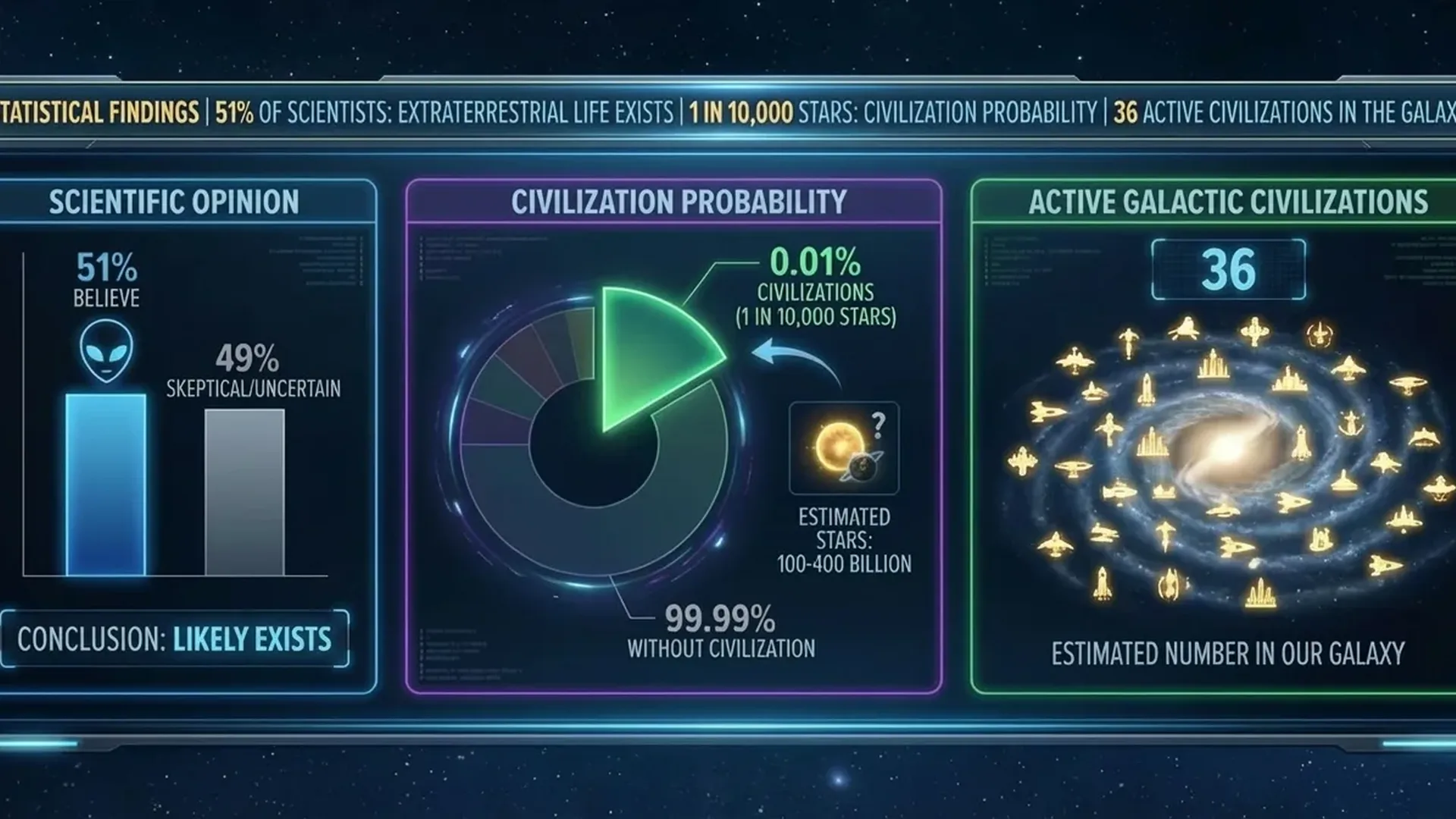
51% of scientists believe alien life exists
In 1950, physicist Enrico Fermi, during a lunch at Los Alamos, posed a simple yet profound question: if the universe is so vast and so old, and if life is common, then "where is everybody?"
This question became known as the Fermi Paradox. Over 75 different explanations have been proposed:
- The Rare Earth Hypothesis: Perhaps Earth is exceptionally rare
- The Great Filter: Some barrier wipes out civilizations before they expand
- The Zoo Hypothesis: They're watching us without interfering
- Different forms of communication: We don't recognize their signals
- Distances: The universe is simply too vast
"Two possibilities exist: either we are alone in the Universe or we are not. Both are equally terrifying."
⚡ The Kardashev Scale: Types of Civilizations
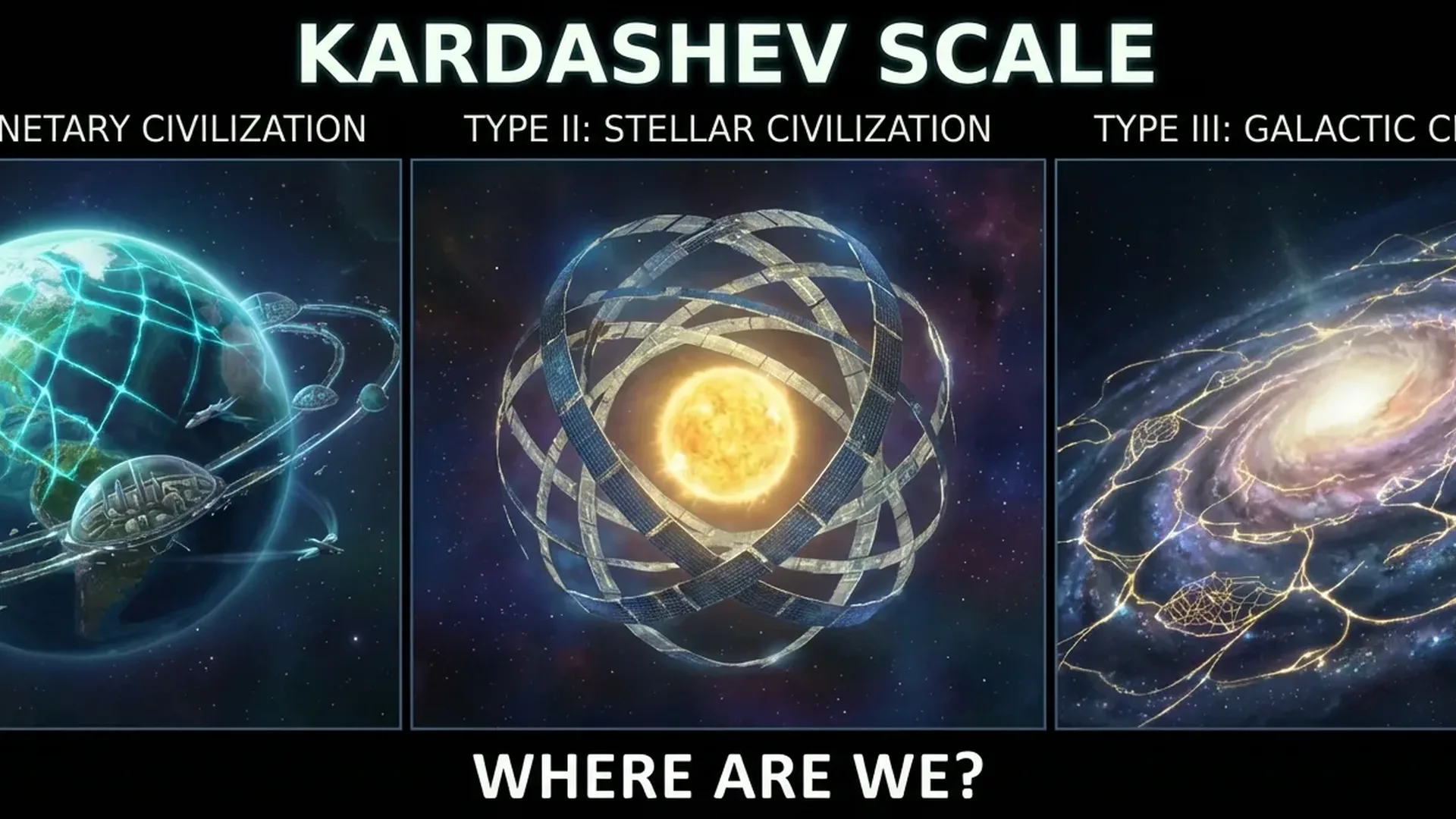
Kardashev Scale | Type I, II, III | Where do we stand?
In 1964, Soviet astronomer Nikolai Kardashev proposed a scale for classifying civilizations based on the energy they consume. This scale helps us understand what we might be looking for.
Types of Civilizations
According to Carl Sagan, humanity could reach Type I around 2100. Physicist Michio Kaku estimates we'll need 100–200 years for Type I, a few thousand for Type II, and 100,000 to 1 million years for Type III.
🔭 The Search Continues: SETI & Exoplanets
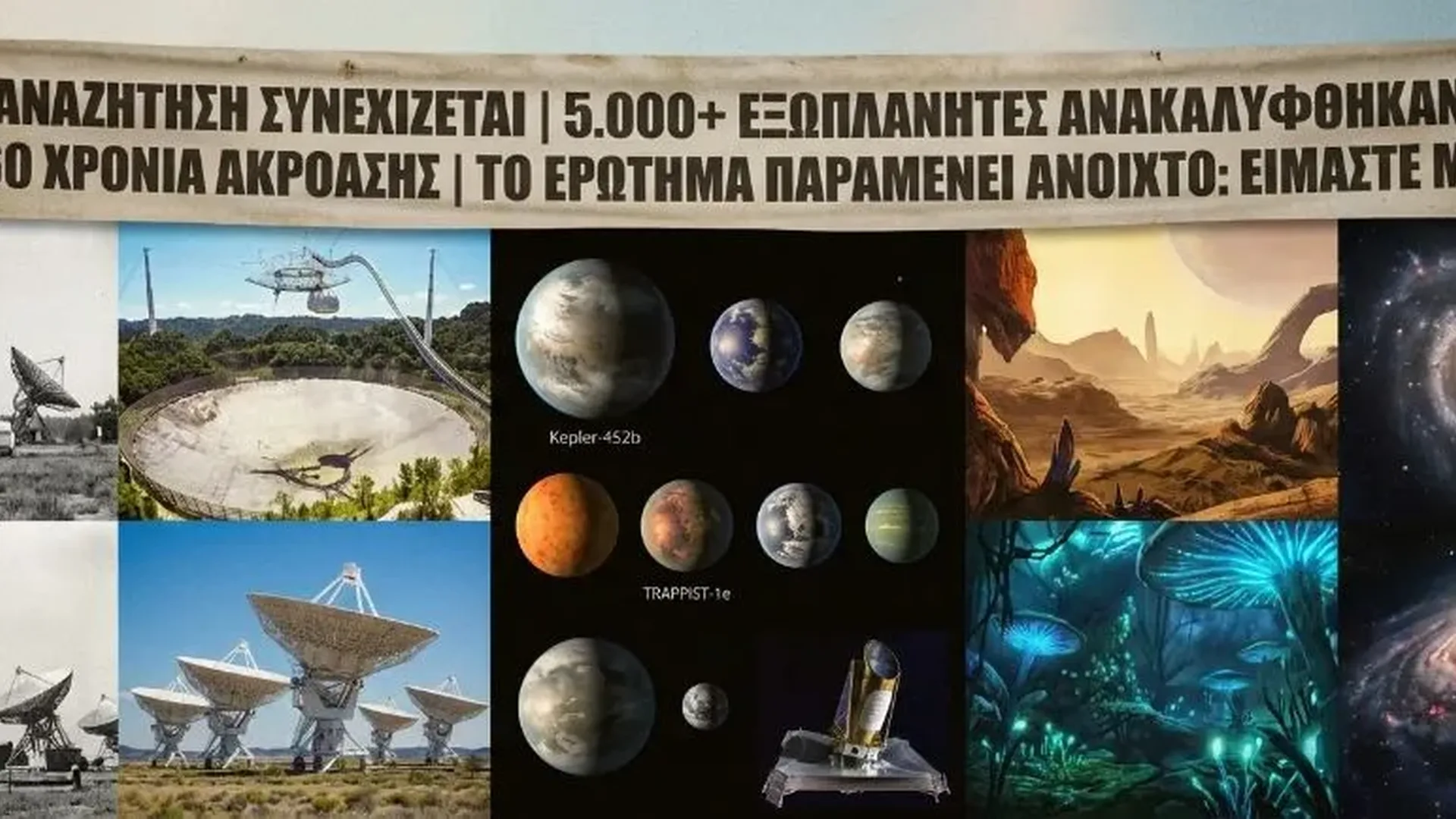
The search continues | 5,700+ exoplanets discovered | SETI: 60+ years of listening
SETI (Search for Extraterrestrial Intelligence) has been operating for over 60 years, scanning the sky for signals. Although nothing definitive has been found, the technology keeps improving. As of 2024, we have discovered over 5,700 exoplanets, with dozens located in habitable zones.
🛸 What Could Alien Life Look Like?
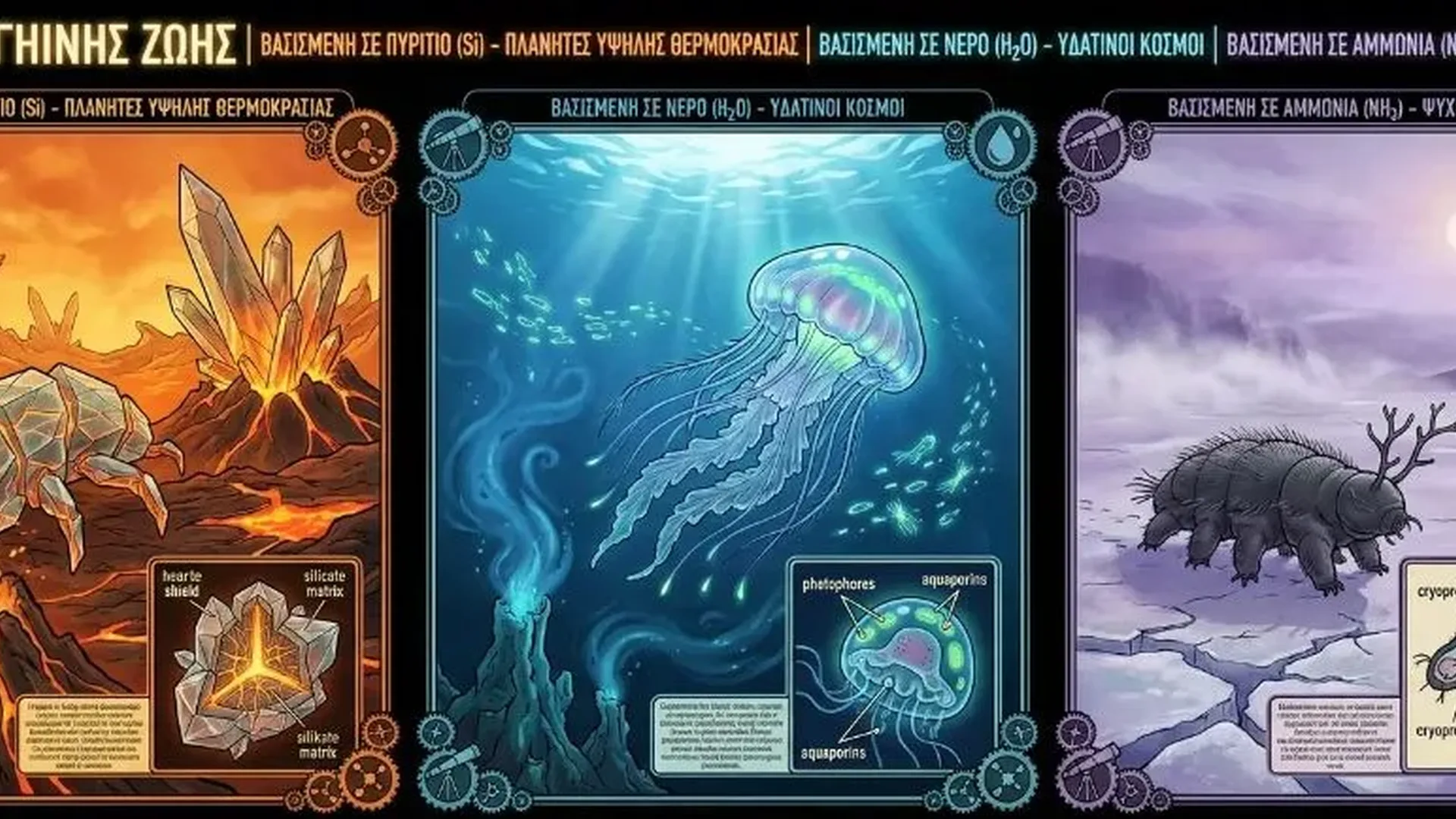
Types of alien life | Silicon, Water, Ammonia
Life on Earth is based on carbon and water, but scientists believe other forms of life could be based on entirely different chemistry.
🌊 Subsurface Oceans: The Greatest Hope
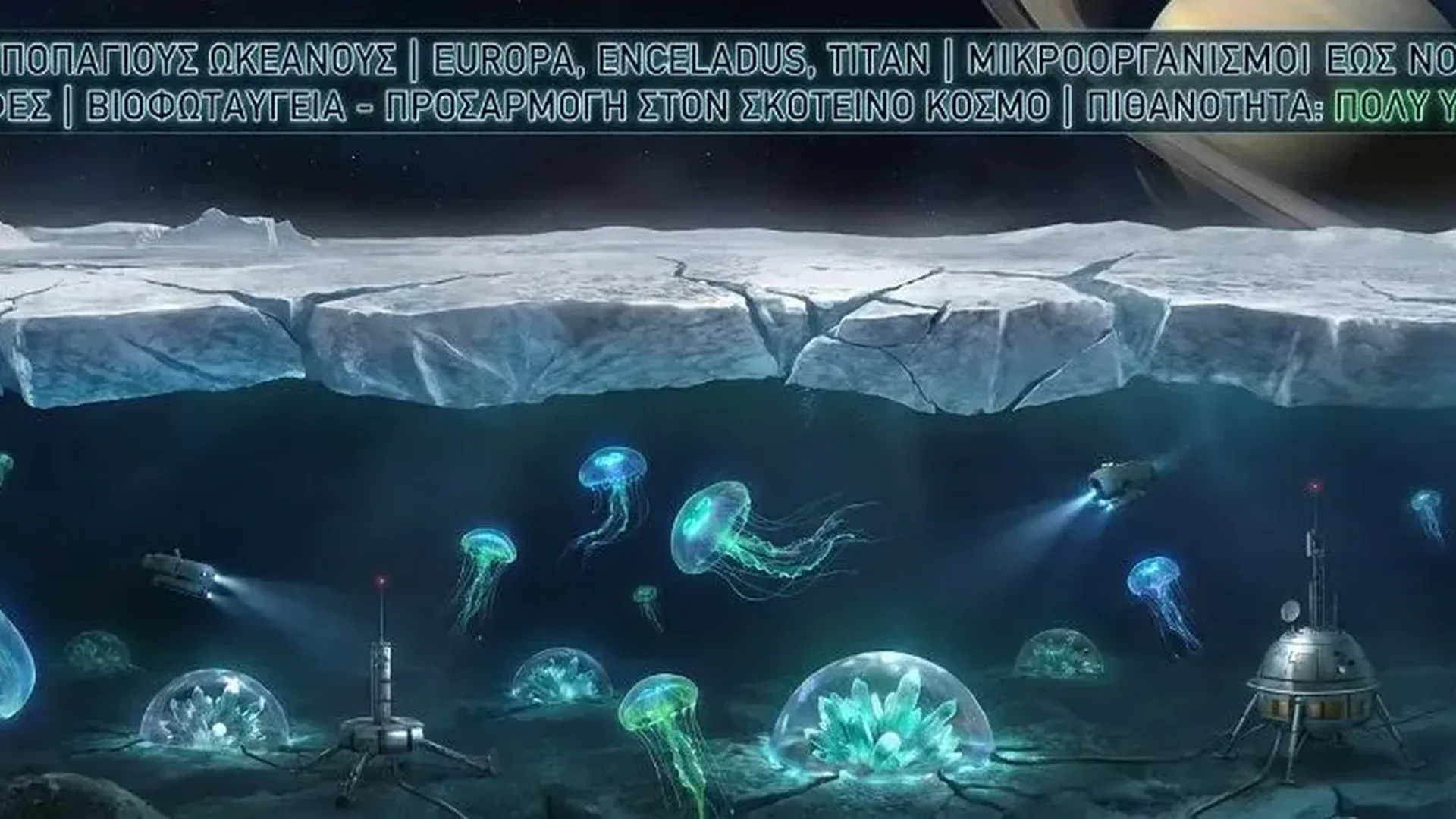
Life in subsurface oceans | Europa, Enceladus, Titan
The moons Europa (Jupiter), Enceladus, and Titan (Saturn) have massive oceans beneath their frozen crusts. NASA considers Europa the #1 target for searching for life in our solar system.
In these dark oceans, life could use:
- Bioluminescence: Producing their own light in total darkness
- Chemosynthesis: Deriving energy from hot hydrothermal vents
- Advanced senses: Echolocation and detection of electric fields
📊 The Stages of Evolution
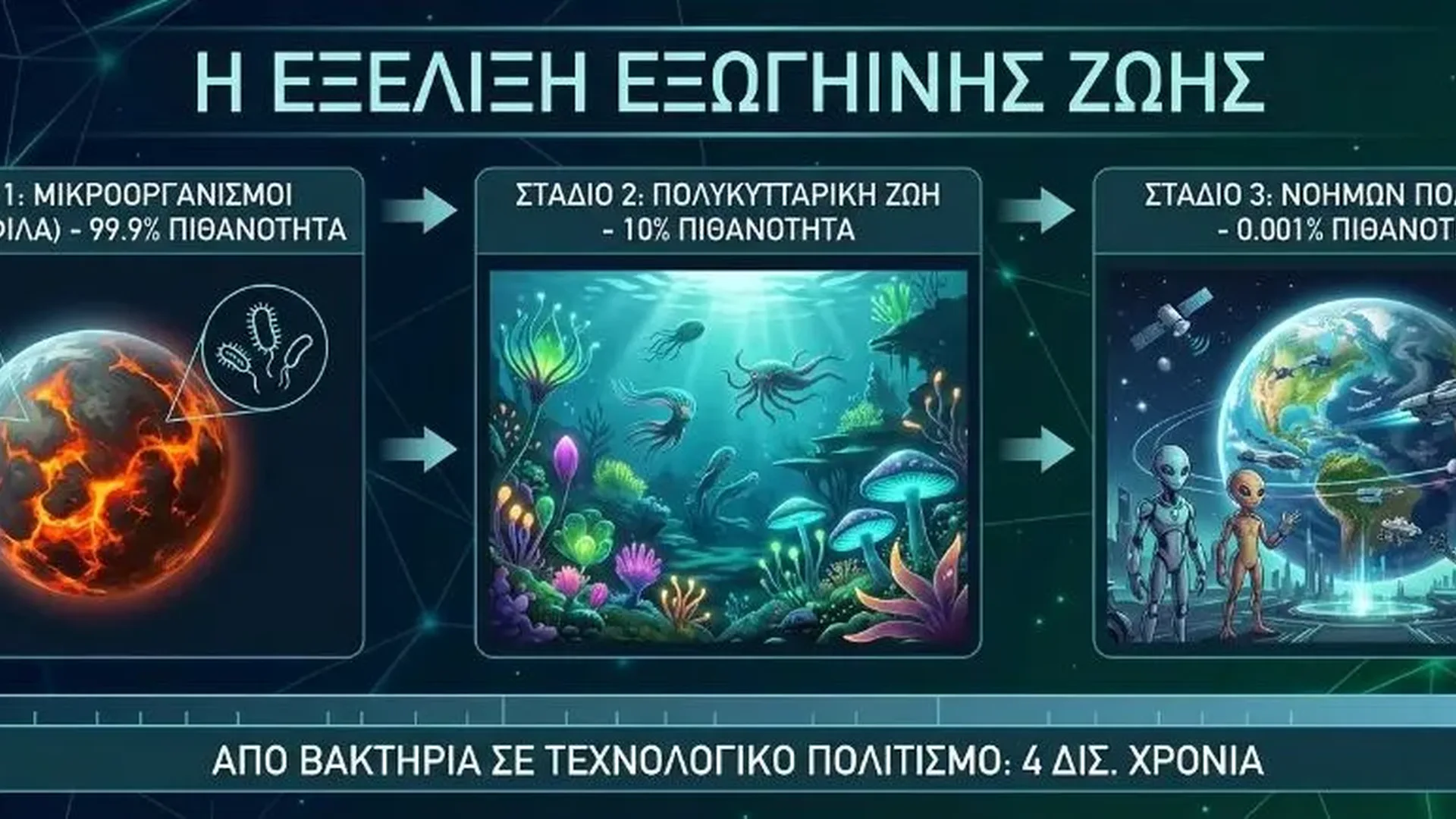
Alien life evolution | Microorganisms 99.9% | Intelligent civilization 0.001%
Even if life is common, intelligent life is most likely extremely rare. On Earth, it took 3.5 billion years for multicellular life to emerge, and another 500 million for a technological civilization to develop.
🔭 Conclusion: What Does the Evidence Say?
Based on current statistical data, we can say with reasonable certainty:
- Microbial life likely exists on millions of planets
- Complex life is rarer but mathematically probable
- Intelligent civilizations are extremely rare — but with 400 billion galaxies, even “rare” means many
- The absence of contact may be explained by distances, time, or unknown factors
"The universe is a pretty big place. If it's just us, seems like an awful waste of space."
The search continues. With new telescopes like James Webb, new missions to Europa, and improved detection techniques, the next decade may give us the first real proof. Until then, the math suggests that somewhere out there, someone is probably looking at the same night sky.
📊 Alien Life by the Numbers: Complete Statistics Table
🌌 THE UNIVERSE IN NUMBERS
| Category | Measurement | Number | Source |
|---|---|---|---|
| 🌌 COSMIC SCALE | |||
| Observable Universe | Galaxies | 400.000.000.000 | Hubble/JWST |
| Observable Universe | Stars | 7×10²² | ESA 2022 |
| Our Galaxy | Stars | 100–400 bn | NASA |
| Our Galaxy | Planets (estimate) | ~100 bn | Kepler Data |
| Galaxy Diameter | Light-years | 100.000 | ESA |
| Age of Universe | Years | 13.800.000.000 | Planck 2018 |
| 🌍 HABITABLE PLANETS | |||
| Confirmed Exoplanets | Total | 5.700+ | NASA 2024 |
| In Habitable Zone | Confirmed | ~60 | Kepler/TESS |
| Estimated Habitable | In the Galaxy | 300.000.000 | NASA 2020 |
| Earth-like Planets | In habitable zones | 40.000.000.000 | Kepler |
| Nearest Habitable | Distance (light-years) | ~12 | Teegarden's Star |
| Proxima Centauri b | Distance (light-years) | 4.24 | ESO 2016 |
| 🧮 DRAKE EQUATION - ESTIMATES | |||
| Optimistic Estimate | Civilizations in the Galaxy | 36.000.000 | Drake 1961 |
| Conservative Estimate | Civilizations in the Galaxy | ~36 | Nottingham 2020 |
| Pessimistic Estimate | Civilizations in the Galaxy | ~1 (us) | Rare Earth |
| Avg. Distance Between Civilizations | Light-years (if 36) | ~17.000 | Nottingham 2020 |
| 📡 SETI & SEARCH | |||
| Years of SETI Search | Years | 64+ | SETI Institute |
| Stars Scanned | Through 2024 | ~1.000.000 | Breakthrough Listen |
| Signals Detected | Confirmed extraterrestrial | 0 | SETI |
| Suspicious Signals | Under investigation | ~100 | SETI |
| Wow! Signal | Duration (seconds) | 72 | 1977 |
| ⚡ KARDASHEV SCALE | |||
| Earth (Today) | Type | 0.73 | Sagan Formula |
| Type I | Power (Watts) | 10¹⁶ | Kardashev |
| Type II | Power (Watts) | 10²⁶ | Kardashev |
| Type III | Power (Watts) | 10³⁷ | Kardashev |
| Time to Type I | Years from now | 100–200 | Kaku |
| 🔬 LIFE PROBABILITIES | |||
| Microbial Life | Probability of existence | ~50–80% | Scientific Community |
| Complex Life | Probability of existence | ~10–30% | Estimates |
| Intelligent Life | Probability of existence | ~1–5% | Estimates |
| Technological Civilization | Probability of existence | ~0.1–1% | Estimates |
| Scientists Who Believe | % saying “life exists” | 51% | Pew Research |
| 🌊 SOLAR SYSTEM - SEARCH TARGETS | |||
| Europa (Jupiter) | Ocean depth (km) | 60–150 | NASA |
| Enceladus (Saturn) | Ocean depth (km) | ~30 | Cassini |
| Titan (Saturn) | Methane lakes | ~400 | Cassini |
| Mars | Possible water (km³) | ~5.000.000 | ESA 2024 |
| ⏱️ TIME MARKERS | |||
| First Life on Earth | Years ago | 3,800,000,000 | Geology |
| First Multicellular | Years ago | 600,000,000 | Paleontology |
| Homo Sapiens | Years ago | 300,000 | Anthropology |
| Radio Signals from Earth | Years of broadcast | ~100 | 1920s |
| Signal “Bubble” Radius | Light-years | ~100 | Calculation |