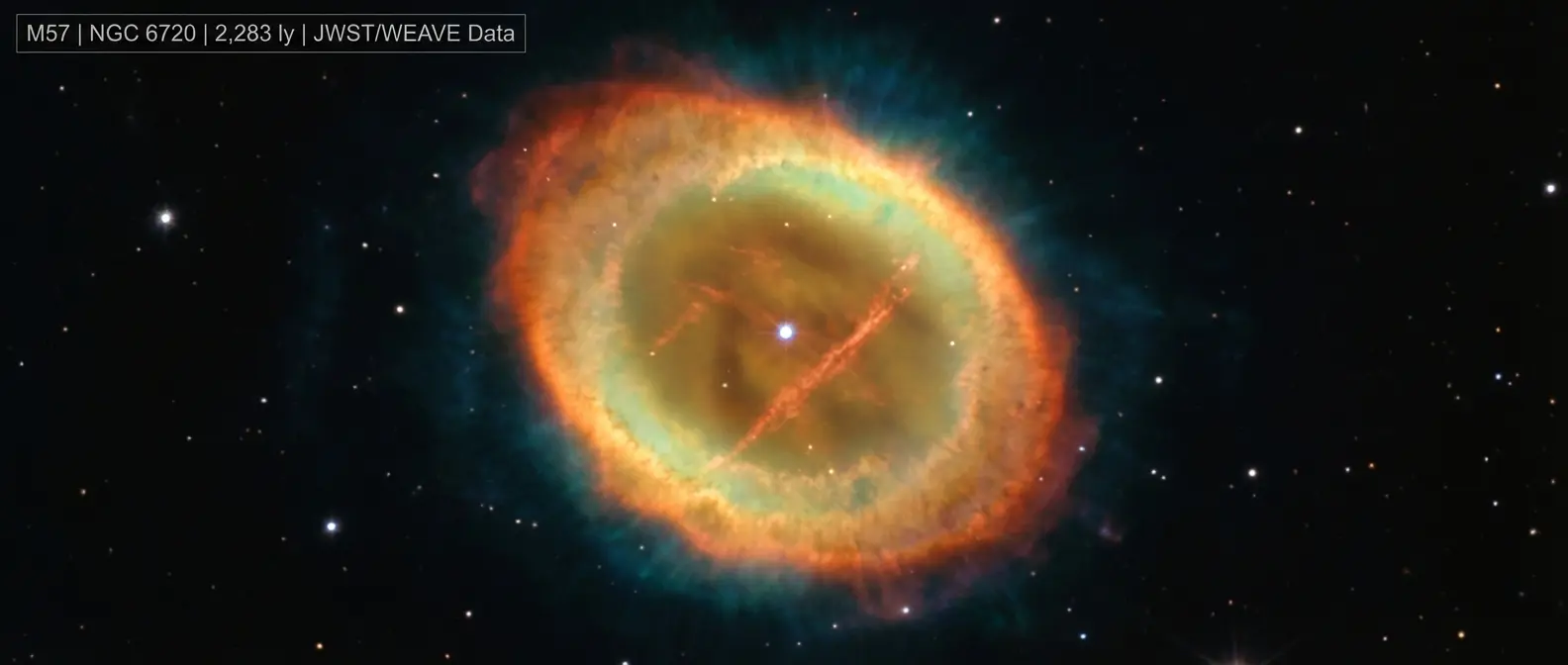
In a discovery that has left astronomers worldwide speechless, a European team of scientists detected for the first time a giant bar of ionized iron hidden within the famous Ring Nebula (M57). This structure had been invisible for nearly 250 years of observations — until now.
📖 Read more: The Largest Star in the Galaxy Is About to Explode
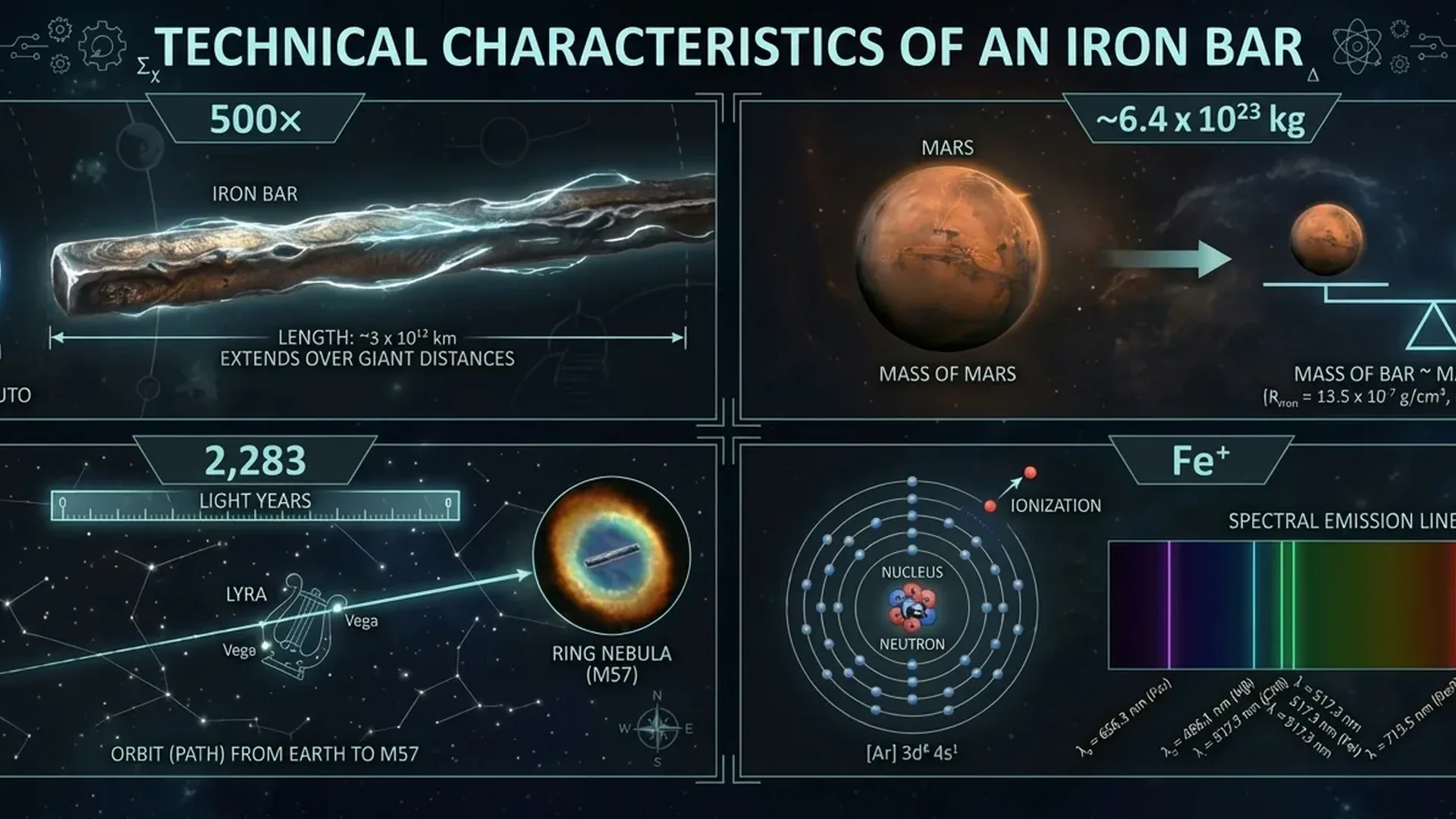
🌌 The discovery: A bar of iron atoms spanning 500 times the Sun-Pluto distance with a mass equivalent to the planet Mars was detected using the new WEAVE instrument on the William Herschel Telescope.
What Was Discovered?
The Ring Nebula, one of the most photographed objects in the night sky, harbors a mystery that had remained hidden for centuries. Using the new WEAVE (WHT Enhanced Area Velocity Explorer) spectrograph, scientists from University College London, Cardiff University, and the Instituto de Astrofísica de Canarias (IAC) revealed a structure that no one expected.
The Ring Nebula: A Brief History
The Ring Nebula, also known as Messier 57 (M57) or NGC 6720, was first discovered in 1779 by the French astronomer Antoine Darquier de Pellepoix, shortly before Charles Messier catalogued it in his famous list.
Discovered by Darquier de Pellepoix in the constellation Lyra
Recognized as a “planetary nebula” — gas from a dying star
Stunning images captured by the James Webb Space Telescope
Discovery of the iron bar using WEAVE
It is located in the constellation Lyra, at a distance of approximately 2,283 light-years from Earth. What we see is a colorful layer of gas ejected by a star at the end of its life, when its nuclear fuel was exhausted — something that will also happen to our own Sun in about 5 billion years.
How Was the Discovery Made?
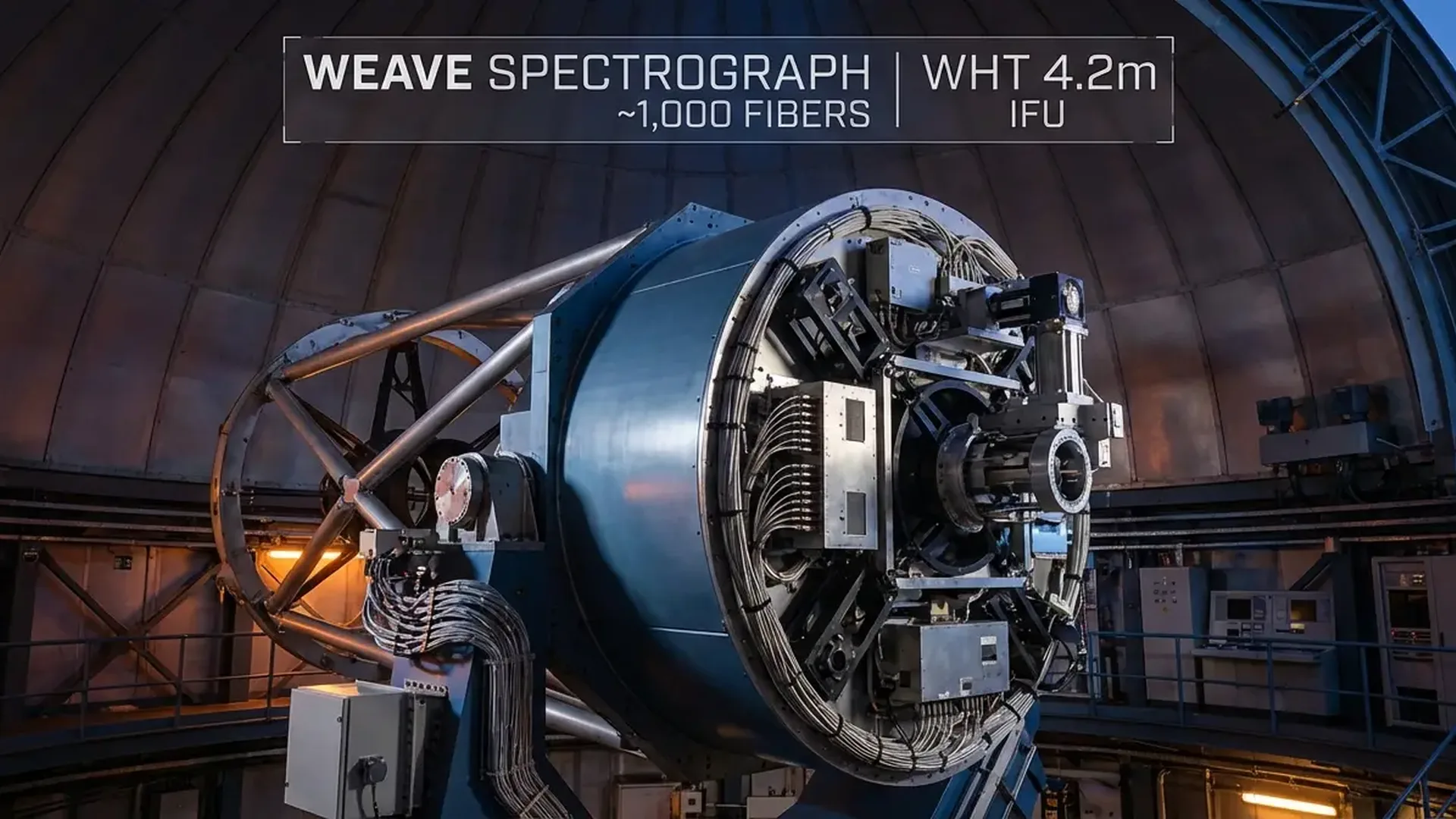
The discovery was made using WEAVE, a revolutionary spectrograph installed on the William Herschel Telescope (WHT) at the Roque de los Muchachos Observatory on La Palma in the Canary Islands.
WEAVE features hundreds of optical fibers that allow simultaneous spectral capture from every point of an object across all optical wavelengths. This “integral field spectroscopy” technology enabled scientists to see the nebula's chemical composition in unprecedented detail — and to reveal the iron bar that had been invisible with every other method.
"Although the Ring Nebula has been studied with many telescopes and instruments, WEAVE allowed us to observe it in entirely new ways and with greater detail. Through continuous spectroscopy, we can create images at any wavelength and determine the chemical composition at every point."
Characteristics of the Iron Bar
The discovered structure has a bar or stripe shape and is located within the elliptical inner layer of the nebula. The dimensions are staggering:
The Great Mystery: How Was It Formed?
The origin of this iron bar remains unknown, and that is what makes the discovery even more fascinating. Scientists are examining two main scenarios:
Scenario 1: A New Form of Stellar Ejection
One possibility is that the bar represents a previously unknown process of material ejection from the central star. Stars at the end of their lives may exhibit unusual behaviors that we do not yet fully understand.
📖 Read more: Betelgeuse: Will We Witness the Supernova?
Scenario 2: The Destruction of a Planet
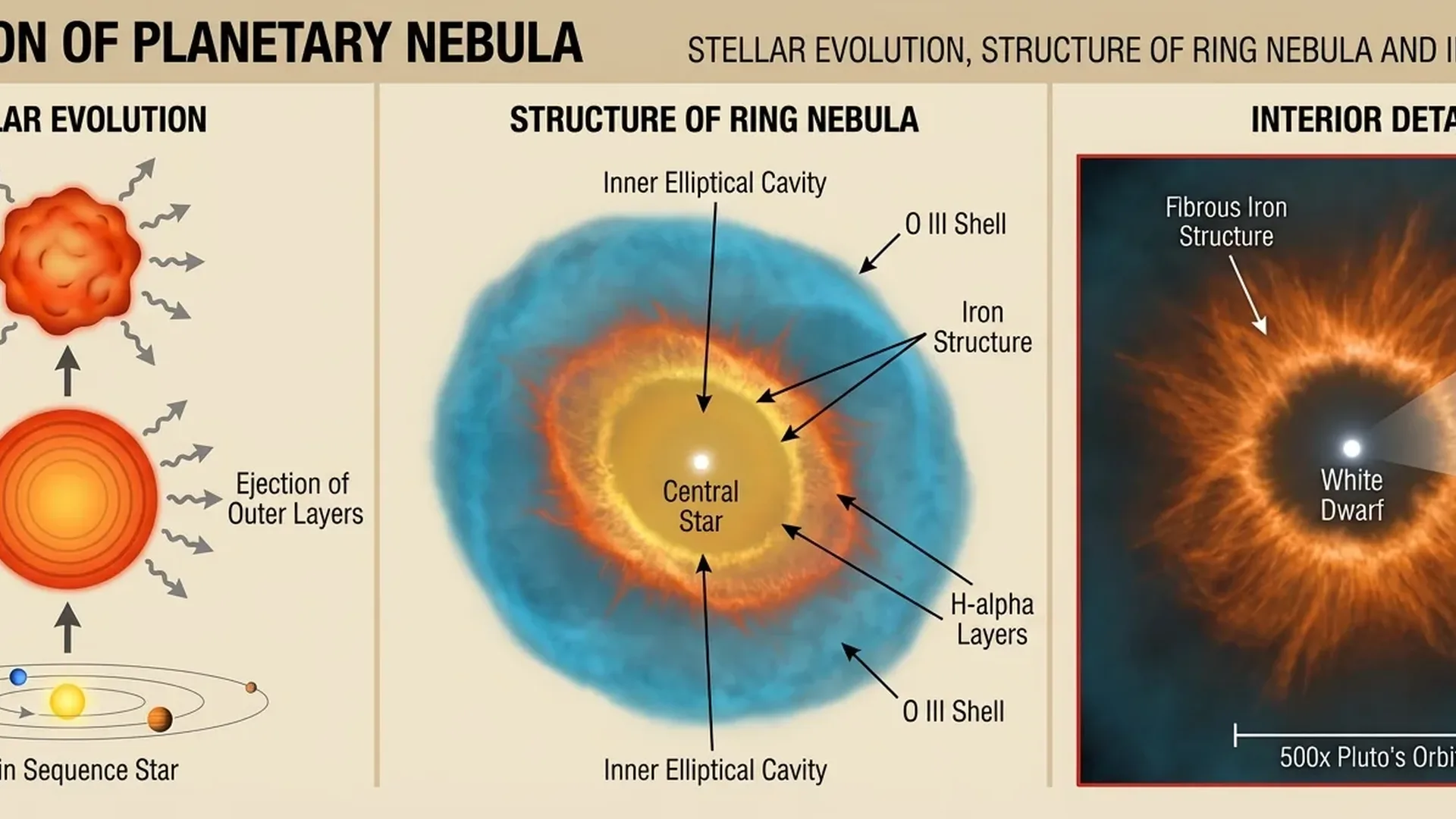
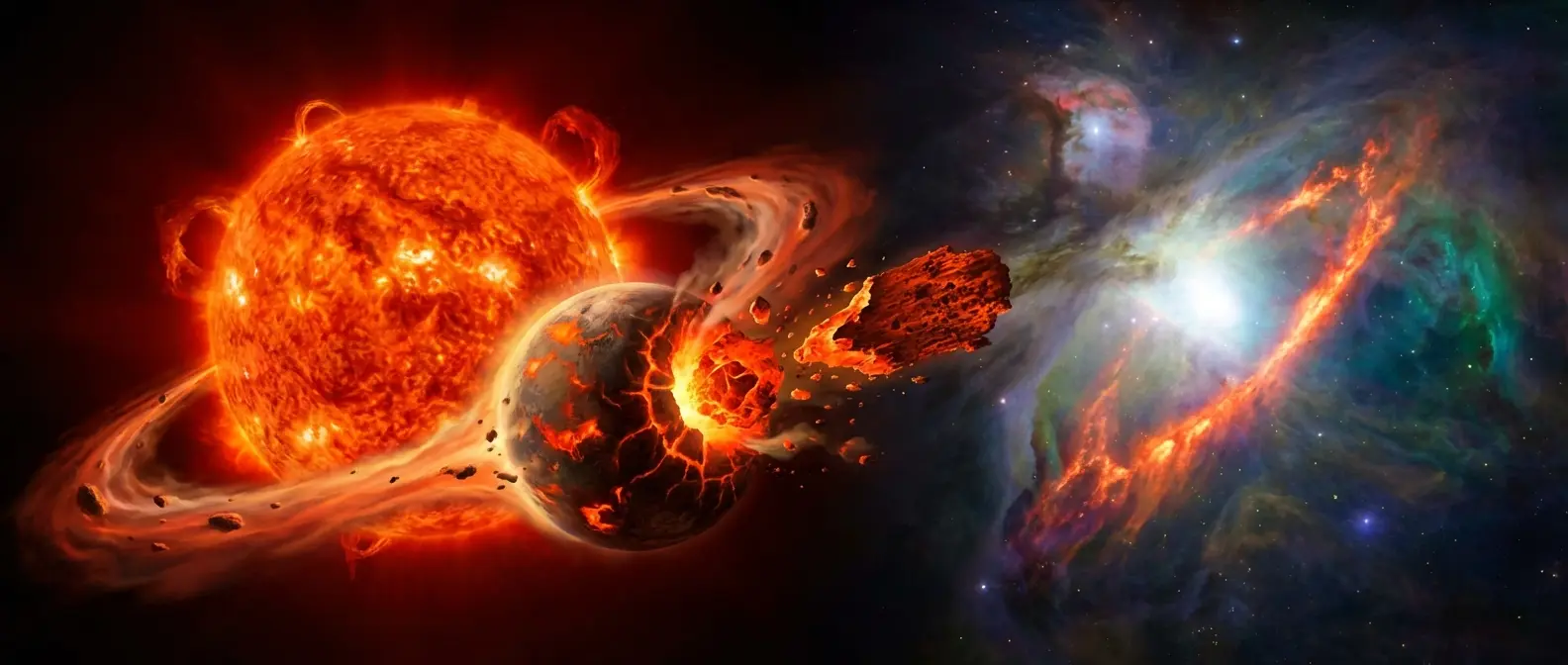
The most fascinating scenario: the bar may have originated from the evaporation of a rocky planet during the nebula ejection process. As the star expands and becomes a red giant, it can engulf and destroy its inner planets — releasing the iron from their cores.
If the destroyed planet scenario is confirmed, it would be the first time we find direct evidence of the fate of planets around dying stars. This has enormous implications for understanding what will happen to our own solar system in 5 billion years, when the Sun exhausts its fuel.
What Does This Mean for Our Sun?
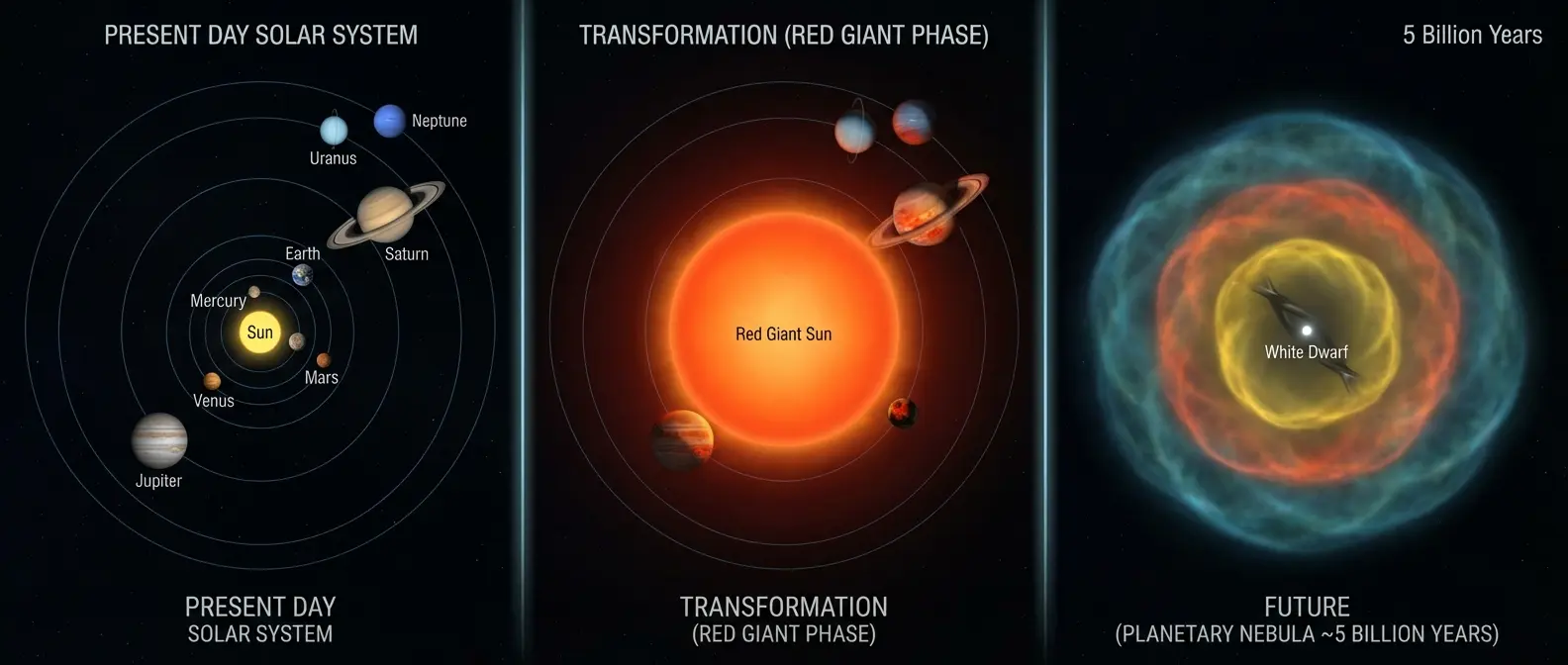
The discovery has direct implications for understanding the future of our own solar system. In about 5 billion years:
- The Sun will expand into a red giant, possibly reaching as far as Mars' orbit
- Earth will be destroyed — either engulfed by the Sun or turned into a barren rock
- The outer layers of the Sun will be ejected, creating a planetary nebula similar to M57
- The core of the Sun will remain as a white dwarf
If our planets leave behind “iron traces” like those found in the Ring Nebula, future astronomers from alien civilizations could discover evidence that planets once existed around our star.
WEAVE: The Instrument That Changed Everything
The discovery would not have been possible without WEAVE, one of the most advanced spectroscopic instruments in the world. Let's see what makes it so special:
| Feature | WEAVE | Traditional Instruments |
|---|---|---|
| Optical fibers | ~1,000 simultaneous | 1-100 typically |
| Field of view | 2° (Large IFU mode) | Smaller |
| Spectral coverage | Full optical spectrum | Limited |
| Operation | Integral Field Unit | Individual objects |
| Telescope | William Herschel 4.2m | Various |
"The finding demonstrates the incredible capabilities of the new WEAVE instrument. We expect it to bring many new discoveries in the coming years, as it examines objects that we thought we knew well."
Next Steps
The team is planning further observations to answer the critical questions:
- What other chemical elements coexist with the iron? This will determine which formation model is correct.
- Do similar structures exist in other planetary nebulae? Dr. Wesson believes the bar may not be unique.
- How does the structure evolve over time? Future observations will show whether it is expanding or changing.
The WEAVE program will conduct eight major research programs over the next five years, covering everything from nearby white dwarfs to very distant galaxies.
The Scientific Publication
The study was published in the prestigious journal Monthly Notices of the Royal Astronomical Society (MNRAS), titled “WEAVE imaging spectroscopy of NGC 6720: an iron bar in the Ring”. The team includes researchers from:
- University College London (UCL)
- Cardiff University
- Instituto de Astrofísica de Canarias (IAC)
- University of Groningen

Conclusion
The discovery of this giant iron bar in the Ring Nebula is a reminder that even the most “familiar” objects in the sky harbor surprises. For nearly 250 years, astronomers observed this nebula without suspecting what was hidden inside it.
If confirmed that the bar originated from a destroyed planet, we would have for the first time direct evidence of the fate of planetary systems around dying stars — and a preview of what awaits our own solar system in billions of years.
🔭 The lesson: Science never stops surprising us. New technology + old objects = new discoveries. The universe still hides many secrets waiting to be revealed.