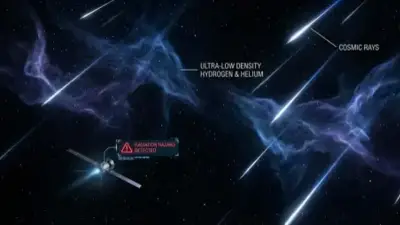
When Voyager 1 crossed the heliopause in 2012 and entered interstellar space, scientists were confronted with a profound question: what exactly is out there? The answer is surprising. Interstellar space is not a perfect vacuum. The interstellar medium (ISM) is a complex environment filled with gas, dust, magnetic fields, and energetic particles — all at incredibly low densities but spanning incomprehensible volumes.
ISM Density: Interstellar space contains on average about 1 atom per cubic centimeter — compared to ~2.7×10¹⁹ molecules/cm³ in Earth's atmosphere. That's roughly 27 quintillion times less dense.
The Heliopause: Where Our Solar System Ends
The heliopause is the boundary where the Sun's solar wind is no longer strong enough to push back the interstellar medium. It sits at approximately 120 AU from the Sun (1 AU = Earth-Sun distance = ~150 million km). Beyond it, interstellar plasma and cosmic rays dominate. Voyager 1 crossed it at ~122 AU; Voyager 2 crossed at ~119 AU in a different direction, showing the heliopause is not perfectly spherical.
The Local Bubble
Our solar system sits within a hot, low-density region of the Milky Way called the Local Bubble — a roughly 1,000 light-year cavity carved out by supernova explosions over the past ~14 million years. The gas inside is extremely hot (~million K) and sparse. The Local Bubble is bounded by denser molecular clouds where new stars form.
Cosmic Rays: The Real Danger
The greatest hazard in interstellar space is galactic cosmic rays (GCRs) — highly energetic particles (protons, helium nuclei, heavier ions) accelerated by distant supernovae and other violent events. On Earth and inside the solar system we are somewhat protected by the heliosphere. In interstellar space, cosmic ray flux is higher and more energetic. For a hypothetical crewed interstellar mission, cosmic rays would be the primary radiation threat, potentially delivering lethal doses over years without shielding measured in meters of water or lead equivalent.
Interstellar Dust and Gas Clouds
Beyond the ISM average, dense molecular clouds — where densities reach 10⁴–10⁶ molecules/cm³ — are scattered throughout the galaxy. These are the birthplaces of stars and planetary systems. If an interstellar spacecraft entered a molecular cloud, it would encounter far more material than the rarefied Local Bubble. The famous Pillars of Creation in the Eagle Nebula are a dramatic example of such structures.
«Space is big. You just won't believe how vastly, hugely, mind-bogglingly big it is.»
— Douglas Adams, The Hitchhiker's Guide to the GalaxyHow Far Is the Nearest Star?
Proxima Centauri, our nearest stellar neighbor, lies 4.24 light-years away — approximately 40 trillion km. At Voyager 1's current speed (~17 km/s), it would take about 73,000 years to reach it (if it were heading that direction, which it isn't). The only realistic near-term proposal to reach a neighboring star is Breakthrough Starshot, which proposes laser-propelled nanoprobes accelerated to 20% of light speed — reaching Proxima in ~20 years.
- NASA JPL – Voyager 1 in Interstellar Space
- Gurnett et al. – Science 2013: Plasma waves in interstellar space
- Frisch et al. – Science 2019: The Local Bubble and its boundaries
- Breakthrough Initiatives – Breakthrough Starshot
Related Articles
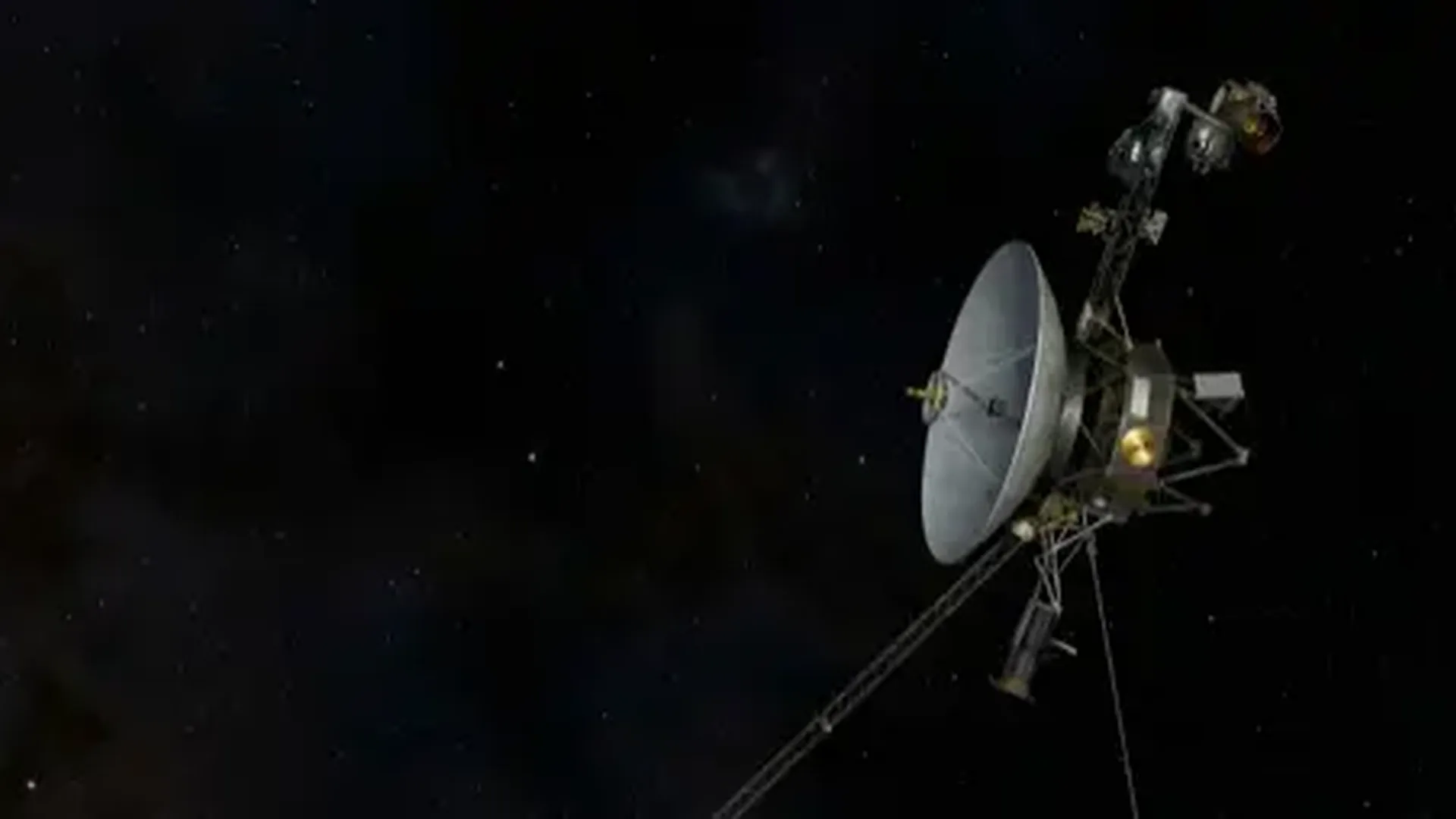
Voyager 1: The Farthest Human Object
Now in the interstellar medium, discovered right here.
Betelgeuse: The Coming Supernova
Supernovae carved out the Local Bubble we live in.
Neutron Stars: Zombie Stars
The stellar remnants that enrich the interstellar medium.
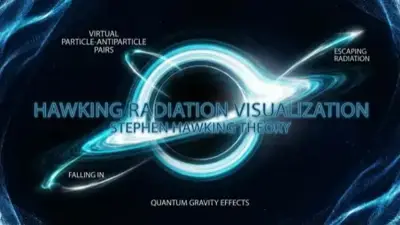
Hawking Radiation: Do Black Holes Evaporate?
What happens to matter at the very edge of spacetime.
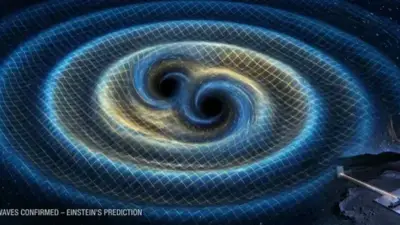
Gravitational Waves: How LIGO Detects Them
Ripples in spacetime reaching across the cosmos.
Alien Civilizations: Will We Meet Them?
The vast distances of interstellar space make contact elusive.