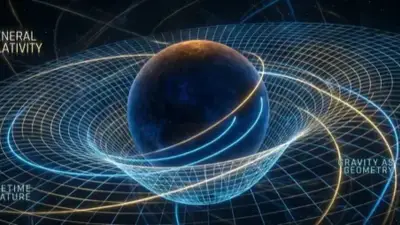
Gravity is the most familiar force in the universe — it keeps your feet on the ground, holds the Moon in orbit, and binds entire galaxies together. Yet for over three centuries, physicists have debated its fundamental nature. Is it a true force, or simply the shape of space itself? The answer depends on whose physics you use — and the two greatest frameworks in history give radically different answers.
Newton vs Einstein: Isaac Newton described gravity as an instantaneous force acting at a distance. Albert Einstein, 228 years later, revealed it as the curvature of spacetime caused by mass — objects don't “fall” toward Earth, they follow the natural curves of warped space.
Newton's Gravity: A Force That Rules the Solar System
In 1687, Isaac Newton published his Principia Mathematica, introducing universal gravitation: every mass attracts every other mass with a force proportional to their masses and inversely proportional to the square of their distance. This elegant equation explained planetary orbits, tidal forces, and projectile motion with extraordinary precision.
For over two centuries, Newtonian gravity was the unchallenged framework of physics. It allowed astronomers to predict the positions of planets decades in advance, and even led to the discovery of Neptune in 1846 — astronomers detected it by calculating the gravitational influence it had on Uranus's orbit before anyone had seen it.
Einstein's Revolution: Gravity as Geometry
Between 1905 and 1915, Albert Einstein worked on a profoundly different picture of gravity. His General Theory of Relativity (GR), completed in November 1915, proposes that massive objects do not exert a “force” on each other — instead, they curve the fabric of spacetime, and other objects move along the straightest possible paths (geodesics) through that curved geometry.
The famous analogy: imagine a stretched rubber sheet. Place a heavy bowling ball in the center and it creates a depression. Now roll a marble nearby — it curves inward toward the bowling ball, not because the bowling ball is “pulling” it, but because the marble follows the contoured surface. Replace the rubber sheet with four-dimensional spacetime, and you have general relativity.
Newton's Gravity
- Instantaneous action at a distance
- Force between masses
- Absolute space and time
- Works perfectly at low speeds, weak fields
- Cannot explain GPS errors, light bending, Mercury precession
Einstein's General Relativity
- Gravity travels at the speed of light
- Curvature of spacetime
- Relative space and time
- Works at all speeds and field strengths
- Predicts black holes, gravitational waves, expanding universe
The Eddington Experiment: Light Bending Around the Sun
Einstein's theory made an extraordinary prediction: light itself should bend around massive objects, because it follows curves in spacetime. In 1919, British astronomer Arthur Eddington sailed to Príncipe Island, West Africa, to photograph stars near the Sun during a total solar eclipse. The results showed exactly the deflection Einstein had predicted — and confirmed General Relativity to the world. Headlines declared “Newton is Overthrown.”
"The most beautiful experience we can have is the mysterious. It is the fundamental emotion that stands at the cradle of true art and true science."
— Albert Einstein, The World As I See It (1931)Real-World Proof: GPS Satellites
General Relativity is not just abstract theory — it has practical, daily consequences. GPS satellites orbit at 20,200 km altitude, where gravity is weaker than on Earth's surface. According to GR, clocks tick faster in weaker gravity. Combined with time dilation from their orbital speed (Special Relativity effect), GPS clocks gain approximately 38 microseconds per day relative to Earth clocks. Without constant corrections, GPS navigation would accumulate errors of about 7.3 km per day. Every smartphone that uses GPS is a silent daily test of Einstein's equations.
Gravitational Lensing and the Bullet Cluster
One of the most spectacular demonstrations of GR is gravitational lensing — massive galaxy clusters bend light from even more distant galaxies behind them, creating arcs and rings in telescope images (the “Einstein Ring” effect). The Hubble Space Telescope has captured hundreds of these in extraordinary detail. The 2006 Bullet Cluster observation used lensing to map dark matter distribution separately from hot gas, providing the strongest evidence to date that dark matter exists as a physical substance rather than a modification of gravity.
The Unsolved Problem: Quantum Gravity
Despite GR's triumphs, physicists face a fundamental crisis. General Relativity governs the very large — galaxies, black holes, the expanding universe. Quantum Mechanics governs the very small — atoms, particles, energy at the Planck scale. But these two theories are mathematically incompatible. At the center of a black hole, or in the first moments after the Big Bang, both regimes apply simultaneously — and our current physics breaks down.
The hypothetical particle that would mediate quantum gravity is the graviton — a massless, spin-2 boson, analogous to how photons mediate electromagnetism. But no graviton has ever been detected, and all attempts to quantize gravity have produced mathematical infinities ("non-renormalizability") that make the equations useless. String theory and loop quantum gravity are leading candidate frameworks, but neither has produced testable predictions confirmed by experiment.
The Open Question: Unifying General Relativity and Quantum Mechanics into a single “Theory of Everything” is the largest unsolved problem in theoretical physics. A century after Einstein, we still don't know what gravity truly is at the most fundamental level.
Sources: NASA General Relativity Overview (nasa.gov), LIGO Scientific Collaboration (ligo.org), ESA Hubble Space Telescope, Eddington 1919 Solar Eclipse Papers, Einstein A. “Die Grundlage der allgemeinen Relativitätstheorie” (Annalen der Physik, 1916), GPS.gov — How GPS Works
Related Articles
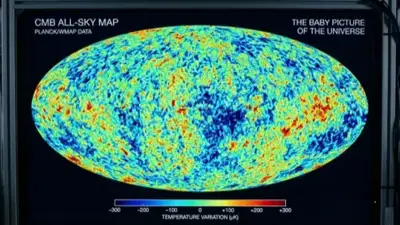
The Cosmic Microwave Background
The oldest light in the universe — echo of the Big Bang from 380,000 years after the beginning.
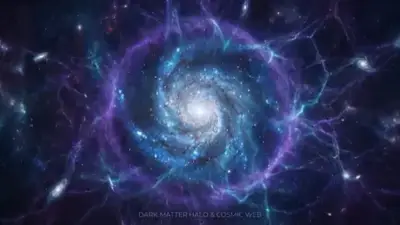
Dark Matter and Dark Energy
95% of the universe is invisible. What do we know about the dark side of the cosmos?
The Fermi Paradox
If the universe is full of planets, where is everybody? Fermi's great unanswered question.
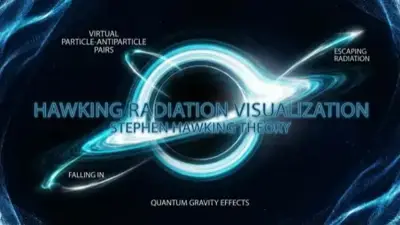
Hawking Radiation
Do black holes actually glow? Stephen Hawking's revolutionary quantum prediction.
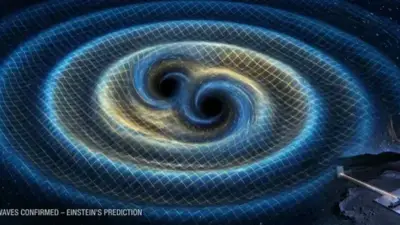
Gravitational Waves
LIGO detected ripples in spacetime — Einstein's last great prediction confirmed.
Exoplanets with Conditions for Life
Which worlds beyond our solar system could harbor life?