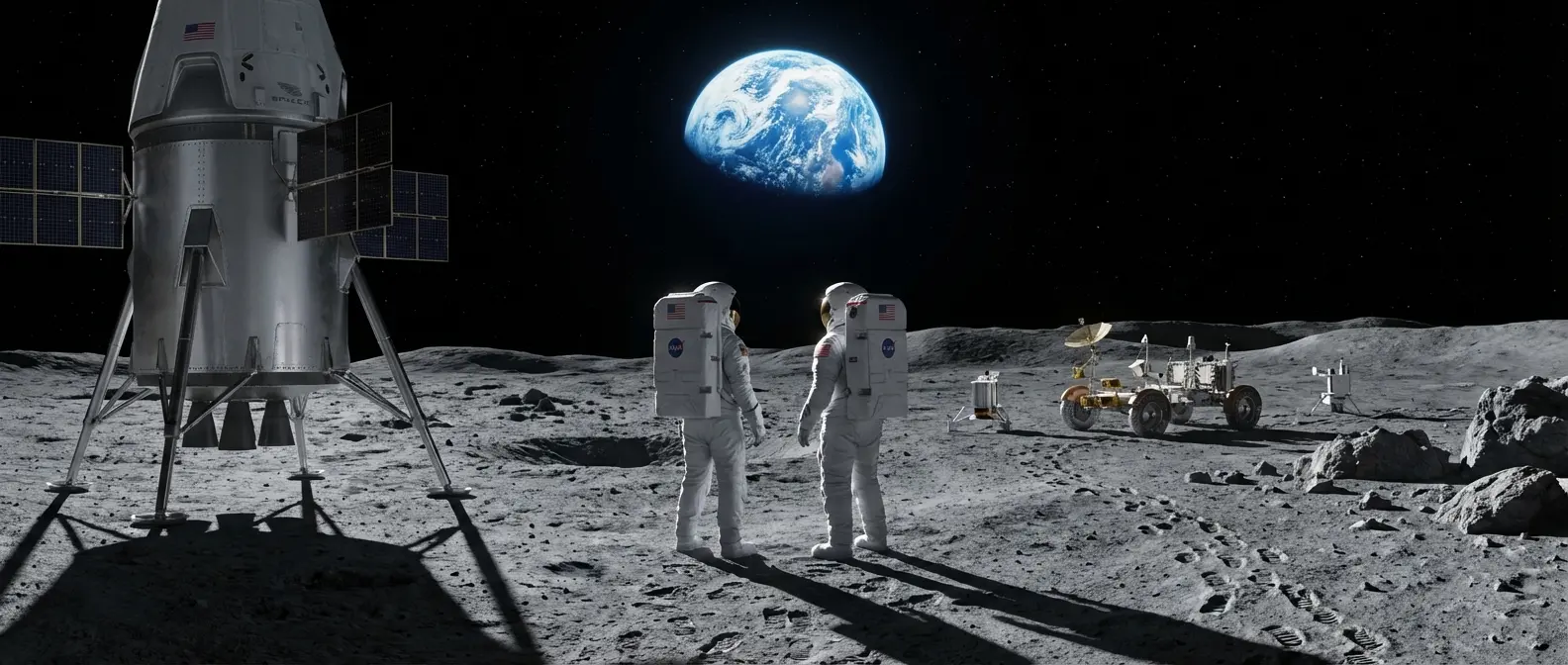
Fifty-three years after the last crewed mission to the Moon, humanity is preparing to return. NASA's Artemis program isn't simply a repeat of Apollo — it's the first step toward a permanent human presence in space. And 2026 is the year that will make history.
🌙 The Artemis III mission will send the first woman and the first person of color to the Moon, marking a new era in space exploration.
What Is the Artemis Program?
Artemis (named after the Greek goddess of the Moon) is NASA's ambitious program to return humans to the lunar surface. But unlike Apollo, the goal isn't just to land and leave — it's to stay.
Program Objectives
- South Pole Exploration - Regions where no human has ever set foot
- Search for Water Ice - Critical for a permanent presence
- Building the Gateway - A space station in lunar orbit
- Artemis Base Camp - The first permanent human base on the Moon
- Preparing for Mars - Using the Moon as a “training ground” for the Red Planet
Artemis III: The Historic 2026 Mission
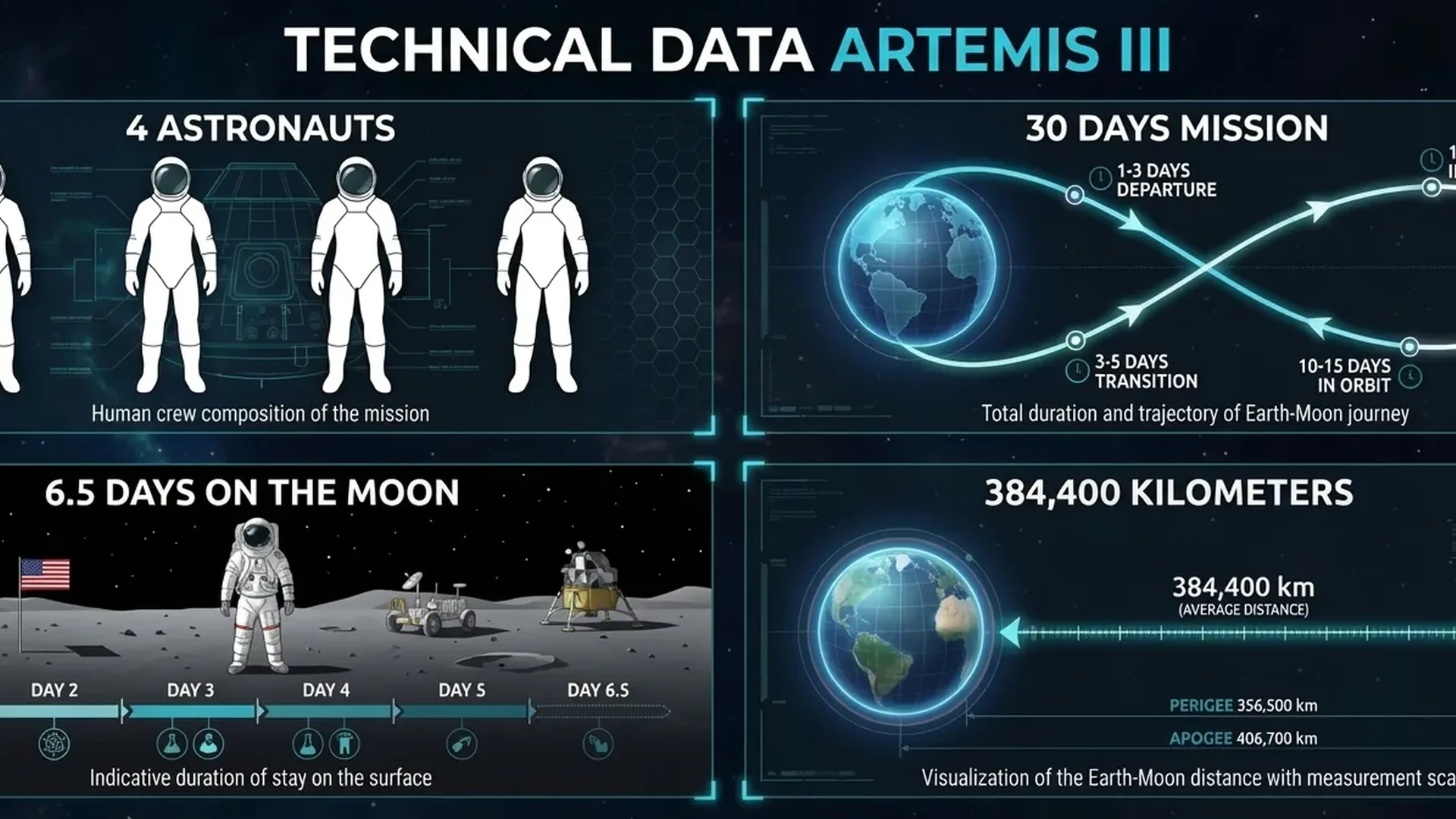
Artemis III will be the first crewed Moon landing since Apollo 17 in 1972. Four astronauts will travel aboard the Orion spacecraft, but only two will descend to the lunar surface using SpaceX's Human Landing System (HLS).
The Mission Astronauts
NASA has selected the Artemis III crew from the Artemis Team, a group of 18 astronauts specially trained for lunar missions.
The mission will include:
- A commander - Responsible for the overall mission
- A pilot - Operating the Orion spacecraft
- Two mission specialists - Who will carry out extravehicular activities on the Moon
👩🚀 A historic moment: For the first time, a woman will walk on the surface of the Moon. NASA has committed to Artemis III including the first woman and the first person of color to set foot on the lunar surface.
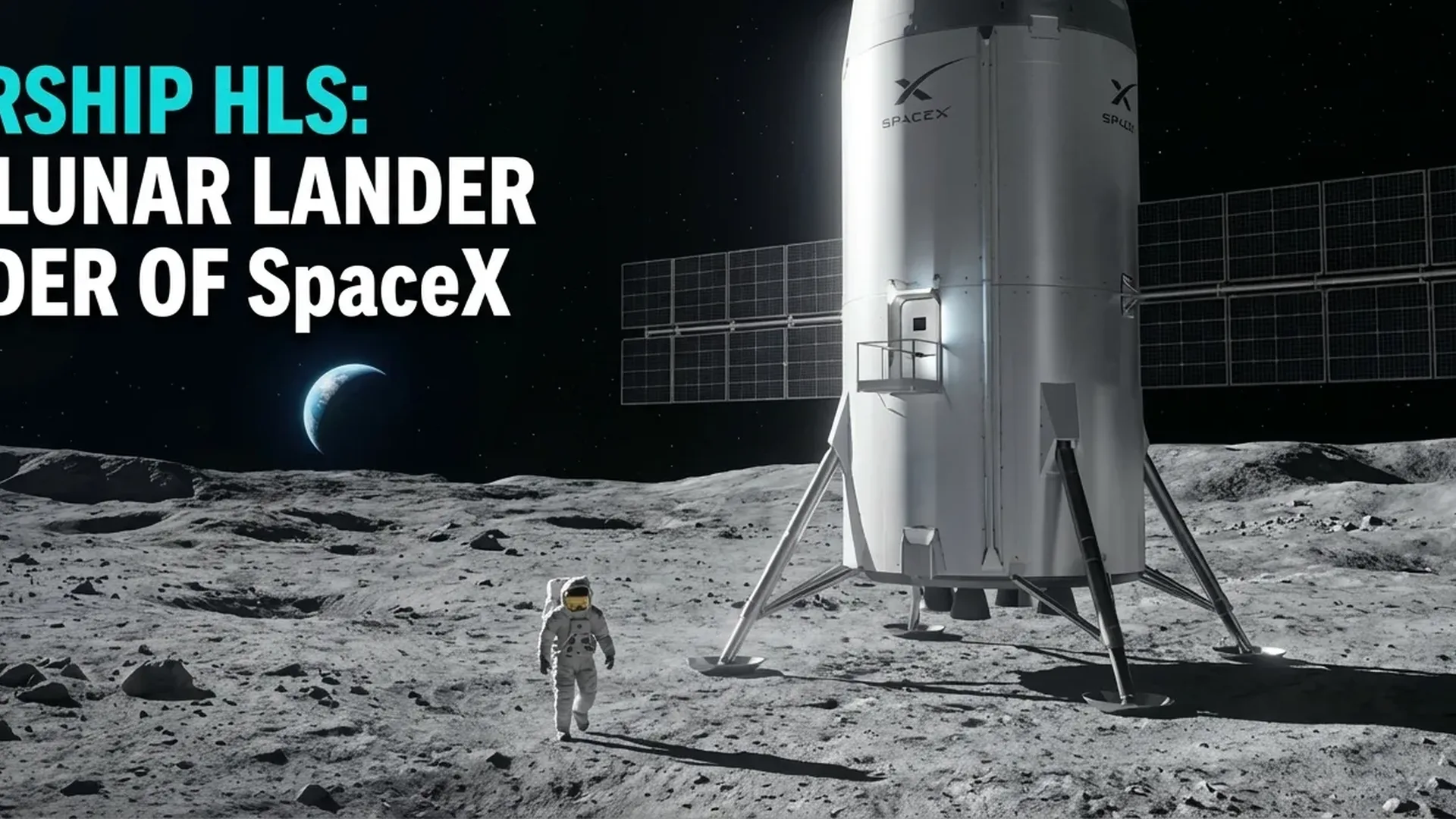
The Starship HLS: SpaceX's Lunar Lander
One of the most exciting aspects of Artemis is the partnership with SpaceX. Elon Musk's company won the contract for the Human Landing System (HLS) — the vehicle that will carry astronauts from orbit down to the lunar surface.
The Starship HLS is a modified version of Starship, designed exclusively for lunar missions:
- 50 meters tall - The largest lunar lander ever built
- Solar arrays - For extended stays on the lunar surface
- Elevator - For easy access to the surface (due to its height)
- Living quarters - For multi-day astronaut stays
The Orion Spacecraft
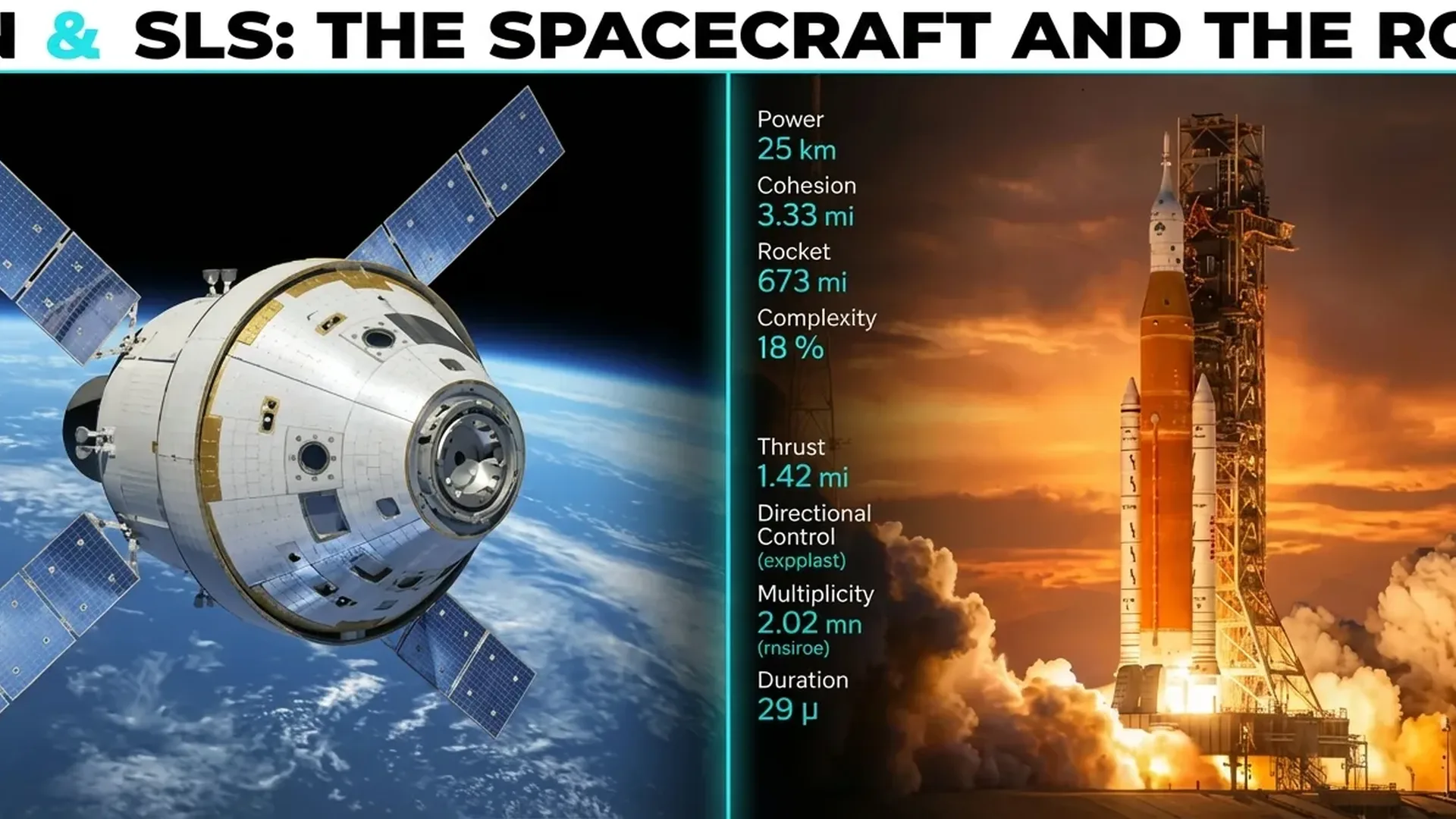
Orion is the spacecraft that will carry astronauts from Earth to lunar orbit and back. Designed for deep space missions, it is the most advanced crewed spacecraft NASA has ever built.
The SLS Rocket: The Most Powerful Rocket in the World
The Space Launch System (SLS) is the rocket that will launch Orion. Standing 98 meters tall with 39.1 meganewtons of thrust, it is the most powerful rocket ever flown — surpassing even the legendary Saturn V from the Apollo era.
The Lunar Base: Artemis Base Camp
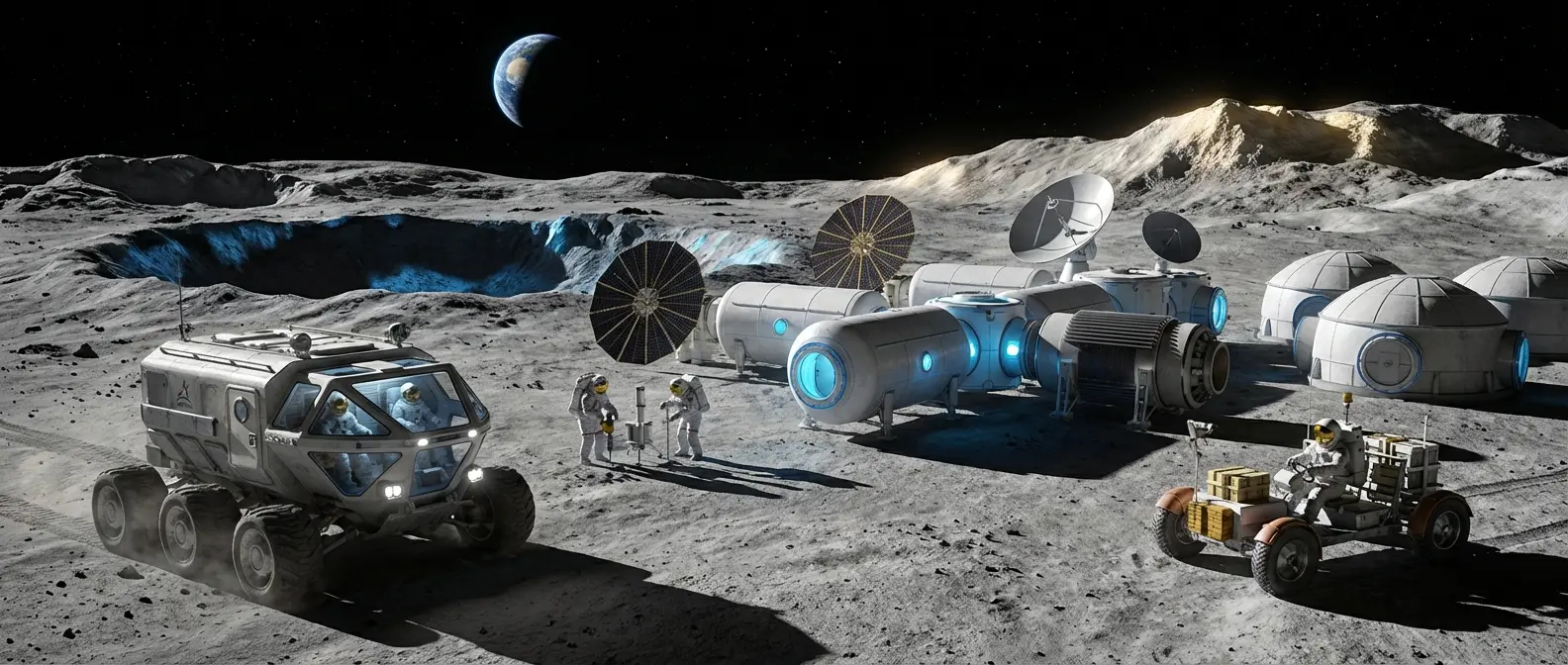
The long-term goal of Artemis is to establish a permanent human presence on the Moon. The Artemis Base Camp will be the first lunar base, located near the Moon's South Pole.
Why the South Pole?
- Water ice - Permanently shadowed craters contain ice that can be used for drinking water, oxygen, and fuel
- Near-constant sunlight - Peaks with nearly 24-hour sunlight for energy
- Scientific interest - Unexplored regions with unique geology
Base Camp Components
- Lunar Terrain Vehicle (LTV) - Robotic vehicle for exploration
- Pressurized Rover - Enclosed vehicle for longer-range missions
- Surface Habitat - Permanent living quarters for astronauts
- Power Systems - Nuclear reactors and solar panels
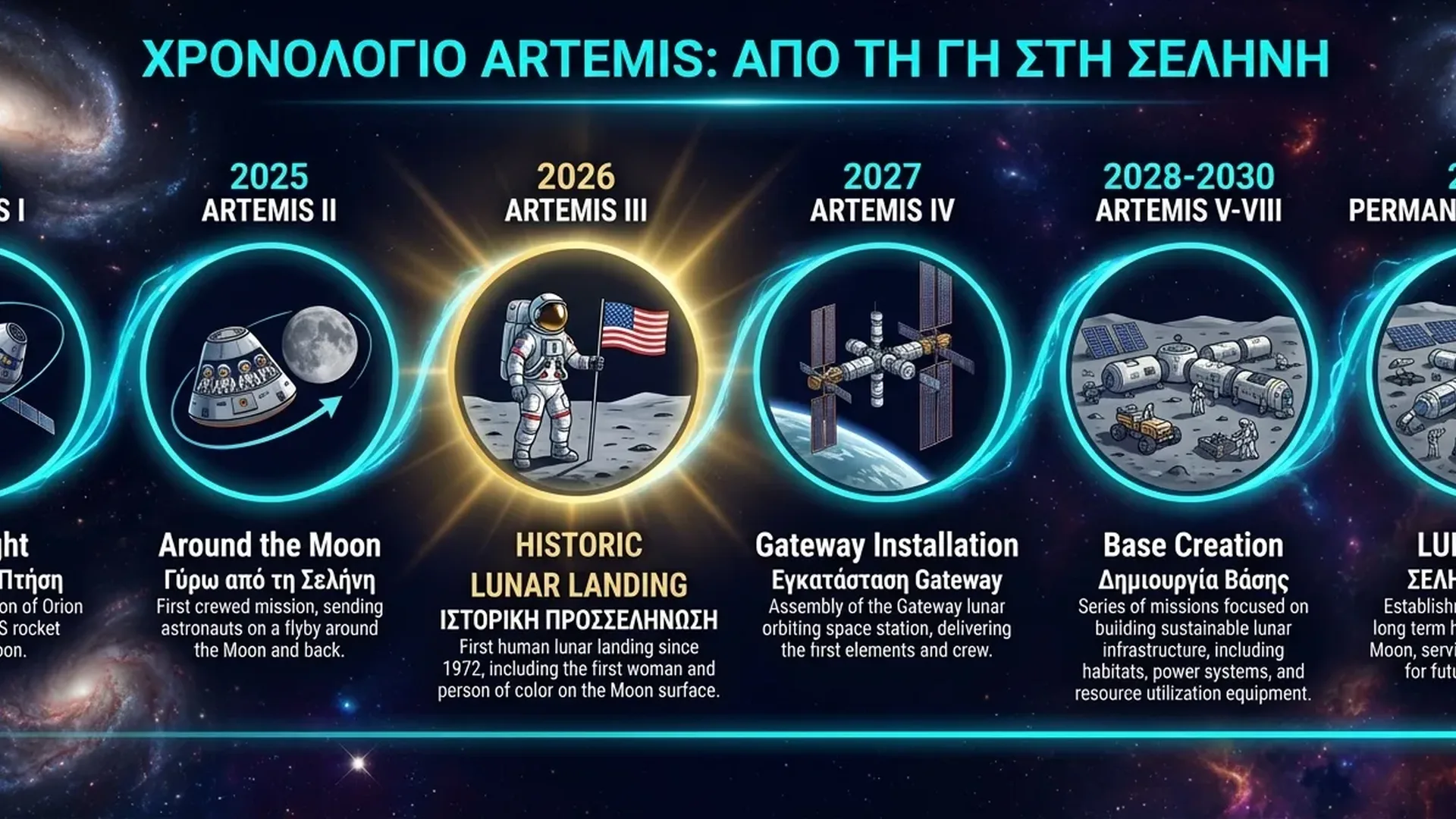
Artemis Program Timeline
Artemis I - First test flight of SLS and Orion (uncrewed)
Artemis II - First crewed flight around the Moon
Artemis III - The historic Moon landing after 50+ years
Artemis IV - Installation of the first Gateway module
Artemis V-VIII - Regular missions, base construction
Permanent human presence on the Moon
International Partnerships
Unlike Apollo, which was a purely American program, Artemis is a global effort. The Artemis Accords have been signed by more than 30 countries, including Greece.
- ESA (Europe) - Providing the European Service Module for Orion
- JAXA (Japan) - Astronauts and technology
- CSA (Canada) - The Canadarm3 robotic arm for the Gateway
- ASI (Italy) - Habitation modules
What Does This Mean for Humanity?
Returning to the Moon is not simply a nostalgic replay of the past. It is the first step toward a multi-planetary future.
The Moon will serve as:
- A laboratory - For technologies that will be used on Mars
- A refueling station - Producing fuel from lunar resources
- An observatory - The “far side” offers ideal conditions for observations
- A gateway to space - A launchpad for missions to asteroids and beyond
🔭 The vision: By the 2040s, NASA plans to send humans to Mars, leveraging the experience and infrastructure gained from the Artemis program.
Conclusion
2026 will be a year we remember forever. After five decades, humanity is returning to the Moon — not just to leave footprints, but to build our future among the stars.
As NASA astronaut Christina Koch put it: "The Artemis generation will be the one to pave the way for the first humans on Mars. We are ready."