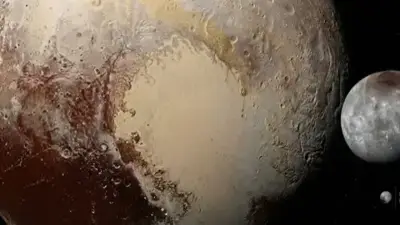
For 76 years, Pluto was the ninth planet of our solar system. Then, on August 24, 2006, the International Astronomical Union (IAU) voted to strip it of full planetary status, reclassifying it as a dwarf planet. The decision was controversial, sparking debate that continues to this day. To understand why, we need to examine what the IAU actually decided — and what it means for the broader question of what makes something a planet.
IAU's Three-Part Definition of a Planet (2006): 1) It orbits the Sun. 2) It has sufficient mass for gravity to make it nearly spherical. 3) It has cleared the neighborhood around its orbit. Pluto fails criterion 3, sharing its orbital zone with many Kuiper Belt Objects.
The Discovery of Pluto
Pluto was discovered on February 18, 1930, by Clyde Tombaugh at Lowell Observatory in Arizona. He was just 23 years old. Tombaugh compared photographic plates taken days apart and noticed a moving point of light — Pluto. The name was suggested by 11-year-old Venetia Burney of Oxford, England. For decades, Pluto was considered the ninth and outermost planet.
The Kuiper Belt Changes Everything
The problem began in the 1990s when astronomers discovered dozens, then hundreds, of icy objects beyond Neptune in a region called the Kuiper Belt. Several were almost as large as Pluto. The crisis peaked in 2005 when Mike Brown (Caltech) discovered Eris — initially appearing slightly larger than Pluto. If Pluto was a planet, Eris would be too. And many more like them existed. The IAU faced a choice: expand the solar system to dozens of planets or redefine planet.
«I killed Pluto. And I'm not sorry.»
— Mike Brown (@plutokiller), Caltech, discoverer of ErisNew Horizons: A World More Complex Than Expected
On July 14, 2015, NASA's New Horizons spacecraft flew within 12,500 km of Pluto after a 9.5-year journey. The images revealed a surprisingly complex, geologically active world — nitrogen glaciers, mountains of water ice 3,500 m high, and a heart-shaped plain of frozen nitrogen informally named Tombaugh Regio in honor of Pluto's discoverer. The atmosphere was a thin blue haze of nitrogen and methane. Nobody expected this level of activity.
Charon: A Binary System
Pluto's largest moon Charon (discovered 1978) is so large relative to Pluto that they orbit a common center of mass between them — making them technically a binary dwarf planet system. Charon's diameter is 1,212 km (about half of Pluto's). Pluto also has four smaller moons: Nix, Hydra, Kerberos, and Styx.
Should Pluto Be a Planet Again?
Many scientists, including former New Horizons principal investigator Alan Stern, argue that the IAU definition is flawed. Under Stern's geophysical definition, any round body in space is a planet — which would include not just Pluto but also Eris, Ceres, Ganymede, Titan, and potentially 100+ other bodies. This debate highlights a genuine scientific tension about categorical definitions.
- IAU – Resolution B5: Definition of a Planet (2006)
- NASA New Horizons – Pluto Flyby Results
- Brown et al. – ApJ Letters 2005: Discovery of Eris (2003 UB313)
- Stern & Levison – Highlights of Astronomy 2002: What is a Planet?
Related Articles
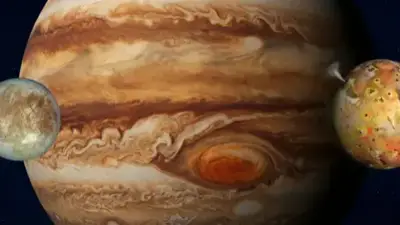
Jupiter: Its 95 Moons
How many moons is too many? Jupiter has 95 and counting.
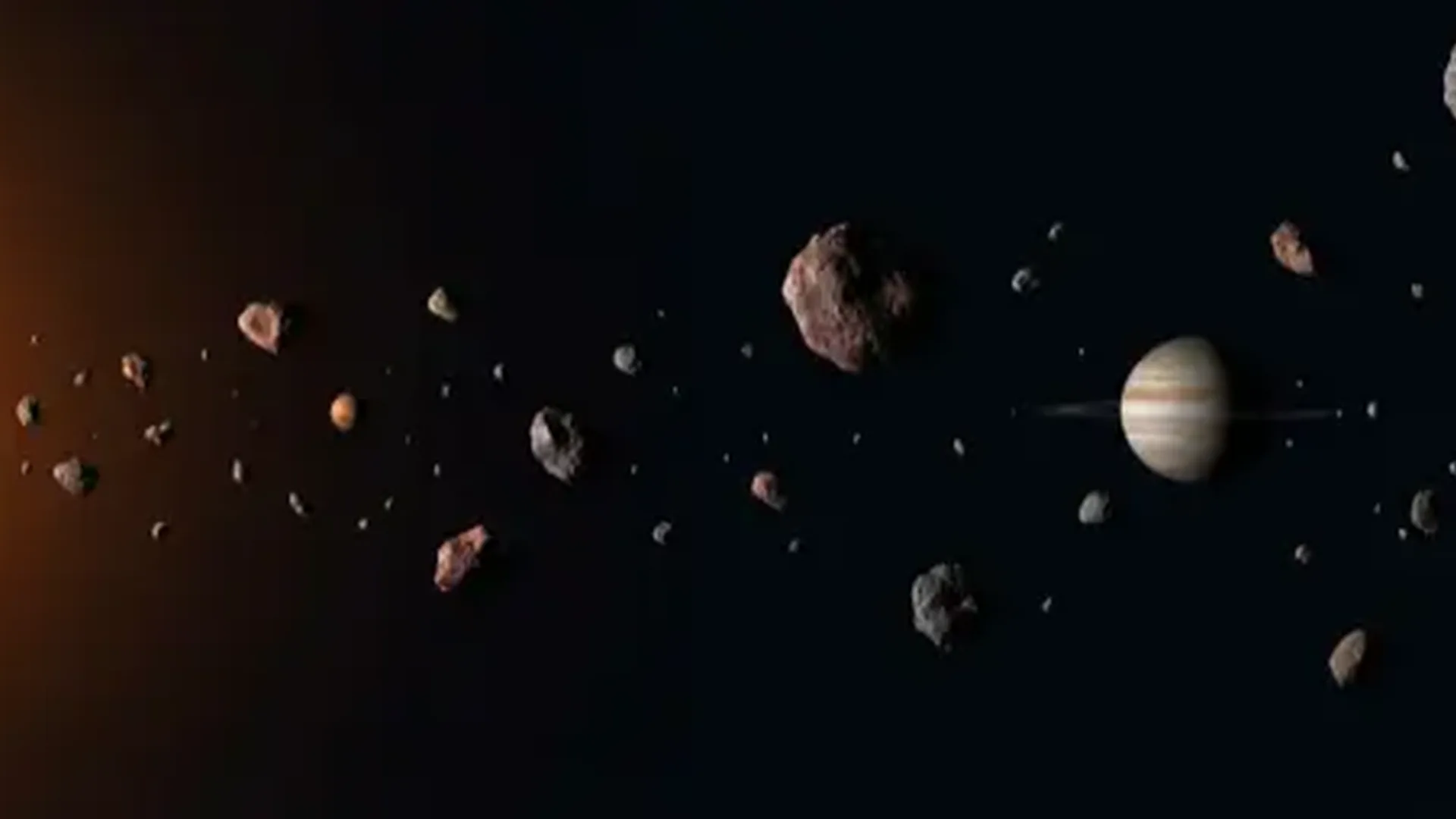
The Asteroid Belt: Not What Movies Show
Near-empty space with fascinating objects like Ceres and Vesta.
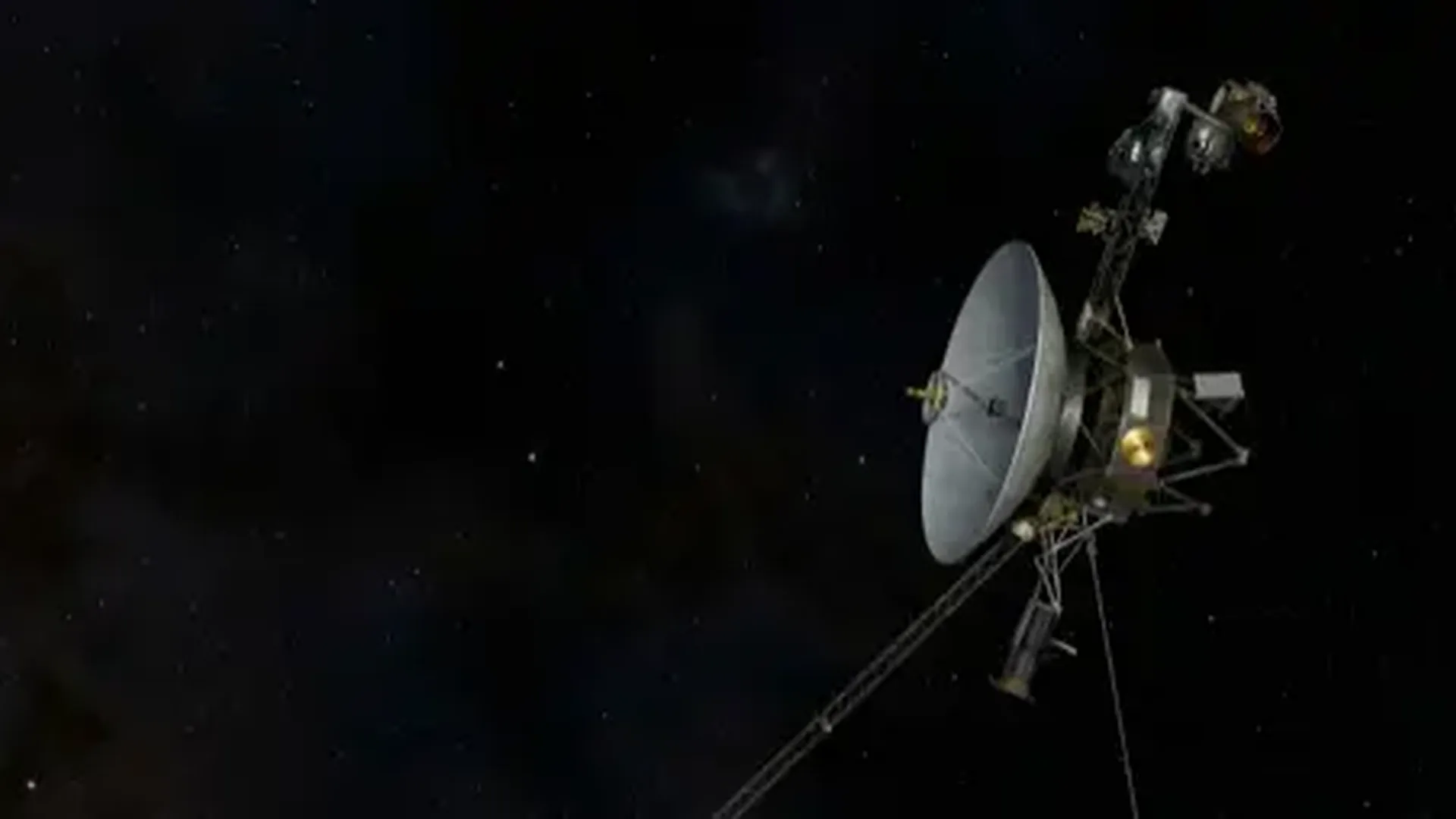
Voyager 1: Beyond the Solar System
Launched 1977, now in interstellar space — 24 billion km away.

Betelgeuse: Will We Witness a Supernova?
The Great Dimming explained and the fate of a red supergiant.

How Will the Universe End?
The five scientific theories for the cosmic endgame.
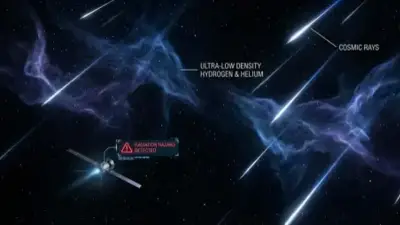
Interstellar Space: Empty but Not Void
What lies beyond the solar system's edge?