
One of the most mind-bending predictions of Einstein's General Theory of Relativity (1915) is that time does not flow at the same rate everywhere in the universe. Near massive objects, where spacetime curves more strongly, time literally passes more slowly compared to regions farther away. This phenomenon, called gravitational time dilation, is not a theoretical curiosity — it is confirmed by precision instruments every single day.
Einstein's Formula: The rate of time near a mass M at radius r is given by t' = t√(1 − 2GM / rc²). The closer to the mass (smaller r), the smaller the factor, the slower time flows.
GPS: Practical Proof Every Day
GPS satellites orbit at ~20,200 km altitude, where Earth's gravity is weaker. Because of this, their clocks run faster by ~45 microseconds per day compared to clocks on the surface. Simultaneously, because they are moving fast (~14,000 km/h), their clocks run slower by ~7 microseconds per day due to special relativistic time dilation. The net effect: GPS clocks gain ~38 microseconds per day and must be corrected. Without this correction, GPS navigation would drift by ~10 km per day.
Pound-Rebka Experiment (1959)
The first laboratory confirmation came from Robert Pound and Glen Rebka at Harvard. They measured the gravitational redshift of gamma rays travelling a mere 22.5 meters vertically in a tower. Photons climbing out of a gravitational field lose energy (redshift), and falling into it gain energy (blueshift). Their measurement agreed with General Relativity to within 10%.
«The result is confirmed with an accuracy of approximately 1 percent, providing the most accurate direct test of the principle of equivalence.»
— Pound & Rebka, Physical Review Letters, 1959Hafele-Keating Experiment (1971)
Physicists Joseph Hafele and Richard Keating flew four cesium atomic clocks around the world on commercial airplanes — eastward and westward. Upon return, they compared these to reference clocks at the US Naval Observatory. The results confirmed both gravitational and velocity-based time dilation with an accuracy of ~10%, exactly as predicted by relativity.
The Twin Paradox
The famous Twin Paradox illustrates velocity-based time dilation: one twin stays on Earth while the other travels at near-light speed to a distant star and returns. The travelling twin returns younger because their clocks ran slower. Gravity has an analogous effect: a twin living near a black hole ages more slowly than one living far away. Over cosmic timescales, this effect becomes enormous.
Near a Black Hole
The most extreme gravitational time dilation occurs near a black hole's event horizon. An observer falling toward a black hole would find their time flowing normally, but a distant observer would see them freeze as they approach the horizon — their image fading and redshifting. The M87* black hole imaged by the Event Horizon Telescope in 2019, with a mass of 6.5 billion solar masses, has a gravitational time dilation factor of millions near its horizon.
Confirmation from Atomic Clocks on Earth
Modern optical atomic clocks are so precise that they can measure gravitational time dilation at height differences of just 1 centimeter. A 2022 NIST experiment with strontium clocks confirmed time dilation at this microscopic altitude difference — the most sensitive confirmation of General Relativity ever performed.
- Pound & Rebka – Physical Review Letters, 1959
- Hafele & Keating – Science, 1972
- NIST – Optical Atomic Clock Experiments, 2022
- ESA – GPS Relativistic Corrections
Related Articles
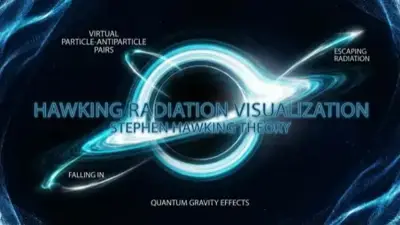
Hawking Radiation: Black Holes Evaporate
Hawking predicted black holes emit radiation. Now experiments look for proof.
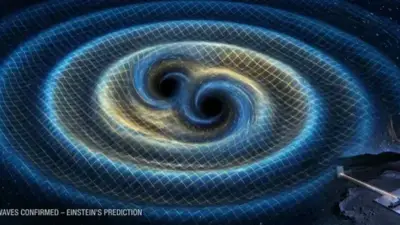
Gravitational Waves: The New Astronomy
GW150914: the detection that confirmed Einstein's last great prediction.
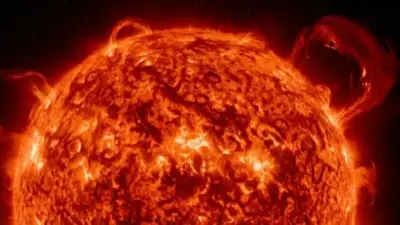
Betelgeuse: Will We Witness a Supernova?
The Great Dimming of 2019-2020 was not what it seemed.

How Will the Universe End?
Heat Death, Big Rip, Big Crunch — what physics says about cosmic fate.
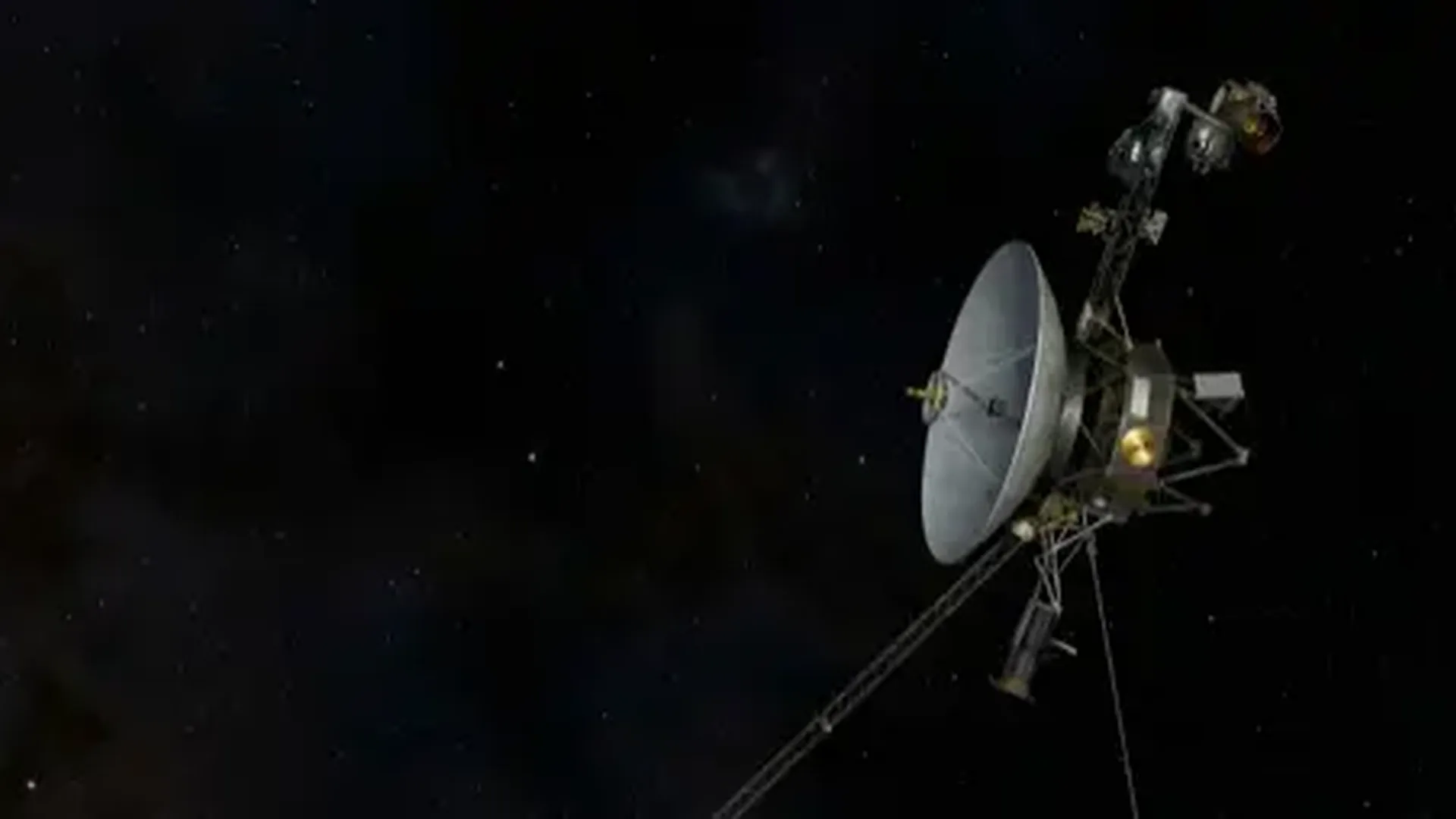
Voyager 1: The Farthest Human Object
24 billion km from Earth,still sending signals home.
Neutron Stars: The Universe's Zombies
The densest objects in the universe, spinning hundreds of times per second.