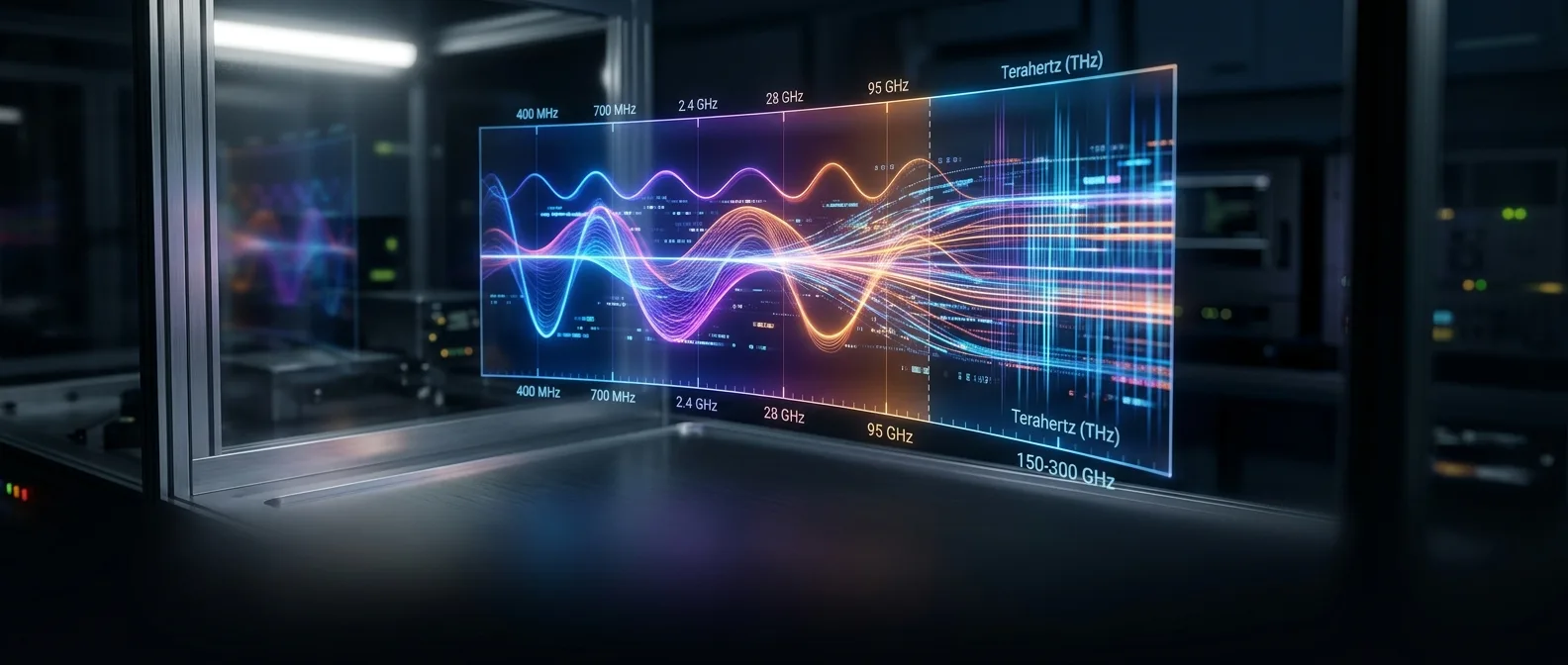
SoftBank dropped a bombshell at Mobile World Congress 2026. Not about 6G timelines — those are moving faster than anyone expected. But about spectrum requirements: 400 MHz minimum for commercial 6G networks. That's double what most carriers planned for. Is it overkill? Essential? Or just the opening bid in a global spectrum land grab?
🚀 Why 400 MHz: The Math Behind the Madness
Koichiro Furueda from SoftBank laid out the numbers in Barcelona. First commercial 6G networks need a massive 400 MHz bandwidth chunk to work properly. This isn't vendor marketing. It's cold arithmetic.
Three factors drive this requirement. Data traffic will multiply five to nine times over the next few years — mostly from AI applications. The existing 3.9 GHz band we use for 5G hits capacity limits around 2030. New applications like autonomous driving and remote surgery demand both high capacity and ultra-low latency simultaneously.
Why Not 200 MHz?
International 6G spectrum discussions examine both 200 MHz and 400 MHz options. But SoftBank picked the higher number for reasons beyond marketing hype. 400 MHz spectrum enables full exploitation of new beamforming technologies at 7 GHz, while creating more room for simultaneous operation of different services.
📡 Tokyo Streets: Real-World 6G Testing
Behind the MWC 2026 announcements lies actual field testing on Tokyo streets. Since June 2025, SoftBank partnered with Nokia to test 7 GHz spectrum in Ginza — one of the city's most densely built districts.
Results surprised everyone. Despite theoretical predictions of reduced coverage at higher frequencies, 7 GHz spectrum delivered performance comparable to existing 3.9 GHz bands. The secret was the "canyon effect" — vertical building surfaces in Ginza acted as natural reflectors, helping signal propagation instead of blocking it.
"Despite theoretical disadvantages, 7 GHz benefited from the urban canyon effect, allowing signals to propagate as effectively as, or even better than, 3.9 GHz."
SoftBank Technical Report
Ginza Isn't Everywhere
Tokyo data looks promising but has limitations. Ginza's architecture — vertical glass towers creating perfect canyon effects — represents ideal conditions. Cities with different building patterns and heights might see different results.
⚡ AI-RAN: The Hidden breakthrough
Behind the 400 MHz requirement lies a philosophy shift SoftBank pushes aggressively. AI-RAN — AI-driven Radio Access Networks. This isn't just a tech upgrade. It's fundamental rethinking of how networks operate.
Traditional networks move data. SoftBank's AI-native model turns networks into AI processing infrastructure. Base stations won't wait for commands from central servers — they'll predict user needs and adjust parameters automatically.
AITRAS Platform: SoftBank developed the AITRAS platform combining radio processing and AI processing on the same hardware. Using GPUs, the platform runs both radio signal processing and machine learning algorithms for network optimization simultaneously.
Spectrum Sensing: AI Finds Free Frequencies
One of SoftBank's boldest proposals involves "spectrum sensing." Using AI, the system detects real-time spectrum usage in the area and automatically allocates available channels. In Japan, where the 6.5-8 GHz band serves satellite communications and broadcasting, this technology would enable coexistence without interference.
🌍 Global Stakes: WRC-27 Showdown
The 400 MHz requirement doubles as strategy to shape international 6G spectrum discussions. The World Radiocommunication Conference 2027 (WRC-27) will decide global 7 GHz band allocation definitively.
SoftBank, Nokia, and other major vendors push to establish 6.4-8.4 GHz as the "Golden Band for 6G." But significant challenges exist. In Europe and the US, parts of this band serve other purposes — from satellite communications to aviation radar.
Japan
Leading 7 GHz testing with Tokyo field trials and AI-RAN deployment strategies.
Europe
€100 million ESA funding for satellite-terrestrial convergence projects.
United States
Examining mid-band frequencies but facing constraints from existing spectrum users.
💰 Carrier Economics: The 400 MHz Price Tag
Transitioning to 400 MHz spectrum for 6G will cost carriers heavily. Operators must invest in new hardware — from base stations to core network infrastructure. Plus spectrum licenses costing millions.
Major players worldwide have started preparing. But the real challenge won't be acquiring spectrum. It'll be creating services that fully exploit its capabilities.
From Coverage to Experience
6G networks with 400 MHz spectrum won't just change download speeds. They'll change what applications we can run. Augmented reality with photorealistic graphics. Remote surgery with haptic feedback. Autonomous vehicles with real-time coordination. These applications need not just high speed, but predictably low latency and guaranteed service quality.
🔮 The Unanswered Questions
Three major obstacles could derail SoftBank's timeline. First, can chipset manufacturers actually produce affordable devices that work efficiently at 7 GHz? Power consumption at higher frequencies remains problematic.
Second, how realistic are data traffic growth predictions? Even if AI multiplies demand, users might not pay for necessary service upgrades.
Third, coexistence with existing services in the 6-8 GHz band might prove more complex than vendors calculate. Satellite providers and radar services won't easily surrender their spectrum.
🎯 Frequently Asked Questions
When will we see first commercial 6G networks?
SoftBank targets 6G service delivery by 2029, but mass adoption is expected around 2030-2032. 6G standards won't be ready before 2029, and additional time is needed for compatible device development.
Will 6G work on existing smartphones?
No. Current devices don't support the 7 GHz band that will be central to 6G. New chipsets and antennas capable of efficient operation at higher frequencies are required.
What happens to existing 5G networks?
6G will coexist with 5G for many years. Carriers will use carrier aggregation to combine existing mid-band spectrum with new 7 GHz bands. This enables smooth transition without abandoning current investments.
SoftBank's 400 MHz demand looks audacious today. But if predictions about AI traffic explosion prove correct, it'll turn out not just necessary but insufficient. 2030 will show whether the Japanese were right — or if they overestimated the world's readiness for another technological revolution.
Sources: