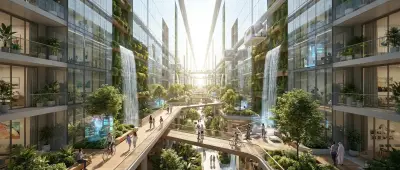
When Crown Prince Mohammed bin Salman (MBS) unveiled The Line in January 2021, most dismissed it as yet another grandiose oil-wealth fantasy. Five years later, satellite imagery shows construction progressing at a staggering pace. The Line is real — and it's rewriting everything we thought we knew about urban planning.
📖 Read more: Sandbox Cities: Technology Testing Zones
🎬 See the Vision of The Line
The official video shows what life in The Line will look like. The video reveals as many questions as answers:
🏗️ What Exactly Is The Line?
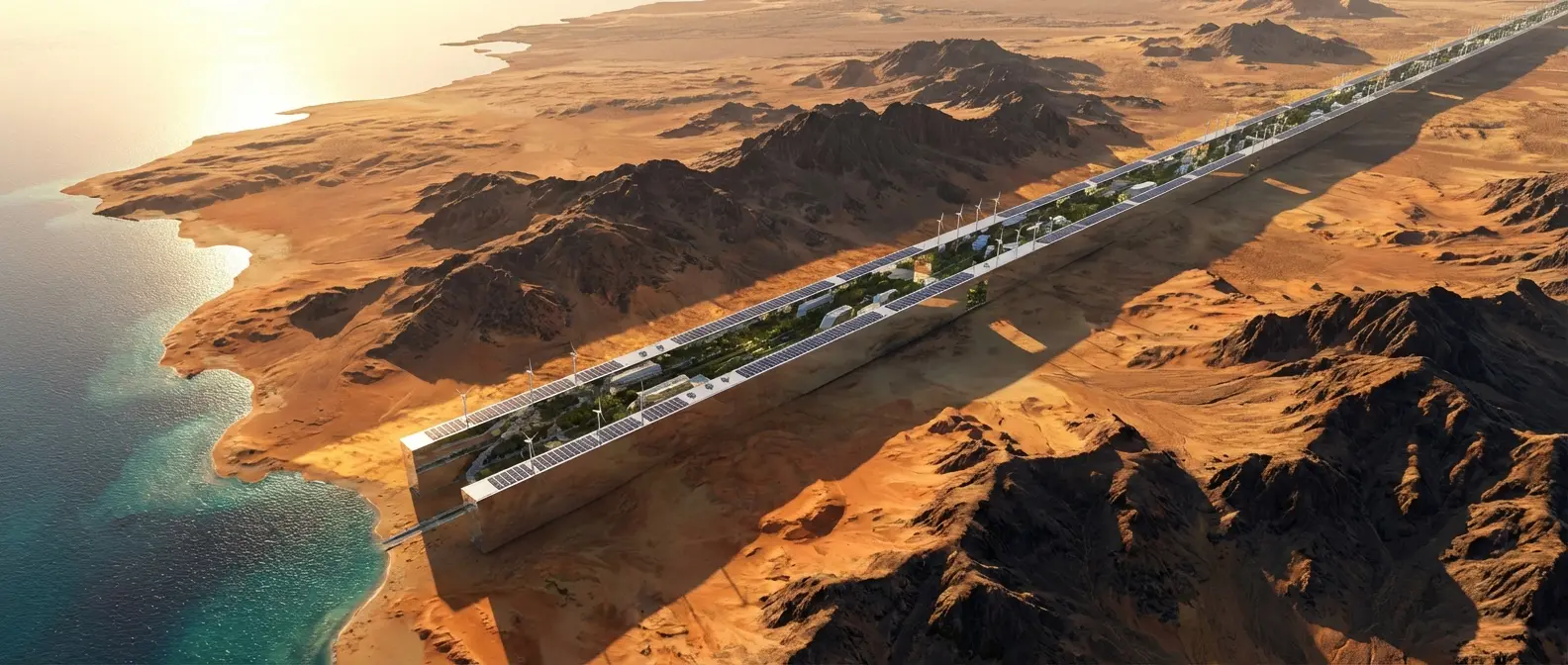
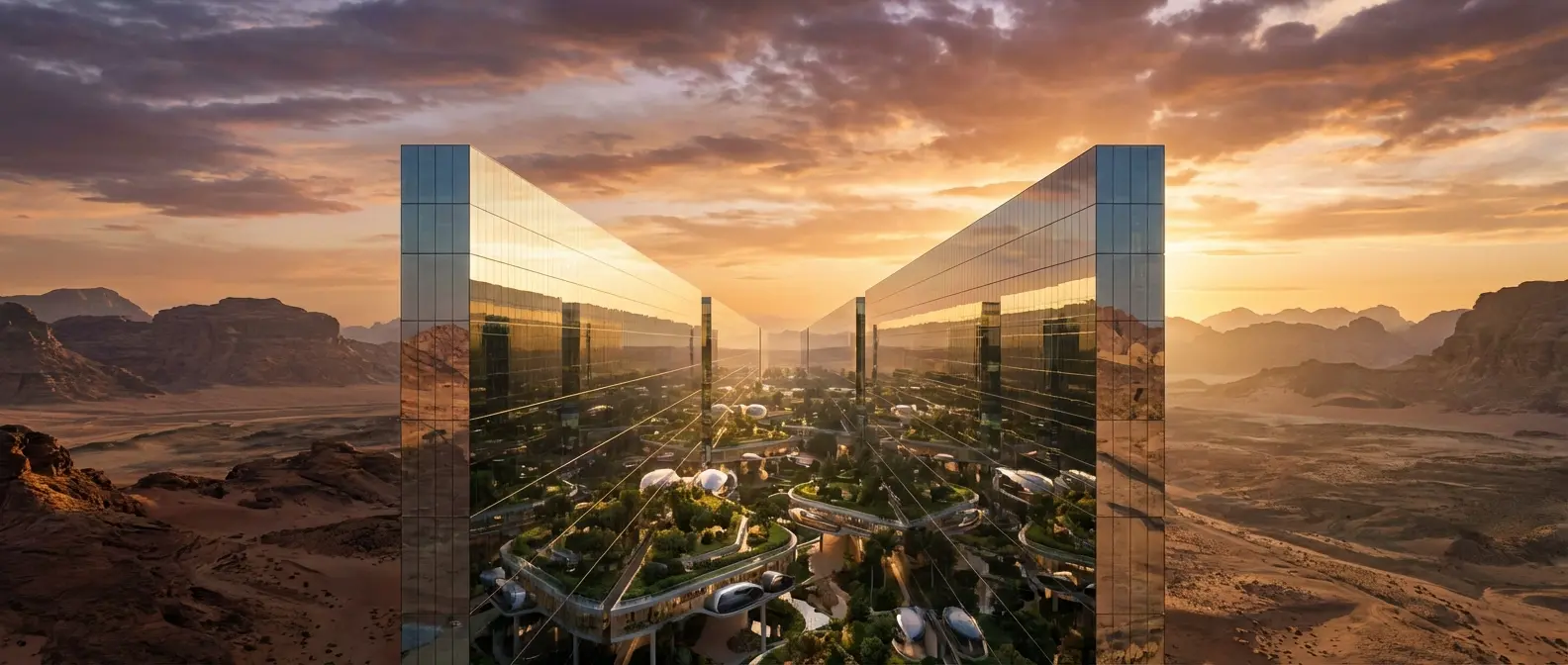
The Line is a linear city — yes, you read that right. Instead of sprawling outward in circles like traditional cities, The Line is a massive straight line cutting through the desert from the Hejaz Mountains to the Red Sea coast.
Imagine two parallel mirrors, 500 meters tall, standing 200 meters apart — and stretching for 170 kilometers. Between them, a living world: homes, offices, schools, parks, theaters, restaurants — all without a single road for cars.
Why a Linear City?
Spanish architect Arturo Soria y Mata first proposed linear cities in 1882, but no one had attempted to build one at this scale.
The logic is simple: in a linear city, everyone lives close to the main transit line. No suburbs, no sprawl. A high-speed train runs through the center and gets you from one end to the other in 20 minutes. Everything you need is a 5-minute walk away.
🌱 Zero Emissions: The Green Promise
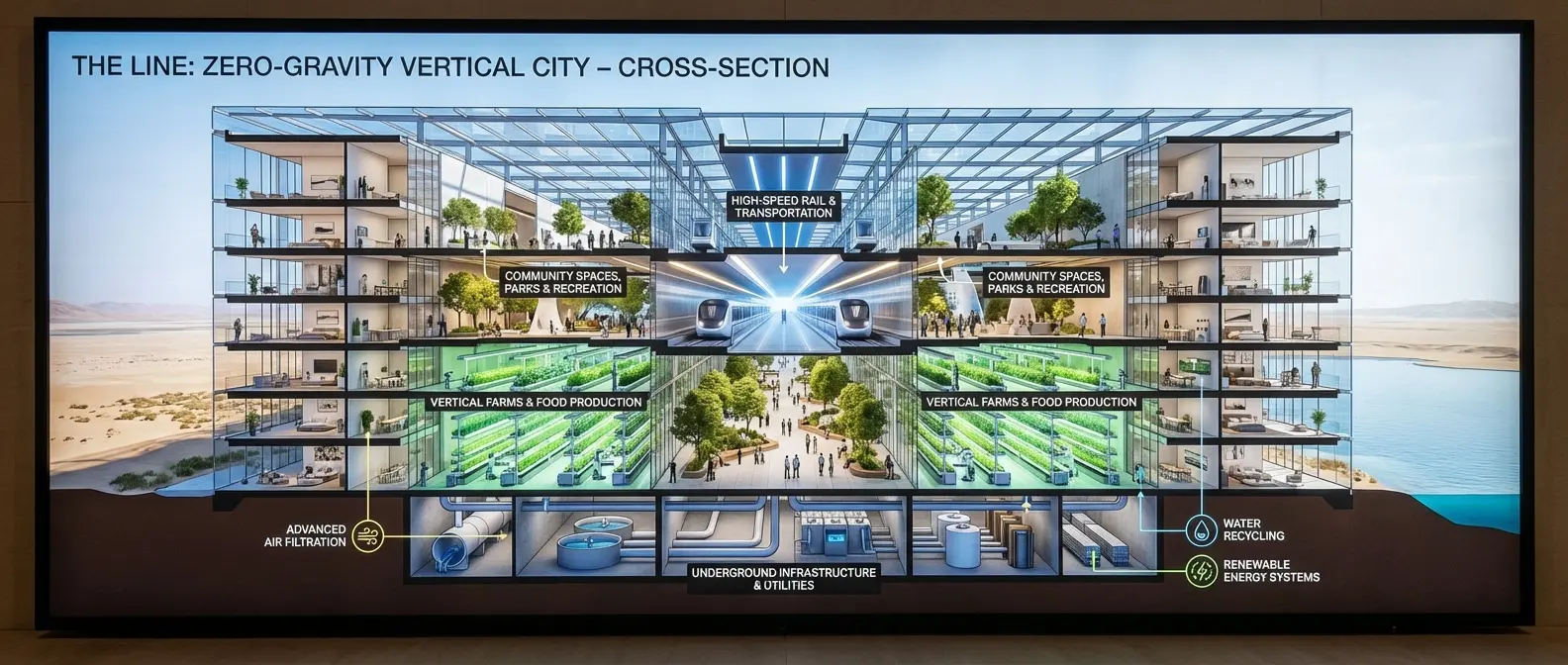
The most ambitious aspect of The Line isn't its size — it's the promise of zero carbon emissions. At a time when cities account for 70% of global CO2 emissions, The Line aims to prove there's another way.
How? First, no internal combustion — no cars, no diesel trucks. Second, 100% renewable energy — solar panels, wind turbines, hydrogen. Third, smart energy management powered by artificial intelligence that optimizes every watt.
Sustainability by the Numbers
- 100% renewable energy
- 95% water recycling
- 0 transportation emissions
- 5 minutes maximum walking distance to essential services
- 50% smaller footprint per resident vs. traditional cities
🏠 Life in The Line: What's Inside
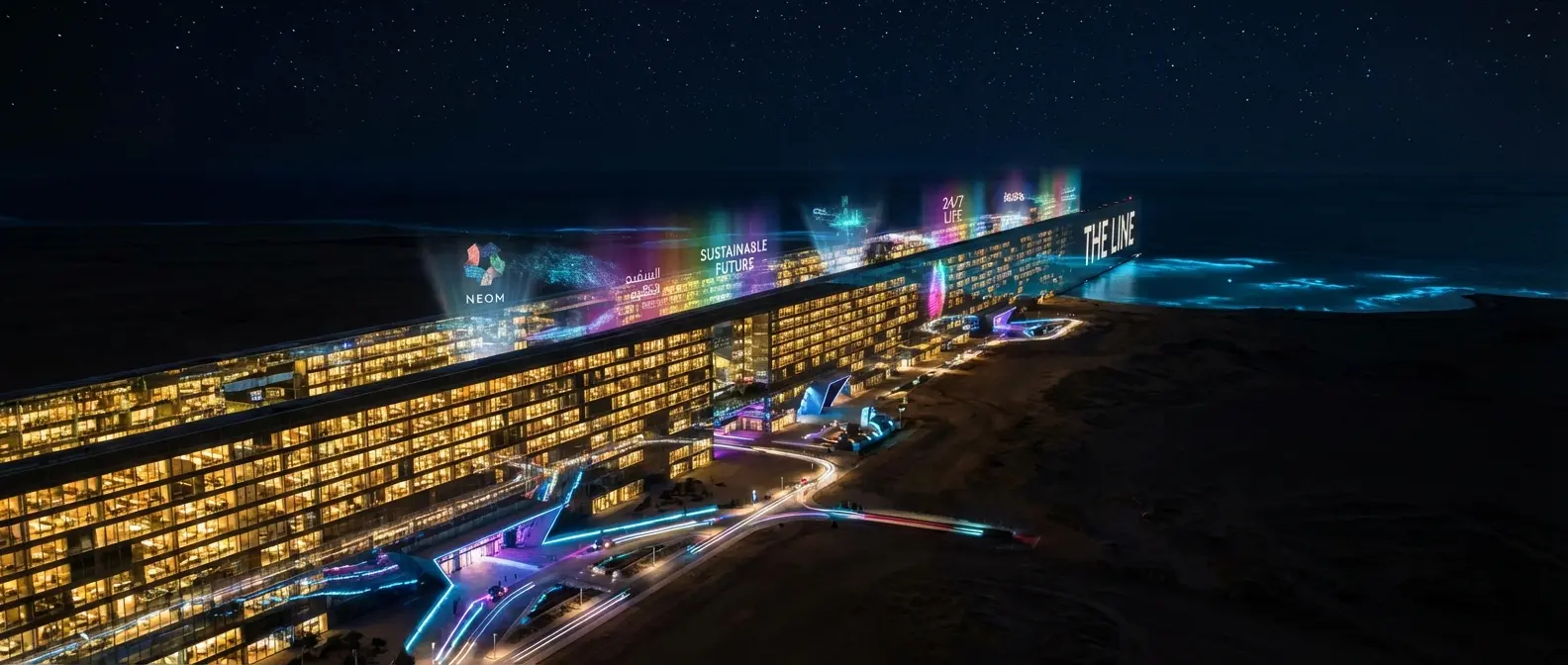
The Line isn't just a building — it's an entire city in vertical form. Imagine layers of life, stacked one on top of another:
Housing
Apartments of every size, from studios to family homes. Views of either the desert or the interior “canyon” filled with gardens.
Work
Offices, co-working spaces, research centers. Designed for remote and hybrid work — no one needs to commute far.
Education
Schools, universities, research institutions. World-class education accessible to every resident.
Healthcare
Hospitals, clinics, wellness centers. Cutting-edge medical technology with AI diagnostics — as we explore in our article on the future of medicine.
Nature
Vertical gardens, parks, artificial lakes. The goal is for 30% of the space to be green — in a desert.
Entertainment
Restaurants, theaters, sports venues, museums. Life in The Line won't just be efficient — it'll be fun too.
⏳ Where Construction Stands Today
Construction officially began in 2022. To date, massive excavations have laid the groundwork for the first section. Tens of thousands of workers operate around the clock — though this has also raised serious human rights concerns.
⚠️ The Dark Side of the Project
While the vision is impressive, The Line has faced serious criticism. Not everything is rosy behind those glossy renderings:
Causes for Concern
- Population displacement: The Huwaitat tribe was forced to abandon their ancestral lands. There have been reports of violence and imprisonment.
- Working conditions: Workers, mostly migrants, toil in extreme heat with questionable labor rights.
- Spiraling costs: Initial budget of $500 billion — but some estimates put the real figure at triple that.
- Technical feasibility: Many engineers question whether something like this can actually be built.
- Demand: Who will want to live in an experimental city in the middle of the desert?
Saudi Arabia isn't known for transparency, leaving key questions unanswered about whether The Line represents genuine sustainability or elaborate PR.
🔮 What This Means for the Future of Cities
Regardless of whether The Line succeeds or fails, it has already changed the conversation about the future of cities. It shows that alternatives to traditional urban planning exist — and that some are willing to invest billions to test them.
Future cities will likely adopt The Line's core concepts: vertical living, zero emissions, AI management, and car-free transportation.
"The Line is either the craziest idea of the century, or the most important one. Perhaps both."
🎯 Conclusion: Boldness or Madness?
The Line is a project that provokes extreme reactions. For some, it's the future — a bold step toward sustainable, efficient cities. For others, it's an oil-wealth vanity project destined to remain half-finished in the desert.
The truth likely lies somewhere in between. Even if The Line is never completed in its full form, the sections that do get built will serve as a testing ground for technologies and ideas that will shape the cities of tomorrow.
Success or failure, The Line represents the largest attempt in human history to reimagine urban life from scratch.