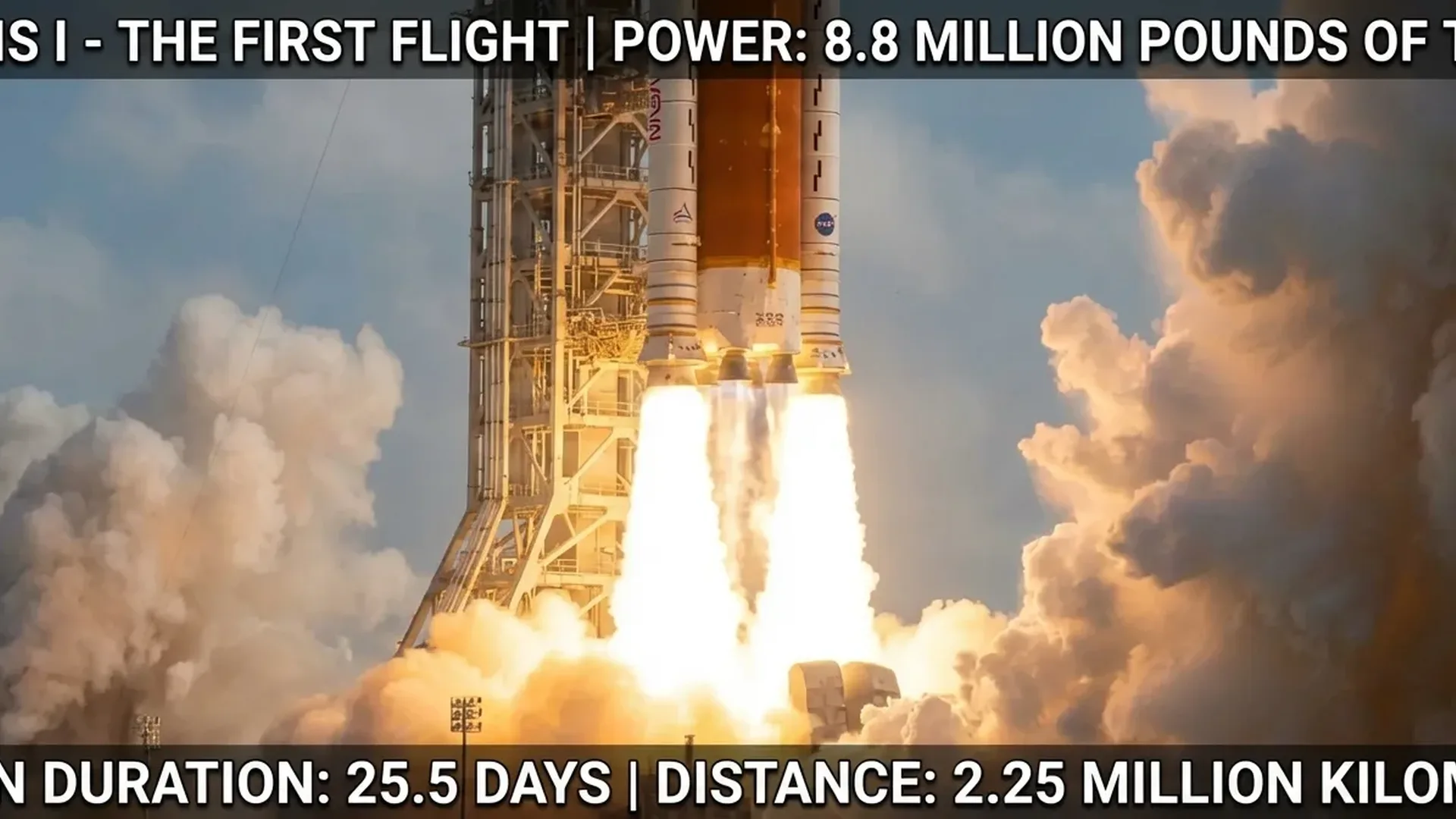
On November 16, 2022, the world watched with bated breath as NASA's mighty Space Launch System (SLS) rocket launched. It was the Artemis I mission — an uncrewed test flight that paved the way for what's to come. Now, with Artemis II scheduled for early February 2026, humanity stands on the threshold of a new era of space exploration.
This article is the most comprehensive guide to the Artemis program, with special emphasis on the upcoming Artemis II mission. We'll explore every aspect — from the technology and crew, to the challenges and the future of human presence on the Moon.
🛸 Artemis I: The First Step of the Return
Before we talk about Artemis II, we need to understand what Artemis I achieved — the mission that laid the foundation for everything that follows.
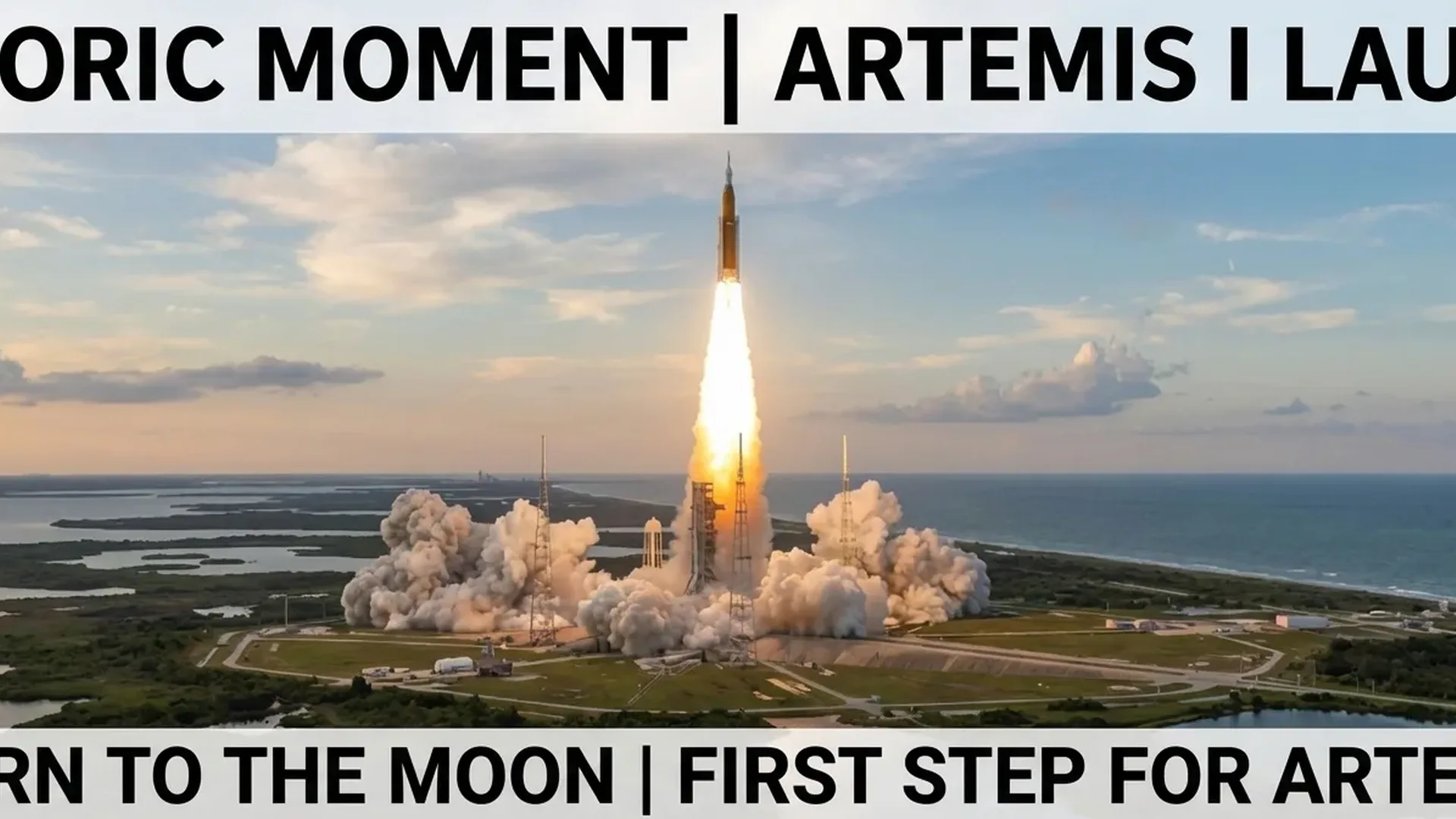
The Historic Launch
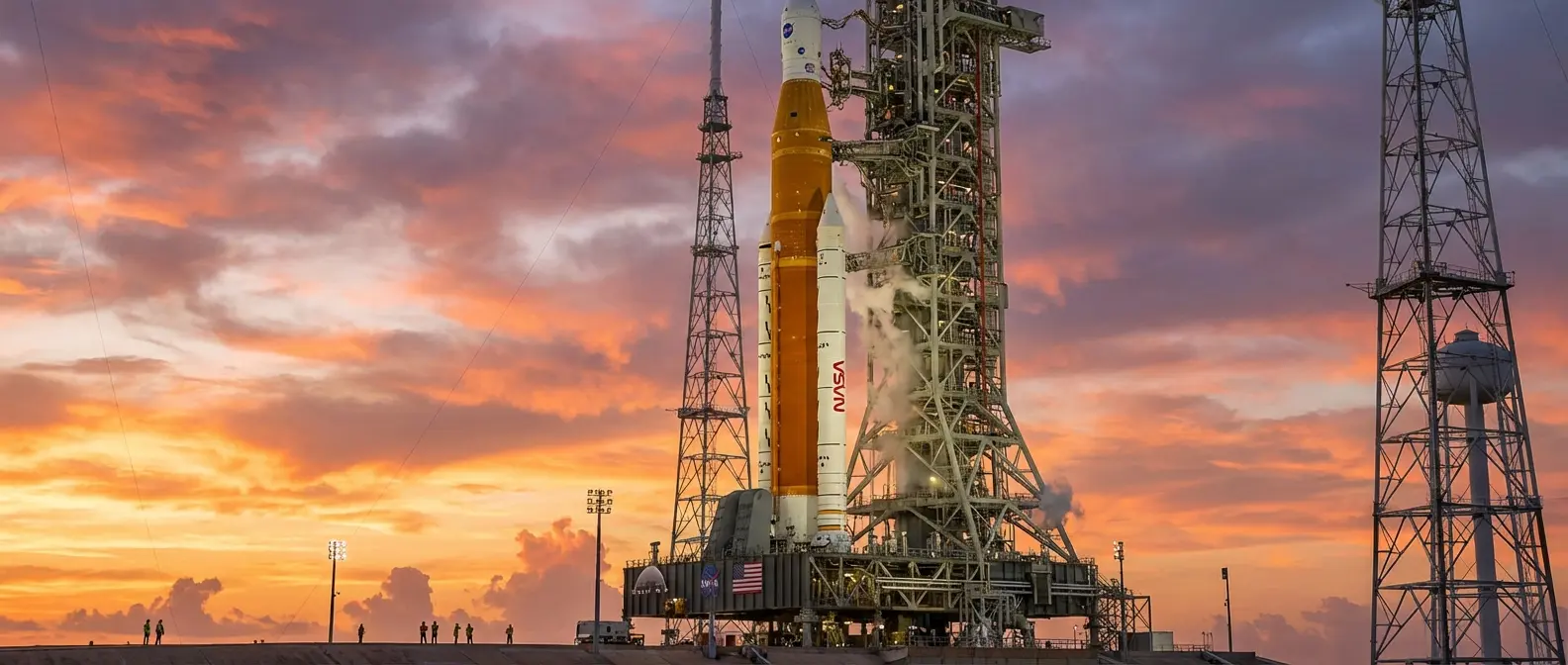
Artemis I launched on November 16, 2022, at 06:47:44 UTC, from the historic Launch Complex 39B at the Kennedy Space Center in Florida — the same site from which the Apollo missions departed half a century ago.
The mission lasted 25 days, 10 hours, and 53 minutes, during which the uncrewed Orion spacecraft traveled 2.1 million kilometers — farther than any other spacecraft designed for humans in history.
🏆 World Record: Orion reached a maximum distance of 432,210 km from Earth, breaking Apollo 13's record that had stood since 1970.
What Was Tested on Artemis I
Although the mission was uncrewed, Orion carried three mannequins equipped with sensors:
- "Captain Moonikin Campos" — Named in honor of Arturo Campos, a hero of the Apollo 13 mission, equipped with vibration and acceleration sensors to measure conditions during launch and reentry.
- "Helga" — A mannequin without a protective suit, designed to measure radiation exposure in deep space.
- "Zohar" — A mannequin wearing special protection, fitted with the AstroRad vest from the Israel Space Agency, to compare the effectiveness of radiation shielding.
The Delays and Challenges
The road to launch was not easy. Artemis I faced multiple delays:
First Cancellation
The launch was scrubbed due to a false overheating reading in one of the four RS-25 engines.
Second Cancellation
A liquid hydrogen leak was detected during tank filling, forcing another postponement.
Hurricanes Ian & Nicole
Two hurricanes threatened Florida, forcing NASA to roll the rocket back to the VAB for protection.
Successful Launch
After months of waiting, the SLS rocket successfully launched at 06:47:44 UTC.
The Discovery of the Heat Shield Problem
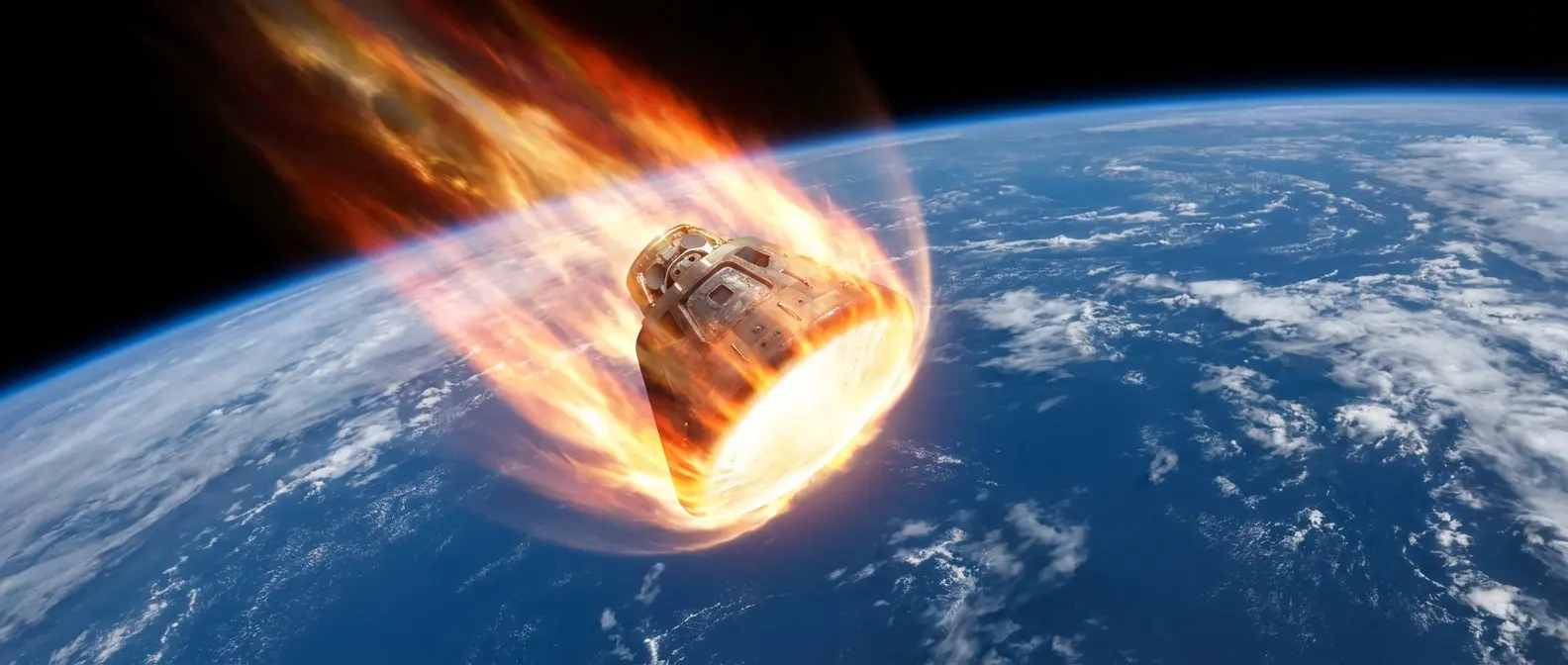
During reentry to Earth on December 11, 2022, Orion used a technique called "skip entry" — a controlled skip off the atmosphere that allows for more precise landing. It was the first time an American spacecraft used this technique.
However, after recovering the capsule from the Pacific Ocean, engineers discovered something concerning: Orion's AVCOAT heat shield had experienced greater erosion than expected. Gases had expanded beneath the material during the skip maneuver, causing unexpected wear.
⚠️ Major Impact: This discovery led to a delay of Artemis II by several months, as NASA needed to modify the reentry trajectory to reduce thermal stress.
🌟 Artemis II: The Mission That Changes Everything
And now we arrive at our main topic — Artemis II, the first crewed mission of the Artemis program and the first time humans will travel beyond low Earth orbit since 1972.
What Is Artemis II?
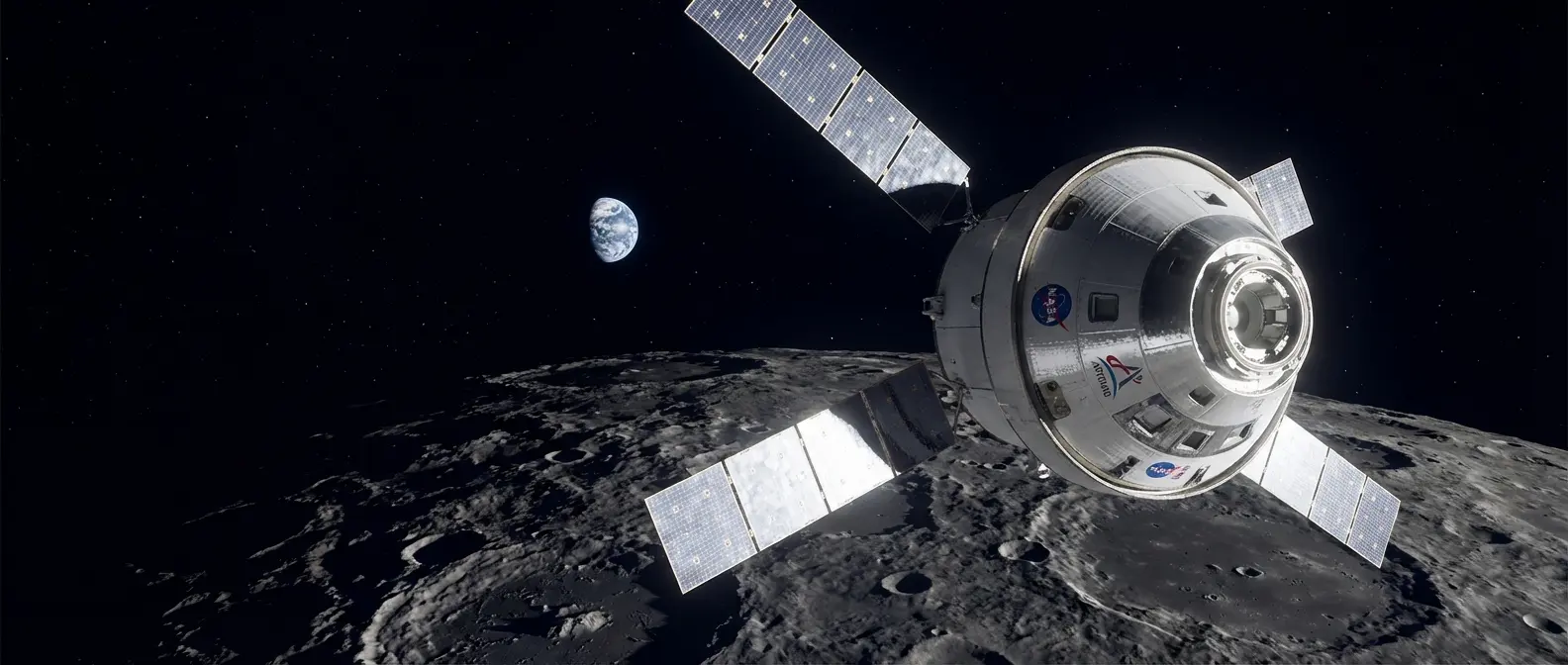
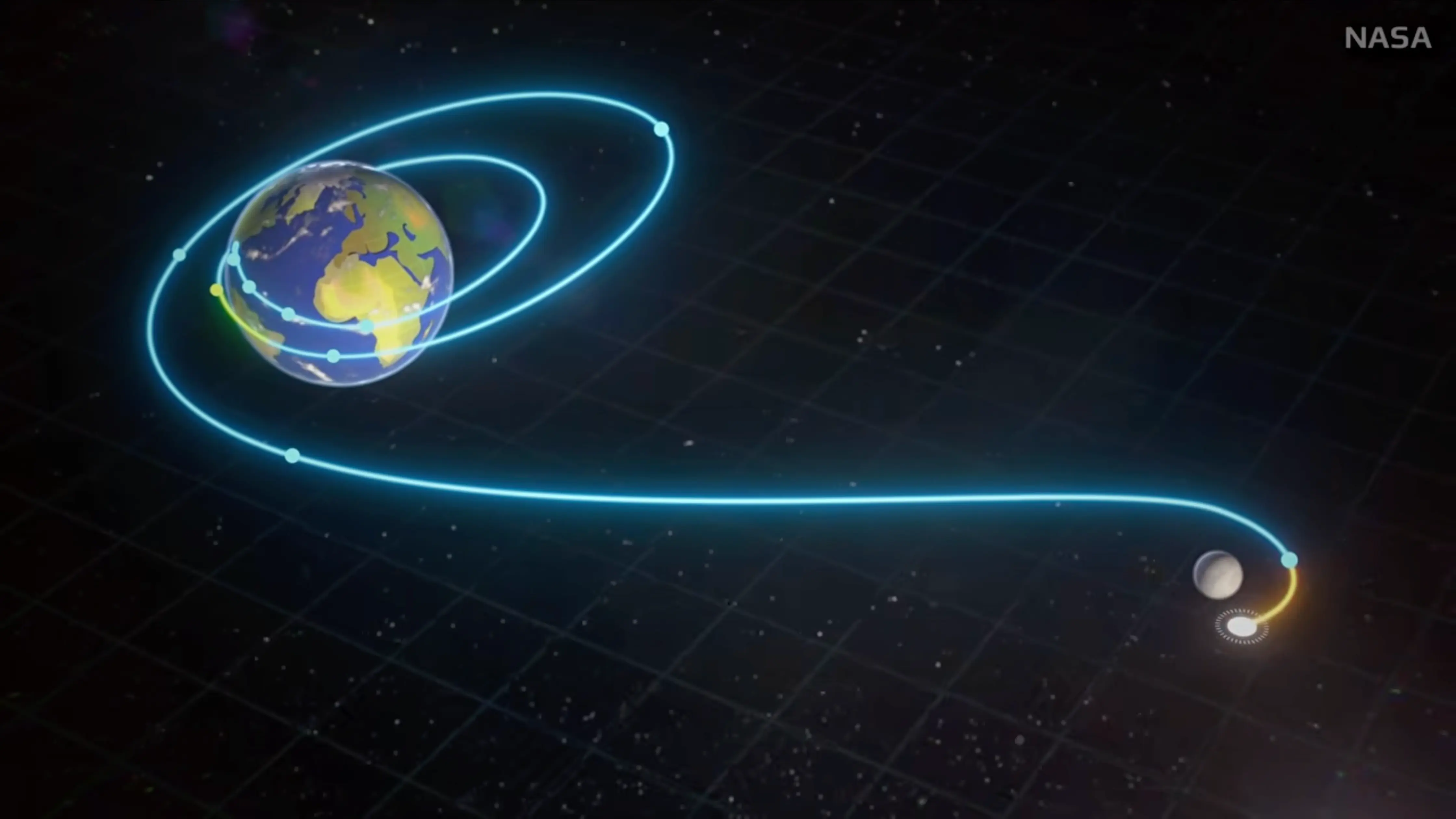
Artemis II is a lunar flyby mission — the spacecraft will pass close to the Moon without entering orbit around it and without landing. This “free-return trajectory” means that Orion will use the Moon's gravity to return to Earth without needing fuel for a return maneuver.
This is a critical test mission that will confirm all of Orion's systems work correctly with humans on board, before NASA attempts the first lunar landing with Artemis III.
Key Dates
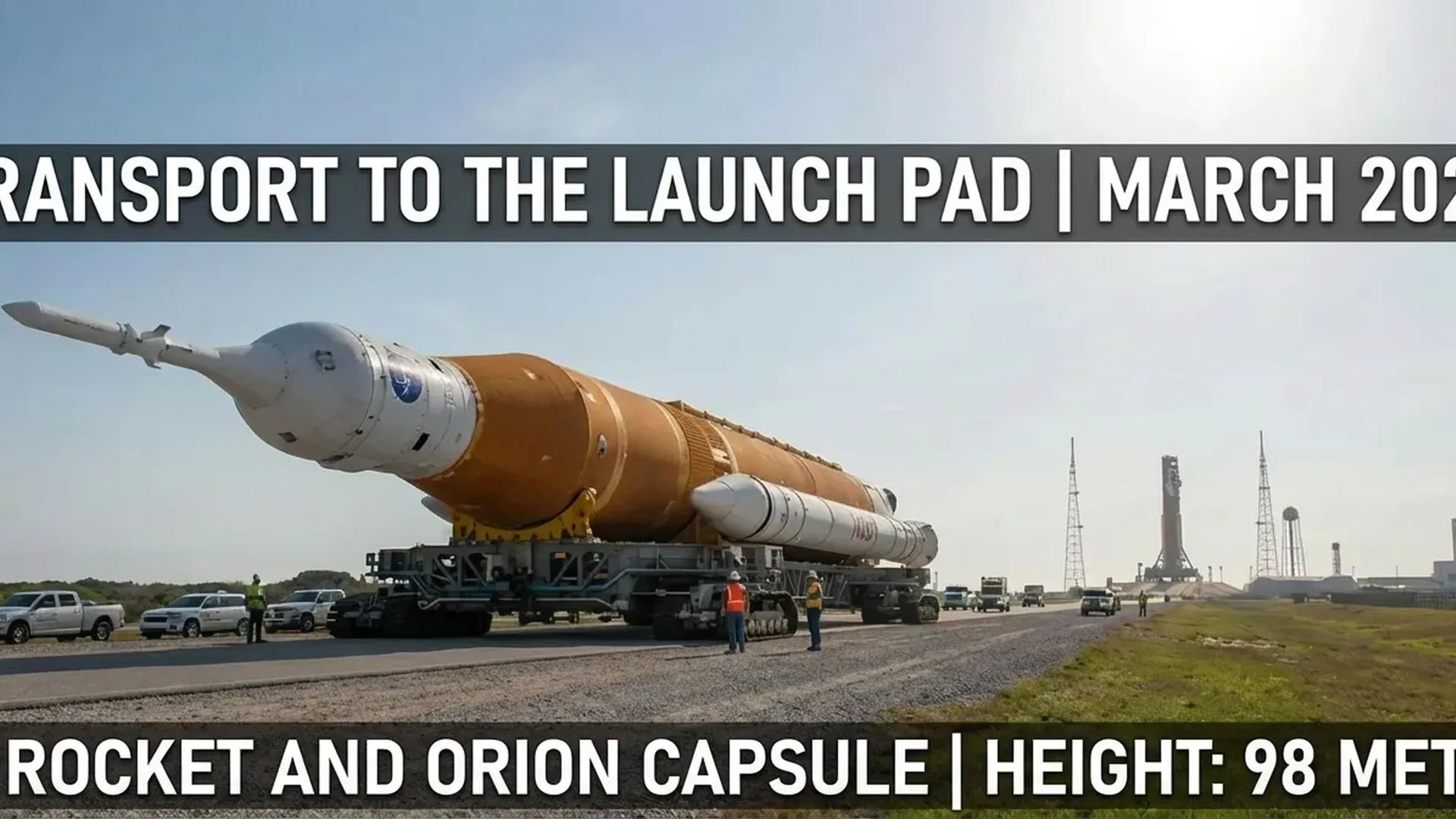
Rollout to Launch Pad
The SLS rocket with Orion was transported from the Vehicle Assembly Building to Launch Complex 39B.
Wet Dress Rehearsal
Full countdown rehearsal with propellant loading — the final major test before launch.
Launch Window
NASA is targeting a launch within this window, with the exact date to be confirmed after the WDR.
Splashdown
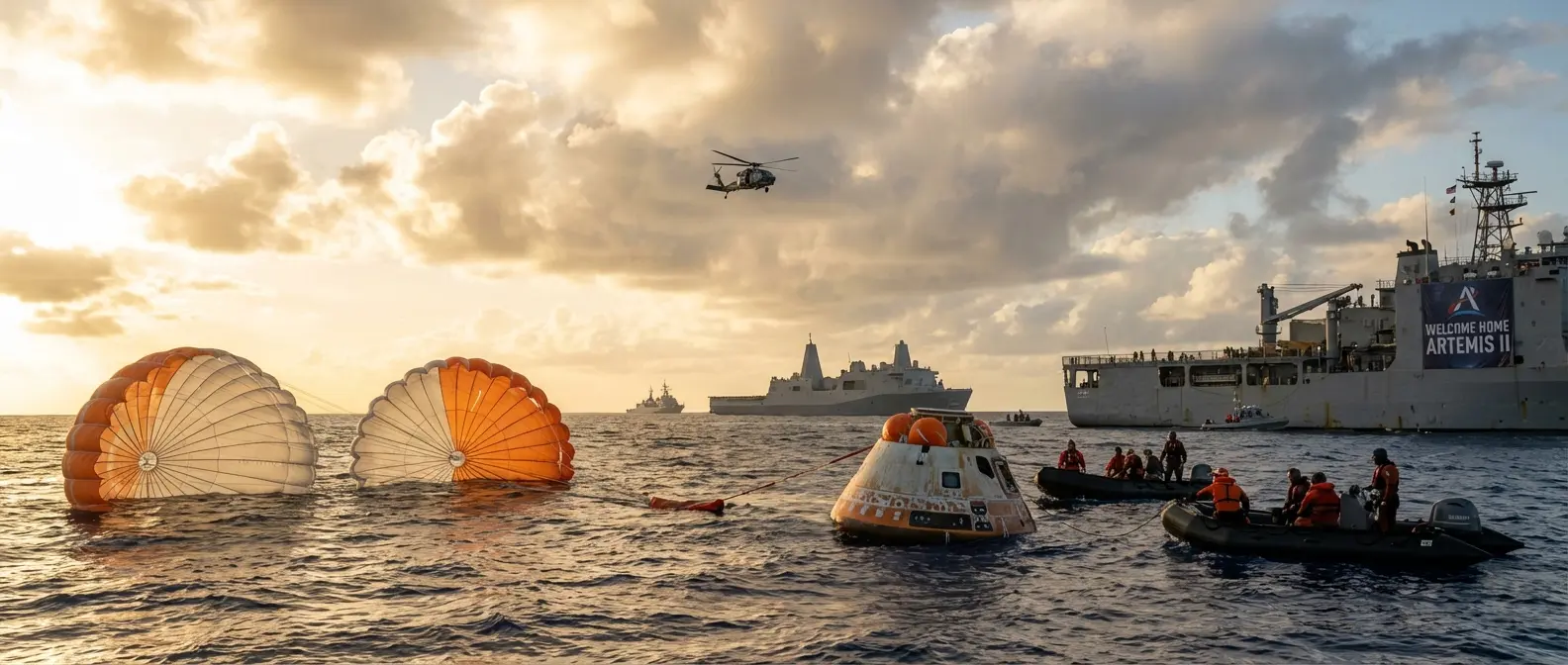
Expected return and splashdown in the Pacific Ocean, approximately 10 days after launch.
This mission represents something more than a test flight. It's the moment humanity returns to deep space — and this time, we're not just going for a visit.
Why Is It So Important?
Artemis II is not just a test flight — it's a massive technological and human achievement for many reasons:
- First crewed flight beyond LEO since 1972 — More than half a century after Apollo 17, humans will once again travel to the Moon.
- Fastest reentry in history — At ~40,000 km/h, it will be the fastest reentry ever attempted by a crewed American spacecraft.
- Life support systems test — All systems will be tested in real deep space conditions.
- International cooperation — With a European Service Module and a Canadian astronaut, the mission symbolizes global cooperation.
👨🚀 The Crew: The 4 Heroes Who Will Make History
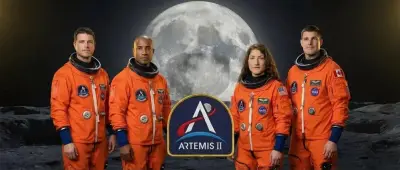
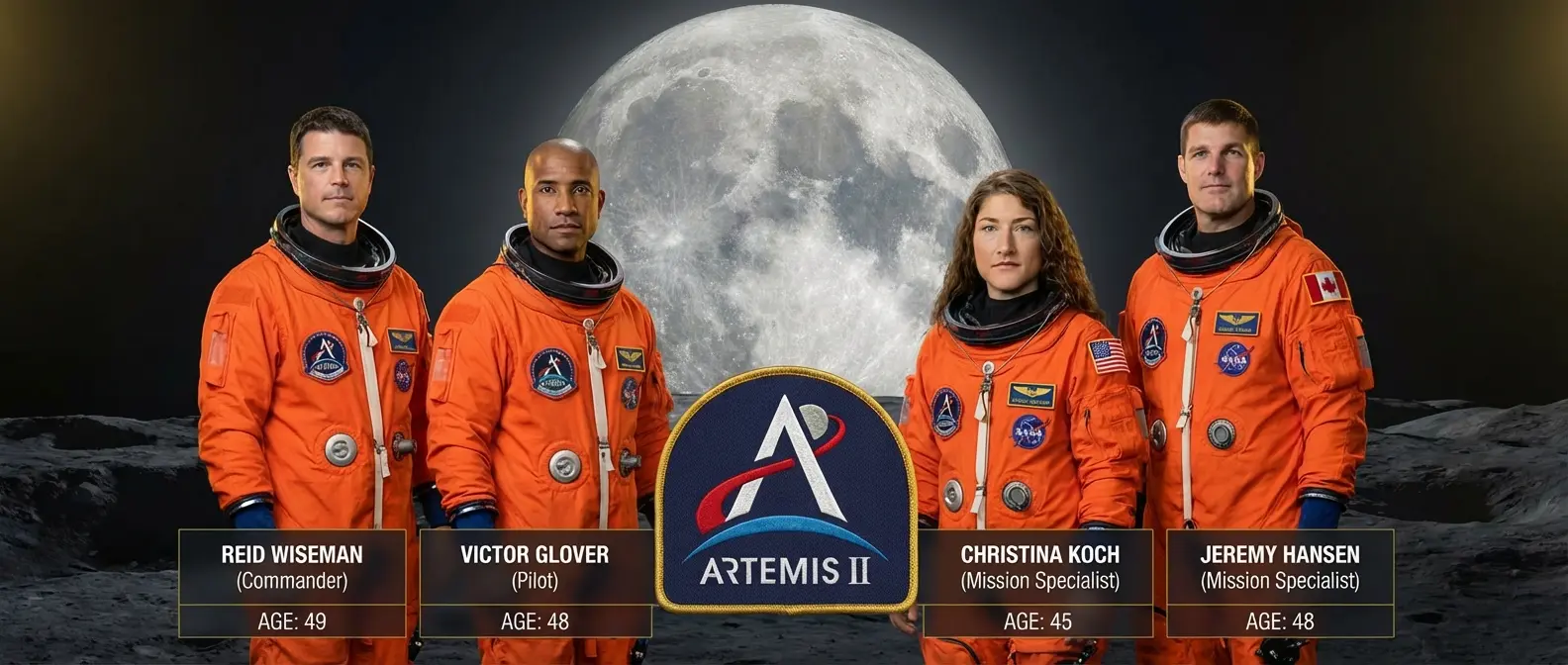
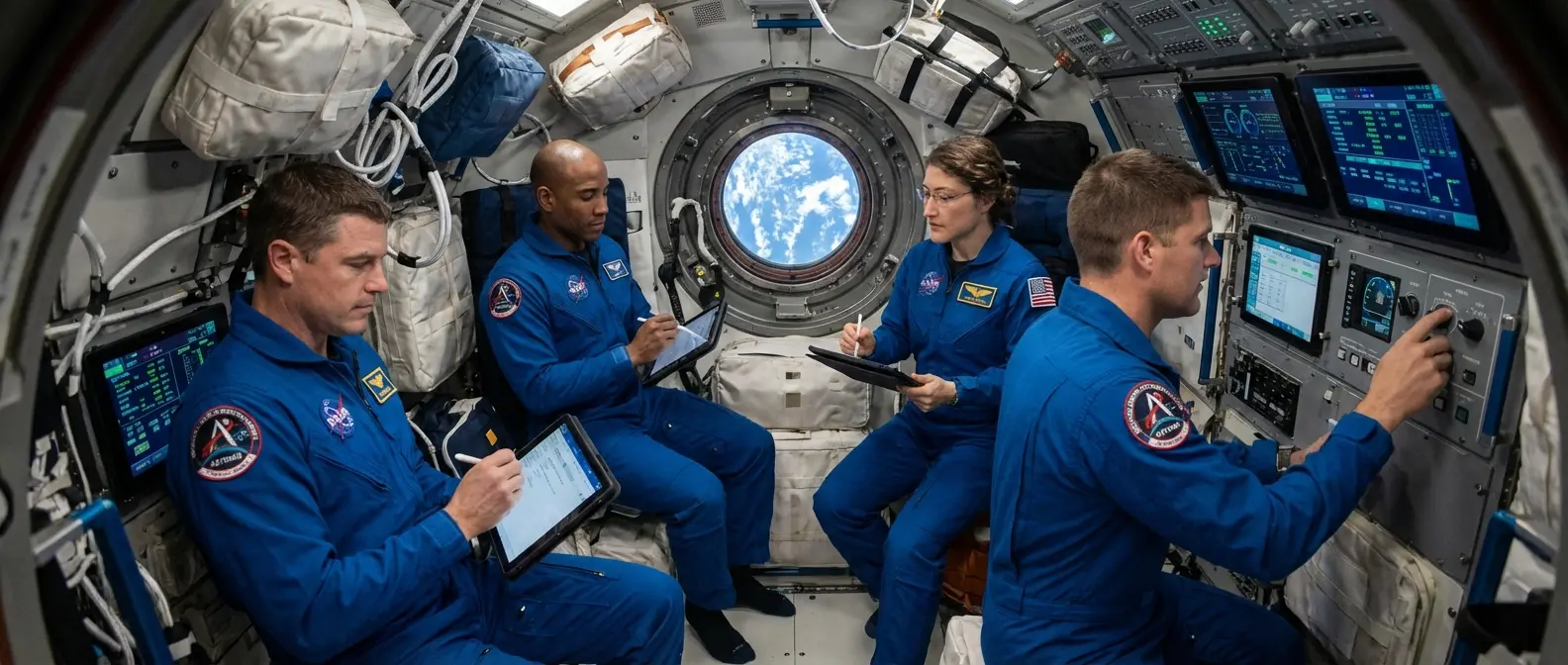
The Artemis II crew consists of four exceptionally trained astronauts carefully selected by NASA and the Canadian Space Agency (CSA). Among them are many “firsts” that make this mission even more historic.
🎖️ Reid Wiseman — Commander
🔍 Click to enlarge
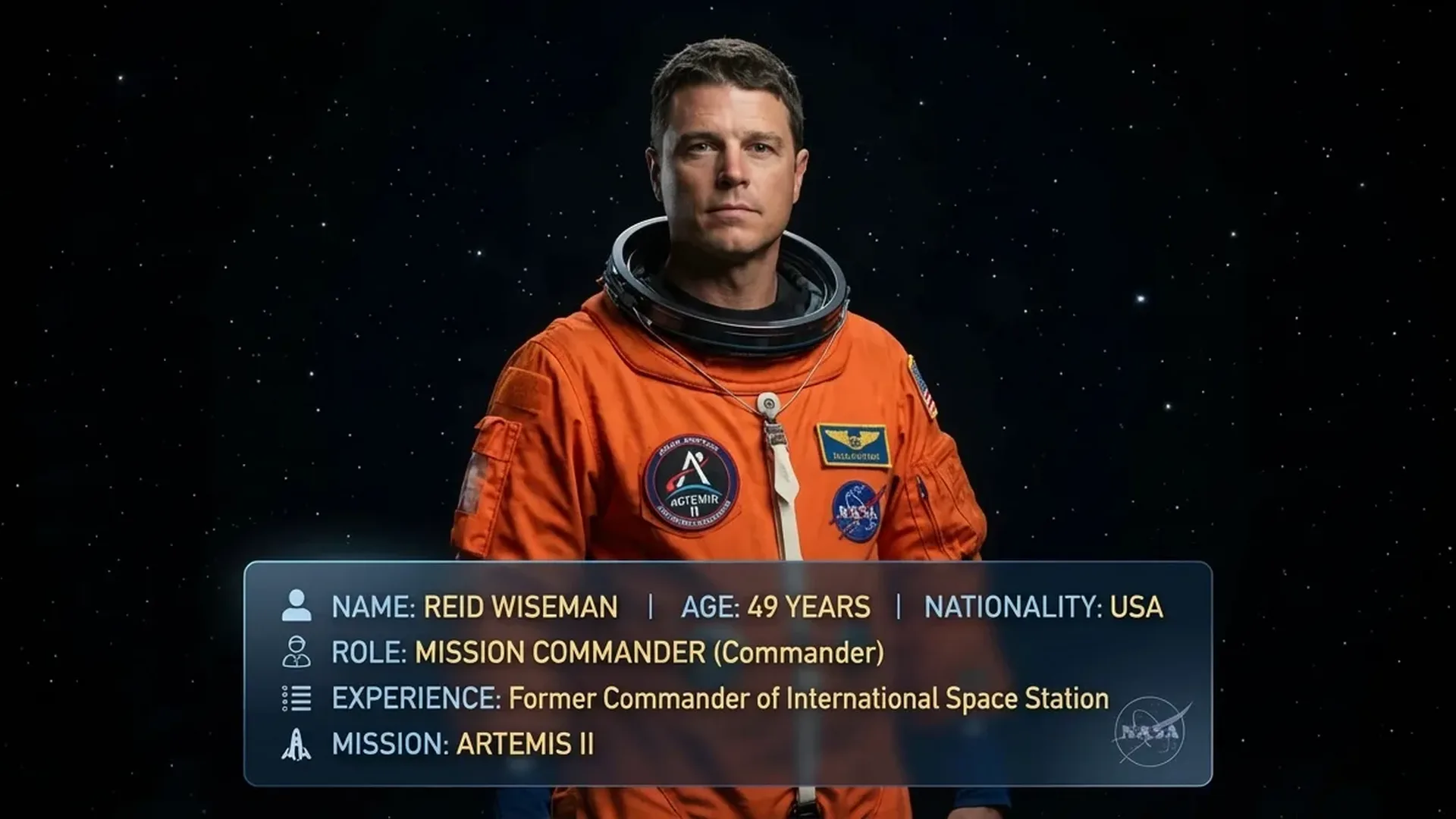
Agency: NASA
Age: 49 years old
Flight Experience: F/A-18 Test Pilot, over 200 carrier landings
Space Experience: ISS Expedition 40/41 (165 days in orbit)
Role on Artemis II: Overall mission control, critical decision-making
Reid Wiseman is a former U.S. Navy test pilot with an impressive résumé. As commander, he bears ultimate responsibility for all aspects of the mission. He served as chief of NASA's astronaut office and is known for his ability to remain calm under pressure — a critical trait for a mission that will test new systems in unprecedented conditions.
✈️ Victor Glover — Pilot
🔍 Click to enlarge
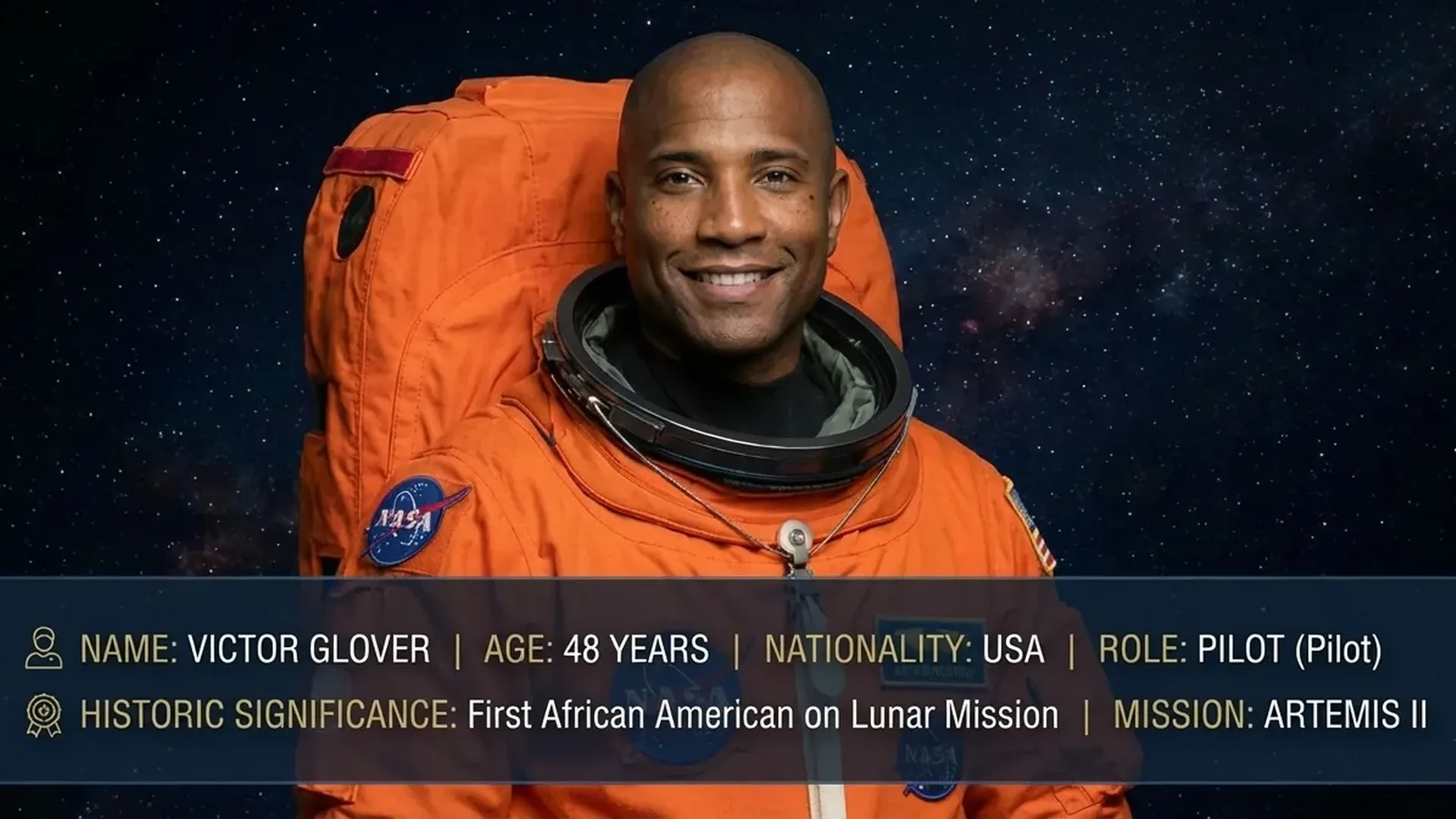
Agency: NASA
Age: 48 years old
Flight Experience: F/A-18 Test Pilot, over 3,000 flight hours
Space Experience: SpaceX Crew-1 (168 days), 4 spacewalks
Historic First: 🌟 First African American on a lunar mission
Victor Glover will become the first African American astronaut to travel beyond low Earth orbit. He was the first pilot of SpaceX Crew Dragon on an operational mission and has logged over 26 hours of spacewalk time. As pilot, he is responsible for controlling the Orion spacecraft and performing maneuvers throughout the mission.
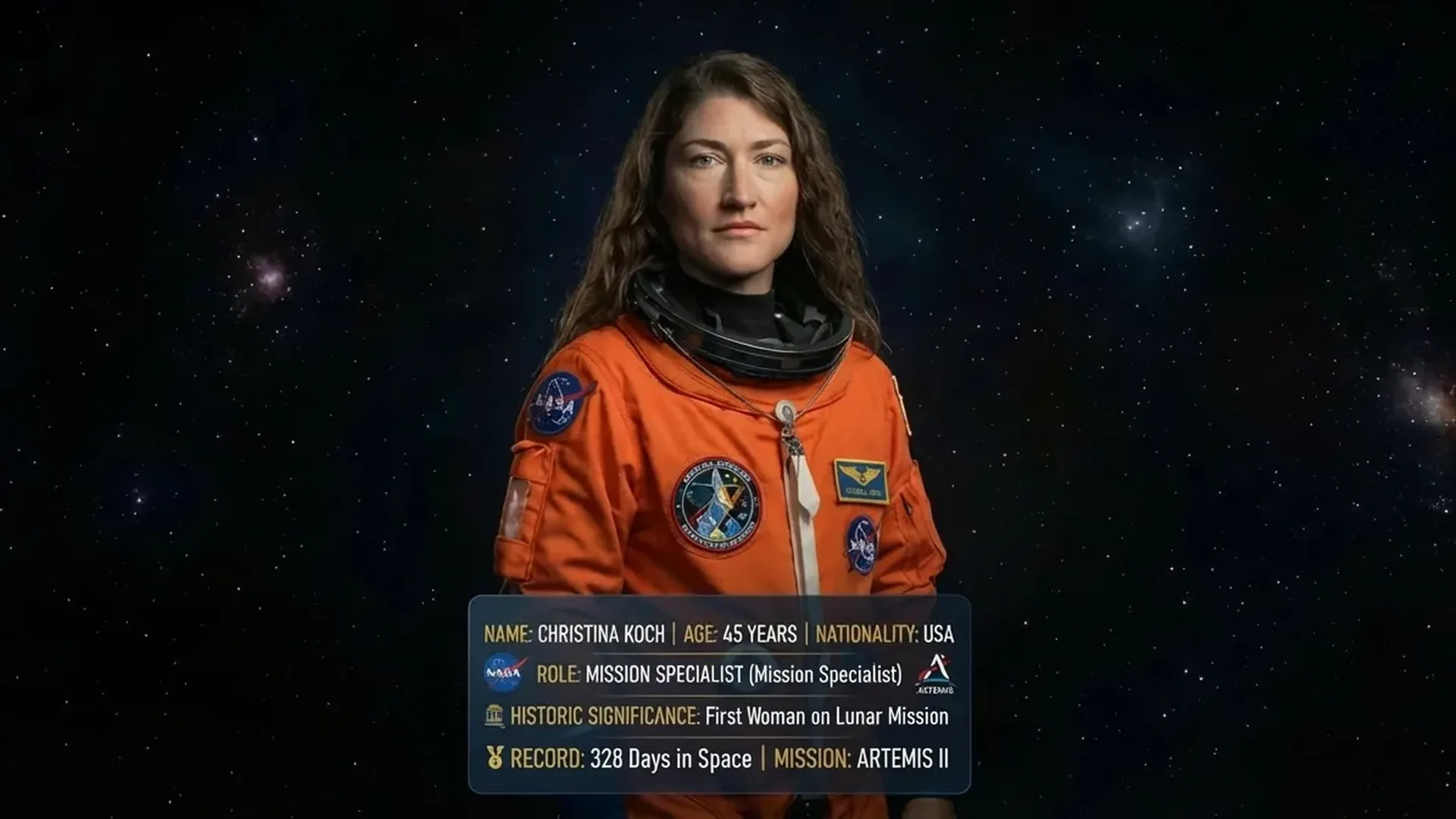
🔬 Christina Koch — Mission Specialist
🔍 Click to enlarge
Agency: NASA
Age: 45 years old
Education: Electrical Engineer & Physicist
Space Experience: ISS (328 days), 6 spacewalks
Historic Firsts: 🌟 First woman on a lunar mission + Record for longest continuous spaceflight by a woman
Christina Koch holds the world record for the longest continuous spaceflight by a female astronaut: 328 days on the ISS! She also completed the first all-female spacewalk alongside Jessica Meir. With Artemis II, she will become the first woman to travel to the Moon — an enormous milestone in the history of space exploration.
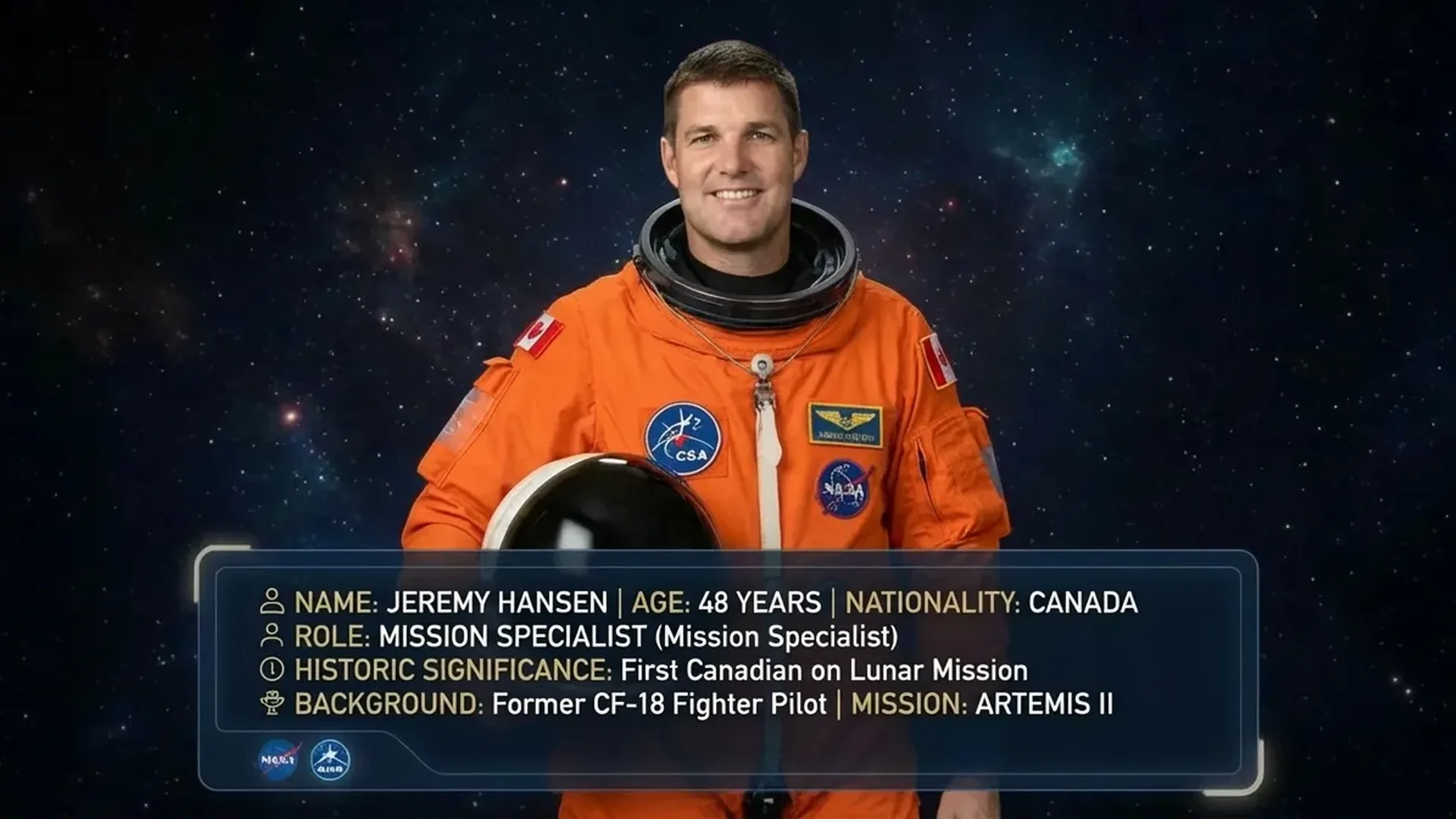
🍁 Jeremy Hansen — Mission Specialist (CSA)
🔍 Click to enlarge
Agency: Canadian Space Agency (CSA)
Age: 48 years old
Flight Experience: CF-18 Fighter Pilot, over 2,500 flight hours
Education: Physicist, CSA Astronaut since 2009
Historic Firsts: 🌟 First non-American on a lunar mission
Jeremy Hansen is a Canadian astronaut and Artemis II will be his first spaceflight! Despite lacking previous space experience, Hansen is considered one of CSA's most capable astronauts — a former CF-18 fighter pilot and geology specialist. He will become the first non-American to travel beyond low Earth orbit, marking a new era of international space cooperation.
Every member of this crew has demonstrated exceptional skill and dedication. Together, they represent the best humanity has to offer as we begin this new chapter of exploration.
🚀 The SLS Rocket: The Most Powerful “Beast” in History
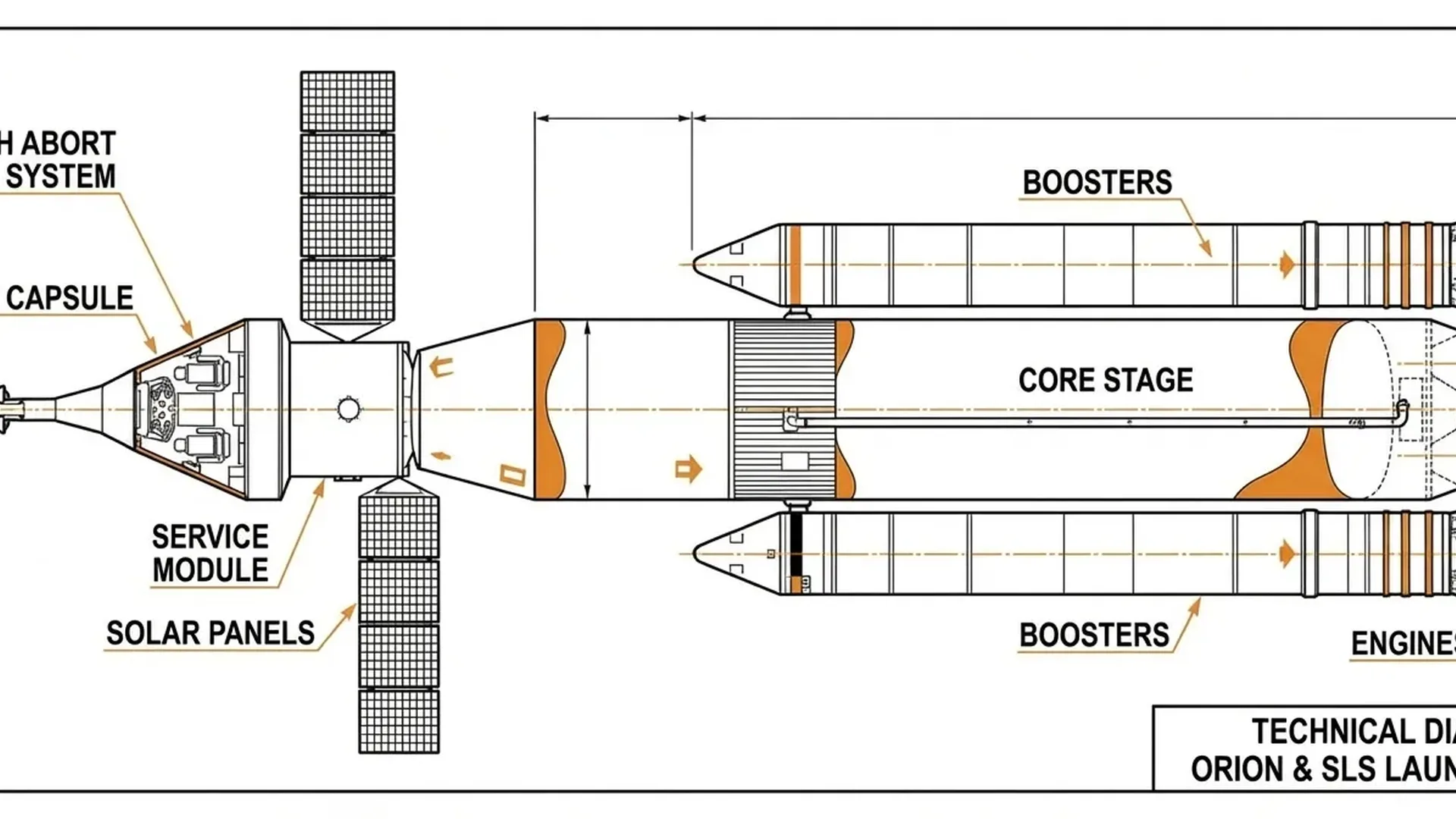
The Space Launch System (SLS) is the most powerful rocket NASA has ever built — and one of the most powerful in human history. Without this colossus, Artemis II would not be possible.
Technical Specifications
| Specification | Value | Comparison |
|---|---|---|
| Height | 98 meters (322 ft) | Nearly as tall as the Statue of Liberty |
| Core Stage Diameter | 8.4 meters | The width of a double-decker bus |
| Launch Weight | 2,608,000 kg | Heavier than 400 elephants! |
| Thrust | 39.1 Meganewtons | 15% more than the Saturn V |
| Core Stage Engines | 4x RS-25 | Upgraded from the Space Shuttle |
| Solid Rocket Boosters | 2x 5-segment SRB | The most powerful SRBs in history |
| Payload (LEO) | 95,000 kg | More than any other active rocket |
| Payload (Moon) | 27,000 kg | Enough for Orion + crew + supplies |
The RS-25 Engines: The Heart of the SLS
The four RS-25 engines that power the SLS are upgraded versions of the Space Shuttle engines — some of the most reliable engines ever built by humanity. Each engine produces 2.3 meganewtons of thrust and burns a mixture of liquid hydrogen and liquid oxygen.
Fun fact: The RS-25s are so efficient that they can drain an Olympic-sized swimming pool in just 60 seconds — that's the rate at which they burn fuel!
Solid Rocket Boosters: The First “Push”
The two Solid Rocket Boosters (SRBs) are the largest and most powerful solid rockets ever flown. Each booster contains 5 segments (instead of the Shuttle's 4) and produces more thrust than 14 Boeing 747s combined!
The SRBs operate for just 2 minutes after launch, but during that time they provide 75% of total thrust. After separation, they fall into the Atlantic Ocean — but unlike the Shuttle, the SLS SRBs are not reused.
🛸 The Orion Spacecraft: The Astronauts' Home
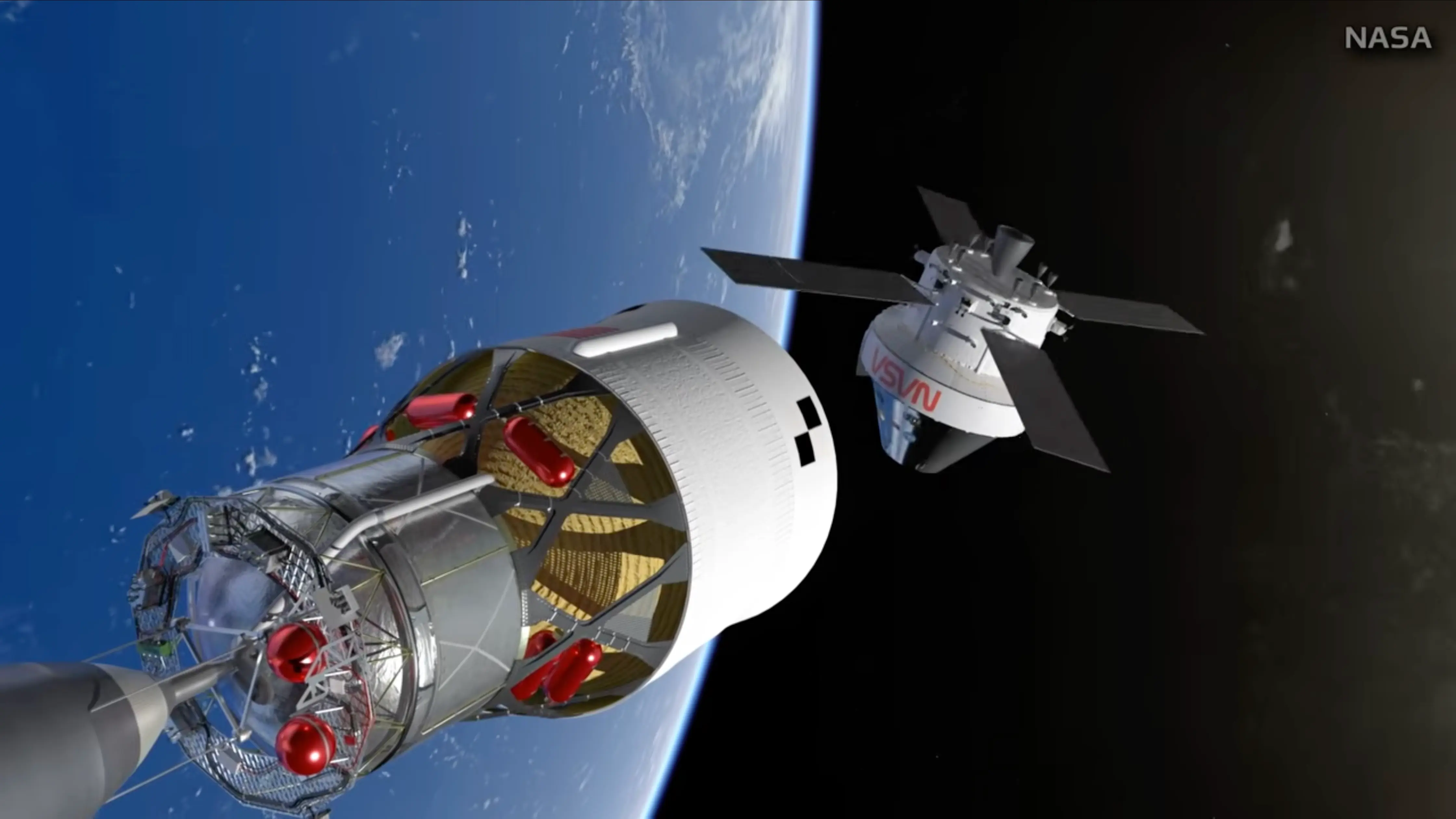
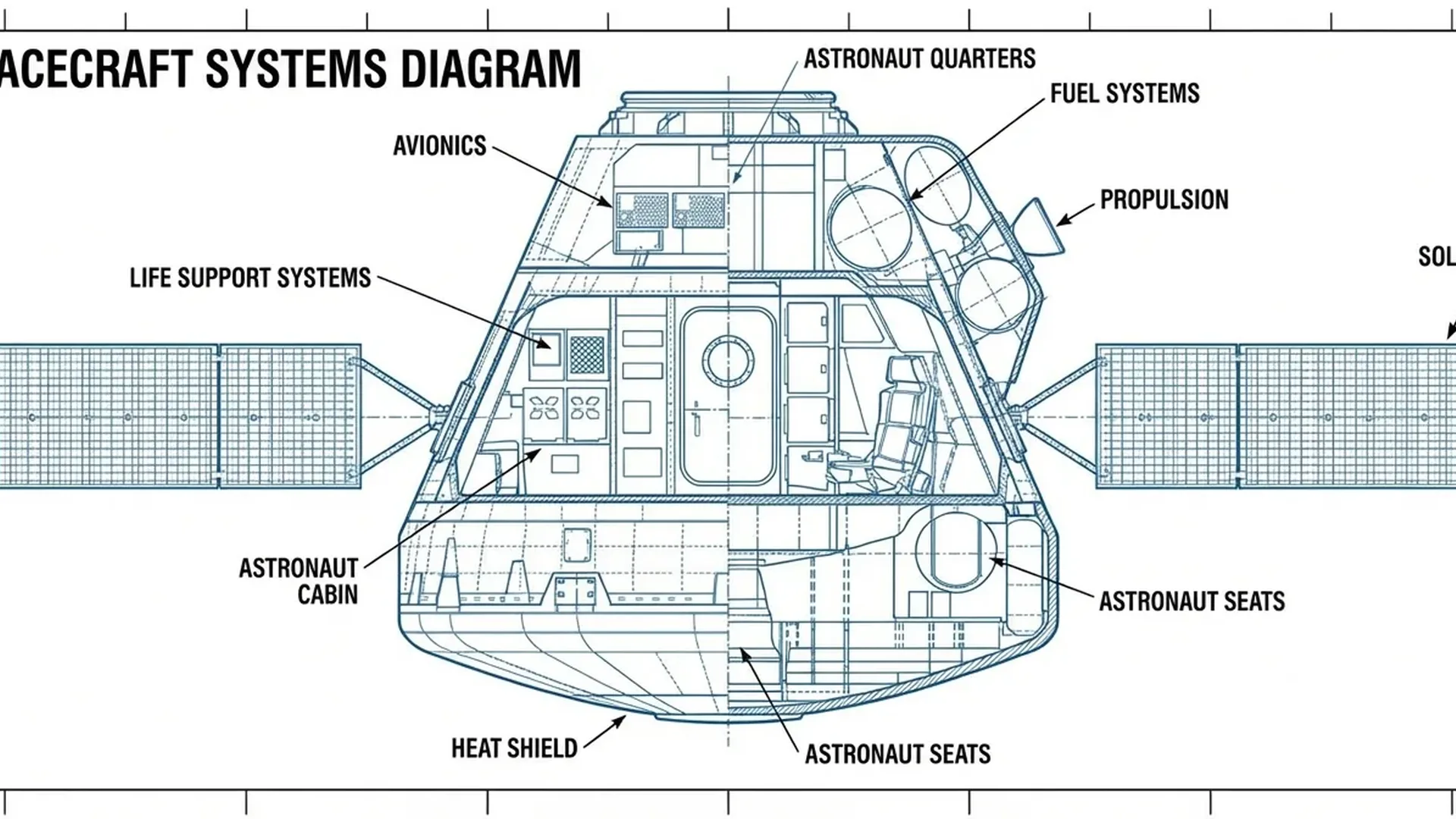
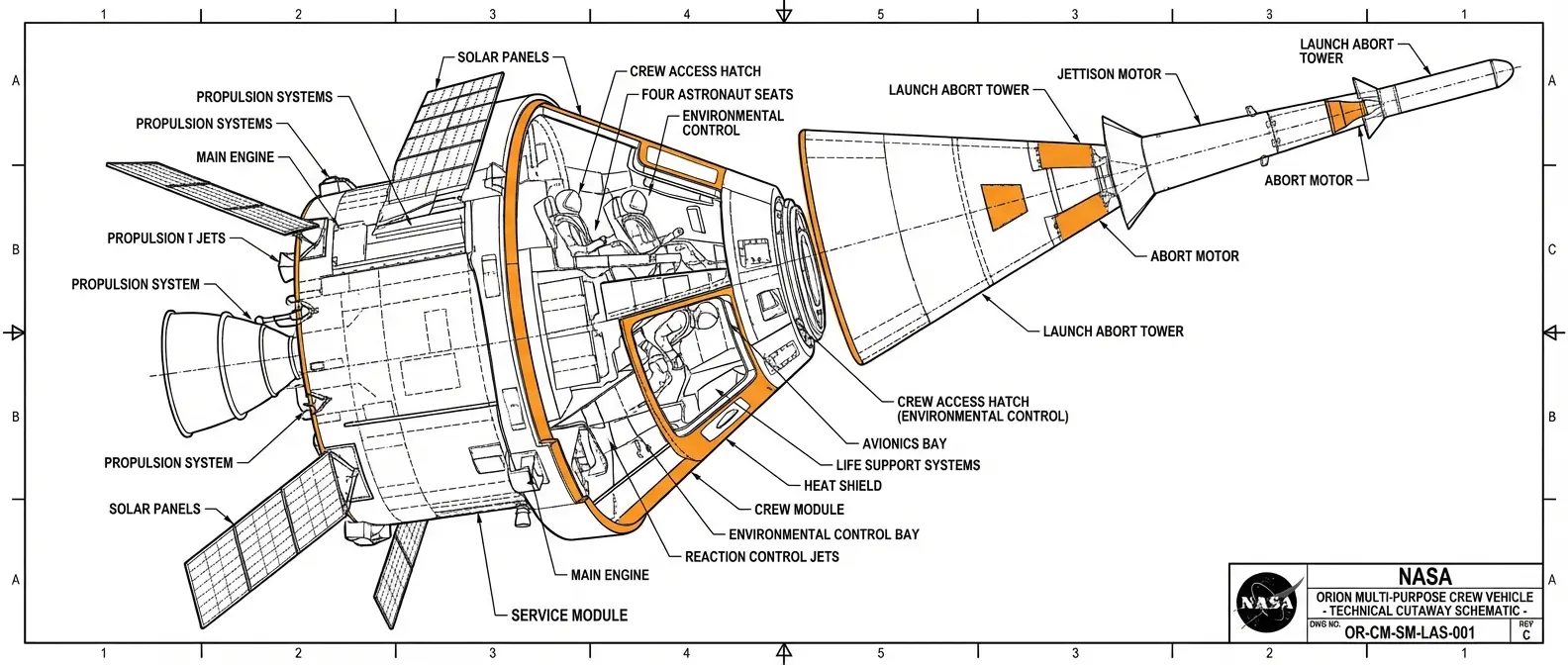
The Orion is the spacecraft that will carry the four Artemis II astronauts — and it is the most advanced crewed spacecraft ever built. It consists of two main parts: the Crew Module (American-built) and the European Service Module (European-built).
Orion Technical Specifications
| Specification | Crew Module | Service Module |
|---|---|---|
| Manufacturer | Lockheed Martin (NASA) | Airbus Defence & Space (ESA) |
| Diameter | 5.03 meters | 5.0 meters |
| Cabin Volume | 9 cubic meters | — |
| Capacity | 4 astronauts | — |
| Maximum Duration | 21 days (independent) | — |
| Solar Panels | — | 4 (19m wingspan, 11.1 kW) |
| Main Engine | — | OMS-E (from Space Shuttle) |
| Auxiliary Engines | — | 8 + 24 RCS thrusters |
The Heat Shield: Vital Protection
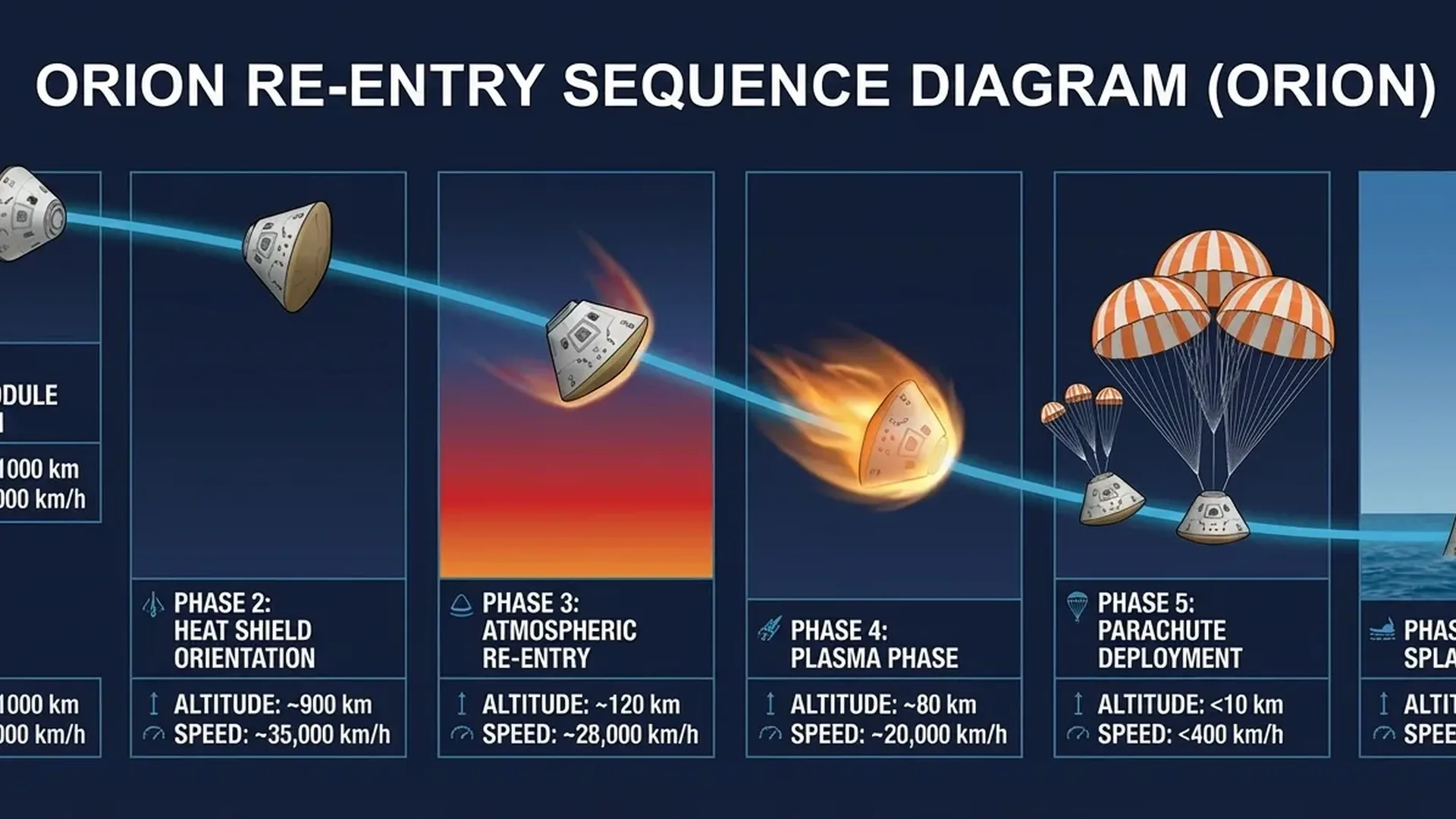
One of Orion's most critical components is its heat shield — the thermal shield that protects the crew during atmospheric reentry. With a diameter of 5 meters, it is the largest heat shield ever built.
During reentry, the external surface temperature will reach 2,760°C — hot enough to melt nearly any metal! The shield is made from a material called AVCOAT, which “sacrifices” itself by vaporizing and carrying heat away.
⚠️ The Artemis I Problem
Artemis I revealed that the heat shield experienced greater-than-expected material loss (charring). For Artemis II, NASA modified the reentry trajectory to reduce thermal stress, ensuring greater safety margins.
The European Service Module: Europe's Contribution
The European Service Module (ESM) is a major contribution from the European Space Agency (ESA) to the Artemis program. It provides everything Orion needs to survive in space:
- Propulsion: The OMS-E main engine (from the Space Shuttle) for major maneuvers
- Power: 4 massive solar panels generating 11.1 kW
- Water & Oxygen: Storage and management of vital resources
- Thermal Control: Temperature regulation in extreme conditions
ESA's participation in Artemis is an exchange for ISS usage — Europe provides Service Modules and in return gains astronaut seats on future lunar missions.
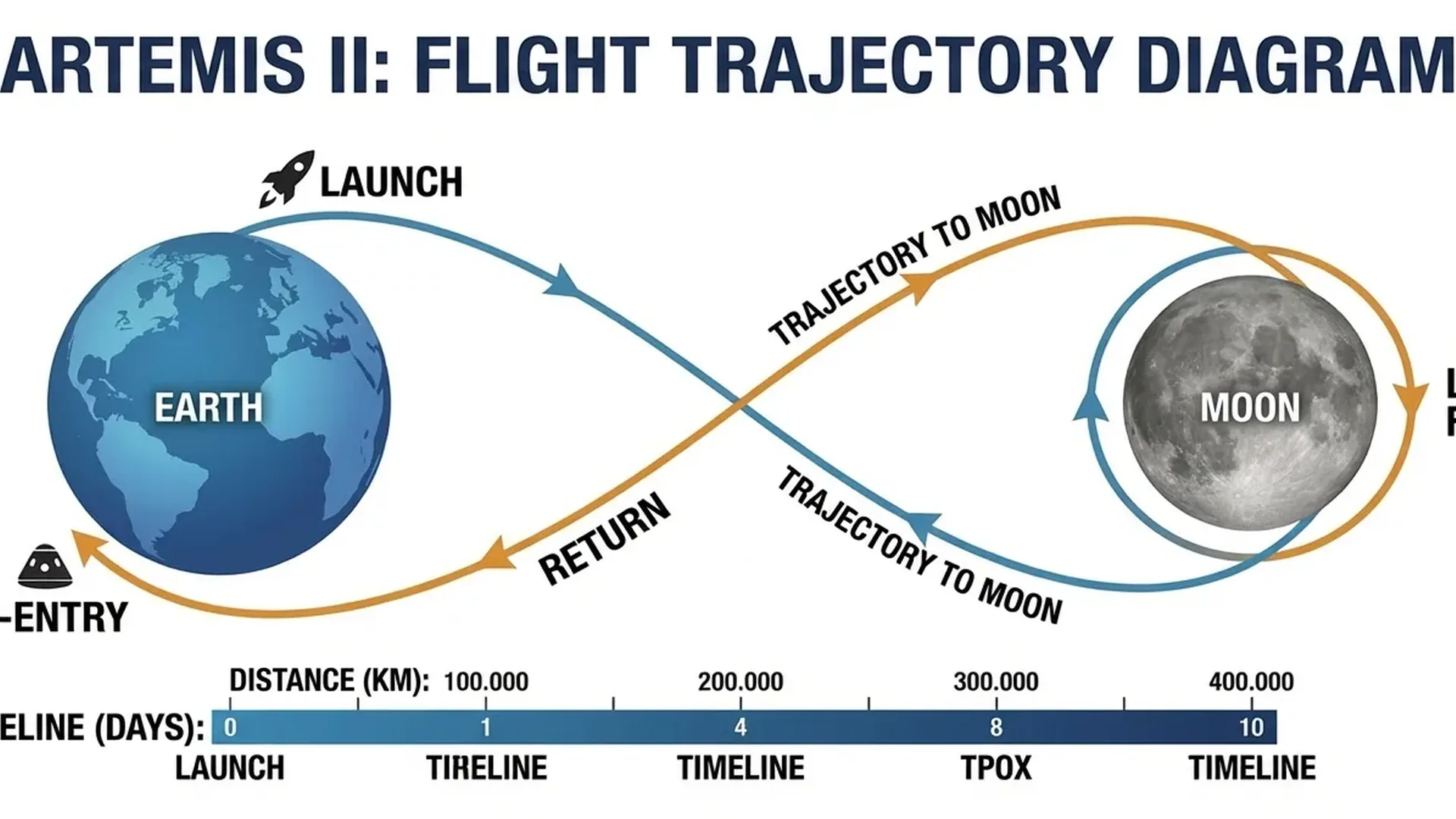
🌙 Mission Trajectory: 10 Days in Deep Space
Artemis II will follow a "free-return trajectory" — a path that uses the Moon's gravity to return the spacecraft to Earth without requiring additional fuel. It's the same technique that saved the crew of Apollo 13 in 1970!
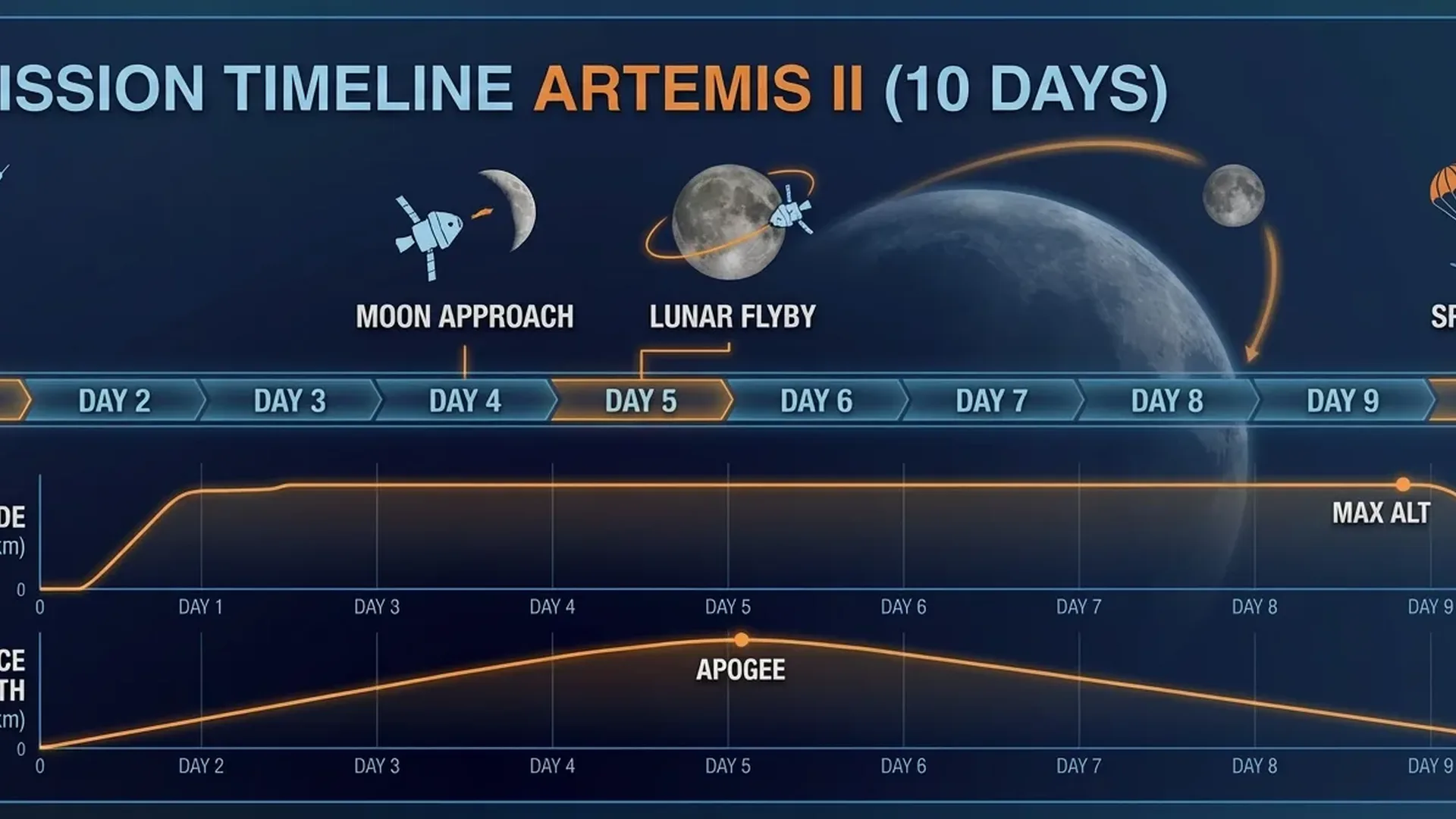
Detailed Mission Timeline
🚀 Launch from KSC
The SLS fires its engines and begins ascent from Launch Complex 39B at the Kennedy Space Center in Florida.
SRB Separation
The two Solid Rocket Boosters separate and fall into the Atlantic. The Core Stage continues with the RS-25s.
MECO & Core Stage Separation
Main Engine Cut-Off — the Core Stage separates. The ICPS (Interim Cryogenic Propulsion Stage) takes over.
Perigee Raise Maneuver
First ICPS burn to raise the orbit around Earth.
🌍 Trans-Lunar Injection (TLI)
The critical burn that sends Orion toward the Moon! After TLI, the ICPS separates.
🌙 Lunar Flyby
Orion passes behind the Moon at a distance of ~6,400 km from the surface. For a few minutes, communication with Earth is lost!
Maximum Distance
Orion reaches its farthest point: ~450,000 km from Earth — the farthest humans have ever traveled!
🌊 Reentry & Splashdown
Reentry at 40,000 km/h and splashdown in the Pacific Ocean.
The Critical Phase: Passing Behind the Moon
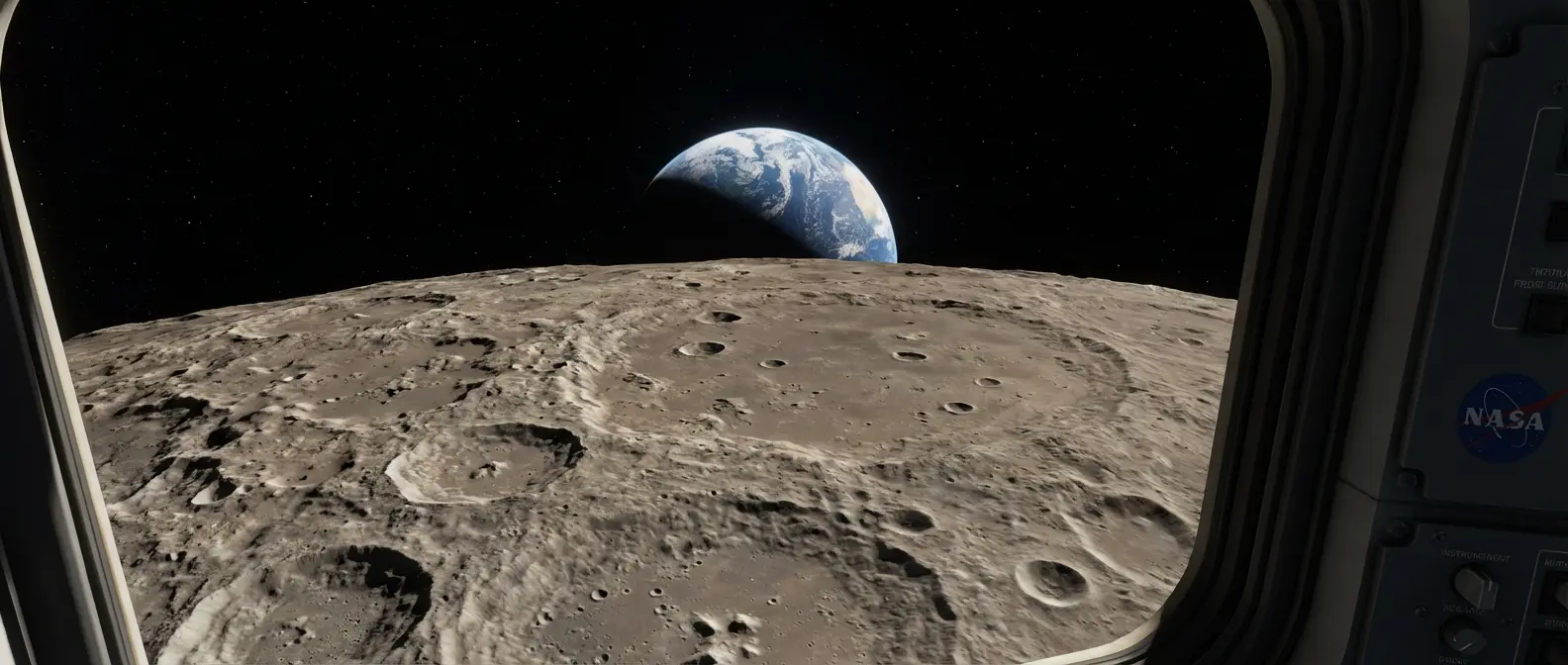
One of the most thrilling parts of the mission is when Orion will pass behind the Moon — on the far side that never faces Earth. For approximately 30-45 minutes, the crew will be completely cut off from all communication with Earth.
During this phase, the astronauts will see something that only 24 people in history have seen with their own eyes: Earth rising above the lunar horizon — the famous “Earthrise.”
🎬 Video: The Artemis II Mission
Watch this excellent video from the reputable Greek channel Astronio that analyzes the Artemis II mission in detail:
Source: Astronio - YouTube
⚠️ Challenges and Risks: What Could Go Wrong
Artemis II is an extremely demanding mission with many technical challenges. NASA has identified and addressed dozens of potential problems, but risk always remains a part of space exploration.
🔥 1. The Heat Shield
The biggest question mark after Artemis I. The shield worked, but suffered greater wear than expected. NASA modified the reentry trajectory to reduce thermal stress.
⚡ 2. Life Support Systems
For the first time, the ECLSS (Environmental Control and Life Support System) will be tested with a real crew in deep space conditions. Any failure would be catastrophic.
☢️ 3. Cosmic Radiation
Beyond the Van Allen belt, astronauts are exposed to higher levels of radiation. Orion has special shelters in case of a solar storm.
🔧 4. Engines and Propulsion
If the main engine fails during TLI, the mission is aborted. If it fails during the flyby, the free-return trajectory ensures a return — but with no margin for maneuvers.
📡 5. Loss of Communication
Behind the Moon, the crew is completely on their own. If a problem arises there, they will have to deal with it without any help from Earth.
✅ Why NASA Is Confident
Despite the risks, NASA has conducted extensive testing and Artemis I proved that the SLS and Orion perform excellently. The crew has been trained for every possible scenario and the systems have multiple redundancies.
🌕 Artemis III: The First Moon Landing of the 21st Century
If Artemis II succeeds, NASA will proceed with Artemis III — the mission that will return humans to the lunar surface for the first time since December 1972!
Why the South Pole?
Artemis III will land near the lunar south pole — a region that no one has ever visited. The choice is not random:
- Water ice: The permanently shadowed craters contain millions of tons of ice — water for drinking, oxygen for breathing, hydrogen for fuel!
- Near-permanent sunlight: The peaks near the pole receive sunlight for 80-90% of the time, ideal for solar panels.
- Scientific interest: Ancient craters containing material from the formation of the solar system.
The SpaceX Starship HLS
For Artemis III, NASA has selected the SpaceX Starship as the lunar lander — the vehicle that will transport astronauts from orbit to the surface and back. It is the same massive spacecraft that SpaceX is developing with the ultimate goal of reaching Mars!
🔮 The Future: Gateway, Artemis Base Camp & Mars
Artemis II is only the beginning. NASA has designed an ambitious program that will transform the Moon into a “waystation” for the future exploration of the solar system.
🛰️ Lunar Gateway: The Station Around the Moon
NASA, in collaboration with ESA, JAXA, and CSA, is planning the Lunar Gateway — a small space station in orbit around the Moon. It will serve as:
- Refueling station for lunar missions
- Research laboratory for scientific experiments
- Waypoint for future missions to Mars
🏕️ Artemis Base Camp: A Permanent Base on the Moon
By the 2030s, NASA is planning the Artemis Base Camp — a permanent base near the south pole with:
- Habitats for extended astronaut stays
- Lunar rover (Lunar Terrain Vehicle) for exploration
- Ice mining equipment for resource production
🔴 The Ultimate Goal: Mars
The Artemis program is not just about the Moon — it is the preparation for Mars. The technologies being developed (life support, space radiation shielding, long-duration spaceflight) will be used for the first crewed mission to the Red Planet, potentially in the 2040s.
The Moon is our proving ground. Everything we learn there — how to live and work in space — will take us to Mars and beyond.
🌟 Conclusion: A New Era Begins
Artemis II is not just a space mission — it is the beginning of a new era for humanity. More than half a century after the last lunar mission, four brave individuals will embark on a journey that will pave the way for future generations.
With Reid Wiseman at the helm, Victor Glover as the first African American on a lunar mission, Christina Koch as the first woman to travel to the Moon, and Jeremy Hansen as the first non-American in deep space, Artemis II symbolizes not only technological progress — it symbolizes unity and inclusion.
In the coming days, as Launch Complex 39B prepares for launch, billions of people around the world will look to the sky with awe and hope. Because Artemis II reminds us of something important:
When humanity unites behind a common dream, there is nothing it cannot achieve — not even the vast distances of space.
🚀 The countdown has begun. Good luck to the crew of Artemis II!